


You’ve tried everything. Ice packs that barely touch the pain. Stretches that don’t stick. Maybe even medications you’d rather not take long-term.
Cupping therapy works differently. It lifts tissue instead of compressing it, creating space where there was tightness. Blood flow increases to areas that have been starved. Fascia that’s been glued down starts to glide again.
Most people notice the difference within the first session. That chronic knot in your shoulder blade softens. Your neck turns further than it has in months. Lower back pain that’s been nagging you for years finally starts to quiet down.
This isn’t about temporary relief that wears off by tomorrow. Cupping addresses the mechanical restrictions causing your pain. When fascia moves properly and circulation improves, your body can actually heal instead of just coping.
You’re not looking for another treatment that kind of helps. You want something that actually works so you can get back to living without constantly managing discomfort.
We’ve been treating patients across Nassau County for years, building a reputation for doing things right. Our physical therapists are trained in modern cupping techniques and integrate them into comprehensive treatment plans based on what your body actually needs.
We’re not a spa offering relaxation treatments. We’re licensed healthcare professionals using cupping as a clinical tool for musculoskeletal conditions. That means proper assessment, targeted application, and measurable outcomes.
Here’s what makes us different in Locust Valley: we come to you. No driving to appointments when you’re in pain. No waiting rooms. Just professional care in your own home, where you’re most comfortable and can rest properly after treatment.
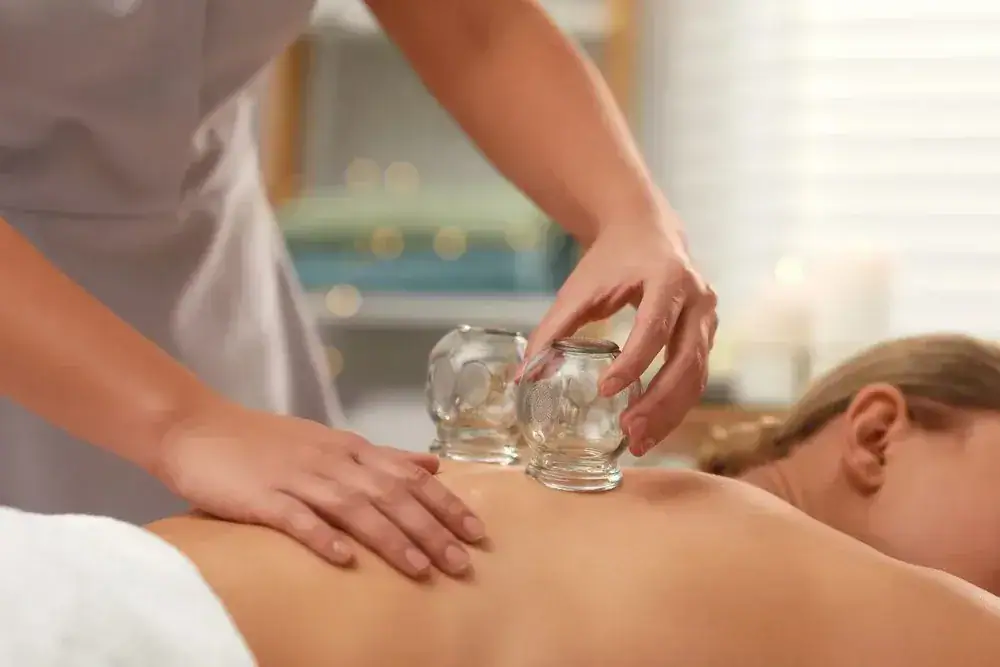
First, your physical therapist evaluates your specific condition. Where’s the pain? What movements are restricted? How long has this been going on? This isn’t a one-size-fits-all approach.
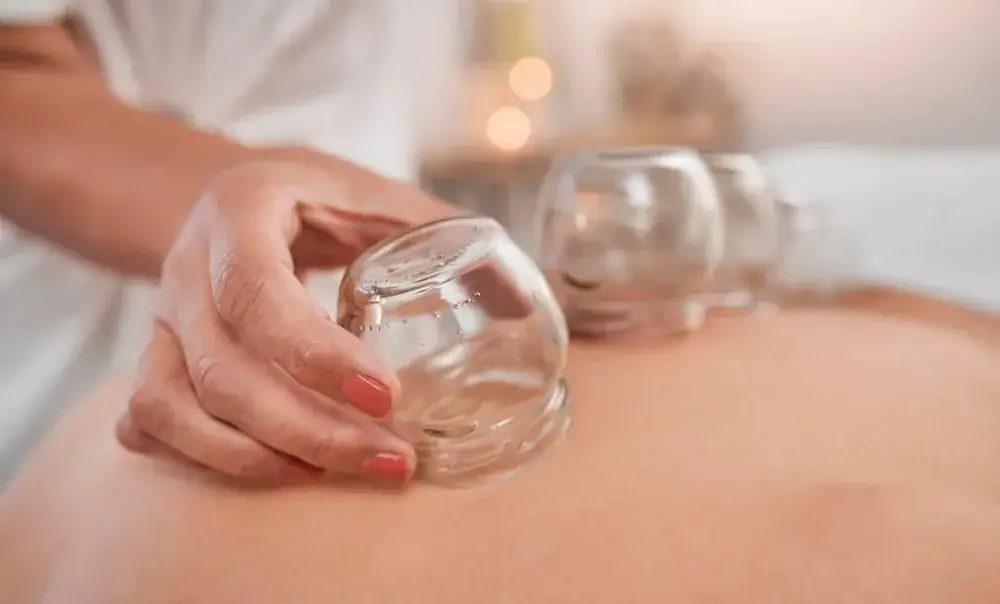
We use dry cupping, which means cups are placed on your skin to create suction without any incisions or bloodletting. The negative pressure lifts tissue, separating fascial layers that have been stuck together and increasing blood flow to the area. You’ll feel a pulling sensation, but it shouldn’t hurt.
Cups stay in place for several minutes, or we might use them dynamically, moving them across your muscles to release larger areas of tightness. Some people see circular marks afterward. They’re not bruises, they’re a sign of increased circulation, and they fade within a few days.
Most treatment plans involve multiple sessions. One appointment might give you relief, but consistent treatment creates lasting change. Your therapist will often combine cupping with other physical therapy techniques, stretching, manual therapy, or specific exercises to address the root cause of your pain.
Between sessions, you’ll get clear guidance on what to do at home. Hydration matters. Movement matters. We’ll tell you exactly what helps and what might set you back.
Ready to get started?
Every session includes a full physical therapy assessment, not just cupping application. We’re looking at your posture, your movement patterns, and the specific tissues causing your symptoms. That’s how we know where to place cups and how aggressive to be with treatment.
You receive hands-on care from a licensed physical therapist who understands anatomy, not a technician following a script. We know the difference between muscle tightness, fascial restriction, and nerve irritation. Treatment gets targeted accordingly.
In Locust Valley, where many residents deal with repetitive strain from desk work or chronic conditions from active lifestyles, cupping offers a non-invasive option that actually addresses tissue quality. You’re not just masking symptoms. You’re improving how your body moves and heals.
Sessions happen in your home, which means no commute when you’re already uncomfortable. You can rest immediately after treatment. You have privacy. And if you need to adjust your schedule, we work with you.
This is medical-grade cupping integrated into a real physical therapy plan. You get the ancient benefits backed by modern clinical knowledge, delivered where it’s most convenient for you.
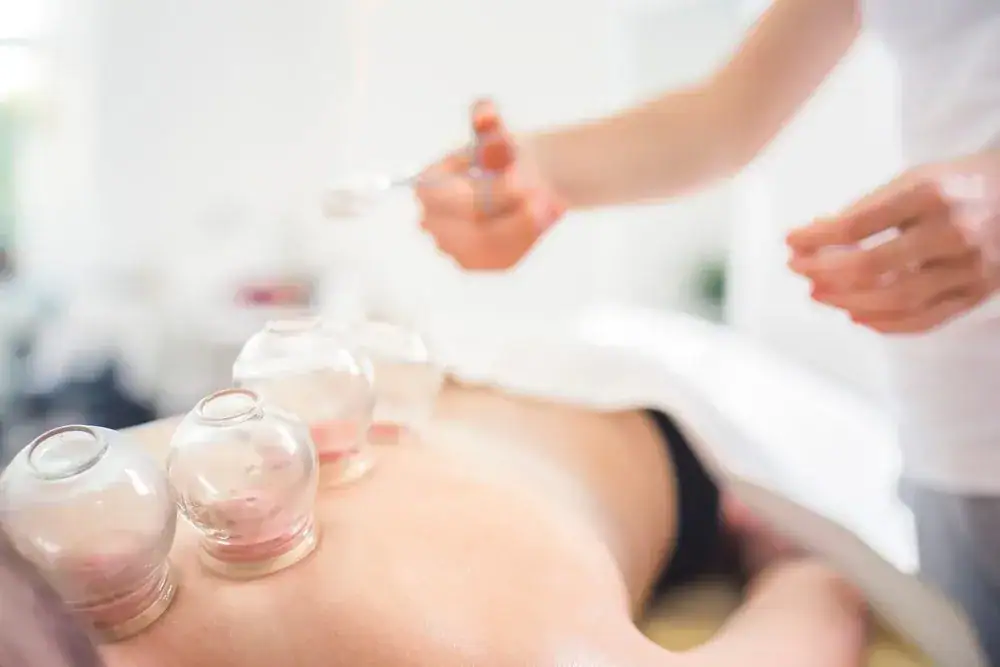
Yes, and the research backs it up. Studies show moderate-quality evidence that cupping reduces chronic low back pain and improves function. It’s not magic, it’s mechanics.
When you have chronic back pain, often the fascia surrounding your muscles has become restricted. Think of it like a tight sleeve around your arm. Cupping lifts that tissue, creating space and allowing better movement between layers. Blood flow increases, bringing oxygen and nutrients to areas that have been tight for months or years.
Most people feel some relief after the first session, but real improvement comes with consistent treatment. Your physical therapist will combine cupping with targeted exercises and manual therapy to address why your back hurts in the first place. If it’s postural, we fix that. If it’s from an old injury that never healed right, we work on tissue mobility and strength.
Cupping won’t fix a herniated disc or structural damage. But for muscular back pain, myofascial restrictions, and chronic tightness, it’s one of the most effective tools we have.
Intent, training, and integration. Spa cupping is usually about relaxation and general wellness. Physical therapy cupping is a clinical treatment for specific musculoskeletal conditions.
When a licensed physical therapist performs cupping, it’s part of a comprehensive evaluation and treatment plan. We’re assessing your movement, identifying restrictions, and using cupping strategically to improve function. We know anatomy. We understand pain patterns. We can tell the difference between muscle guarding, fascial adhesion, and nerve involvement.
Spa practitioners might place cups symmetrically or follow general protocols. We place them exactly where your body needs them based on clinical assessment. If your right shoulder is restricted because of a rotator cuff issue, treatment looks completely different than if it’s tight from compensation due to a neck problem.
You also get follow-up. We track your progress, adjust treatment as you improve, and teach you what to do between sessions. The goal isn’t just to feel better for a day. It’s to fix the underlying problem so you stay better.
You’ll likely see circular marks, but they’re not bruises in the traditional sense. They’re areas of increased circulation where stagnant blood and fluids have been drawn to the surface.
The marks can range from light pink to deep purple depending on how restricted the tissue was and how much suction was used. Tighter areas with poorer circulation tend to mark more. They don’t hurt like bruises do, and they typically fade within three to seven days.
If you have an event coming up where the marks would be visible and bothersome, tell your therapist. We can adjust cup placement or intensity. But understand that those marks are often a sign the treatment is working. They indicate areas where blood flow was compromised and is now improving.
Some people don’t mark much at all, especially after several sessions once circulation improves. Everyone’s tissue responds differently. What matters more than the appearance of marks is how you feel and whether your pain and mobility are improving.
Most people notice some improvement after one session, but lasting change typically takes four to eight treatments. It depends entirely on what we’re treating and how long you’ve had the problem.
Acute muscle tightness from overuse might respond quickly. Chronic pain that’s been building for years takes longer because we’re not just releasing tissue, we’re retraining movement patterns and rebuilding tissue quality.
Your physical therapist will give you a realistic timeline after the initial evaluation. We’re not going to string you along with endless appointments. If cupping isn’t producing measurable improvement within a few sessions, we’ll adjust the approach or try something different.
Treatment frequency matters too. Weekly sessions tend to build on each other better than sporadic appointments spread far apart. Your body needs consistent input to create lasting change, especially if you’re dealing with chronic conditions or compensatory patterns that have been in place for a long time.
Absolutely. Neck pain and tension headaches often come from the same source: tight muscles and restricted fascia in the neck, shoulders, and upper back. Cupping addresses both effectively.
When the muscles at the base of your skull are tight, they can refer pain into your head, creating what feels like a headache but is actually muscular tension. Cupping releases those muscles, improves blood flow, and reduces the tension causing the pain.
For neck pain specifically, cupping works on the deeper layers of tissue that are hard to reach with stretching or massage alone. The suction lifts and separates fascial layers, allowing your neck to move more freely. Most people notice they can turn their head further and the constant ache starts to fade.
We typically combine cupping with postural correction and strengthening exercises. If your neck hurts because you’re sitting at a computer all day with your head forward, cupping will help, but you also need to change the mechanics causing the problem. That’s where physical therapy makes the difference. We don’t just treat symptoms, we fix the cause.
Often, yes. When cupping is performed by a licensed physical therapist as part of a physical therapy treatment plan, it’s typically billed under your PT benefits, not as a separate alternative therapy.
Insurance coverage varies by plan, so you’ll want to verify your specific benefits. Most plans cover physical therapy with a copay or after your deductible is met. Cupping becomes part of that session, along with other manual therapy techniques and exercises.
We handle insurance verification and billing, so you know what to expect before treatment starts. If your plan doesn’t cover home visits or has limitations on PT sessions, we’ll tell you upfront what your costs will be.
The advantage of getting cupping through physical therapy rather than a wellness center is that it’s medical treatment, not elective. That usually means better insurance coverage and the ability to use your health benefits rather than paying entirely out of pocket. Plus, you’re getting comprehensive care from a licensed healthcare provider, not just a standalone service.
Other Services we provide in Locust Valley