
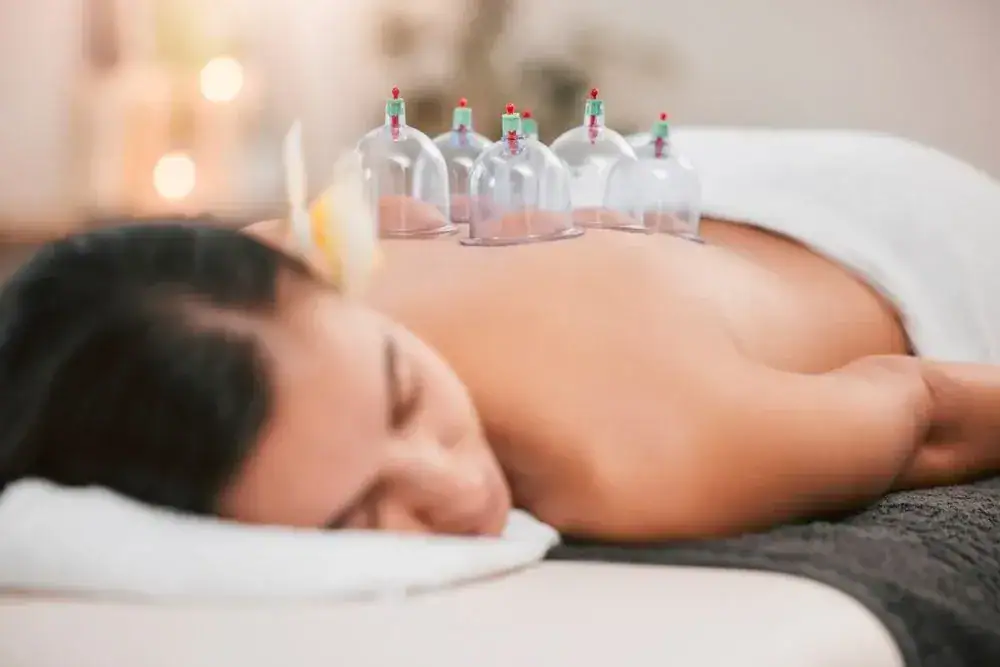

You’re not looking for temporary relief. You need something that works long enough to get back to your routine without constantly managing discomfort.
Cupping therapy increases blood flow to the areas that hurt most—your lower back, neck, shoulders, knees. That improved circulation helps reduce muscle tension, clear out inflammation, and speed up actual healing at the tissue level. Patients often report their pain dropping from an 8 to a 3 during treatment.
This isn’t about masking symptoms. It’s about addressing the root cause of musculoskeletal pain so you can move better, sleep better, and stop planning your day around what hurts. Whether you’re dealing with arthritis, chronic back pain, or post-workout soreness that won’t quit, cupping gives your body the push it needs to recover the right way.
The treatment itself is straightforward. Cups create suction on your skin, drawing blood to the surface and loosening tight tissue. It feels like a deep reverse massage—pressure that pulls instead of pushes. Most people find it surprisingly comfortable, and the relief starts before the session ends.
We’ve been serving Long Island since 2010. We bring licensed physical therapists directly to your home in Lawrence because we know getting to appointments isn’t always realistic when you’re in pain or managing mobility issues.
Our therapists treat no more than eight patients per day. That’s intentional. It means you get their full attention, not a rushed 20-minute session squeezed between a packed schedule.
We accept Medicare and most commercial insurance. Every treatment plan is customized based on what you’re dealing with and what you’re trying to get back to. Lawrence residents trust us because we show up on time, we listen, and we don’t disappear after the first visit. You work with the same therapist throughout your care, so they actually know your progress and can adjust as you improve.
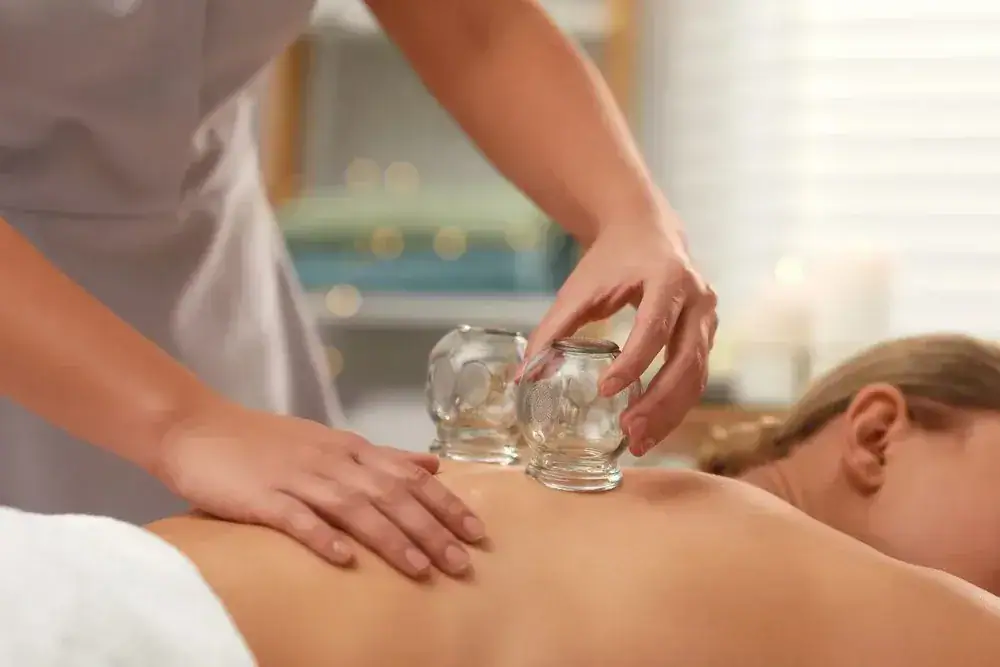
Your therapist starts with an assessment. They’ll ask about your pain—where it is, how long you’ve had it, what makes it worse. They’ll also check your range of motion and any areas of tightness or swelling.
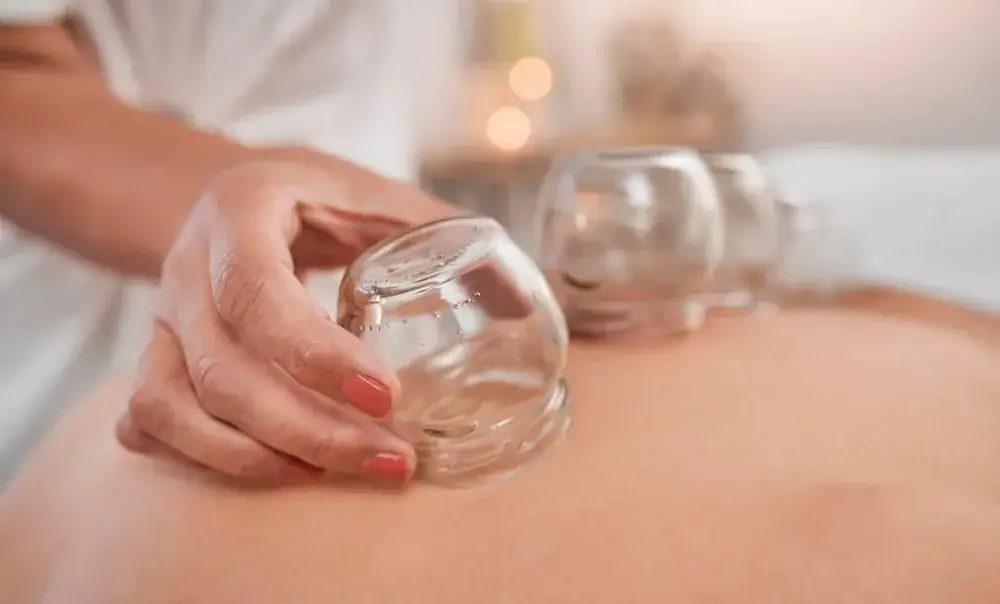
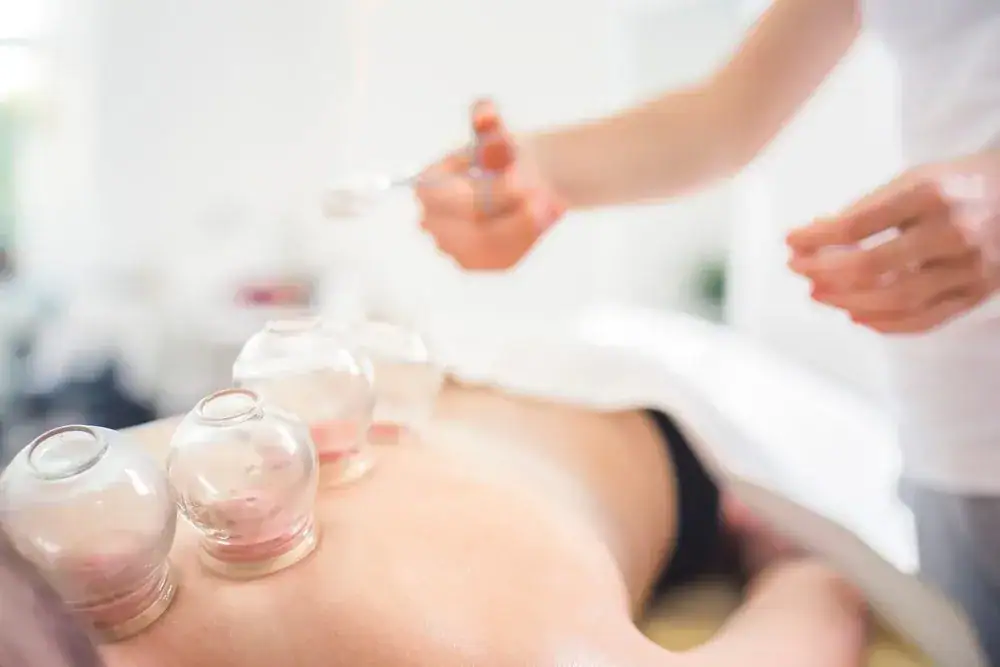
Then comes the cupping. Your therapist places silicone or glass cups on the affected areas and creates suction, either manually or with a small pump. The cups stay in place for 5 to 15 minutes, depending on your condition. You’ll feel a pulling sensation, but it shouldn’t hurt. If it does, they adjust immediately.
Some therapists use dry cupping, where the cups stay stationary. Others may slide the cups across your skin after applying oil, which helps release deeper muscle adhesions. Both methods work—it just depends on what your body needs.
After the cups come off, you’ll likely see circular marks where they were placed. Those aren’t bruises. They’re caused by increased blood flow to the area and usually fade within a few days. Your therapist may combine cupping with stretching, manual therapy, or strengthening exercises to maximize results.
Most people feel looser and less sore right away. Depending on your condition, you might need multiple sessions over a few weeks to see lasting improvement.
Ready to get started?
Cupping therapy in Lawrence addresses the kind of pain that limits what you can do. Nearly a third of residents in the surrounding area report chronic pain that disrupts their daily routine—especially older adults, people with disabilities, and those managing long-term conditions.
This treatment works for back pain, neck stiffness, shoulder tension, knee pain, and headaches. It’s also effective for athletes dealing with muscle soreness or reduced mobility after training. The suction increases circulation, which helps your muscles recover faster and reduces the buildup of lactic acid that causes post-workout pain.
Because we bring this service to your home, you don’t have to worry about driving across town or sitting in a waiting room when you’re already uncomfortable. Your therapist brings everything needed for the session and works within your space.
Sessions typically last 30 to 45 minutes and can be combined with other physical therapy techniques if that’s what your treatment plan calls for. Medicare covers cupping when it’s part of a prescribed physical therapy program, and most commercial insurance plans follow similar guidelines. Your therapist will verify your coverage before starting treatment so there are no surprises.
Yes, and the research backs it up. Studies show that cupping therapy is more effective at reducing chronic musculoskeletal pain than conventional treatments alone, especially when combined with physical therapy.
The reason it works comes down to blood flow. Chronic pain often develops in areas where circulation is poor and muscles stay tight for too long. Cupping creates suction that pulls blood to the surface, which helps deliver oxygen and nutrients to damaged tissue. That process reduces inflammation and speeds up healing.
For back pain specifically, cupping helps release muscle adhesions and tension in the lower back, which is where most people feel it. Patients often report significant pain reduction after just a few sessions. It won’t fix structural issues like herniated discs, but it’s highly effective for muscle-related pain, stiffness, and limited range of motion.
Cupping leaves circular marks, but they’re not bruises in the traditional sense. Bruises happen when blood vessels break under the skin due to impact. Cupping marks appear because suction draws blood to the surface, which temporarily discolors the skin.
The marks usually range from light pink to deep purple, depending on how much stagnation or tension was in that area. They typically fade within three to seven days. Some people see them disappear in two days, others take a bit longer.
If you’re concerned about visible marks, let your therapist know. They can adjust the suction level or place cups in areas that are easier to cover with clothing. The marks don’t hurt and they’re not a sign of injury—they’re actually a sign that the treatment is working and circulation is improving.
Yes, when cupping is performed as part of a physical therapy treatment plan prescribed by your doctor. Medicare covers outpatient physical therapy services, and cupping falls under that umbrella when a licensed therapist uses it to treat a documented condition like chronic pain, limited mobility, or musculoskeletal dysfunction.
Most commercial insurance plans follow similar guidelines. Coverage depends on your specific plan and whether you’ve met your deductible, but we accept Medicare and nearly all major insurers. Your therapist will verify your benefits before starting treatment so you know what to expect.
If you’re paying out of pocket, cupping sessions typically range from $50 to $150, depending on session length and whether it’s combined with other therapies. Home-based care through us is often more affordable than you’d expect, especially when insurance covers it.
Most people notice some improvement after the first session, but lasting results usually take three to six sessions over a few weeks. It depends on what you’re treating and how long you’ve been dealing with it.
Acute pain—like a pulled muscle or recent injury—responds faster. You might feel significantly better after two or three treatments. Chronic conditions like long-term back pain, arthritis, or recurring tension headaches take longer because the tissue has been compromised for months or years.
Your therapist will assess your progress after each session and adjust the plan as needed. Some patients continue with maintenance sessions once a month after their initial treatment plan is complete, especially if they’re managing a chronic condition or staying active in sports. The goal is to get you to a point where you’re functional and pain-free, not dependent on ongoing treatment forever.
Absolutely. Cupping is widely used in sports therapy because it speeds up muscle recovery, reduces soreness, and improves range of motion. Athletes dealing with tight hamstrings, hip pain, shoulder stiffness, or lower body fatigue see real benefits from regular cupping sessions.
The treatment works by increasing blood flow to overworked muscles, which helps clear out metabolic waste like lactic acid that builds up during intense training. That means less soreness and faster recovery between workouts or competitions. Cupping also helps release fascial adhesions—tight spots in the connective tissue that limit flexibility and movement.
Many professional athletes use cupping as part of their regular recovery routine, and it’s just as effective for recreational athletes or anyone who stays active. If you’re training for an event, dealing with a nagging injury, or just trying to keep up with your fitness routine without constant pain, cupping can help you stay in the game longer.
Dry cupping is the most common method we use in physical therapy. Cups are placed on your skin and suction is applied, but the cups stay in one place for several minutes. This technique is effective for targeting specific areas of pain or tension, like your lower back, shoulders, or knees.
Wet cupping involves making small incisions in the skin before applying the cups, which draws out a small amount of blood. This method is more common in traditional Chinese medicine but less frequently used in clinical physical therapy settings. We stick with dry cupping because it’s non-invasive and just as effective for musculoskeletal pain.
There’s also massage cupping, where the therapist applies oil to your skin and moves the cups around instead of leaving them stationary. This technique helps release deeper muscle adhesions and is often used for larger muscle groups like the back or thighs. Your therapist will choose the method that makes the most sense for your condition and treatment goals.
Other Services we provide in Lawrence