
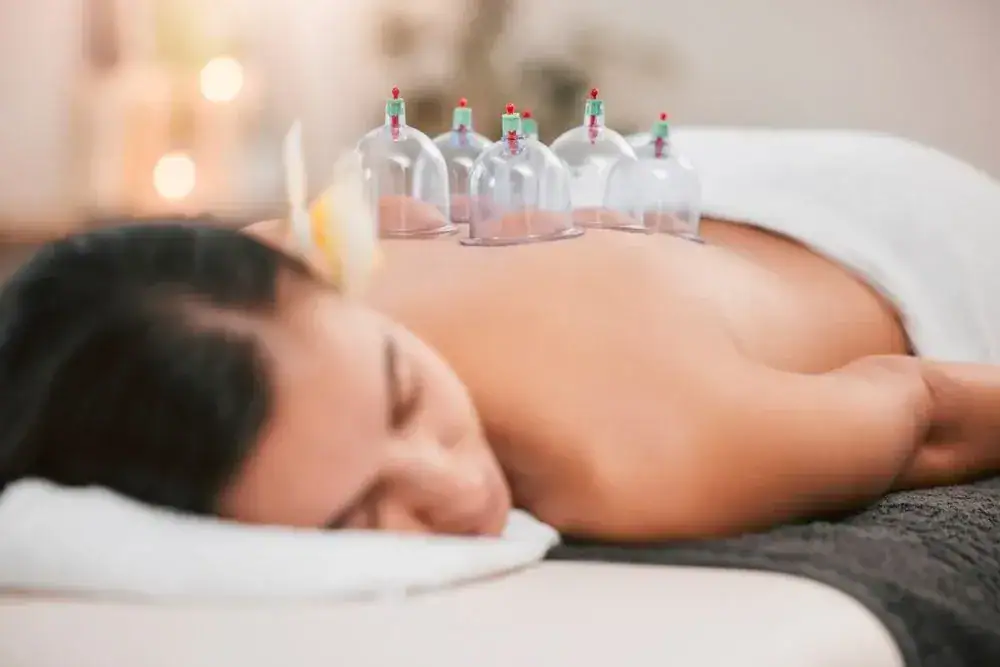

You stop planning your day around what hurts. That stiffness in your lower back that makes getting out of bed a negotiation? It loosens. The shoulder tension that’s been there so long you forgot what normal feels like? It releases.
Cupping therapy uses controlled suction to pull blood flow into tight, painful areas. That increased circulation helps flush out inflammation, relax muscle spasms, and speed up your body’s natural healing process. You’re not masking pain—you’re addressing what’s causing it.
Most people notice a difference after the first session. Not a miracle, just measurable relief. Less tension. Better range of motion. The kind of improvement that makes you realize how long you’ve been compensating.
This isn’t about managing symptoms forever. It’s about giving your body what it needs to actually recover—whether that’s from a sports injury, chronic back pain, or years of sitting at a desk in Lakeview.
We’ve built our reputation across multiple locations by doing one thing consistently: helping people get out of pain and back to their lives. Our team in Lakeview, NY includes licensed physical therapists who’ve treated everything from weekend warrior injuries to chronic conditions that other providers gave up on.
We don’t just offer cupping as a standalone service. It’s part of a broader physical therapy approach that’s personalized to what your body actually needs. That means if cupping works for you, great. If it works better combined with manual therapy or targeted exercises, we do that instead.
You’re not walking into a spa. You’re working with healthcare professionals who understand musculoskeletal pain, know how to assess what’s going on, and have the training to treat it properly. Lakeview residents come here because they want results, not relaxation music.
First, we talk. You tell us what hurts, how long it’s been going on, and what you’ve already tried. We assess your range of motion, check for muscle tightness, and figure out whether cupping is the right move or if something else makes more sense.
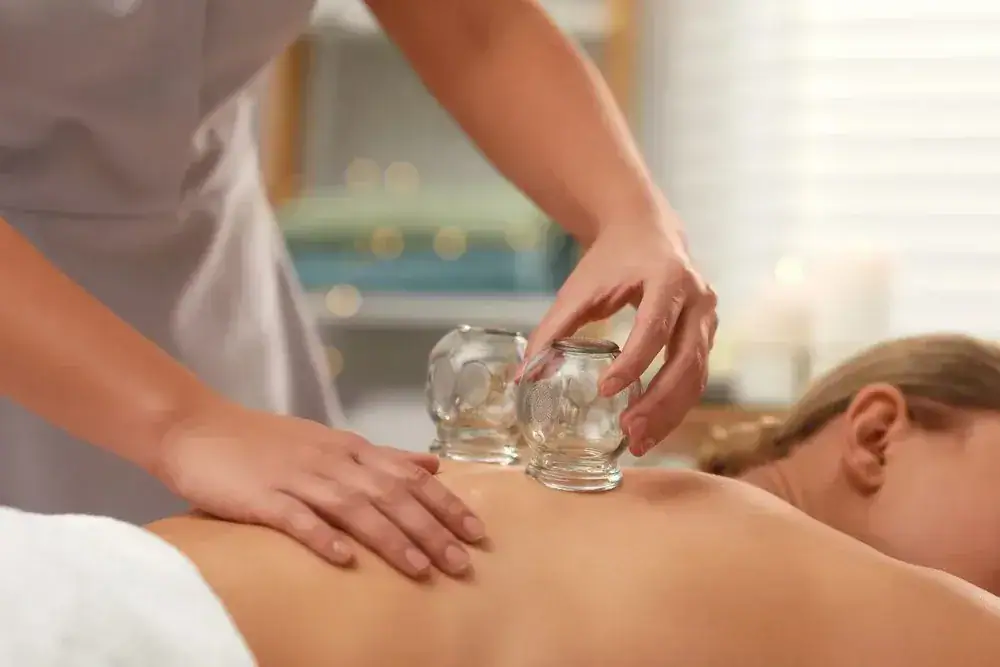
If cupping fits, here’s how it works: we place specialized cups on your skin over the painful or tight areas. The cups create suction—either through heat or a pump—that pulls your skin and underlying tissue upward. That suction increases blood flow to the area, helps release fascial restrictions, and gives tight muscles room to relax.
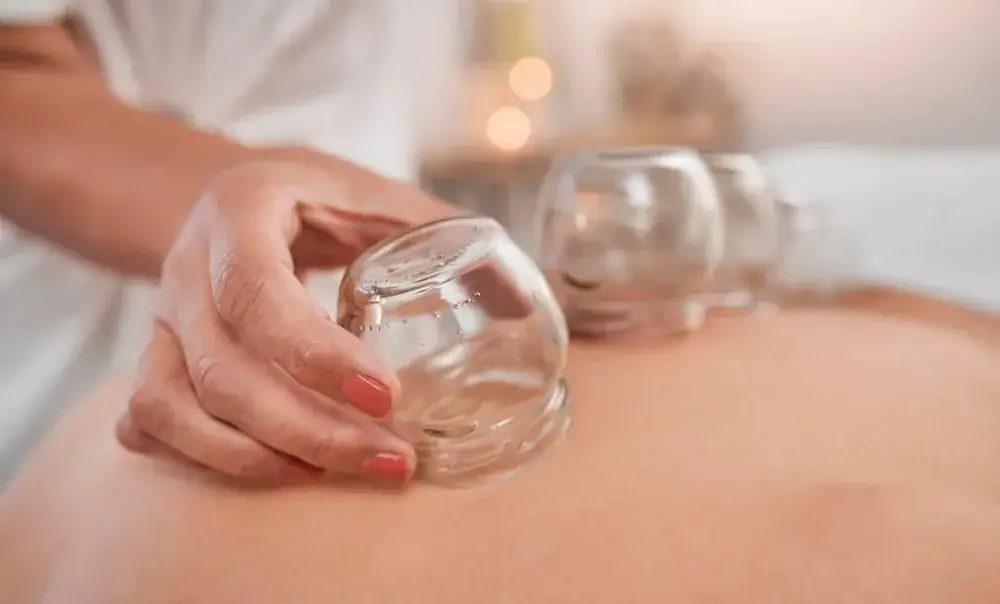
Dry cupping is what most people think of when they hear “cupping therapy.” The cups stay in place for several minutes, or we might move them across your skin in a gliding motion to cover more area. You’ll feel pressure and a pulling sensation, but it shouldn’t hurt. Some people find it oddly satisfying.
Sessions typically last 15 to 30 minutes, depending on how many areas we’re treating. Afterward, you might have circular marks where the cups were—those fade in a few days and aren’t painful. Most people feel looser immediately and notice continued improvement over the next day or two as inflammation decreases.
Ready to get started?
Cupping therapy at Medcare isn’t a one-size-fits-all treatment. We use it strategically for conditions where it’s proven effective: chronic back pain, neck stiffness, shoulder tension, and muscle recovery after injury or intense activity.
In Lakeview, NY, we see a lot of people dealing with pain from repetitive stress—whether that’s from desk work, manual labor, or athletic training. Cupping helps break that cycle by improving circulation to areas that aren’t getting enough blood flow, releasing trigger points that refer pain elsewhere, and reducing the inflammation that keeps you stuck in discomfort.
It’s particularly effective when combined with other physical therapy treatments. Cupping can prep your muscles before manual therapy or exercise, making those interventions more effective. Or it can be used after to help with recovery and reduce soreness.
You’re not committing to months of treatment. Many patients feel significant relief within three to five sessions. Some need more, some need less—it depends on how chronic the issue is and how your body responds. We’ll be straight with you about what’s realistic based on what we’re seeing.
The goal isn’t to keep you coming back forever. It’s to get you functional again so you can maintain the progress on your own.
Yes, and the research backs it up. Studies show that cupping therapy significantly reduces chronic back pain—often more effectively than conventional treatments alone. It works by increasing blood flow to tight, painful muscles in your lower back, which helps reduce inflammation and release muscle spasms.
Most people with back pain have areas that are chronically tight and not getting adequate circulation. Cupping addresses that directly by creating suction that pulls fresh blood into the tissue. That increased circulation brings oxygen and nutrients while flushing out metabolic waste that contributes to pain.
You’ll likely notice some improvement after your first session—less stiffness, better range of motion when you bend or twist. The effects build over multiple sessions as inflammation decreases and your muscles start functioning normally again. For chronic back pain in Lakeview residents, we typically see the best results when cupping is combined with targeted exercises that address the underlying weakness or imbalance causing the problem in the first place.
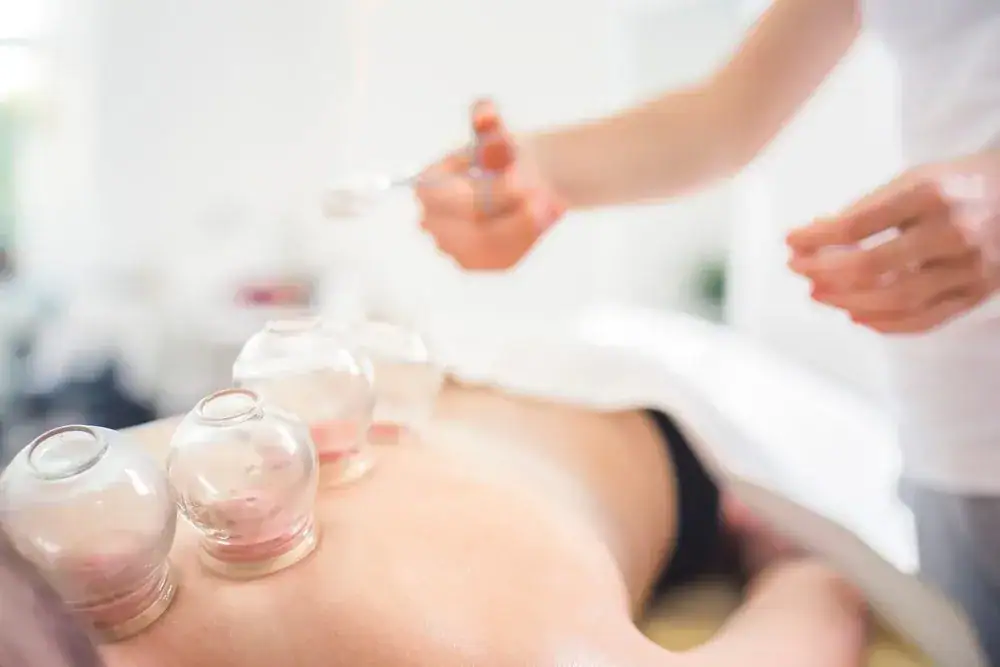
Dry cupping is the most common form and what we primarily use at Medcare. It involves placing cups on your skin to create suction—no needles, no incisions, nothing invasive. The cups either stay in one spot (stationary cupping) or get moved across your skin (gliding cupping) depending on what area we’re treating and what we’re trying to accomplish.
Wet cupping, by contrast, involves making small incisions in the skin before applying the cups, which draws out small amounts of blood. It’s used in some traditional medicine practices but isn’t typically part of modern physical therapy protocols in the United States.
Fire cupping uses a flame to create suction by heating the air inside the cup before placing it on your skin. Pump cupping uses a manual or electric pump to create the vacuum. Both methods create the same therapeutic effect—the difference is just in how the suction is generated.
For pain relief and muscle recovery, dry cupping delivers results without any breaking of the skin. It’s safe, effective, and integrates well with other physical therapy treatments we offer in Lakeview, NY.
Yes, cupping usually leaves circular marks where the cups were placed, and no, you shouldn’t worry about them. They look like bruises but they’re not—they’re caused by the suction pulling blood to the surface of your skin. The marks are typically dark red or purple and fade completely within three to seven days.
These marks don’t hurt. You might not even notice them unless you’re looking in a mirror. They’re a normal response to the treatment and actually indicate that blood flow increased to that area, which is exactly what we want for healing.
If you have an event coming up where you’ll be wearing something that shows your back or shoulders, just mention it before treatment. We can adjust placement or timing accordingly. But for most people in Lakeview getting cupping therapy for pain relief, the marks are a non-issue—especially once they realize how much better they feel.
The intensity of the marks doesn’t correlate with how effective the treatment is. Some people mark easily, others barely show anything. What matters is whether your pain decreases and your mobility improves.
Most people notice improvement within one to three sessions, but the total number depends on what we’re treating and how long you’ve been dealing with it. Acute issues—like muscle soreness from a recent workout or a minor strain—often respond quickly. Chronic conditions that have been building for months or years typically need more sessions to fully resolve.
For something like chronic neck pain or lower back stiffness, a realistic treatment plan might be six to eight sessions over a few weeks. We’ll reassess after every few appointments to see how you’re progressing and adjust accordingly. If you’re not seeing improvement by session three or four, we’ll talk about whether cupping is the right approach or if we need to try something different.
The goal is always to get you better as efficiently as possible. We’re not interested in stringing you along for months of treatment. Once your pain is manageable and your function is restored, we’ll give you the tools to maintain that progress on your own.
For Lakeview, NY residents dealing with chronic pain, cupping therapy often works best as part of a broader physical therapy plan that includes strengthening and mobility work. That combination tends to produce longer-lasting results than cupping alone.
It depends on your insurance plan and how the treatment is billed. When cupping is provided as part of a physical therapy session at Medcare—which is how we typically use it—it’s often covered under your physical therapy benefits. We bill it as part of your overall treatment, not as a separate alternative therapy service.
That said, every insurance plan is different. Some cover cupping without issue when it’s medically necessary and performed by a licensed physical therapist. Others have restrictions or require prior authorization. We recommend calling your insurance provider before your first appointment to ask specifically about coverage for physical therapy services that include cupping.
Our team can provide you with the billing codes and documentation you need to check with your insurer. We’ll also verify your benefits on our end and let you know what to expect in terms of copays or out-of-pocket costs before you commit to treatment.
If insurance doesn’t cover it or if you’re paying out of pocket, we’ll be upfront about costs so there are no surprises. For many people in Lakeview dealing with chronic pain, the investment is worth it—especially compared to ongoing medication costs or more invasive interventions down the road.
Absolutely. Cupping therapy is widely used by athletes because it speeds up muscle recovery, reduces soreness, and helps prevent injury by keeping muscles loose and functional. If you’ve pushed hard in training or competition, cupping increases blood flow to fatigued muscles, which helps clear out lactic acid buildup and delivers the oxygen and nutrients needed for repair.
It’s particularly effective for treating tight hip flexors, hamstrings, shoulders, and upper back—areas that take a beating in most sports. Cupping can also address specific injuries like muscle strains or tendonitis by reducing inflammation and promoting healing in the affected tissue.
We work with weekend warriors, high school athletes, and recreational gym-goers in Lakeview, NY who use cupping as part of their recovery routine. Some come in after a tough event or training block. Others use it preventatively to stay loose and avoid the kind of chronic tightness that leads to injury.
The key is timing. Cupping right after intense activity can reduce next-day soreness. Using it during recovery weeks helps your body adapt to training stress more effectively. And if you’re already dealing with an injury, cupping combined with targeted rehab exercises can get you back to your sport faster than rest alone.
Other Services we provide in Lakeview