
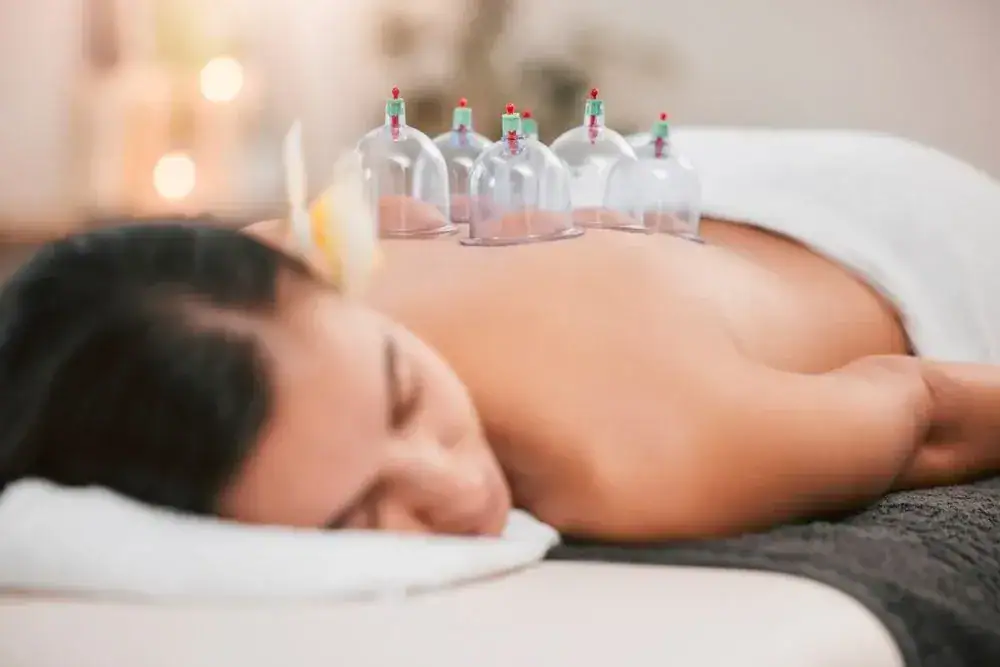

You’re not looking for temporary relief that wears off by dinner. You want to bend down without wincing. Sleep through the night. Get back to your workouts or just keep up with your kids without that constant ache slowing you down.
Cupping therapy works by improving blood flow to tight, painful areas while mechanically lifting and separating the layers of fascia that have gotten stuck together. That means less stiffness, better range of motion, and muscles that actually relax instead of staying locked up.
The suction creates space between tissue layers, which reduces inflammation and helps your body heal itself more effectively. You’re not masking symptoms. You’re addressing what’s causing the pain in the first place so you can move freely again.
Medcare Therapy Services has been treating patients across Long Island with a straightforward approach: listen first, treat with precision, and follow through until you’re better. Our physical therapists in Holtsville, NY are trained in cupping therapy and use it as part of comprehensive treatment plans designed around your specific condition.
We’re not a spa offering relaxation sessions. We’re licensed healthcare providers treating real pain with evidence-based methods. That means proper assessment, controlled technique, and integration with other therapies when it makes sense for your recovery.
Holtsville residents deal with everything from desk job tension to sports injuries to chronic conditions that haven’t responded well to other treatments. We’ve seen it, treated it, and helped people get back to normal life without depending on pills or injections.
Your first visit starts with an evaluation. We need to understand where your pain is coming from, what makes it worse, and what you’ve already tried. This isn’t a one-size-fits-all situation.
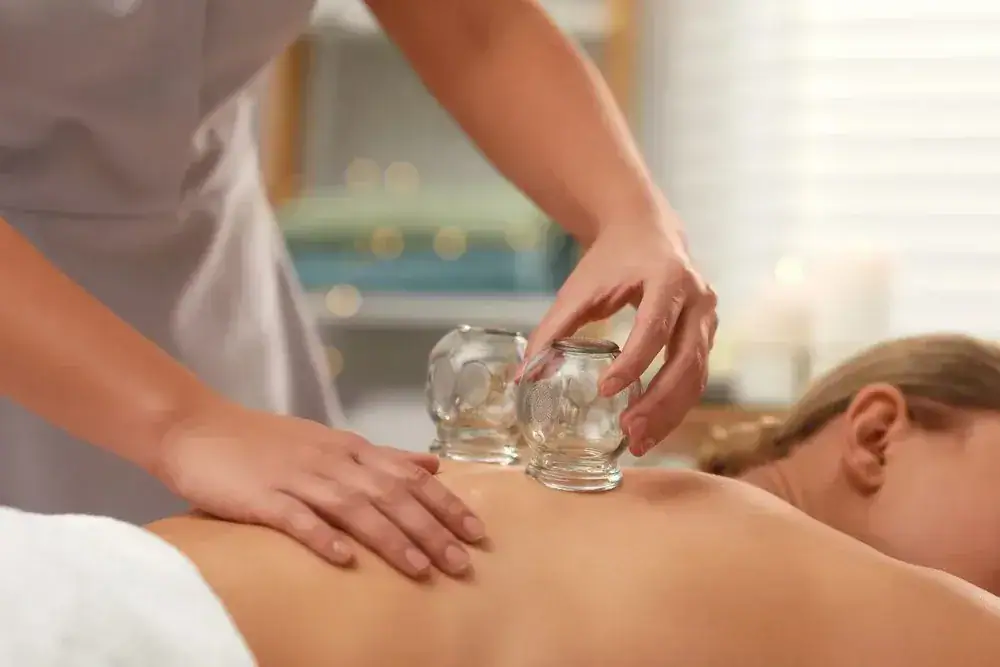
Once we know what we’re dealing with, we’ll explain how cupping fits into your treatment plan. The process itself is straightforward: we place specialized cups on targeted areas of your body and create suction that pulls tissue upward. This can be done with dry cupping, which uses negative pressure alone, or as part of a broader physical therapy session.
The suction increases blood circulation to the area, releases fascial restrictions, and encourages your muscles to let go of tension they’ve been holding. Sessions typically last 15 to 30 minutes depending on the area being treated. You might see circular marks afterward—that’s normal and they fade within a few days.
Most people feel some level of relief right away. Others need a few sessions before they notice significant improvement. We’ll track your progress and adjust the approach as needed so you’re actually getting better, not just going through the motions.
Ready to get started?
Cupping therapy is effective for chronic back pain, neck tension, shoulder tightness, and muscle soreness that won’t quit. It’s also used for headaches, knee pain from osteoarthritis, and recovery from sports injuries. If you’ve got fascial restrictions or scar tissue limiting your movement, this is one of the few treatments that can mechanically address it.
Here in Holtsville, NY and across Long Island, we see a lot of people dealing with repetitive strain from work, lingering pain from old injuries, and age-related stiffness that’s starting to interfere with daily life. Cupping works well for all of these because it targets the soft tissue directly and improves how your body moves and heals.
This isn’t about chasing trends. Professional and Olympic athletes use cupping because it works for performance and recovery. Physical therapists use it because the research supports it for pain reduction and mobility improvement. You’re getting a treatment that’s both ancient in origin and validated by modern clinical studies.
We combine cupping with other physical therapy techniques when it makes sense—manual therapy, targeted exercises, movement training. The goal is always the same: get you out of pain and back to doing what matters to you.
Yes, and the research backs it up. Studies show that cupping therapy reduces pain and improves function in people dealing with chronic neck pain, lower back pain, and knee osteoarthritis. It’s not a miracle cure, but it’s a legitimate treatment option that works by improving blood flow, reducing muscle tension, and releasing fascial restrictions.
The key is using it correctly. When a licensed physical therapist applies cupping as part of a structured treatment plan, you’re more likely to see real improvement. Random sessions without proper assessment won’t give you the same results.
Most people notice some relief after the first session, but lasting improvement usually takes a few treatments. We’re addressing tissue that’s been tight or restricted for weeks, months, or even years—it takes time to retrain your body and restore normal movement patterns.
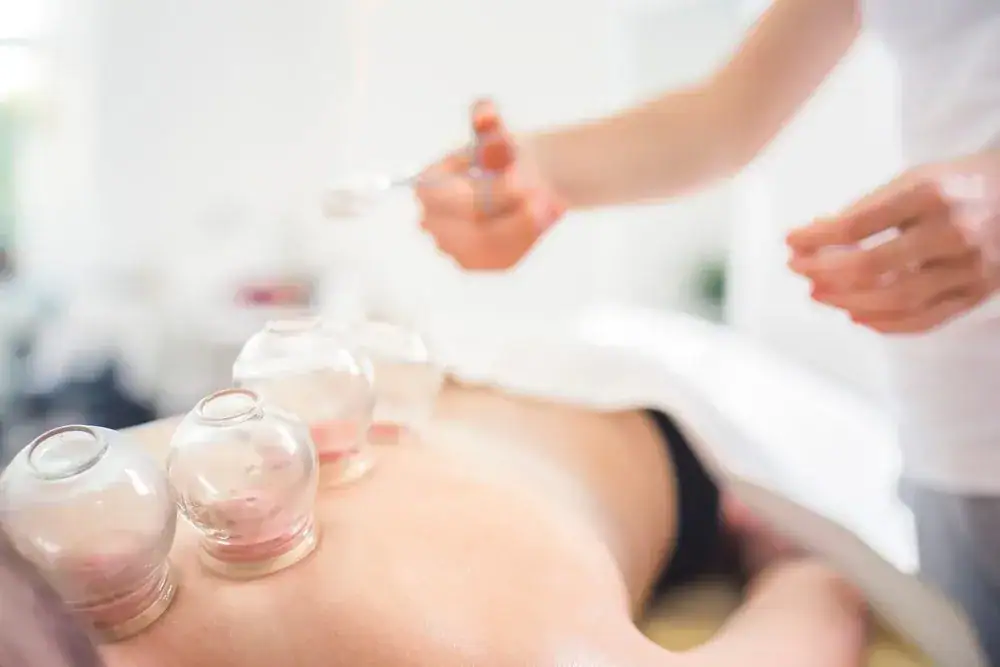
Dry cupping uses suction alone to lift tissue and create therapeutic effects. There’s no cutting, no blood removal—just controlled negative pressure applied through cups placed on your skin. This is what we use in physical therapy settings because it’s safe, effective, and low-risk.
Wet cupping involves making small incisions and drawing out blood, which is a different practice altogether and not something physical therapists perform. When people talk about cupping therapy for pain relief and muscle relaxation, they’re almost always referring to dry cupping.
The cups can be left in place (static cupping) or moved across your skin (dynamic cupping) depending on what we’re treating. Both methods work to improve circulation, release tension, and reduce pain. Your therapist will choose the approach that makes the most sense for your specific condition.
Probably, yes. The suction pulls blood to the surface, which often leaves circular marks that look like bruises. They’re not painful and they typically fade within three to seven days. Some people get darker marks than others depending on how much tension and restriction is in the tissue.
These marks are a normal part of the treatment and actually indicate that blood flow is increasing to areas that needed it. If you’re concerned about visible marks for an event or specific reason, let us know ahead of time and we can adjust the intensity or timing of your session.
The marks aren’t a sign of injury or damage. They’re just a temporary side effect of the mechanical lifting that happens during treatment. Most people don’t mind them once they understand what’s happening and especially once they feel the relief that comes with it.
It depends on what we’re treating and how long you’ve been dealing with it. Acute issues like a recent muscle strain might improve in two to four sessions. Chronic conditions like long-term back pain or fascial restrictions usually take longer—anywhere from six to ten sessions or more.
We’ll give you a realistic timeline after your initial evaluation. Some people feel significantly better after just one or two treatments and decide that’s enough. Others need ongoing sessions to maintain improvement, especially if their pain is related to repetitive activities or degenerative conditions.
The goal isn’t to keep you coming in forever. It’s to get you functional again and teach you how to maintain that progress on your own. We’ll be honest about what’s realistic and adjust the plan based on how you’re actually responding to treatment.
If it’s performed by a licensed physical therapist as part of a physical therapy treatment plan, it’s often covered under your PT benefits. Insurance typically doesn’t cover cupping when it’s done in a spa or wellness setting, but when it’s delivered as a medical treatment by a healthcare provider, coverage is much more likely.
We recommend calling your insurance company to verify your specific benefits before your first visit. Ask whether physical therapy is covered, what your copay is, and if there are any visit limits. Most plans cover PT services when they’re medically necessary, and cupping falls under that umbrella when it’s used to treat pain or mobility issues.
We’ll provide all the documentation your insurance needs, including evaluation notes and treatment records. If you have questions about billing or coverage, talk to our front desk staff—they deal with insurance companies every day and can help you understand what to expect.
Absolutely. Athletes use cupping to speed up recovery, reduce muscle soreness, and improve range of motion after intense training or competition. It’s effective for treating strains, overuse injuries, and the kind of deep muscle tightness that limits performance.
The treatment works by increasing blood flow to injured tissue, which brings in oxygen and nutrients while clearing out metabolic waste. It also releases fascial adhesions that develop after injury and can restrict movement if left untreated. That means faster healing and better mobility as you get back to your sport.
We treat plenty of active people in Holtsville, NY who are dealing with running injuries, weightlifting strains, tennis elbow, and other sports-related issues. Cupping is one tool in a larger toolkit that includes strengthening exercises, movement correction, and manual therapy. The combination gets you back in the game faster and helps prevent the same injury from happening again.
Other Services we provide in Holtsville