
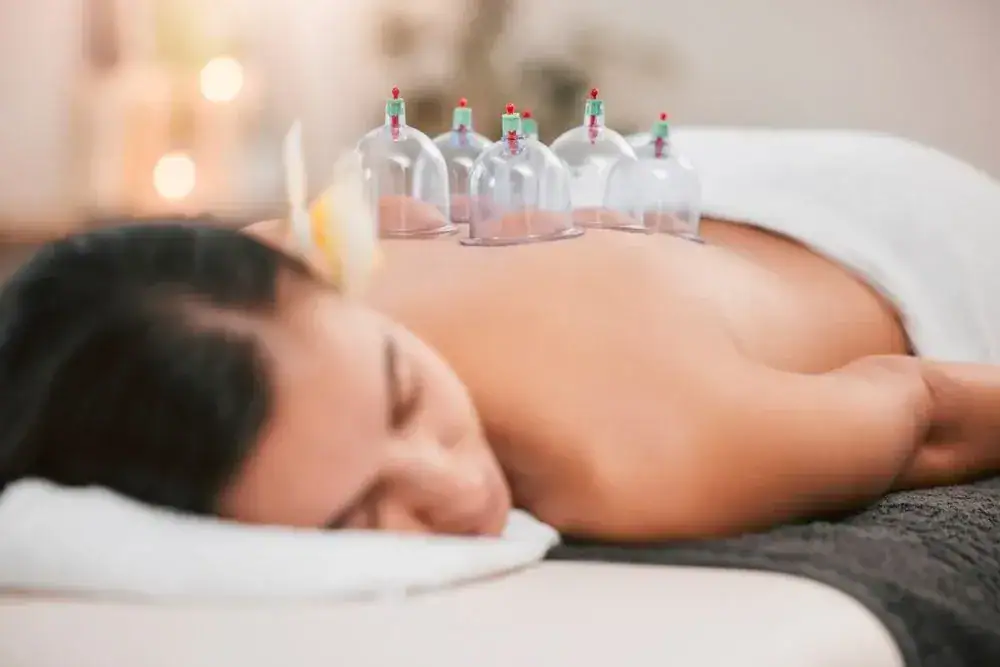

You wake up without that familiar stiffness in your lower back. You reach for something on a high shelf and your shoulder doesn’t lock up halfway through the motion. You get through your day without constantly shifting positions to find relief.
That’s what effective pain management looks like. Cupping therapy increases blood flow to tight, painful areas while reducing inflammation that keeps you stuck in the same cycle. The suction created during treatment lifts tissue, breaks up adhesions, and gives your muscles room to relax and heal.
Most people notice improved range of motion after their first session. Chronic tension in your neck, shoulders, or back starts to release. You’re not just masking symptoms – you’re addressing what’s causing the pain in the first place.
This isn’t about temporary relief that wears off in a few hours. It’s about giving your body what it needs to actually recover. Better circulation means faster healing. Less muscle tension means less pain. More mobility means you can get back to the things you’ve been avoiding.
Your therapist starts with an assessment. We need to understand where your pain is, how long you’ve had it, and what makes it better or worse. This isn’t a formality – it determines whether cupping is right for you and how we’ll approach your treatment.
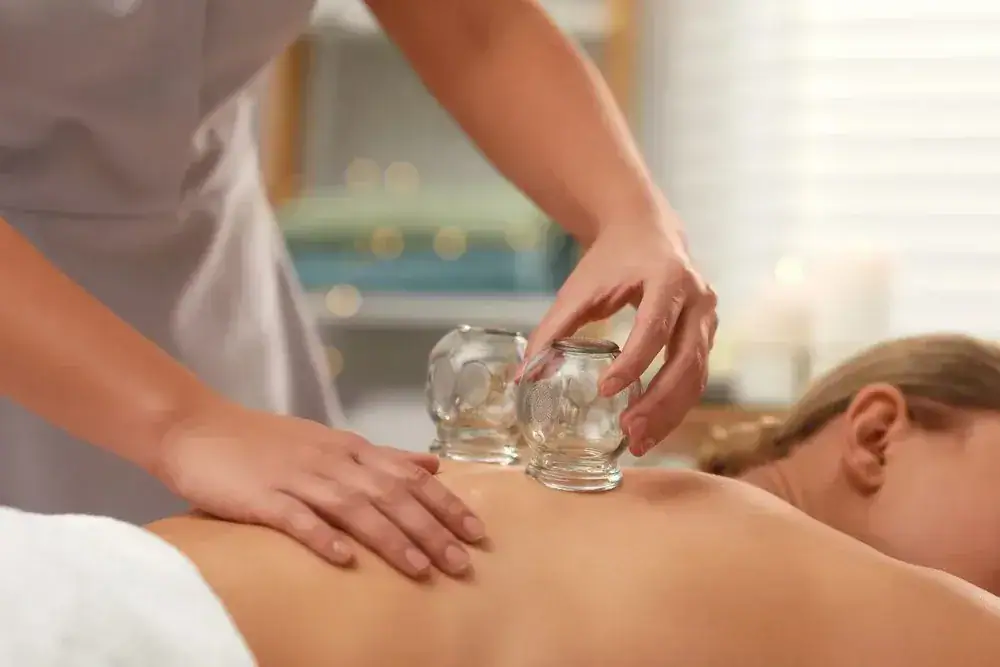
During the session, we place specialized cups on targeted areas of your body. Modern cupping uses controlled suction to lift tissue away from underlying muscle. You’ll feel a pulling sensation, but it shouldn’t hurt. Some people find it immediately relaxing.
The cups stay in place for several minutes while they do their work. Blood flow increases to the area. Tight fascia starts to release. Muscle fibers that have been stuck together begin to separate. This is dry cupping – no incisions, no blood, just therapeutic suction.
You might see circular marks afterward. They’re not bruises, though they look similar. They’re caused by increased circulation and typically fade within a few days. Most people wear them like a badge – proof they’re doing something about their pain.
We’ll discuss frequency based on your response. Some conditions improve with weekly sessions. Others need more intensive treatment up front, then maintenance visits. You’re in control of your care schedule.
Ready to get started?
Cupping therapy works particularly well for chronic conditions common among Hewlett Harbor residents. Lower back pain from years of desk work. Neck and shoulder tension that never fully goes away. Knee pain that makes stairs feel like a challenge. Muscle soreness that limits how active you can be.
Nassau County has an aging population dealing with arthritis, reduced mobility, and pain that traditional treatments haven’t fully resolved. That’s where alternative approaches like cupping make a real difference. Research shows it can significantly improve range of motion and reduce pain levels – not just temporarily, but with lasting results when combined with proper physical therapy.
Our therapists integrate cupping with other evidence-based techniques. We’re not just placing cups and calling it done. We’re looking at your whole movement pattern, identifying compensations you’ve developed, and addressing the root cause of your dysfunction. Cupping is one tool in a comprehensive approach.
Home-based care removes the transportation barrier. You don’t need to arrange rides or worry about getting to an office when you’re already in pain. We bring everything to you, treat you in a comfortable environment, and work around your schedule. That accessibility matters, especially for patients who find leaving home difficult.
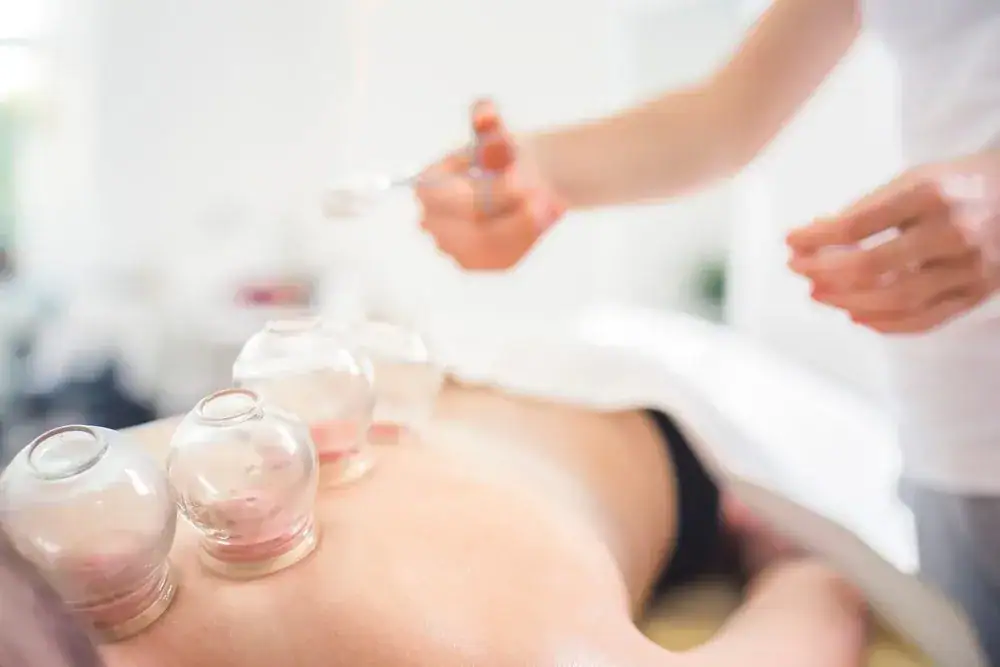
The research is clear: cupping therapy significantly reduces pain and improves function for people with chronic musculoskeletal conditions. Multiple peer-reviewed studies show it outperforms conventional treatments for lower back pain, neck pain, and muscle tension.
Here’s why it works. The suction increases blood flow to areas that aren’t getting adequate circulation. More blood means more oxygen and nutrients reaching damaged tissue. It also helps remove metabolic waste that builds up in chronically tight muscles. That combination promotes actual healing, not just symptom management.
The therapy also provides myofascial decompression. Your fascia – the connective tissue wrapping your muscles – can get stuck and restricted. Cupping lifts that tissue, creates space, and allows muscles to move the way they’re supposed to. When your muscles can move properly, they stop sending pain signals.
You’ll find cupping used by professional athletes, Olympic competitors, and physical therapy clinics worldwide. It’s not alternative medicine anymore – it’s an established treatment modality backed by clinical evidence and integrated into modern rehabilitation programs.
Most insurance plans cover cupping when it’s performed by a licensed physical therapist as part of your treatment plan. We accept Medicare and nearly all commercial insurance carriers. Most don’t require a referral, though you should verify your specific coverage.
Here’s how it typically works. Cupping is billed as part of your physical therapy services, not as a separate alternative treatment. That means it falls under your standard PT benefits. If you have coverage for outpatient physical therapy, cupping is usually included.
Medicare specifically covers cupping therapy when provided by qualified healthcare professionals for medically necessary conditions. That includes chronic pain, post-surgical rehabilitation, and functional limitations affecting your daily life. We handle the documentation and billing to ensure you get the coverage you’re entitled to.
Before your first session, we’ll verify your benefits and let you know what to expect for out-of-pocket costs. No surprises. If you have questions about your specific plan, call us and we’ll walk through it with you. Getting treatment shouldn’t require a degree in insurance navigation.
Cupping works exceptionally well for muscle-related pain and tension. Lower back pain is probably the most researched application, with strong evidence for significant improvement. Neck and shoulder pain from poor posture or repetitive strain also responds well. Knee pain, particularly when related to muscle tightness rather than structural damage, often improves dramatically.
Chronic headaches and migraines linked to muscle tension see good results. The therapy helps release trigger points in your neck and upper back that refer pain to your head. Many patients report fewer headaches and reduced intensity after a series of treatments.
Athletes use cupping for muscle recovery and performance enhancement. It helps reduce soreness after intense training, speeds recovery between workouts, and can improve flexibility and range of motion. If you’re dealing with a sports injury or trying to get back to your fitness routine, cupping accelerates the process.
Conditions like fibromyalgia and arthritis benefit from the increased circulation and reduced inflammation. While cupping won’t cure these conditions, it can significantly improve your quality of life by managing symptoms and improving function. We see patients regain mobility they thought was gone for good.
Cupping isn’t separate from physical therapy – it’s a specialized technique that physical therapists use as part of comprehensive treatment. Think of it as one tool in a larger toolkit. Your therapist might use cupping along with manual therapy, therapeutic exercise, and other interventions.
The main difference is the mechanism. Traditional PT often involves compression – pushing into tissue with massage or manipulation. Cupping does the opposite. It creates decompression by pulling tissue up and away from underlying structures. That lifting action releases restrictions that compression techniques can’t always reach.
Some patients respond better to decompression than compression. If you’ve tried traditional physical therapy with limited results, cupping might address your issue from a different angle. The suction reaches deeper layers of tissue and can release adhesions that manual therapy alone doesn’t fully resolve.
We don’t use cupping in isolation. You’ll still get exercise instruction, movement training, and education about managing your condition. Cupping enhances those interventions by preparing your tissue, reducing pain so you can exercise more effectively, and accelerating your overall recovery. It’s integrated care, not alternative care.
The marks are temporary and completely harmless. They’re caused by increased blood flow and typically fade within three to seven days. They look like bruises but feel different – most people report no tenderness when you touch them.
Here’s what’s actually happening. The suction brings blood to the surface and can cause small capillaries to expand. Areas with more restriction or poor circulation tend to show darker marks. As your tissue health improves with repeated treatments, the marks often become lighter because circulation is already better.
You can go about your normal activities with the marks visible. Some people prefer to schedule treatments when they can cover the areas with clothing for a few days. Others don’t care. It’s entirely personal preference.
The marks are actually useful diagnostic information. They show your therapist where you have the most restriction and poorest circulation. We can track your progress by observing how the marking pattern changes over time. Lighter marks usually indicate improving tissue health and better blood flow to the area.
Many patients notice improved mobility and reduced pain immediately after their first session. That initial relief comes from increased blood flow and muscle relaxation. Whether it lasts depends on how chronic your condition is and what’s causing it.
For acute issues – like a recent muscle strain or sudden onset of pain – you might see significant improvement within two to four sessions. Your body responds quickly when the problem is recent and hasn’t developed compensatory patterns.
Chronic conditions take longer. If you’ve had lower back pain for years, your body has adapted around it. Muscles have shortened, fascia has thickened, and movement patterns have changed. Undoing that takes consistent treatment over several weeks. Most chronic pain patients see meaningful improvement within six to eight sessions, with continued gains as treatment progresses.
The key is consistency. One session might feel great, but lasting change requires repeated treatment while your tissue remodels and your nervous system resets its pain patterns. We’ll give you a realistic timeline based on your specific condition during your initial assessment. Some people need ongoing maintenance sessions. Others complete a treatment series and they’re done. It depends entirely on what your body needs.
Other Services we provide in Hewlett Harbor