
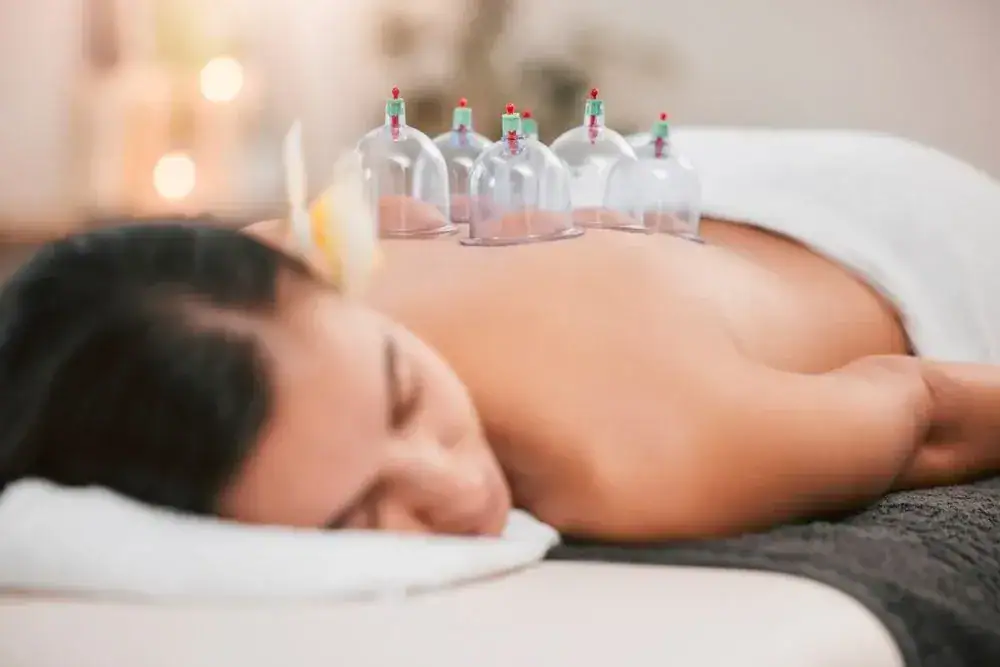

You’re not looking for temporary relief that wears off by dinner. You want to move without wincing, sleep without repositioning every hour, and get back to the activities chronic pain has stolen from you.
Cupping therapy works by lifting and decompressing soft tissue. That suction increases blood flow to areas that have been tight, inflamed, or stuck for months. More blood means more oxygen, faster healing, and less of the stiffness that makes every movement feel like a negotiation.
When cupping is combined with physical therapy, you’re not just masking symptoms. You’re addressing the root cause—whether that’s muscle tension from poor posture, inflammation from overuse, or restricted mobility from an old injury. The result is functional improvement you can feel in your daily life, not just during treatment.
People come in because their neck won’t turn, their shoulder won’t lift, or their back won’t let them stand up straight. They leave because those limitations start to fade. That’s the difference between a therapy that distracts you from pain and one that actually resolves it.
We operate multiple locations across Long Island, including our Yaphank area, with a track record built on results, not marketing. We don’t just offer cupping as a trendy add-on—we integrate it into evidence-based physical therapy plans designed around your specific condition.
Our team has treated everyone from weekend athletes dealing with muscle strains to older adults managing arthritis and chronic pain. We’ve earned referrals from top physicians across New York because our approach works: comprehensive evaluations, personalized treatment plans, and therapies that actually move the needle.
Yaphank and the surrounding Suffolk County communities deal with the same issues we see everywhere—aging populations with declining mobility, active individuals sidelined by injury, and people who’ve tried everything else without success. We’re here because those people need more than a one-size-fits-all solution. They need someone who listens, evaluates properly, and applies the right combination of techniques to get them better.
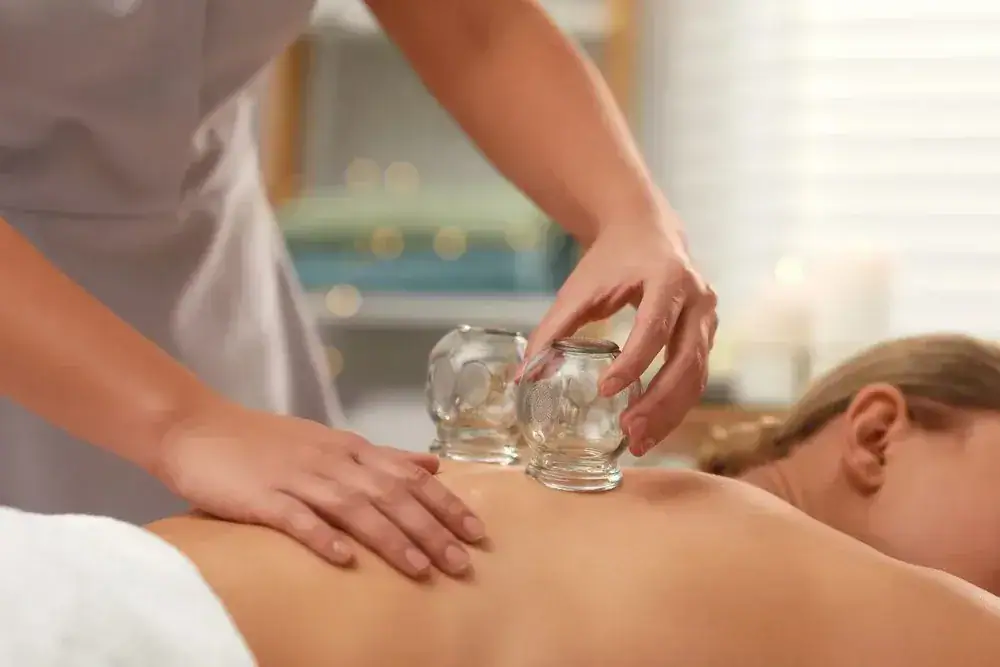
First, we evaluate. You’re not getting cupping just because you asked for it—we assess your pain, your movement patterns, and what’s actually causing the problem. If cupping makes sense for your condition, we’ll explain why and how it fits into your overall treatment plan.
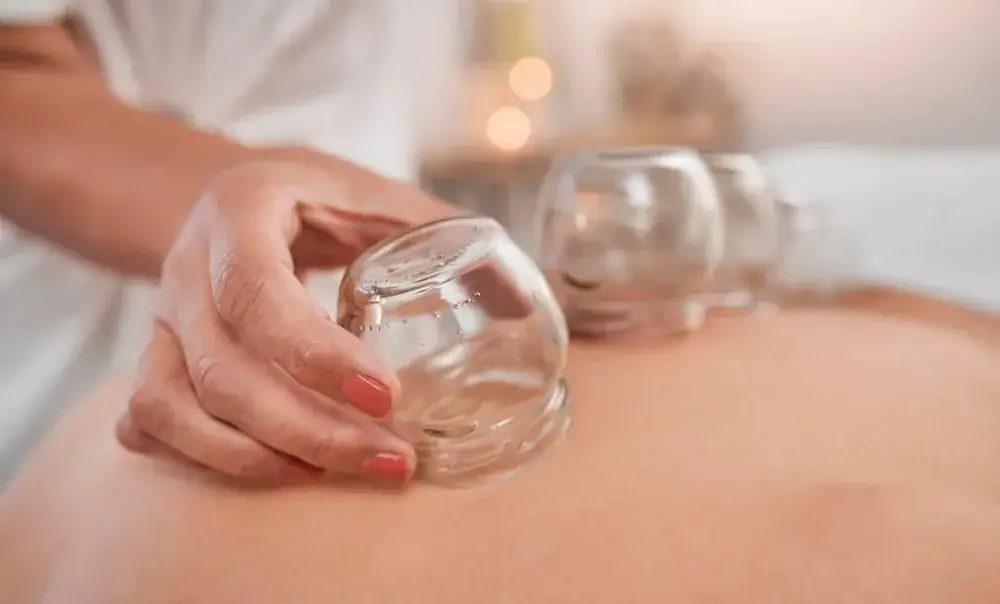
During the session, cups are placed on targeted areas of your body. The suction pulls tissue upward, creating space between muscle layers and fascia that may have been compressed or adhered. This isn’t painful—most people find it deeply relaxing. You’ll feel the pull, but it’s more of a release than discomfort.
The cups stay in place for several minutes while blood flow increases to the area. When they’re removed, you might see circular marks on your skin. Those aren’t bruises in the traditional sense—they’re a result of increased circulation and typically fade within a few days.
After cupping, many patients notice immediate improvements in range of motion and a reduction in muscle tightness. But the real benefit builds over multiple sessions as inflammation decreases, tissue heals, and your body starts moving the way it should. We’ll often combine cupping with manual therapy, stretching, or strengthening exercises to maximize results and prevent the issue from coming back.
Ready to get started?
Cupping therapy at Medcare isn’t a standalone treatment. It’s part of a broader physical therapy plan that includes manual therapy, targeted exercises, and functional training. We use dry cupping—no needles, no incisions, just controlled suction applied to specific areas based on your evaluation.
In Yaphank and across Long Island, we see a lot of patients dealing with chronic lower back pain, neck and shoulder tension from desk work, and joint stiffness related to aging or arthritis. These are exactly the conditions where cupping, combined with physical therapy, delivers measurable improvement. You’re not just getting temporary relief—you’re retraining your body to move correctly and handle stress without breaking down.
Every session is supervised by licensed physical therapists who understand anatomy, biomechanics, and how to integrate cupping into a recovery plan that makes sense for your goals. Whether you’re trying to return to sports, manage a chronic condition, or regain independence after an injury, the treatment is built around what you need—not a generic protocol.
We also accept most major insurance plans, which means you’re not paying out of pocket for care that should be covered. Our team handles the verification and billing so you can focus on getting better, not navigating paperwork.
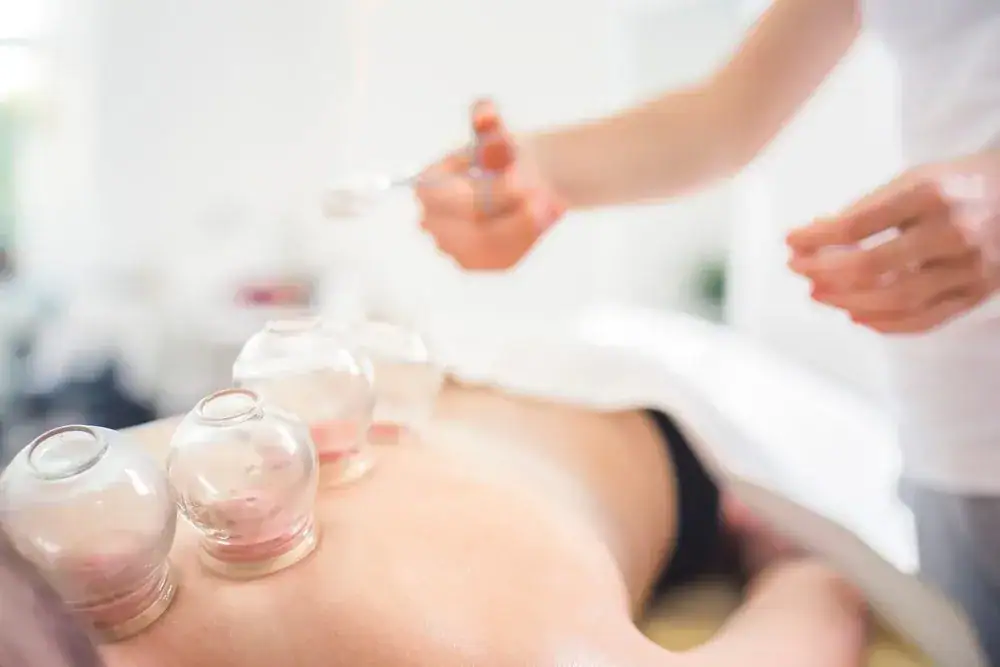
Yes, but not as a magic fix. Cupping therapy helps relieve chronic back pain by increasing blood flow to tight, inflamed muscles and decompressing tissue that’s been stuck in a painful pattern. When combined with physical therapy, it addresses both the symptoms and the underlying cause—whether that’s poor posture, muscle imbalances, or restricted movement.
Research shows that cupping can be more effective than conventional treatments alone for musculoskeletal pain, especially when it’s part of a comprehensive plan. You’re not just lying there with cups on your back and hoping for the best. You’re working with a physical therapist who’s identifying why your back hurts in the first place and using cupping as one tool among several to fix it.
Most patients notice some improvement after the first session—less stiffness, better range of motion, or a reduction in that constant ache. But lasting relief comes from multiple sessions combined with exercises that strengthen weak areas and correct movement patterns. If your back pain is from sitting all day, cupping will help in the short term, but you’ll also need to address how you sit, stand, and move.
Cupping leaves circular marks that look like bruises, but they’re not the same as a bruise from trauma. The discoloration comes from increased blood flow and the release of stagnant fluids in the tissue—it’s actually a sign the therapy is working. The marks are usually painless and fade within three to seven days, depending on your circulation and how your body responds.
Some people get darker marks than others. If your tissue is particularly tight or inflamed, the suction may pull more blood to the surface, resulting in deeper coloring. That’s normal and not a cause for concern. Over time, as your condition improves and inflammation decreases, the marks tend to become lighter with each session.
If you’re worried about appearance—say, you have an event coming up—let your therapist know. We can adjust the intensity or placement of the cups. But for most people, the marks are a small trade-off for the relief they get. You’re not walking around in pain anymore, and that matters more than a few temporary circles on your back or shoulders.
Massage applies pressure downward into the muscle. Cupping does the opposite—it lifts tissue upward, creating space and decompression. That difference matters because some types of pain and restriction don’t respond well to pressure. If your fascia is stuck or your muscles are chronically tight, the pulling action of cupping can release tension in a way massage can’t.
Cupping also increases blood flow more aggressively than most massage techniques. The suction draws fresh blood to areas that may have poor circulation, which speeds up healing and reduces inflammation. You’re not just relaxing the muscle—you’re actively improving the environment around it so it can recover.
That said, cupping and massage aren’t mutually exclusive. Many physical therapy plans include both. Massage can address surface-level tension and improve overall relaxation, while cupping targets deeper restrictions and specific problem areas. At Medcare, we use whatever combination of techniques makes sense for your condition. The goal isn’t to sell you on one method—it’s to get you better using the most effective approach.
Cupping is safe when performed by trained professionals. The most common side effect is the temporary discoloration we already mentioned. Some people also experience mild soreness in the treated area for a day or two, similar to what you might feel after a deep tissue massage. That soreness is your body responding to increased circulation and tissue movement—it’s not a sign of injury.
There are a few situations where cupping isn’t recommended. If you have a bleeding disorder, are on blood thinners, or have certain skin conditions, we’ll either modify the treatment or use a different approach. That’s why the evaluation matters—we’re not just slapping cups on everyone who walks in. We’re assessing whether it’s appropriate for your specific situation.
Cupping has been used for thousands of years across multiple cultures, and modern research continues to support its effectiveness for pain relief and muscle recovery. When it’s integrated into a physical therapy plan and supervised by licensed therapists, the risk is minimal and the benefit is real. You’re in controlled, professional hands—not experimenting with something you saw on YouTube.
Most people notice some improvement after one or two sessions, but lasting results take longer. If you’re dealing with acute pain from a recent injury, you might only need a few sessions combined with other therapies. If you’re managing chronic pain that’s been building for months or years, expect a longer timeline—typically six to eight sessions or more.
The number of sessions depends on your condition, how your body responds, and whether you’re doing the work outside of treatment. Cupping helps, but if you’re not addressing the habits or movement patterns that caused the problem, the pain will come back. That’s why we build cupping into a full physical therapy plan that includes exercises, posture correction, and education on how to prevent re-injury.
We’ll give you a realistic timeline during your evaluation. No one benefits from vague promises or dragging out treatment longer than necessary. You’ll know what to expect, how long it should take, and what you need to do between sessions to speed up recovery. If you’re not seeing progress, we adjust the plan. The goal is results, not just appointments.
In most cases, yes—when cupping is part of a physical therapy treatment plan. Insurance companies typically cover cupping as a manual therapy technique within your PT benefits, not as a separate service. That means if you’re approved for physical therapy, cupping is usually included in your coverage.
We accept most major insurance plans and handle the verification process for you. Our team will confirm your benefits, explain what’s covered, and let you know if there’s any out-of-pocket cost before you start treatment. You’re not going to get surprised by a bill three weeks later.
If you don’t have insurance or your plan doesn’t cover physical therapy, we’ll discuss your options. But for the majority of patients in Yaphank and the surrounding area, cupping therapy is a covered benefit when it’s medically necessary and prescribed as part of your care plan. The key is working with a licensed provider who documents properly and bills correctly—which is exactly what we do.
Other Services we provide in Yaphank