

You’ve tried the usual route. Medications that barely touch the pain. Appointments that eat up half your day just to sit in a waiting room. Physical therapy that requires you to drive across town when you can barely move.
Cupping therapy works differently. It increases blood flow to the exact areas where you’re tight and sore, which means oxygen and nutrients get where they need to go. That translates to less inflammation, looser muscles, and actual range of motion you can feel.
Most people notice immediate relief after their first session. Not the kind where you convince yourself it helped—the kind where you can turn your head without wincing or bend down without bracing yourself. Chronic back pain, neck stiffness, knee problems, tension headaches—these respond well to cupping because the technique addresses what’s happening under the surface, not just the symptoms you feel on top.
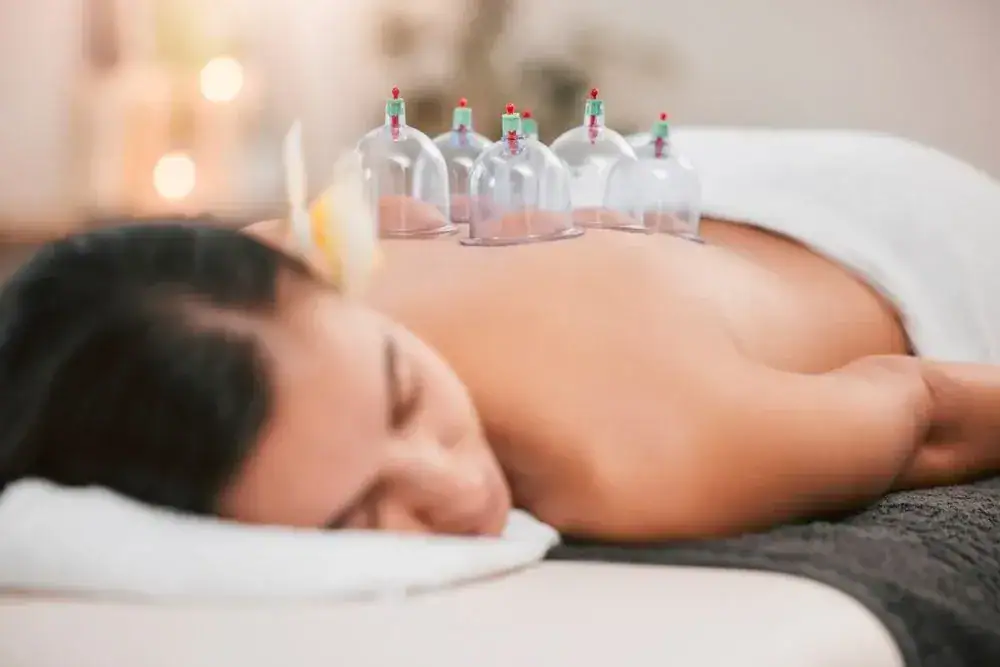
The treatment itself is straightforward. Cups create suction on your skin, pulling blood to areas that have been starved of circulation. Your muscles relax. Tightness releases. You move better.
We’ve been treating patients across Long Island for over a decade at Medcare Therapy Services. We specialize in home-based physical therapy, which means you don’t have to figure out transportation or sit in traffic when you’re already in pain.
Our therapists are licensed, trained in modern cupping techniques, and experienced with the kinds of chronic pain issues common in West Babylon—where the median age is over 40 and a lot of people are dealing with years of wear and tear. We accept Medicare and nearly all commercial insurance, so cost doesn’t have to be the reason you stay stuck.
You’re not a number here. We treat each patient like someone we’d want caring for our own family. That means showing up on time, listening to what’s actually wrong, and adjusting treatment based on how you respond—not some cookie-cutter protocol.
First, we come to you. No driving, no waiting rooms, no wasted time. Your therapist arrives at your home in West Babylon with everything needed for your session.
We start with an assessment. Where’s the pain? How long has it been there? What makes it worse? This isn’t a formality—it determines where we place the cups and how we structure your treatment.
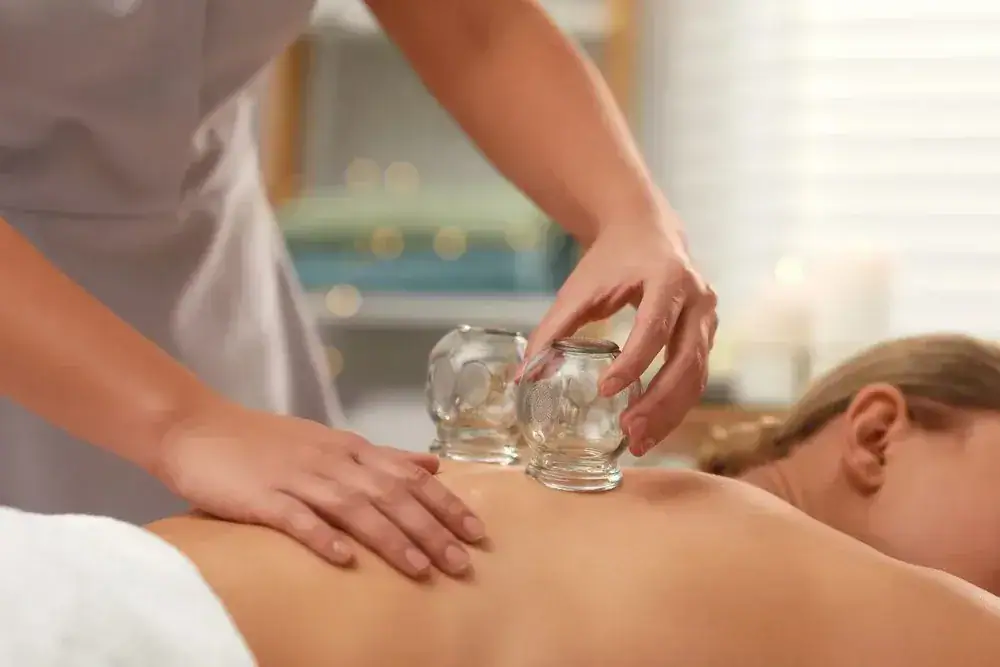
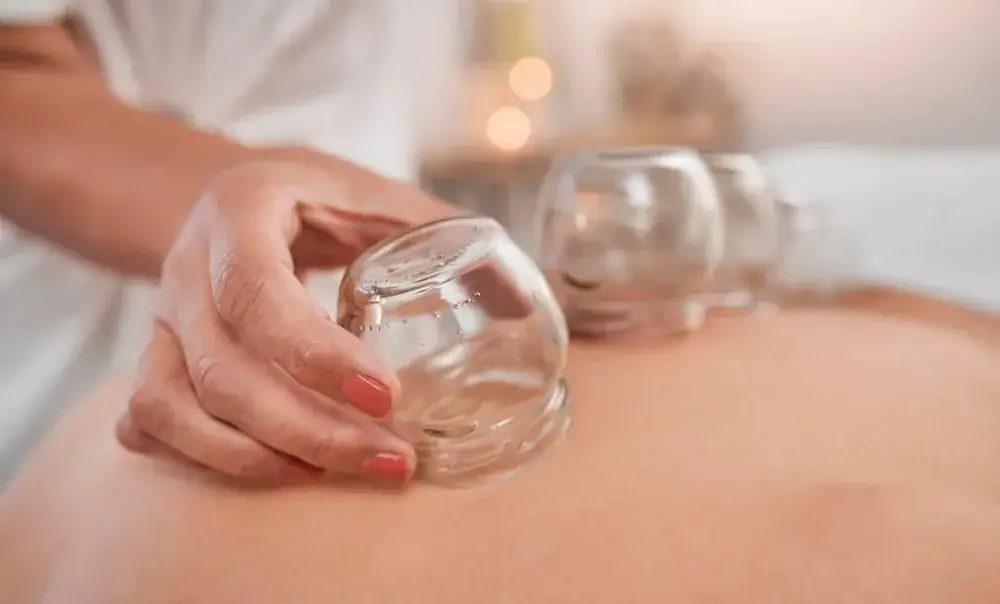
Then comes the cupping itself. We use dry cupping, which means placing specialized cups on your skin that create suction. This isn’t painful. Most people say it feels like a deep tissue massage—firm pressure, but in a way that releases tension instead of adding to it. The suction pulls blood into areas that have been tight and oxygen-deprived, which is what triggers the healing response.
Sessions typically last 30 to 45 minutes. You might see some circular marks afterward—that’s normal and they fade within a few days. Those marks show where blood flow was increased and toxins were pulled to the surface.
Most patients do a series of sessions. Pain that’s been building for months or years doesn’t disappear in one appointment, but you should feel a difference right away. We’ll track your progress and adjust the treatment as you improve.
Ready to get started?
Every session includes a full evaluation, not just cupping. We look at your posture, your movement patterns, and what’s contributing to the pain in the first place. Cupping is highly effective, but it works even better when combined with targeted stretches or strengthening exercises.
You’ll work with the same therapist each time, so there’s continuity. They’ll know your history, what’s working, and what needs to change. No repeating yourself to a new person every visit.
In West Babylon, we see a lot of patients dealing with lower back pain from desk jobs or physical work, neck and shoulder tension from stress and poor ergonomics, and knee problems common in active adults over 45. Cupping addresses all of these because it targets the root cause—restricted blood flow and chronic muscle tightness.
We also handle all the insurance paperwork. You don’t need a referral for most plans, and we’ll verify your coverage before your first appointment so there are no surprises. Medicare patients are fully covered under Part B when medically necessary.
Yes, and the research backs it up. Clinical studies show that cupping significantly reduces chronic musculoskeletal pain, especially in the lower back. It works by increasing circulation to areas where muscles have been tight for months or years, which reduces inflammation and allows those muscles to finally relax.
Here’s what that means for you: if you’ve been dealing with persistent back pain that hasn’t responded well to medication or traditional physical therapy, cupping gives your body a different mechanism for healing. The suction pulls fresh blood into damaged tissue, which brings oxygen and nutrients that help repair the area.
Most patients feel relief after the first session—not a cure, but enough improvement that they can move more easily and sleep better. A series of treatments builds on that initial progress. You’re not masking the pain; you’re addressing what’s causing it.
Most insurance plans do cover cupping when it’s provided by a licensed physical therapist as part of a treatment plan. That includes Medicare Part B and the majority of commercial insurance plans common in West Babylon.
Here’s how it works: cupping is billed as part of your physical therapy services, not as a separate alternative medicine treatment. That distinction matters because insurance companies recognize physical therapy as medically necessary for pain management and recovery.
Before your first appointment, we verify your coverage and let you know exactly what you’ll owe. No surprises, no hidden fees. If you have a copay or deductible, we’ll tell you upfront. For most patients, the out-of-pocket cost is minimal or zero, especially if you’re on Medicare.
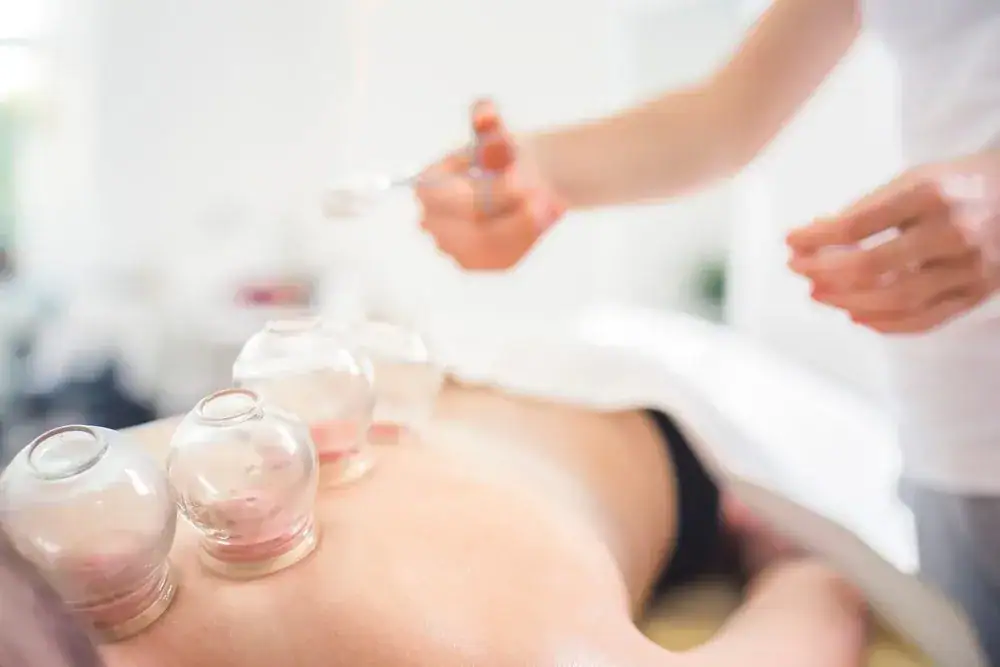
Dry cupping uses suction alone—no needles, no incisions, nothing invasive. Cups are placed on your skin and create a vacuum that pulls tissue upward. That’s it. It’s the most common form used in physical therapy and the one we use at Medcare.
Wet cupping, by contrast, involves making small cuts in the skin to draw out blood. It’s used in some traditional medicine practices, but it’s not what we do and it’s not necessary for pain relief or muscle recovery.
Dry cupping is effective because the suction increases blood flow and breaks up adhesions in the fascia—the connective tissue that wraps around your muscles. When that tissue gets tight or stuck, it restricts movement and causes pain. Cupping releases it without any need for invasive techniques.
Most people feel some improvement immediately after their first session. That might mean less pain, better range of motion, or muscles that feel looser than they have in months. But one session isn’t a full fix, especially if you’ve been dealing with chronic pain.
Real, lasting results typically come after a series of treatments—usually 4 to 8 sessions depending on your condition. Each session builds on the last. The first appointment reduces inflammation and gets blood moving. Follow-up sessions continue that process and allow your body to heal more deeply.
Think of it this way: if your pain took months or years to develop, it’s not going to disappear overnight. But cupping accelerates your body’s natural healing process, so you see progress much faster than you would without treatment. And unlike medication, which just masks symptoms, cupping actually addresses the underlying problem.
The marks aren’t permanent and they’re not a sign of damage. They’re circular discolorations that show where the cups were placed, and they fade completely within 3 to 7 days. The darker the mark, the more stagnant blood was in that area—which means that’s where you needed treatment most.
They don’t hurt. During the session, you’ll feel firm pressure and a pulling sensation, but it’s not painful. Most people describe it as similar to a deep tissue massage. Afterward, the area might feel a little tender, like you worked out, but nothing sharp or severe.
If you’re concerned about visible marks—say, you have an event coming up—just let your therapist know. We can adjust the intensity or place cups in areas that won’t be visible. But for most patients, the marks are a non-issue compared to the relief they get from the treatment.
Absolutely. Cupping is effective for a wide range of musculoskeletal issues. We use it regularly for neck pain, shoulder tension, knee pain, headaches, and even conditions like plantar fasciitis. If the problem involves tight muscles, restricted blood flow, or chronic inflammation, cupping can help.
It’s also useful for recovery after surgery or injury. Athletes use cupping to speed up muscle recovery and reduce soreness. Older adults use it to manage arthritis pain and improve mobility. The technique is versatile because it works with your body’s natural healing mechanisms rather than targeting one specific condition.
That said, cupping isn’t a cure-all. It works best when combined with other physical therapy techniques—stretching, strengthening, posture correction. During your evaluation, we’ll determine whether cupping is the right fit for your specific situation and build a treatment plan around what you actually need.
Other Services we provide in West Babylon