
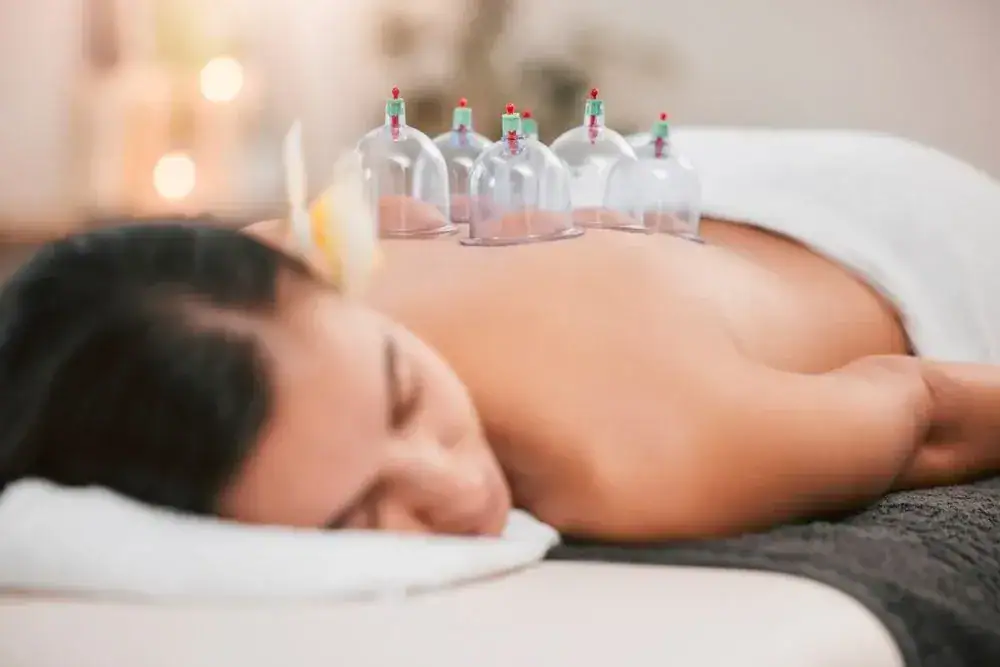
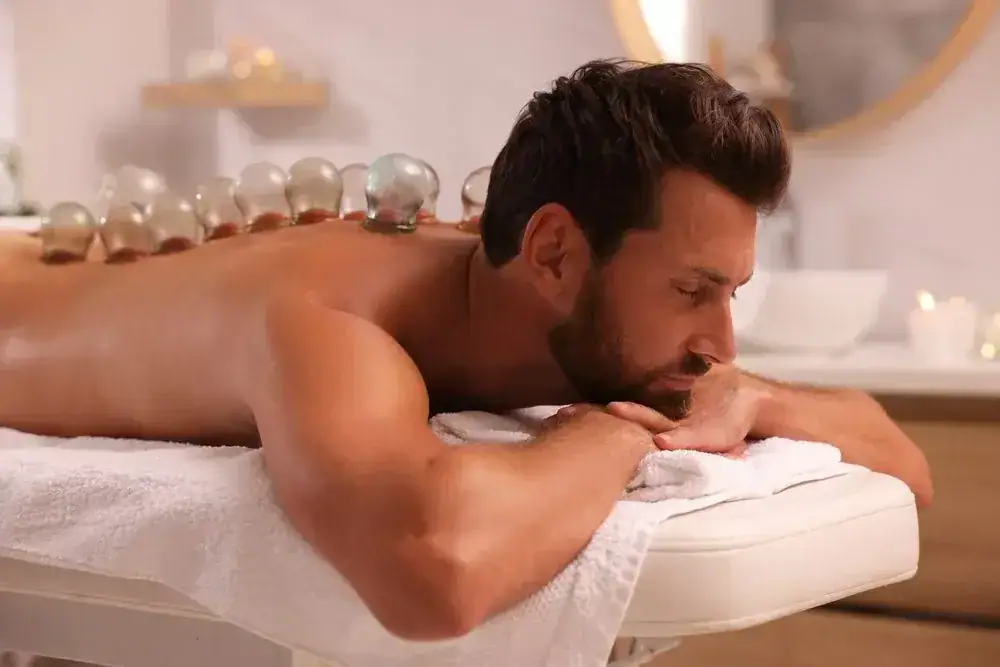
You know what it’s like when your lower back locks up before you even get out of bed. Or when your neck is so tight you can’t check your blind spot. That’s not just discomfort—it’s your life shrinking.
Cupping therapy works by creating suction on your skin that pulls blood flow to the area and releases those rope-like knots in your muscles. Most people feel some relief right there on the table. Within 24 hours, many notice they’re moving differently—reaching higher, bending easier, sleeping through the night.
The research backs this up. Studies show cupping significantly reduces pain levels for chronic low back pain, neck pain, and knee osteoarthritis. It’s not a cure, but it’s a tool that works—especially when your other options haven’t.
What matters is this: when the pain drops, your world opens back up. You’re not planning your day around what hurts. You’re not avoiding activities you used to love. You’re just living again.
We’ve been doing home-based physical therapy across Long Island since 2010. That’s fifteen years of treating people who can’t easily get to a clinic—or just don’t want to.
We’re licensed physical therapists who come to you in Thomaston. We accept Medicare and most commercial insurance. Our approach is straightforward: we show up, we assess what’s going on, and we treat you like a person, not a case number.
Thomaston residents deal with the same chronic pain issues as the rest of Nassau County—over a quarter of insured adults in New York have documented chronic pain. You’re not alone in this. And you don’t have to leave your house to get real help for it.
First, we come to your home in Thomaston at a time that works for you. No waiting rooms. No intake paperwork in a lobby. Just a licensed therapist at your door with everything needed to assess and treat you.
We start by talking through what’s been going on—where it hurts, how long it’s been happening, what makes it worse. Then we look at your range of motion and muscle tension. From there, we decide if cupping is the right fit or if we need to combine it with other physical therapy techniques.
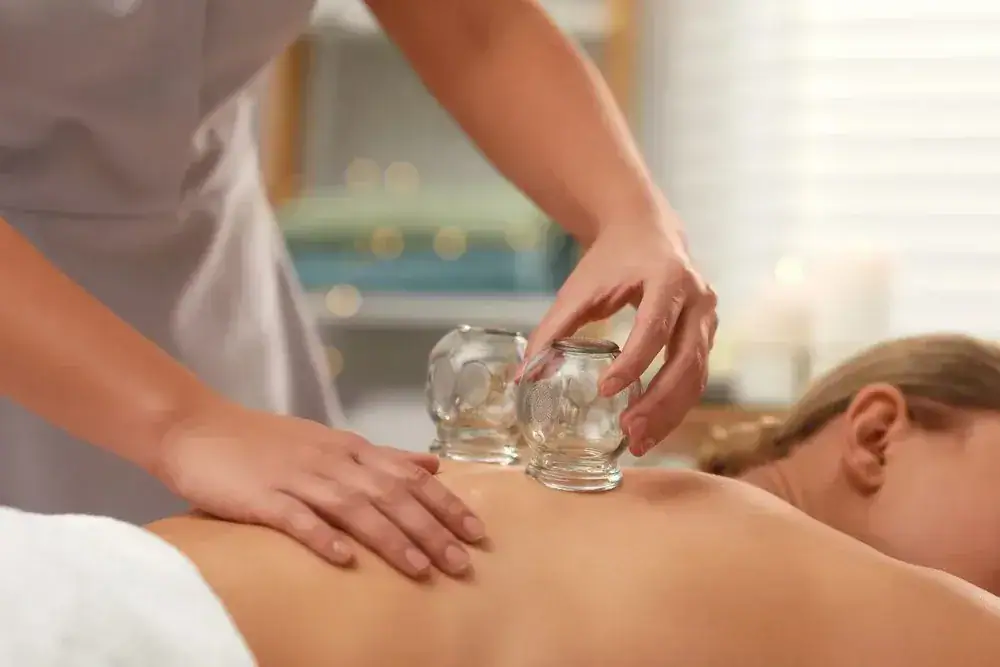
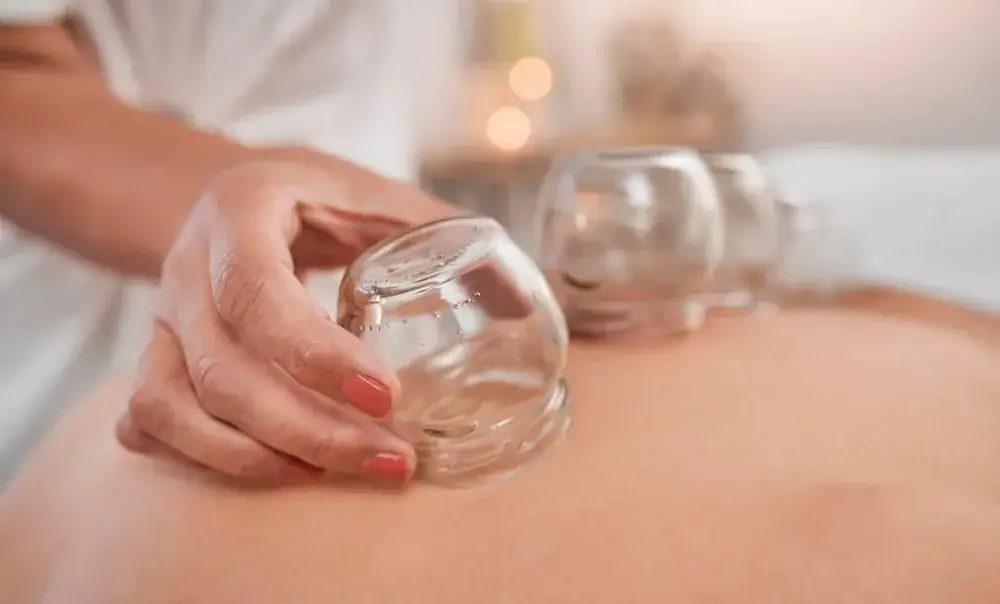
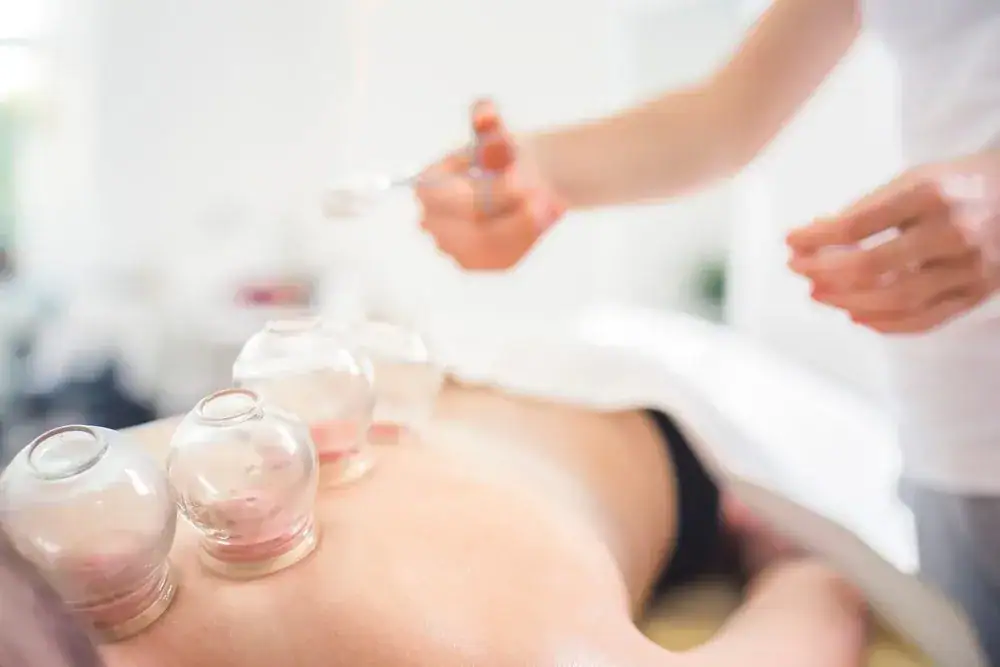
During cupping, we place cups on your skin to create suction. It might feel tight or pulling, but it shouldn’t hurt. We leave them on for a few minutes, sometimes moving them around depending on the technique. Dry cupping is the most common—it’s non-invasive and works well for muscle pain and tension.
After the session, you might see circular marks where the cups were. That’s normal. They fade in a few days. Most people feel looser right away. Some feel sore for a day, like after a deep massage. We’ll talk through what to expect and when to schedule your next visit.
Ready to get started?
Cupping therapy isn’t a standalone miracle. It’s a tool we use as part of a broader physical therapy plan. When you work with us, you’re getting a licensed PT who knows how to integrate cupping with manual therapy, stretching, and strengthening exercises.
Here’s what that looks like in Thomaston: we treat a lot of chronic lower back pain, neck stiffness, and shoulder tension. These are the most common complaints on Long Island, and they respond well to cupping when it’s done right. The suction increases blood flow, reduces muscle tightness, and can give you enough relief to actually do the exercises that’ll keep you moving long-term.
We also see people dealing with knee osteoarthritis and limited hip mobility. Research shows cupping improves range of motion in those areas, especially when combined with targeted movement work. It’s not about the cups doing all the work—it’s about creating the right environment for your body to heal and move better.
You’ll get a personalized plan. We’re not running the same protocol on everyone. Your pain is yours. Your treatment should be too.
It works, but let’s be clear about what that means. Cupping isn’t going to cure a herniated disc or reverse arthritis. What it does is reduce pain levels and improve function for a lot of people dealing with chronic musculoskeletal issues.
The research shows moderate-quality evidence that cupping helps with chronic low back pain, neck pain, and knee osteoarthritis. In studies, people reported significant pain reduction immediately after treatment, at 24 hours, and even up to two weeks later. That’s not placebo—that’s measurable relief.
But here’s the thing: cupping works best when it’s part of a complete plan. If you’re only doing cupping and ignoring the exercises or movement work, you’re leaving results on the table. We use it to get you comfortable enough to do the rehab that actually keeps you better long-term.
You’ll likely see circular marks where the cups were placed. They look like bruises, but they’re not quite the same thing. They’re caused by the suction pulling blood to the surface, not from impact or injury.
Most marks fade within three to seven days. Some people get darker marks than others depending on skin tone, how much tension was in the area, and how much suction was used. If you bruise easily in general, expect the marks to stick around a bit longer.
They don’t hurt. You might feel a little tender in the area for a day or two, similar to post-massage soreness. If you’ve got an event coming up where you don’t want visible marks—like a wedding or beach trip—just let us know. We can adjust placement or timing accordingly.
It depends on how it’s billed and who’s doing it. When cupping is provided as part of a physical therapy treatment plan by a licensed PT, it’s often covered under your PT benefits. That’s how we do it at Medcare.
We accept Medicare and most commercial insurance plans. Cupping isn’t billed separately—it’s included as a manual therapy technique within your overall PT session. That means if your insurance covers physical therapy, cupping is typically part of that coverage.
You’ll want to check your specific plan for details on copays, deductibles, and visit limits. We can help verify your benefits before your first session so there are no surprises. The key is that it’s being delivered by a licensed professional as part of a documented treatment plan, not as a standalone wellness service.
Some people feel better after one session. Others need a handful before they notice lasting change. It depends on what’s going on, how long it’s been going on, and how your body responds.
For acute issues—like you tweaked your back last week—you might only need two or three sessions combined with some stretching and strengthening. For chronic pain that’s been around for months or years, expect a longer timeline. We’re not just chasing symptom relief at that point; we’re retraining how your body moves and holds tension.
Most treatment plans involve one to two sessions per week for a few weeks, then we reassess. If you’re improving, we keep going. If you’re not, we adjust the approach. The goal isn’t to keep you coming forever—it’s to get you functional and give you the tools to manage on your own.
Yes. Neck and shoulder tension is one of the most common reasons people try cupping, and it’s one of the areas where it works really well. Those tight, ropy spots you feel—trigger points or “knots”—respond to the suction and increased blood flow cupping provides.
When we place cups on your upper traps, neck, or shoulders, the suction pulls the tissue up and creates space. That helps release the muscle tension and reduces the hypersensitivity in the area. A lot of people say it feels like the tightness just melts after a session.
We usually combine cupping with some manual work and stretches to address why the tension built up in the first place. If you’re sitting at a desk all day or dealing with stress, those knots will come back unless we also work on posture, movement patterns, and muscle balance. Cupping gets you out of pain; the rest keeps you out.
Dry cupping is very safe when done by a trained professional. The most common side effects are the circular marks we talked about earlier and some temporary soreness in the treated area. Both are normal and go away on their own.
Rarely, someone might feel lightheaded during or right after treatment, especially if it’s their first time. That’s why we have you lie down and take it slow. If you have certain conditions—like a bleeding disorder, active infection, or very fragile skin—cupping might not be appropriate. We’ll screen for that before starting.
The bigger risk isn’t the cupping itself; it’s getting it done by someone who doesn’t know what they’re doing. We’re licensed physical therapists with specific training in cupping techniques. We know how much suction to use, where to place the cups, and how to integrate it safely into your overall care plan. That’s the difference between effective treatment and just leaving marks on your back.
Other Services we provide in Thomaston