
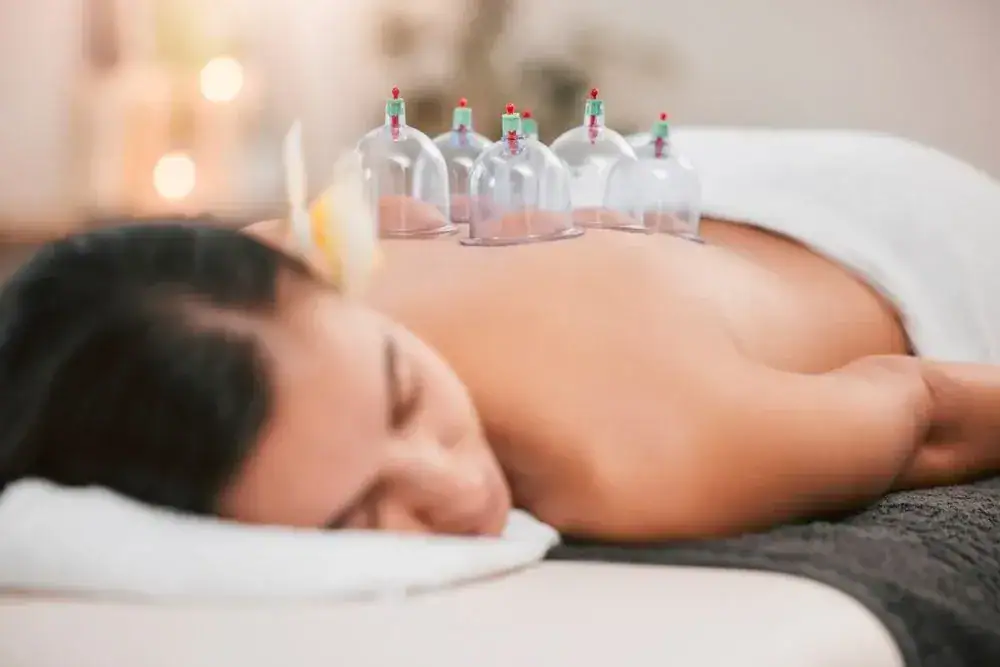

Chronic pain changes how you live. You avoid movements that used to be second nature. You plan your day around what hurts and when.
Cupping therapy addresses pain at the source by lifting tissue away from underlying muscle. That suction increases blood flow to areas that aren’t healing on their own. More blood means more oxygen, less inflammation, and actual tissue repair instead of just masking symptoms.
You’ll notice tension releasing in muscles that have been tight for months or years. Range of motion improves because fascial layers that were stuck together can finally glide the way they’re supposed to. The treatment stimulates your body’s natural endorphin release, which means pain relief that lasts beyond the session itself.
This isn’t about temporary comfort. It’s about restoring function so you can get back to activities you’ve been avoiding.
Medcare Therapy Services has been providing home-based physical therapy across Long Island for over a decade. We’re affiliated with established practices like Physical Therapy Associates of Smithtown and Speonk Physical Therapy, bringing that same clinical expertise directly to your home in Southold.
Our therapists are licensed professionals trained in cupping therapy and myofascial decompression techniques. They don’t just show up and run through a standard protocol – they assess your specific pain patterns, movement limitations, and treatment goals.
Southold’s population skews older, with a median age over 54 and strong healthcare needs. You’re not looking for gimmicks. You want proven treatment from people who know what they’re doing, accept your insurance, and respect your time. That’s what we do.
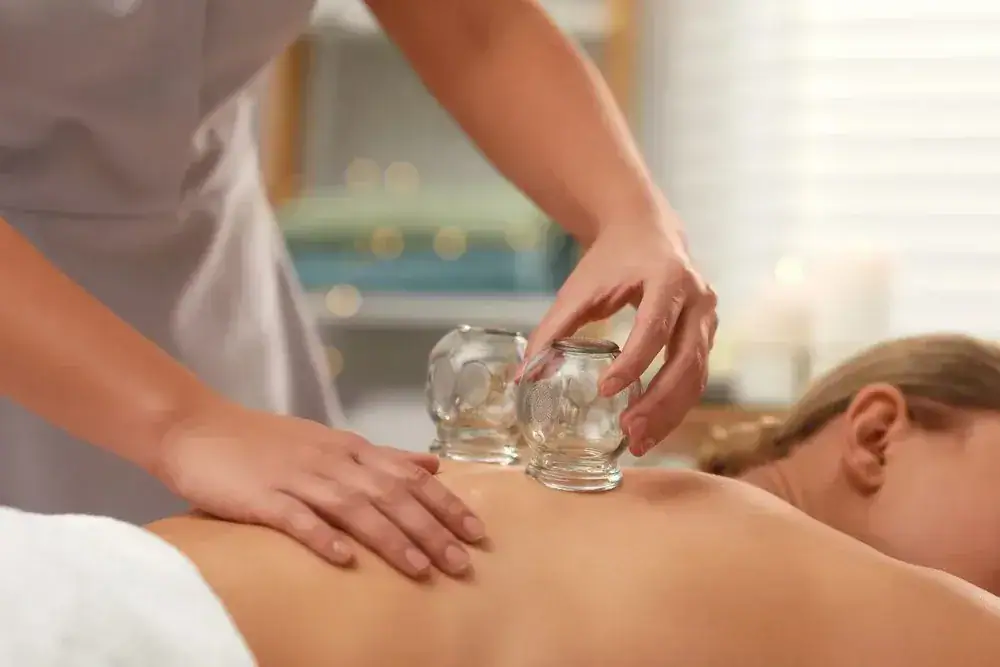
Your therapist starts with an evaluation. They’ll ask about your pain – where it is, when it started, what makes it worse. They’ll watch you move to identify compensation patterns and muscle imbalances.
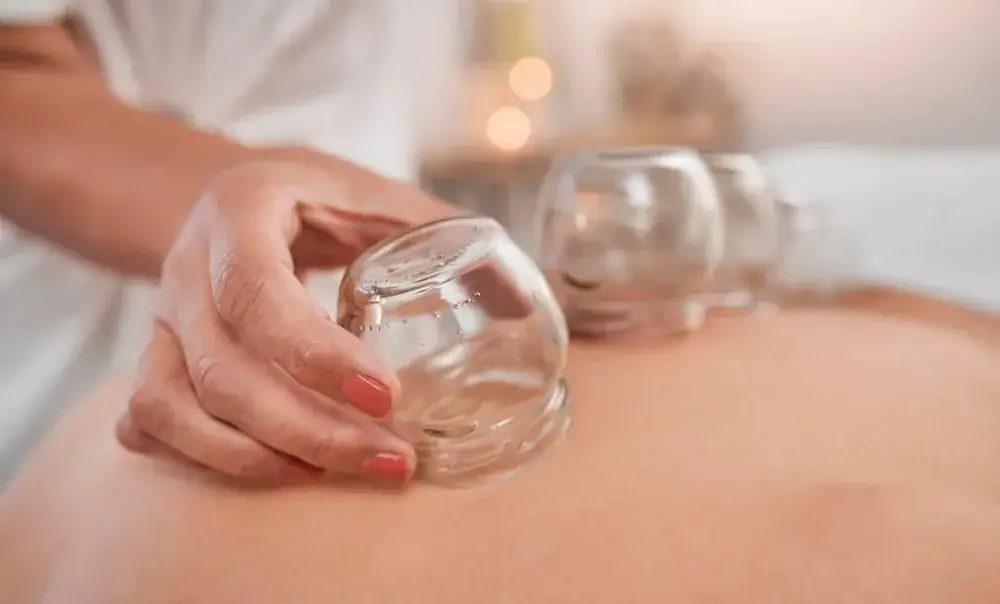
During dry cupping, cups are placed on your skin over problem areas. A pump creates suction that lifts tissue away from the muscle beneath. You’ll feel a pulling sensation, not pain. The cups stay in place for several minutes while blood flow increases to the area.
Some therapists use sliding cupping, where they apply oil to your skin and move the cups along muscle groups. This works especially well for releasing tight fascia along your back, shoulders, or legs.
After the cups come off, you might see circular marks on your skin. Those aren’t bruises – they’re a sign of increased circulation bringing fresh blood to areas that needed it. The marks fade within a few days.
Your therapist will combine cupping with other physical therapy techniques based on what your body needs. Maybe that’s stretching, strengthening exercises, or manual therapy. The goal is always the same: less pain, better movement, faster recovery.
Ready to get started?
We bring everything to your home. You don’t drive to appointments or sit in waiting rooms. Your therapist arrives with all necessary equipment and works with you in your own space.
Sessions are covered by Medicare and most commercial insurance plans. We handle the verification and billing so you’re not dealing with paperwork and phone calls.
Cupping therapy works particularly well for chronic low back pain, neck tension, knee osteoarthritis, and shoulder mobility issues – all common in Southold’s aging population. Research shows moderate-quality evidence supporting cupping for these conditions, and our therapists have seen those results firsthand.
You’re not locked into one type of treatment. If cupping isn’t addressing your specific issue, your therapist adjusts the approach. Maybe you need more manual therapy, different exercises, or a combination of techniques. The plan changes based on how your body responds.
Treatment frequency depends on your condition. Some people see significant improvement after three or four sessions. Others need ongoing care for chronic issues. Your therapist will be straight with you about realistic timelines and expected outcomes.
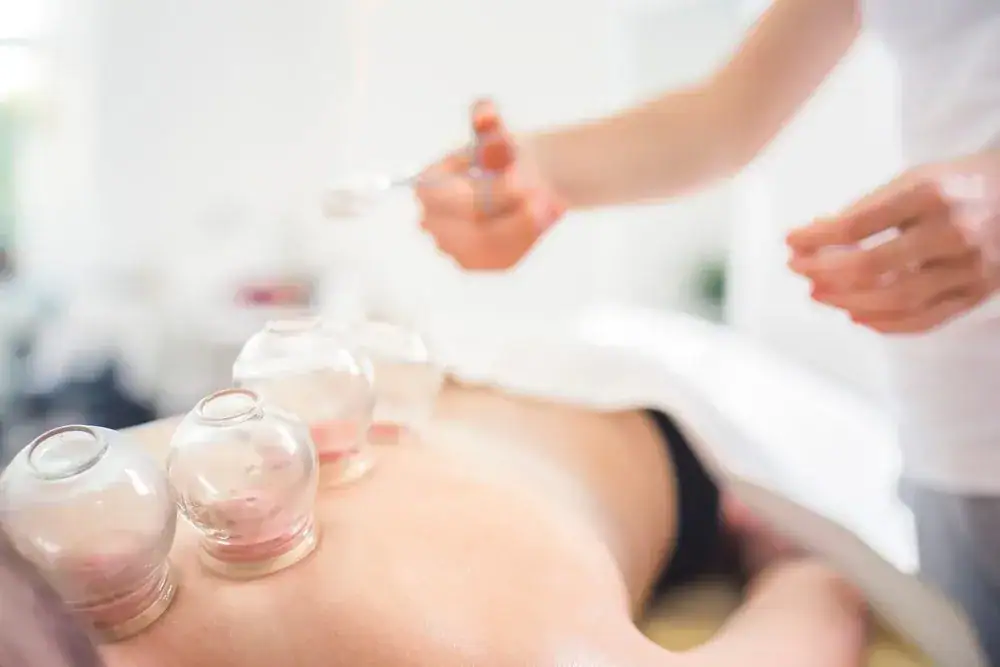
Yes, but let’s be specific about what the research shows. Fourteen meta-analyses have examined cupping therapy’s effectiveness for pain-related conditions. The evidence is strongest for chronic low back pain, neck pain, and knee osteoarthritis.
Cupping works by mechanically lifting fascial layers that have become stuck together. When fascia can’t glide properly, you get restricted movement and pain. The suction separates those layers, improves tissue mobility, and increases blood flow to areas that aren’t healing on their own.
You’ll also get an endorphin release during treatment. Those are your body’s natural pain-relieving chemicals, and they provide relief that extends beyond the session itself. Most people notice reduced muscle tension immediately and improved range of motion within a few treatments.
Cupping is relatively low-risk when performed by trained professionals. The most common side effect is circular marks on your skin where the cups were placed. These aren’t bruises – they’re caused by increased blood flow to the surface. They typically fade within three to seven days.
Some people experience mild soreness in treated areas for a day or two after their session. This is similar to post-workout soreness and indicates your body is responding to the treatment.
Cupping isn’t appropriate if you have certain skin conditions, are taking blood thinners, or have active infections in the treatment area. Your therapist will review your medical history before starting treatment. That’s why working with a licensed physical therapist matters – we know when cupping is appropriate and when it’s not.
Cupping is a technique we use within physical therapy, not a replacement for it. Your therapist combines cupping with other treatments based on what your body needs.
Traditional physical therapy might use manual techniques like massage or joint mobilization to release tight tissue. Cupping achieves similar results through suction instead of pressure. For some people and some conditions, that lifting action works better than pressing down.
Cupping excels at releasing fascial restrictions and improving blood flow to specific areas. We might use it to prep tissue before stretching, to release trigger points that aren’t responding to other techniques, or to improve mobility in joints affected by arthritis. It’s one tool in a larger treatment plan that includes exercise, education, and functional training.
If your insurance covers physical therapy, cupping is typically included as part of your treatment. We accept Medicare and nearly all commercial insurance plans.
Cupping isn’t billed separately – it’s a technique your physical therapist uses during your session. Your coverage depends on your physical therapy benefits, not whether cupping specifically is covered.
We verify your insurance before starting treatment so you know what to expect. Medicare covers home-based physical therapy when it’s medically necessary, and cupping performed by a licensed therapist during those sessions falls under that coverage. For commercial plans, we’ll check your benefits and let you know about any copays or deductibles before your first appointment.
That depends entirely on your condition and how your body responds. Acute muscle tension might resolve in two to four sessions. Chronic pain that’s been building for years typically requires more.
Your therapist will give you a realistic timeline after your initial evaluation. We’ll reassess your progress regularly and adjust the treatment plan based on what’s working. If you’re not seeing improvement within a reasonable timeframe, we’ll tell you that too.
Most people start with twice-weekly sessions, then space them out as symptoms improve. The goal is always to get you functioning independently, not to keep you in treatment indefinitely. Your therapist will teach you exercises and strategies to maintain improvements on your own.
Your therapist arrives at your home with all necessary equipment. The first session includes a full evaluation – discussing your pain history, watching you move, and testing range of motion in affected areas.
We’ll explain how cupping works and what you’ll feel before placing any cups. Most people describe the sensation as a strong pulling or tugging, not pain. If a cup feels too intense, we adjust the suction immediately.
Your first treatment is usually shorter than follow-up sessions because part of the time goes to evaluation. You might see those characteristic circular marks on your skin afterward. Your therapist will tell you what to expect over the next few days and schedule your next appointment based on your treatment plan.
Other Services we provide in Southold