
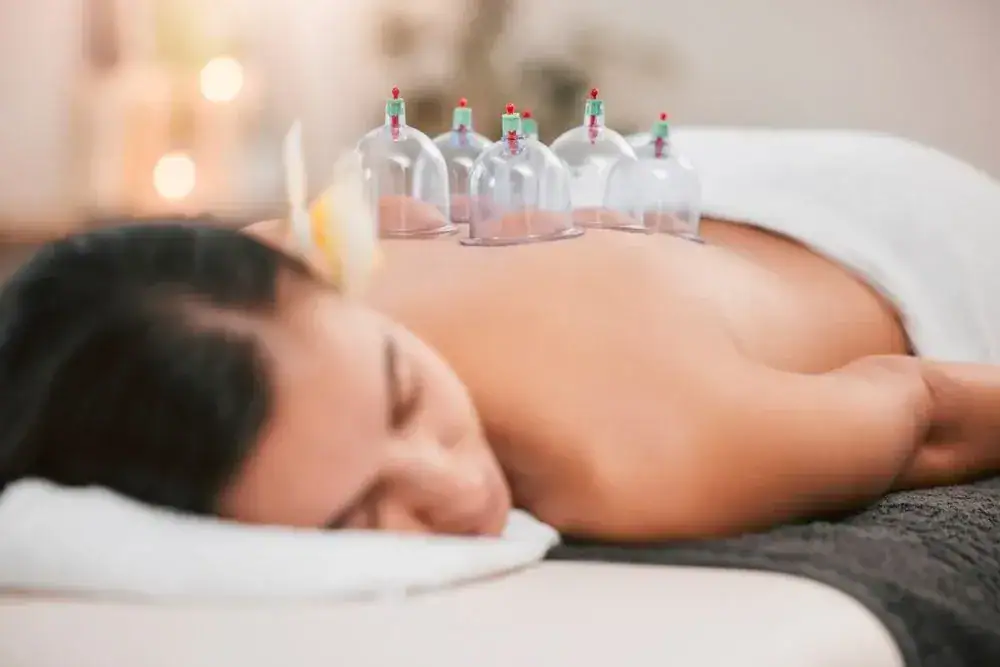

You wake up and your back doesn’t scream at you. You reach for something on the top shelf without wincing. You get through your day without counting down the hours until you can take another pill.
That’s what cupping therapy does when it’s done right. The suction increases blood flow to the exact spots where you’re tight, inflamed, or stuck. Your muscles release. Your body starts healing the way it’s supposed to.
Most people notice the difference after one session. The tightness in your shoulders loosens. Your range of motion improves. You’re not constantly adjusting your position to avoid the pain.
This isn’t a temporary fix that wears off in two hours. Cupping therapy addresses what’s actually causing the problem—restricted blood flow, muscle tension, inflammation—so you get relief that lasts. And because it’s non-invasive, you’re not trading one problem for another.
Medcare Therapy Services has been serving South Hempstead and Long Island since 2010. We bring licensed physical therapists directly to your home because we know getting to a clinic isn’t always realistic when you’re already dealing with pain or mobility issues.
Our therapists are the kind of professionals who show up on time, listen to what’s actually going on, and build treatment plans around your life—not a one-size-fits-all protocol. They’re trained in cupping therapy as part of a broader physical therapy approach, which means you’re getting evidence-based care that’s personalized to what your body needs.
We work with Medicare and most insurance plans, so you’re not stuck paying out of pocket for care that should be accessible. South Hempstead residents choose us because we make quality therapy convenient, professional, and actually effective.
Your therapist starts with an assessment. They’ll ask where it hurts, what makes it worse, and what you’ve already tried. This isn’t small talk—it’s how they figure out the right treatment approach for your specific situation.
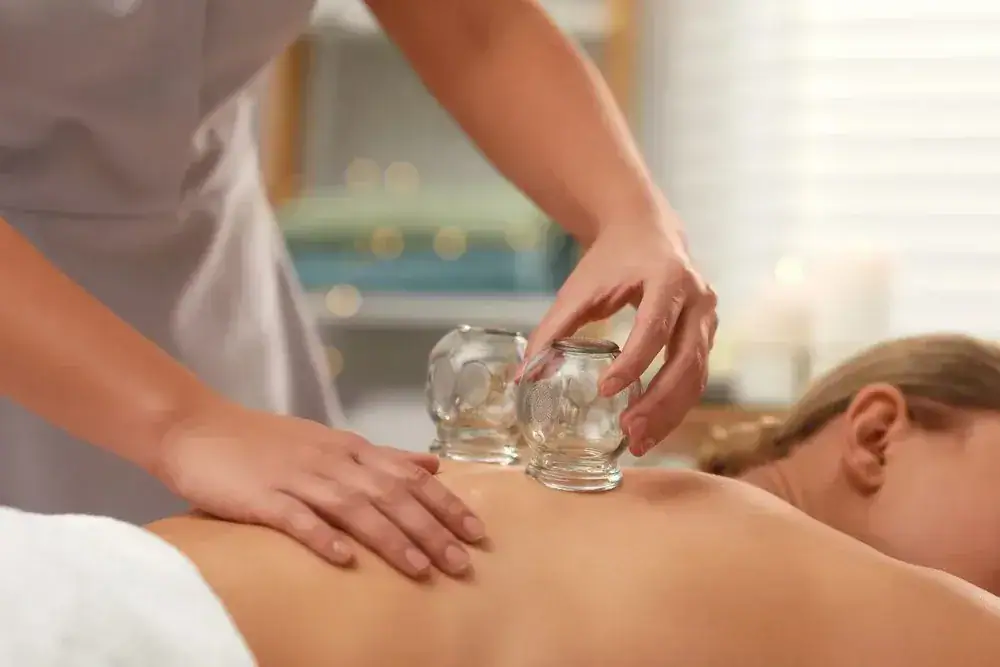
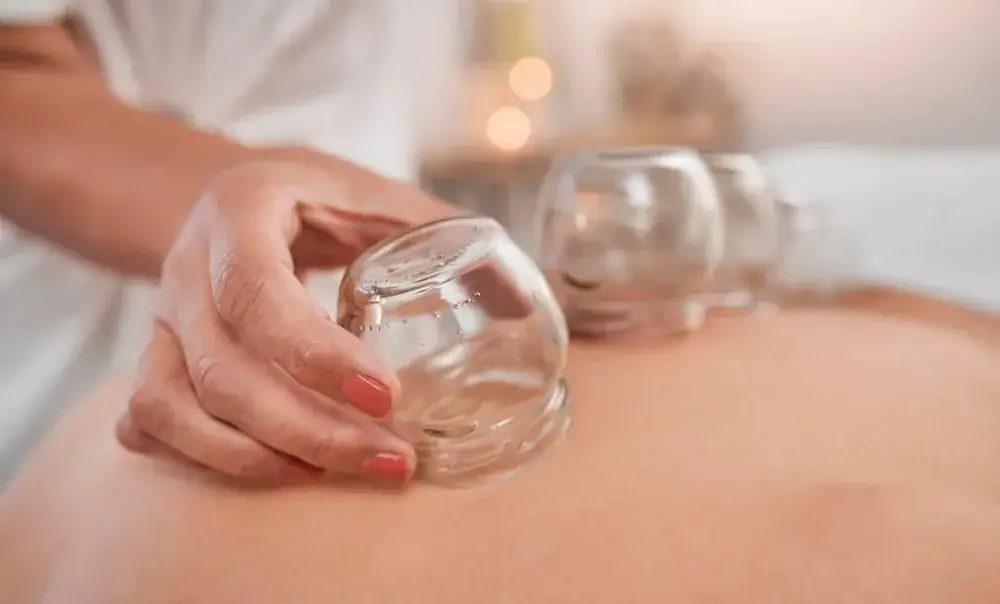
During the session, they place specialized cups on targeted areas of your skin. The suction pulls blood to the surface, which increases circulation and helps release tight fascia and muscle tissue. You’ll feel pressure, but it shouldn’t hurt. Most people find it surprisingly relaxing.
Each session typically lasts 30 to 45 minutes. Depending on what you’re dealing with, your therapist might combine cupping with stretching, manual therapy, or other physical therapy techniques. The goal is always the same: get you moving better and feeling less pain.
After treatment, you might see some circular marks where the cups were placed. That’s normal—it’s just increased blood flow to the area. They fade within a few days. You’ll also get guidance on what to do between sessions to keep progressing, whether that’s specific stretches, activity modifications, or hydration tips.
Ready to get started?
Cupping therapy works well for chronic lower back pain, neck stiffness, shoulder tension, and muscle soreness that won’t quit. If you’ve been dealing with pain that limits how you move or what you can do, this is worth trying.
It’s particularly effective for South Hempstead residents who’ve been stuck in the cycle of taking pain medication that only masks the problem. Cupping addresses the root cause—restricted circulation, inflammation, tight muscles—so you’re not just covering up symptoms.
Athletes and active adults use cupping to speed up recovery after workouts or injuries. It helps reduce exercise-induced soreness and gets you back to your routine faster. But you don’t have to be an athlete to benefit. If you’re just trying to get through your day without constant discomfort, cupping therapy can help.
Because we bring this service to your home in South Hempstead, you don’t have to worry about driving across town or sitting in a waiting room when you’re already uncomfortable. You get professional care in your own space, on your schedule, with therapists who know what they’re doing.
Yes, when it’s done by a licensed physical therapist who knows how to use it correctly. Cupping increases blood flow to areas where circulation is restricted, which helps reduce inflammation and release tight muscles. That’s not theory—it’s what happens physiologically when suction is applied to soft tissue.
Research backs this up. Randomized controlled trials show that cupping combined with physical therapy improves pain and function in people with chronic lower back pain, and those improvements last for months after treatment ends. It’s not a miracle cure, but it’s a legitimate treatment option that works for a lot of people.
The key is consistency. Most people see the best results when they get cupping once a week for several weeks, combined with other physical therapy techniques. One session might give you temporary relief, but regular treatment is what creates lasting change.
Cupping is safe when performed by a trained, licensed therapist. The most common side effect is circular bruising or discoloration where the cups were placed. It looks more dramatic than it feels—most people don’t experience pain from the marks, and they fade within three to seven days.
Some people feel lightheaded during or immediately after treatment, especially if it’s their first session. That’s why your therapist will have you rest for a few minutes before you get up. Staying hydrated before and after your session helps minimize this.
Serious side effects are rare and usually only happen when cupping is done incorrectly or by someone who isn’t properly trained. That’s why it matters who’s doing your treatment. Our therapists are licensed professionals who follow evidence-based protocols and safety standards, so you’re getting care that’s both effective and safe.
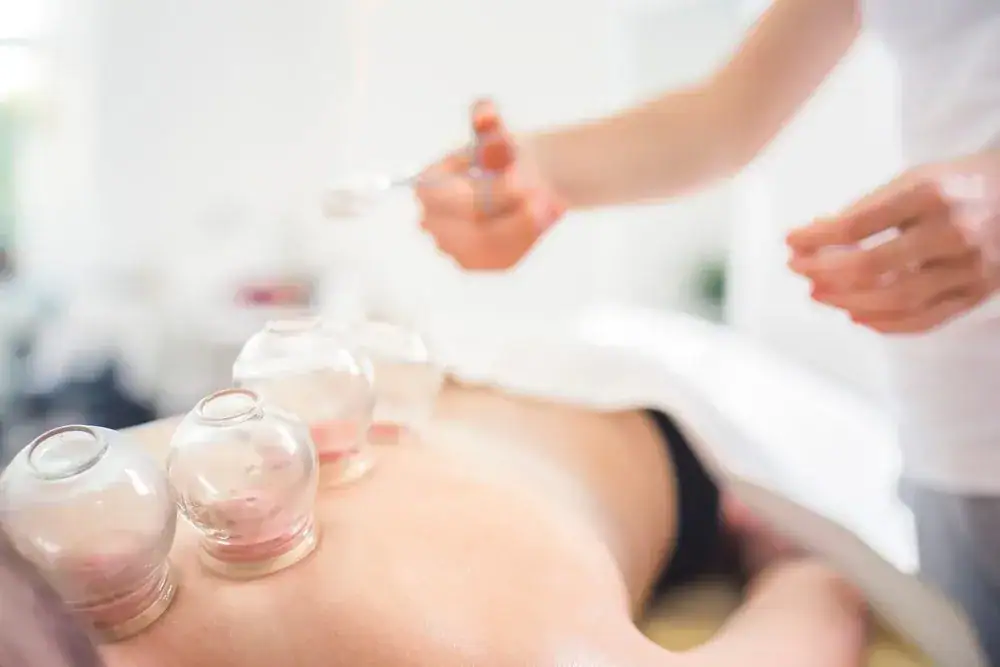
Dry cupping uses suction alone—no needles, no incisions, no blood. The cups create a vacuum that pulls your skin and underlying tissue upward, which increases circulation and releases muscle tension. It’s completely non-invasive.
Wet cupping, by contrast, involves making small cuts in the skin before applying the cups, which draws out a small amount of blood. That’s not what we do. Dry cupping is what most physical therapists use because it’s effective, safe, and doesn’t require any breaking of the skin.
There’s also fire cupping, where a flame is used to create suction, versus modern cupping that uses a pump. Both create the same effect—it’s just a different method of creating the vacuum. What matters more than the technique is whether your therapist knows how to place the cups correctly and integrate cupping into a broader treatment plan that addresses your specific condition.
Most insurance plans, including Medicare, cover cupping therapy when it’s provided as part of physical therapy treatment by a licensed therapist. We work with Medicare and most major insurance providers, and we handle the billing coordination so you’re not stuck figuring it out on your own.
Coverage depends on your specific plan and whether you’ve met your deductible. Some plans require a referral from your doctor, while others don’t. We recommend calling your insurance company to confirm your benefits before your first session, or our team can help verify coverage for you.
Even if you have a copay or coinsurance, getting professional physical therapy at home is often more cost-effective than you’d think—especially when you factor in what you’d spend on gas, time off work, and ongoing pain medication. The goal is to make effective treatment accessible, not to create another financial burden.
Most people notice some improvement after the first session—less tightness, better range of motion, reduced pain. But one session isn’t going to solve a problem you’ve been dealing with for months or years.
For chronic pain or long-term muscle tension, plan on weekly sessions for four to six weeks. That’s typically what it takes to see significant, lasting improvement. Your therapist will reassess your progress as you go and adjust the treatment plan based on how your body responds.
If you’re using cupping for faster recovery after exercise or a recent injury, you might only need a few sessions. It really depends on what you’re treating and how your body heals. The important thing is that your therapist isn’t guessing—they’re basing the treatment frequency on clinical evidence and your specific condition, not trying to lock you into unnecessary appointments.
Yes, and that’s actually how it works best. Cupping is most effective when it’s part of a comprehensive physical therapy plan that includes manual therapy, targeted exercises, and movement training. Your therapist might use cupping to release tight muscles, then follow up with stretches or strengthening exercises that address the underlying weakness or imbalance causing the problem.
This integrated approach is what separates professional physical therapy from just getting cupping done at a spa. Your therapist isn’t just treating the symptom—they’re looking at why you’re tight or in pain in the first place and building a plan that addresses the root cause.
For South Hempstead residents dealing with chronic conditions, this combination approach is what creates real, lasting change. You’re not just getting temporary relief—you’re retraining your body to move correctly, building strength where you’re weak, and breaking the patterns that keep causing the same problems. That’s how you get off the pain medication cycle and back to doing what you want to do.
Other Services we provide in South Hempstead