
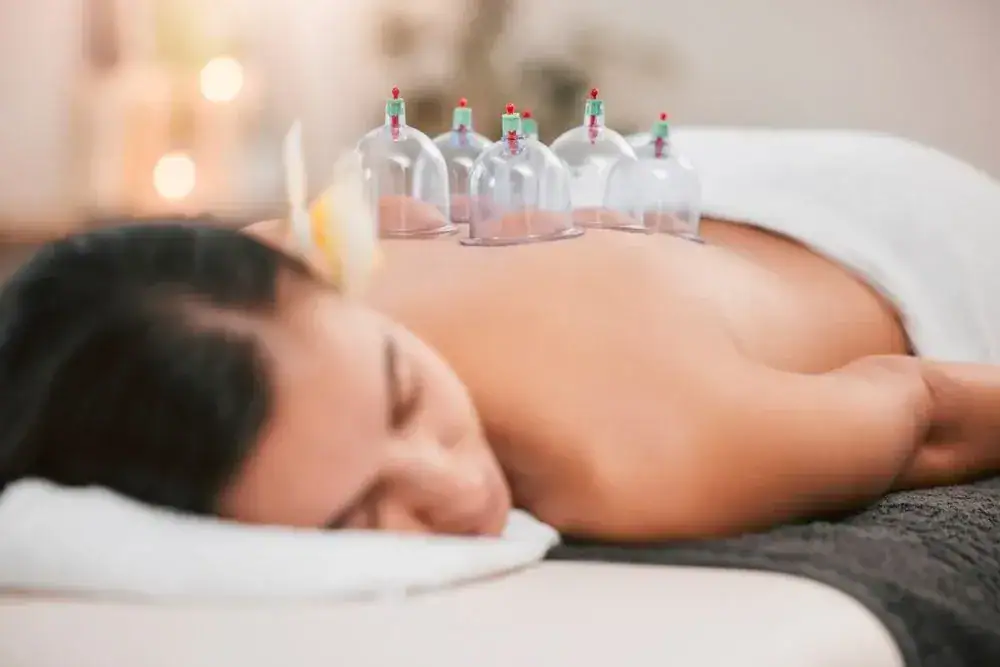

You know that constant ache in your lower back that makes getting out of bed feel like a negotiation? Or the shoulder tension that’s been your unwanted companion for months? Cupping therapy works by lifting tissue away from underlying muscles, creating space where there wasn’t any before.
Blood flow increases. Tight fascia starts to release. That knot you’ve been carrying around begins to soften.
Most people notice the difference during the first session—not because it’s magic, but because your body responds when someone actually addresses what’s causing the restriction. You’re not masking pain. You’re giving compressed tissue room to heal, improving circulation to areas that have been starved of oxygen, and reducing the inflammation that keeps you stuck in the same painful loop.
The cups create suction that mechanically separates fascial layers. Think of it as the opposite of deep tissue massage—instead of pushing down, we’re pulling up. For chronic neck pain, stubborn shoulder tightness, or that lower back pain that flares up every time you bend over, this approach gives your body what it’s been asking for: actual relief, not just temporary distraction.
Medcare Therapy Services has been providing physical therapy across Long Island since 2010, and we’ve always focused on one thing: meeting you where you are. Literally.
In South Floral Park, where nearly a quarter of residents are 65 or older, getting to a clinic isn’t always simple. Parking is a hassle. Mobility can be limited. You’re already dealing with pain—why add transportation stress on top of it?
Our licensed physical therapists bring cupping therapy, along with other evidence-based treatments, directly to your home. We work with Medicare and most insurance plans, so you’re not choosing between affordability and quality care. You’re getting both, in your own space, on your schedule.
We’re not the flashiest option. We’re the one that works—for people who need real relief without the runaround.
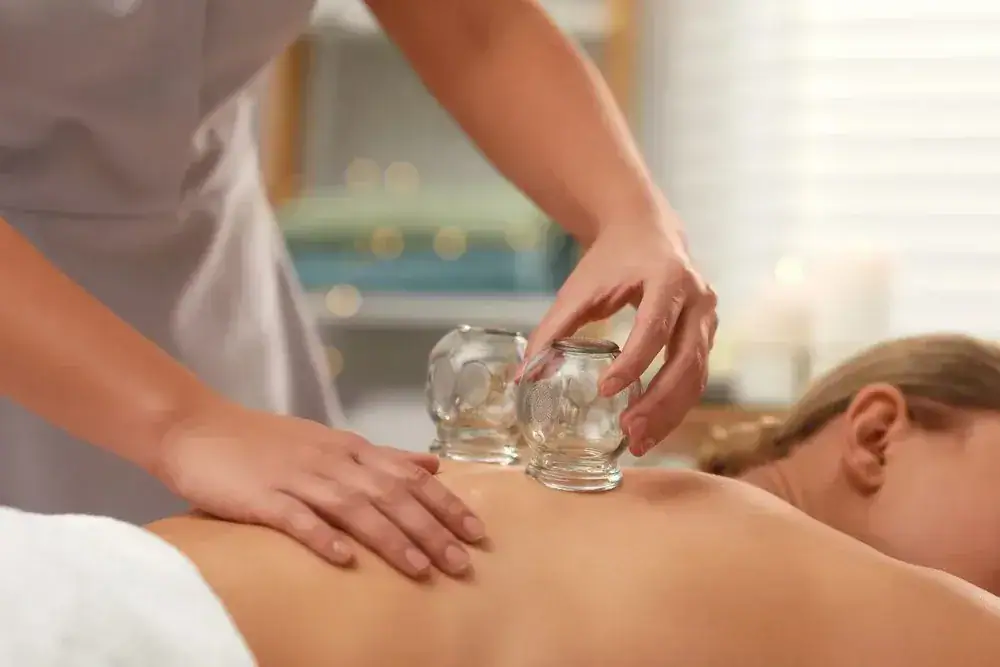
First, your therapist evaluates where you’re holding tension and what’s limiting your movement. We’re looking at your pain patterns, your range of motion, and how your muscles respond to pressure. This isn’t a one-size-fits-all setup.
Then we apply the cups to targeted areas—usually your back, shoulders, neck, or wherever you’re dealing with chronic tightness. The suction pulls tissue upward, creating negative pressure that increases blood flow and releases fascial restrictions. You’ll feel the pull, but it shouldn’t hurt. Most people describe it as a deep, relieving stretch.
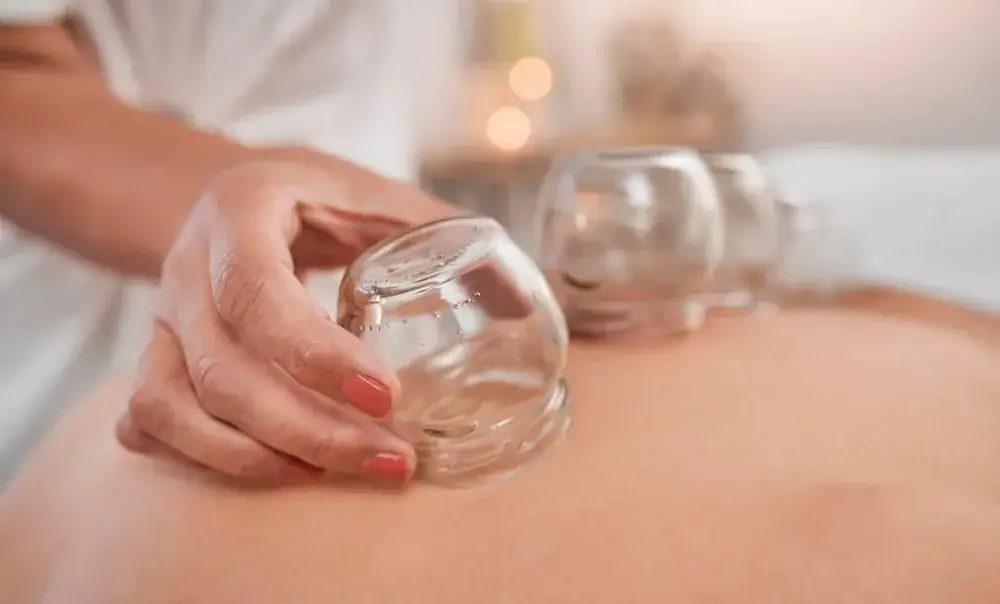
We leave the cups in place for several minutes, sometimes moving them across the muscle (that’s called gliding cupping). The goal is to break up adhesions, reduce muscle stiffness, and get fresh oxygen to areas that have been tight for too long.
After we remove the cups, you might see circular marks on your skin—that’s normal and fades within a few days. What you’ll also notice is improved mobility, less pain, and muscles that finally feel like they’re not clenched in a permanent fist. Some people feel relief immediately. Others need a few sessions to see the full effect. Either way, we’re tracking your progress and adjusting the treatment as you improve.
Ready to get started?
Every session starts with a proper assessment. We’re not just slapping cups on your back and calling it a day. You’re getting a licensed physical therapist who understands musculoskeletal pain, fascial restrictions, and how to integrate cupping into a broader treatment plan.
Cupping works especially well for chronic lower back pain, neck stiffness, shoulder tension, and muscle soreness that won’t quit. In South Floral Park, where many residents deal with age-related mobility challenges or workplace strain from desk jobs, this kind of targeted muscle relaxation makes a measurable difference in daily function.
We also combine cupping with other physical therapy techniques when it makes sense—stretching, strengthening exercises, manual therapy. You’re not getting a single tool thrown at every problem. You’re getting a personalized plan that addresses why you’re in pain, not just where.
Because we come to your home, you’re also avoiding the physical strain of travel. For older adults or anyone with limited mobility, that’s not a small thing. You save energy, reduce stress, and get care in an environment where you’re already comfortable. And since most of our patients are covered by Medicare or private insurance, cost isn’t the barrier it could be.
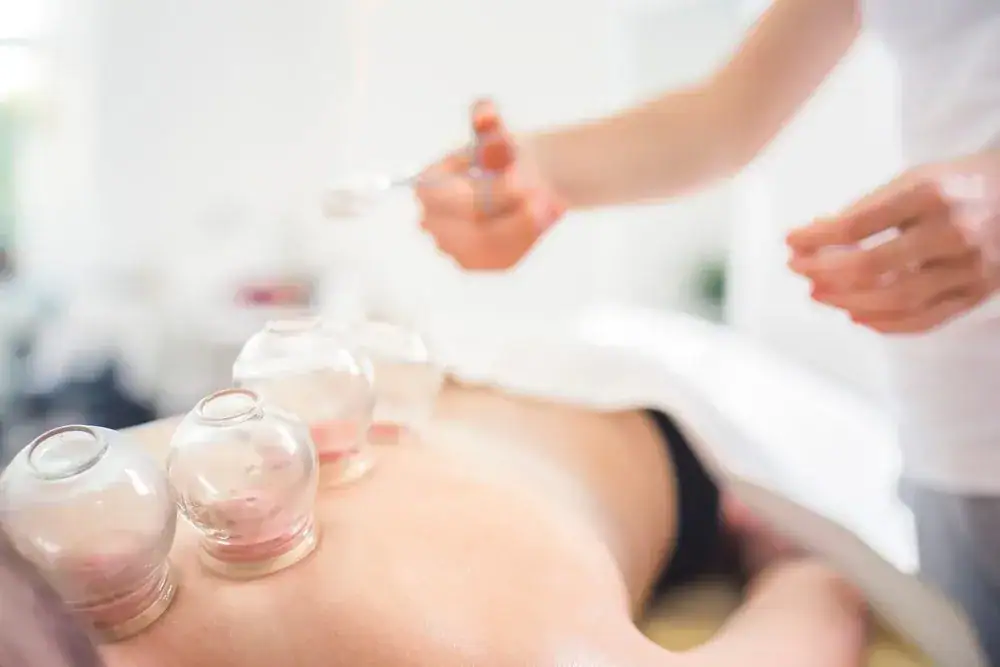
Yes, and there’s research backing it up. Multiple studies show that cupping therapy provides significant relief for chronic lower back pain, often with results that last beyond the treatment session itself.
Here’s why it works: chronic back pain usually involves tight muscles, restricted fascia, and poor circulation to the affected area. Cupping addresses all three. The suction pulls tissue upward, which increases blood flow and helps break up the fascial adhesions that keep muscles locked in a painful position.
Most people feel some level of relief after the first session, but the real improvement comes with consistency. If you’ve been dealing with back pain for months or years, one session isn’t going to undo all of that. But a series of treatments, combined with targeted exercises and proper body mechanics, can make a significant difference in how you move and how much pain you’re carrying around daily.
You’ll likely have circular marks where the cups were placed, but they’re not bruises in the traditional sense. Bruises happen when blood vessels break and leak into surrounding tissue. Cupping marks are caused by blood being drawn to the surface, which is part of the therapeutic process.
The marks can range from light pink to deep purple, depending on how much stagnation or tension was in that area. They’re not painful, and they usually fade within three to seven days. Some people barely mark at all. Others see darker circles, especially in areas where they’ve been holding a lot of chronic tension.
If the appearance of the marks bothers you, let your therapist know. We can adjust the suction intensity or choose placement areas that are easier to cover with clothing. But for most people, the marks are a non-issue compared to the relief they’re getting from the treatment itself.
When cupping is provided as part of a physical therapy treatment plan by a licensed therapist, it’s often covered by Medicare and private insurance. It’s not usually billed as a standalone service—it’s integrated into your overall physical therapy care.
We work with Medicare and most major insurance plans. We handle the billing and verification process, so you’re not stuck figuring out codes and coverage limits on your own. For South Floral Park residents on Medicare (about 15.5% of the local population), this makes cupping therapy accessible without out-of-pocket costs becoming a barrier.
If you’re unsure about your specific coverage, we can verify your benefits before your first session. That way, you know exactly what to expect and there are no surprises when it comes to cost. The goal is to make treatment accessible, not complicated.
Massage applies pressure downward into the muscle. Cupping does the opposite—it lifts tissue upward, away from underlying structures. That difference matters, especially when you’re dealing with fascial restrictions or deep muscle tension that doesn’t respond well to traditional massage.
The suction from cupping creates negative pressure, which helps separate fascial layers that have become stuck together. This is called myofascial decompression, and it’s particularly effective for people who feel like their muscles are constantly tight no matter how much stretching or massage they do.
Cupping also improves local blood flow in a way that massage doesn’t. By pulling blood to the surface and increasing circulation to deeper tissues, you’re giving your body the resources it needs to heal. For chronic conditions like neck pain, shoulder stiffness, or stubborn lower back tension, cupping often produces results that massage alone can’t match. That said, the two techniques work well together, and many physical therapists (including ours) use both depending on what your body needs.
Absolutely. Shoulder pain often comes from tight muscles, inflamed tendons, or restricted fascia around the joint. Cupping addresses all of those issues by increasing blood flow, reducing muscle tension, and creating space in compressed tissue.
If you’re having trouble reaching overhead, putting on a jacket, or sleeping on one side because of shoulder pain, cupping can help restore mobility. The suction lifts the tissue around your shoulder joint, which reduces pressure on tendons and allows for better movement. Combined with targeted stretching and strengthening exercises, most people see noticeable improvement within a few sessions.
For older adults in South Floral Park dealing with age-related shoulder stiffness or rotator cuff issues, this kind of treatment makes daily activities easier. You’re not just managing pain—you’re actually improving function. And because we provide treatment in your home, you can immediately apply what you’re learning in the environment where you actually live and move.
It depends on what you’re treating and how long you’ve been dealing with it. Acute muscle tension from a recent injury might respond well to just a few sessions. Chronic pain that’s been building for months or years usually requires a longer treatment plan.
Most people start with one to two sessions per week for the first few weeks, then taper down as symptoms improve. Your therapist will reassess your progress after each session and adjust the frequency based on how you’re responding. We’re not interested in keeping you in treatment longer than necessary—we’re interested in getting you results.
For conditions like chronic lower back pain, neck stiffness, or shoulder tension, you might need six to eight sessions before you see significant, lasting improvement. But many people notice some level of relief after the first or second session, which helps you stay motivated as your body continues to heal. The key is consistency and combining cupping with other physical therapy techniques that address the root cause of your pain, not just the symptoms.
Other Services we provide in South Floral Park