
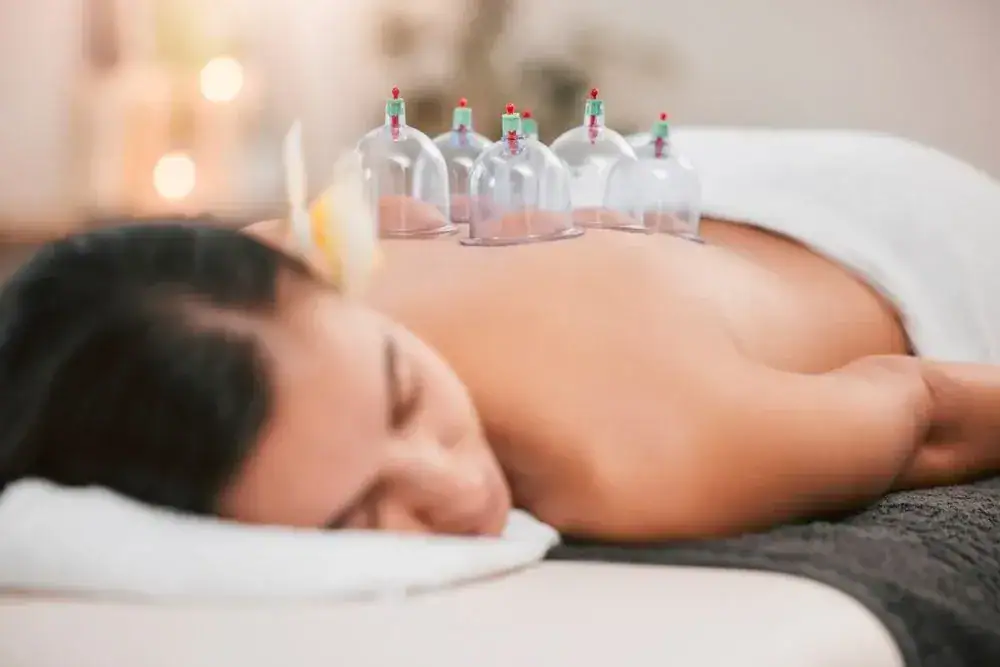

That nagging back pain that makes you move differently all day. The shoulder tension that’s been there so long you forgot what normal feels like. The knee stiffness that has you planning your day around stairs.
Cupping therapy works by creating suction that pulls blood to the surface and encourages your muscle fibers to release. It’s not magic, but when you’ve tried everything else and nothing’s touched that deep tightness, the difference is noticeable. Most people feel looser within the first session.
The circular marks fade in a few days. The relief tends to last longer, especially when cupping becomes part of a broader physical therapy plan. You’re not just masking symptoms – you’re improving blood flow, reducing inflammation, and giving restricted tissue room to heal.
For chronic conditions like arthritis, old sports injuries, or neck pain from years of desk work, dry cupping offers a non-invasive option that complements what your body already wants to do: recover.
We’ve been serving Long Island since 2010, bringing physical therapy and occupational therapy directly to patients’ homes. No waiting rooms, no driving when you’re in pain, no rushing to make an appointment across town.
Roslyn and the surrounding Nassau County communities have access to plenty of therapy options, but not many offer the convenience of in-home care combined with techniques like cupping therapy. Our therapists are licensed, trained, and focused on creating personalized treatment plans that fit your schedule and your space.
We treat you like family because that’s how home-based care should work. You get one-on-one attention in an environment where you’re already comfortable, and we handle the Medicare paperwork so you can focus on getting better.
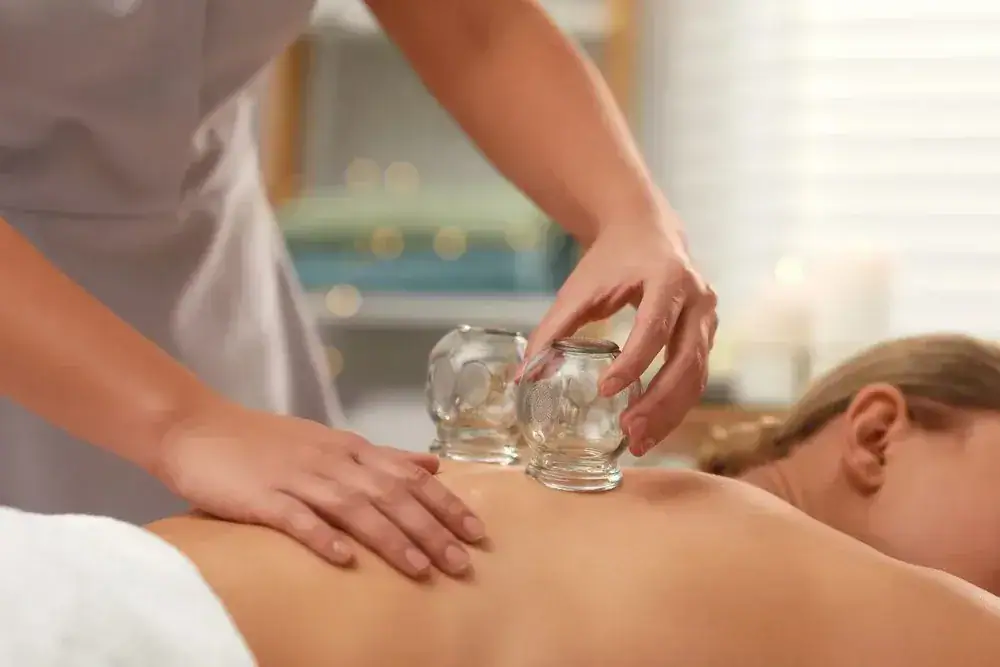
Your therapist starts with an assessment. Where’s the pain? How long has it been there? What makes it better or worse? This isn’t a one-size-fits-all treatment – the placement of the cups depends entirely on what your body needs.
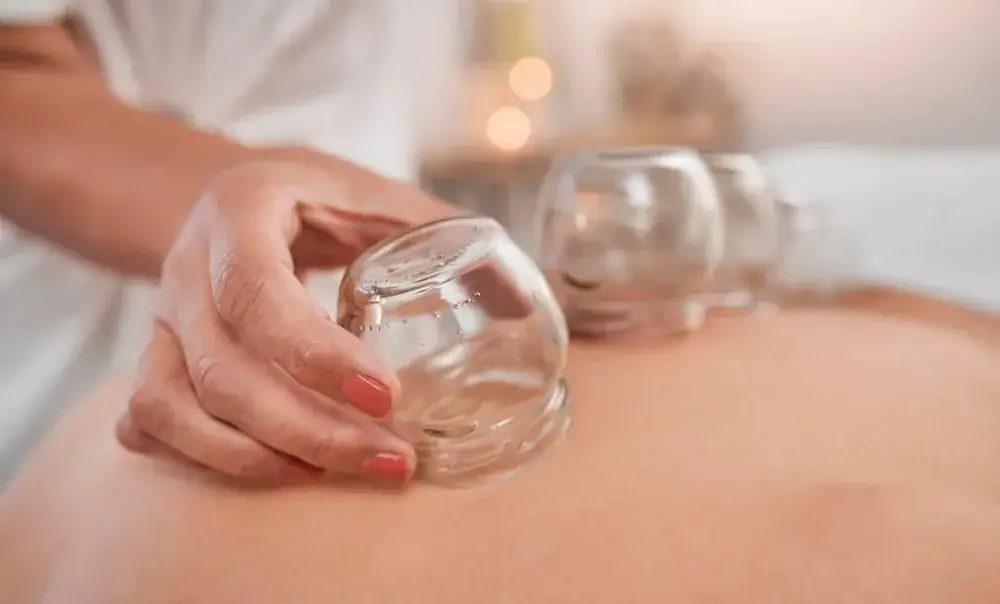
Once we identify the target areas, small cups are applied to your skin using suction. Some therapists use a pump, others use heat to create the vacuum. Either way, the suction draws your skin and underlying tissue upward into the cup. You’ll feel pulling and tightness, but it shouldn’t hurt. If it does, we adjust.
The cups usually stay in place for 5 to 15 minutes. During that time, blood flow increases to the area, muscle fibers start to relax, and fascial layers that have been stuck together begin to separate. When the cups come off, you’ll see circular marks – that’s normal and expected. They’re not bruises in the traditional sense, just evidence that blood has been drawn to the surface.
After your session, most people feel immediate relief in range of motion. Soreness might show up the next day, similar to how you feel after a deep tissue massage. That fades quickly. The improved mobility and reduced pain tend to stick around longer, especially with repeat sessions.
Ready to get started?
Cupping isn’t a standalone fix. It’s most effective when integrated into a full physical therapy regimen that includes stretching, strengthening, and movement training. Think of it as a tool that helps unlock areas traditional techniques can’t quite reach.
In Roslyn and across Long Island, the aging population deals with chronic conditions like osteoarthritis, lower back pain, and reduced mobility from years of wear and tear. Cupping addresses the soft tissue component – the tight muscles, restricted fascia, and poor circulation that make movement painful. Physical therapy addresses the movement patterns, strength deficits, and functional limitations that keep you from doing what you want to do.
When you combine both, you’re treating the problem from multiple angles. Cupping reduces the immediate discomfort and increases tissue mobility. Physical therapy rebuilds strength and teaches your body how to move without re-injuring the same areas. Over time, that combination leads to lasting improvement, not just temporary relief.
Our therapists bring both to your home. You don’t need to coordinate multiple appointments at different locations or explain your history to several providers. One therapist, one plan, one place – your living room.
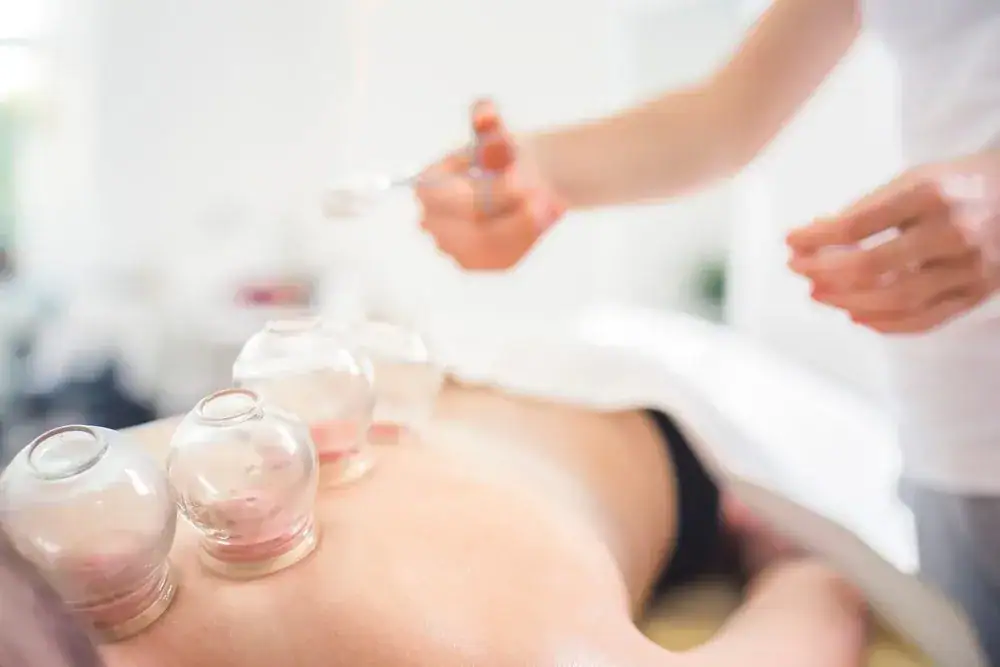
Yes, and there’s research to back it up. Multiple studies show that cupping therapy reduces pain intensity and improves function in people dealing with chronic lower back pain. It’s not a cure, but it’s a proven method for managing symptoms when other approaches haven’t been enough.
The mechanism is straightforward. Cupping increases blood flow to the affected area, which helps reduce inflammation and promotes healing. It also creates space between fascial layers that have become dense and restricted over time. When fascia moves better, muscles move better, and pain decreases.
That said, cupping works best as part of a broader treatment plan. If your back pain stems from weak core muscles, poor posture, or movement patterns that put stress on your spine, cupping alone won’t fix those issues. But when combined with targeted exercises and manual therapy, it can significantly speed up your progress and give you relief while you’re building strength.
Dry cupping uses suction alone. Cups are placed on your skin, a vacuum is created, and they stay in place for several minutes. The suction pulls blood to the surface and encourages muscle relaxation. No incisions, no blood removal – just suction and time.
Wet cupping involves making small cuts in the skin before applying the cups. The suction then draws out a small amount of blood. This method is more common in traditional Chinese medicine and some Middle Eastern practices. It’s less common in Western physical therapy settings and requires additional training and precautions.
At Medcare, we use dry cupping. It’s effective, low-risk, and integrates seamlessly into standard physical therapy protocols. You get the benefits of increased circulation and muscle relaxation without the added complexity or recovery time associated with wet cupping. For most musculoskeletal conditions – back pain, neck stiffness, shoulder tension, knee issues – dry cupping is more than sufficient.
Usually between three and seven days. The circular marks you see after cupping aren’t bruises in the traditional sense – they’re areas where blood has been drawn to the surface due to the suction. The darker the mark, the more stagnation or restriction was present in that area.
The marks don’t hurt. They might look dramatic, especially if you’re not expecting them, but they fade on their own without any special treatment. Some people notice the marks are darker after their first session and lighter with subsequent treatments, which often indicates improved circulation and less tissue restriction over time.
If you’re concerned about visible marks for an event or occasion, let your therapist know ahead of time. We can adjust the intensity of the suction or place cups in areas that are easier to cover with clothing. The effectiveness of the treatment doesn’t depend on how dark the marks are – lighter suction can still provide significant relief.
When cupping is performed as part of a physical therapy treatment plan, it’s typically covered under your physical therapy benefits. Medicare covers outpatient physical therapy services, and cupping falls under the umbrella of manual therapy techniques that licensed physical therapists are trained to perform.
The key is that cupping needs to be medically necessary and part of a documented treatment plan for a specific condition – like chronic pain, limited range of motion, or recovery from an injury. It’s not covered as a standalone wellness service or for general relaxation.
We handle the billing and documentation for Medicare patients. We verify your coverage, submit claims, and manage the paperwork so you don’t have to navigate the system yourself. If you have supplemental insurance or a Medicare Advantage plan, coverage details may vary slightly, but we’ll walk you through what to expect before your first session.
Absolutely. Neck and shoulder pain from prolonged sitting and computer work is one of the most common complaints we see, especially in Roslyn and the surrounding Long Island communities where many residents commute or work from home offices.
The problem usually isn’t just tight muscles – it’s a combination of poor posture, forward head position, rounded shoulders, and fascial restriction that builds up over months or years. Cupping addresses the soft tissue component by releasing tension in the upper traps, levator scapulae, and the muscles around your shoulder blades. It increases blood flow to areas that have become chronically tight and helps restore normal tissue mobility.
But here’s the thing: if you go right back to the same desk setup and the same posture, the pain will return. That’s why cupping works best when paired with ergonomic adjustments, postural training, and exercises that strengthen the muscles responsible for holding your head and shoulders in proper alignment. Our therapists address all of that during in-home sessions, so you’re not just getting temporary relief – you’re learning how to prevent the pain from coming back.
Most people notice some improvement after the first session – better range of motion, less stiffness, or a reduction in pain intensity. But one session rarely solves a chronic problem. Tissue that’s been tight or restricted for months or years needs time and repeated treatment to fully change.
A typical treatment plan might include cupping once or twice a week for four to six weeks, depending on the severity of your condition and how your body responds. Some people need more sessions, others need fewer. Your therapist will reassess your progress regularly and adjust the plan based on what’s working.
The goal isn’t to keep you in treatment forever. It’s to get you to a point where you can manage your symptoms independently through movement, stretching, and strength training. Cupping is a tool to accelerate that process, not a permanent dependency. Once you’ve regained mobility and reduced pain to a manageable level, maintenance sessions might be recommended every few weeks or as needed – but that’s based on your goals and your body’s response, not a predetermined schedule.
Other Services we provide in Roslyn