
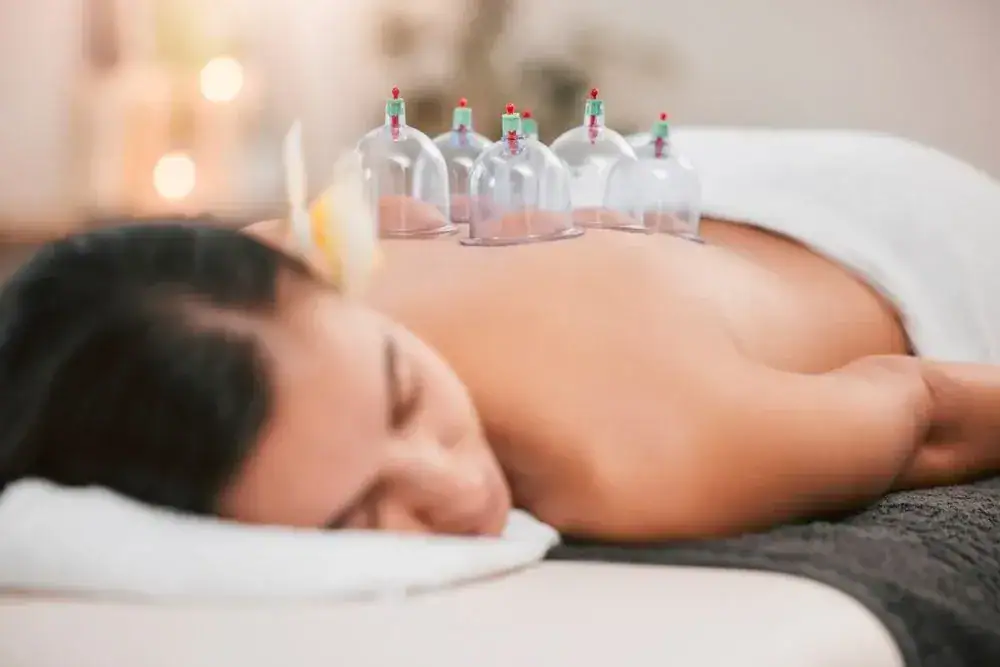

You’ve tried heat. Ice. Stretching. Maybe even medications that left you feeling foggy or worried about side effects. The tension in your back, neck, or shoulders keeps coming back because nothing’s actually addressing why your muscles stay locked up in the first place.
Cupping therapy works differently. It lifts tissue away from the muscle, creating space where there was only tightness. Fresh blood flows in. Waste products flow out. That knot you’ve been carrying for months starts to release—not because someone’s digging into it, but because your body finally has room to heal.
Most people notice less stiffness after the first session. By the third or fourth, they’re moving through their day without that constant reminder that something hurts. You’re not masking pain. You’re giving your muscles what they need to recover: better circulation, reduced inflammation, and actual relief that lasts beyond the appointment.
We’ve been treating patients across Long Island since 2010. We’re licensed physical therapists who specialize in bringing care directly to your home in Rockville Centre, NY—no commute, no waiting room, no rushing through your appointment because the next patient’s already there.
Rockville Centre has plenty of therapy options. What you don’t have much of is time. Or patience for another practitioner who barely looks at you before running through the same routine they use on everyone else.
We treat you like you’re part of our family because that’s how small practices survive—by actually helping people, not processing them. You get the same therapist each visit. They learn what’s working, what’s not, and how your body responds. That’s how real progress happens.
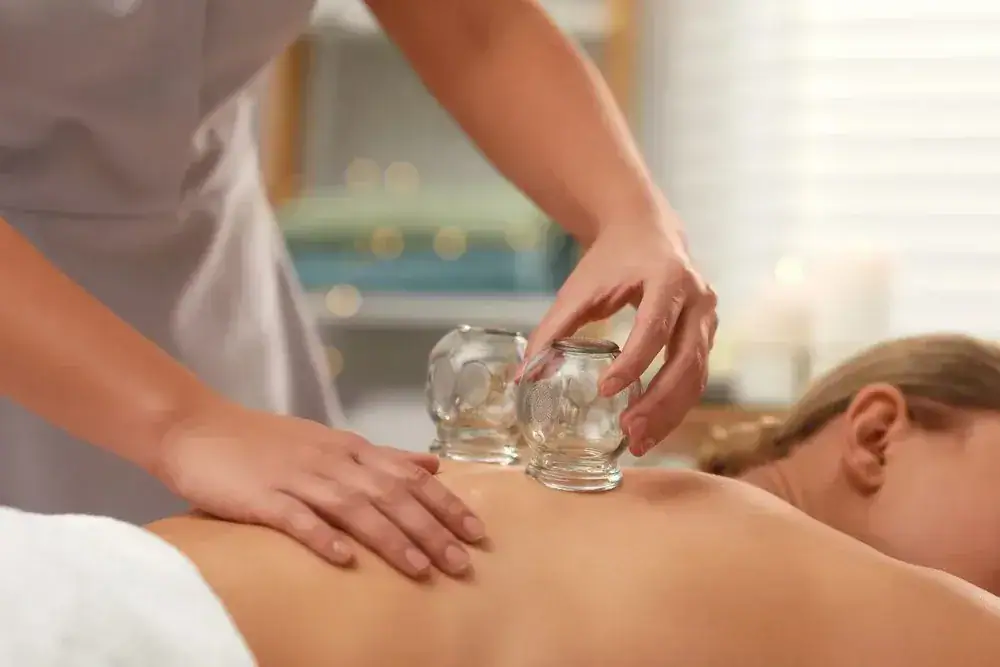
Your therapist starts by evaluating where you’re holding tension and what’s limiting your movement. This isn’t a one-size-fits-all treatment. The cups go where your body needs them, not where a protocol says they should.
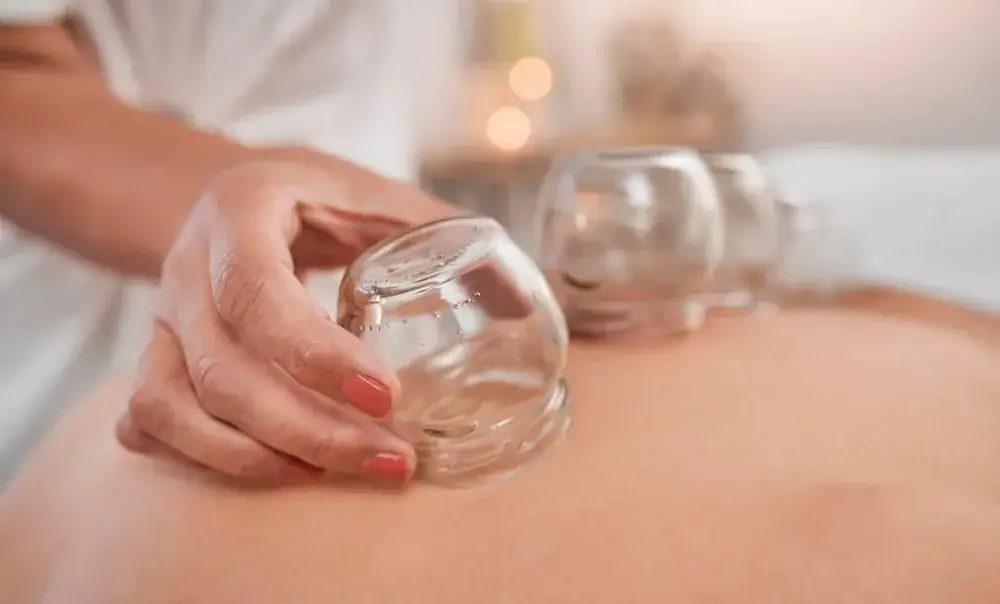
We use dry cupping—smooth cups placed on your skin that create suction to lift the tissue. You’ll feel a pulling sensation, but it shouldn’t hurt. Most people find it oddly satisfying, like finally scratching an itch you couldn’t reach. The cups stay in place for 5 to 15 minutes while they do their work: increasing blood flow, loosening fascial restrictions, and giving compressed tissue room to breathe.
After we remove the cups, you might see circular marks where they were placed. Those aren’t bruises—they’re a sign of stagnant blood being drawn to the surface so your body can clear it out. They fade within a few days to a week. Some people feel immediate relief. Others notice the difference over the next day or two as inflammation settles and movement becomes easier.
We’ll often combine cupping with other physical therapy techniques—manual therapy, targeted exercises, or stretching—to address the full picture of what’s causing your pain. You’re not just getting cupping. You’re getting a complete treatment plan designed around your specific condition.
Ready to get started?
Cupping works well for chronic back pain, neck stiffness, shoulder tension, and muscle strains that won’t fully heal. If you’ve been dealing with tightness that limits how you move—bending down, reaching overhead, turning your head to check your blind spot—this is worth trying.
In Rockville Centre, we see a lot of active adults in their 40s, 50s, and 60s who refuse to accept that pain is just part of getting older. You’re right not to accept it. But you also don’t want another treatment that requires you to block out half your day just to sit in traffic and wait for a 20-minute appointment.
Home-based therapy means your session happens in your space, on your schedule. No fighting for parking on Sunrise Highway. No cutting your workday short. Your therapist brings everything needed—including the cups, treatment table, and expertise—and focuses entirely on you for the full session.
Cupping also helps athletes recover faster from training, people with desk jobs release upper back tension, and anyone managing arthritis improve their range of motion without relying on medications. It’s not a miracle cure. It’s a proven method that works when it’s done correctly by someone who knows what they’re doing.
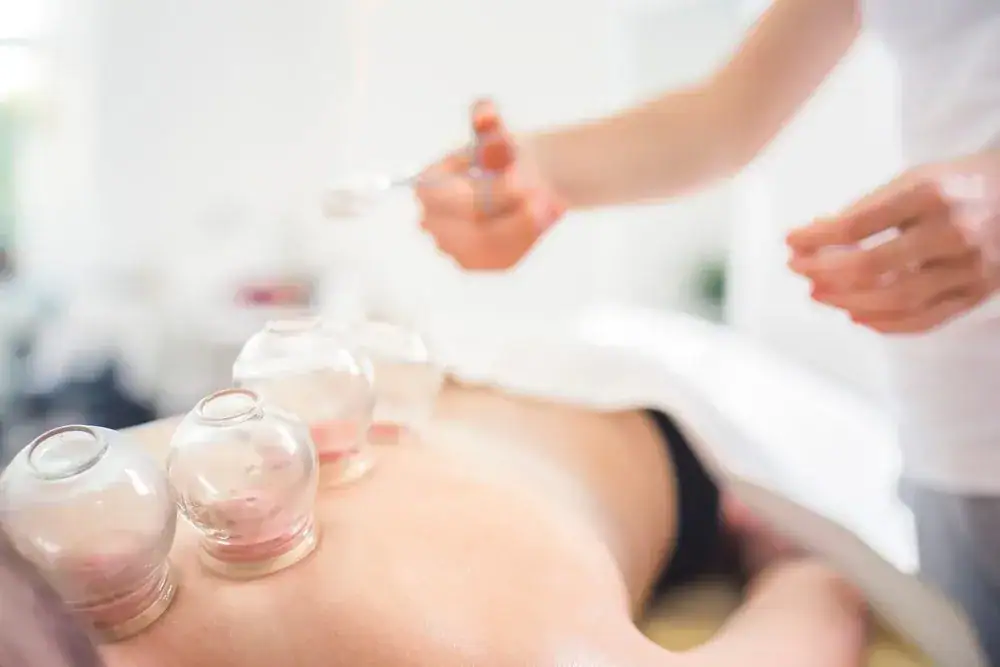
Research shows cupping can reduce pain and improve function for conditions like chronic back pain, neck pain, and knee osteoarthritis. A 2023 review of 14 meta-analyses found consistent evidence supporting its use for pain-related conditions, though researchers note that more high-quality studies would strengthen the findings.
Here’s what that means in practical terms: cupping won’t fix a herniated disc or reverse arthritis. But it can significantly reduce the pain and stiffness those conditions cause by improving blood flow, decreasing muscle tension, and reducing inflammation in the affected area.
Most patients notice some improvement within the first few sessions. How much improvement depends on what’s causing your pain, how long you’ve had it, and how your body responds to treatment. Some people get dramatic relief. Others see steady, gradual progress over several weeks. We track what’s working and adjust your treatment plan accordingly—because if something’s not helping after a reasonable trial, we’re not going to keep doing it.
Massage pushes into your muscles. Cupping pulls them up and away from the underlying tissue. That difference matters when you’re dealing with fascial restrictions, scar tissue, or areas that are too sensitive for deep pressure.
The suction created by the cups mechanically lifts and separates tissue layers that have become stuck together—something manual pressure alone can’t always accomplish. This makes cupping particularly effective for releasing trigger points, improving tissue mobility, and increasing range of motion in joints that feel locked up.
We often use both techniques in the same session. Cupping prepares the tissue by increasing circulation and creating space, then manual therapy or targeted exercises address the specific movement patterns that are contributing to your pain. You’re getting the benefits of multiple approaches working together, not just one technique applied in isolation.
Yes, cupping typically leaves circular marks where the cups were placed. They look like bruises but aren’t—they’re caused by blood being drawn to the surface, which is actually part of how the treatment works.
The marks usually fade within three to seven days, depending on how much stagnation was in the tissue and how your body processes it. Darker marks often appear in areas with more tension or restricted blood flow. As you continue treatment and circulation improves, the marks typically become lighter and fade faster.
If you have an event coming up where you’ll be wearing something that shows your back or shoulders, let your therapist know. We can adjust cup placement or timing so you’re not walking around with visible marks when it matters to you. But for most people, the marks are a small trade-off for the relief they get—and they’re easily covered by normal clothing.
When cupping is performed by a licensed physical therapist as part of your physical therapy treatment plan, it’s typically covered under your PT benefits. We accept Medicare and most commercial insurance plans, and we handle the billing process for you.
Coverage depends on your specific plan, deductible, and whether you’ve met any visit limits for physical therapy. We verify your benefits before starting treatment so you know what to expect. Most patients pay a copay per session, similar to what they’d pay for any other physical therapy visit.
If you’re paying out of pocket, cupping sessions in the New York area generally range from $50 to $150, depending on the provider and session length. Our home-based model means you’re getting a full physical therapy evaluation and treatment—not just cupping in isolation—which provides better value and better outcomes than standalone cupping at a spa or wellness center.
Most people notice some improvement after one to three sessions, but lasting results typically require six to eight sessions over several weeks. That’s not us trying to sell you more appointments—it’s how tissue healing actually works.
Your first session reduces immediate tension and improves circulation. The next few sessions build on that progress, addressing deeper restrictions and retraining movement patterns that have been compensating for pain. By the time you’re several weeks in, you’re not just feeling better temporarily—you’re actually functioning better because the underlying issues have been addressed.
Some conditions respond faster than others. A recent muscle strain might resolve in three to four sessions. Chronic pain you’ve had for years will take longer because there’s more to unwind. We reassess your progress regularly and adjust the treatment plan based on what’s actually happening, not what a generic protocol says should happen. When you’re moving well and pain-free, we’re done—not before, and not longer than necessary.
You can buy cupping kits online, but that doesn’t mean you should use them without guidance. Cupping done incorrectly can cause skin irritation, excessive bruising, or burns if you’re using fire cups. More importantly, you might be treating the wrong area entirely if you don’t understand what’s actually causing your pain.
A licensed physical therapist knows where to place cups based on your specific condition, how much suction to use, how long to leave them in place, and which other treatments to combine with cupping for maximum benefit. We’re also watching for contraindications—reasons you shouldn’t use cupping on certain areas or at certain times—that you wouldn’t necessarily know to look for.
If cost is the concern, talk to us about it. We’d rather work out a treatment plan you can actually afford than have you try to DIY something that requires professional training to do safely and effectively. And if you’re just curious about maintaining results between sessions, we can teach you self-care techniques that complement your professional treatment without the risks of doing cupping on yourself.
Other Services we provide in Rockville Centre