
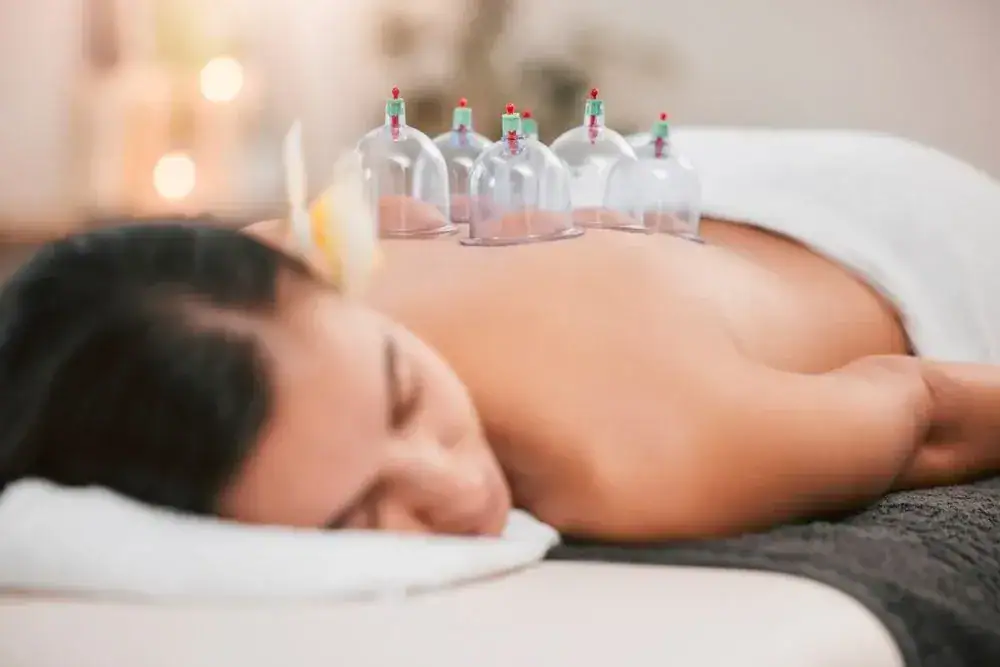

Chronic back pain changes how you move through your day. You avoid certain movements. You plan around the discomfort. You wonder if this is just how life is now.
Cupping therapy works by lifting tissue away from underlying structures, creating space where there wasn’t any. That decompression improves blood flow to areas that have been tight and restricted. More blood means more oxygen, faster healing, and less inflammation in the muscles causing your pain.
Most people feel some relief after the first session. The tight spots in your back, shoulders, or legs start to loosen. Your range of motion improves. You can turn your head without that catch, or bend down without bracing yourself first.
This isn’t a temporary fix that wears off in an hour. The effects build as your body responds to increased circulation and reduced muscle tension. You’re not just masking pain—you’re addressing what’s causing it.
Your therapist arrives at your home with everything needed for your session. First visit includes an assessment—where the pain is, what movements are limited, what your goals are. This isn’t a one-size-fits-all approach.
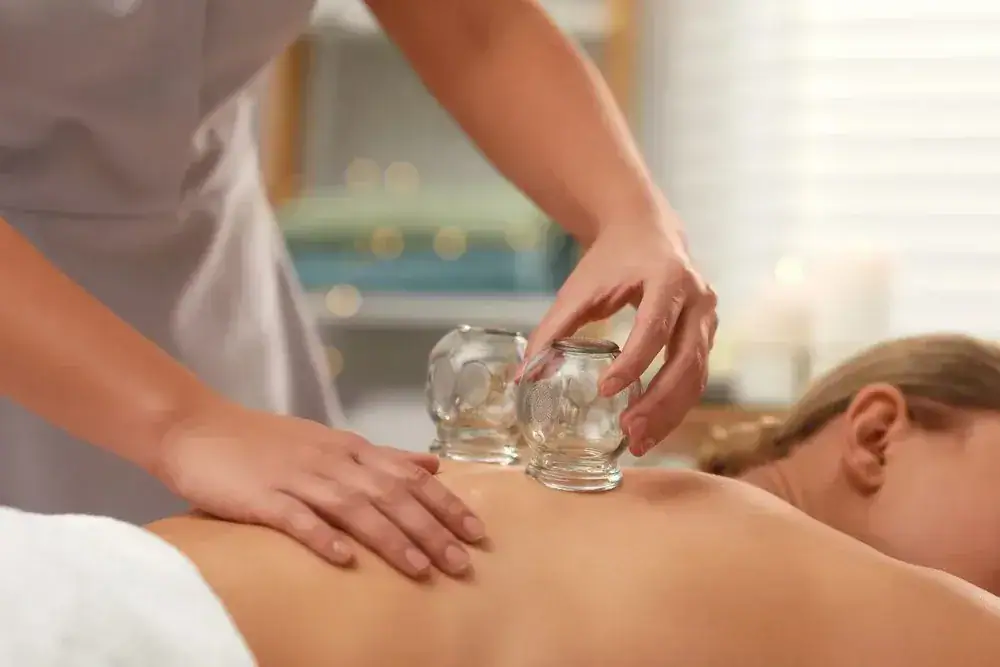
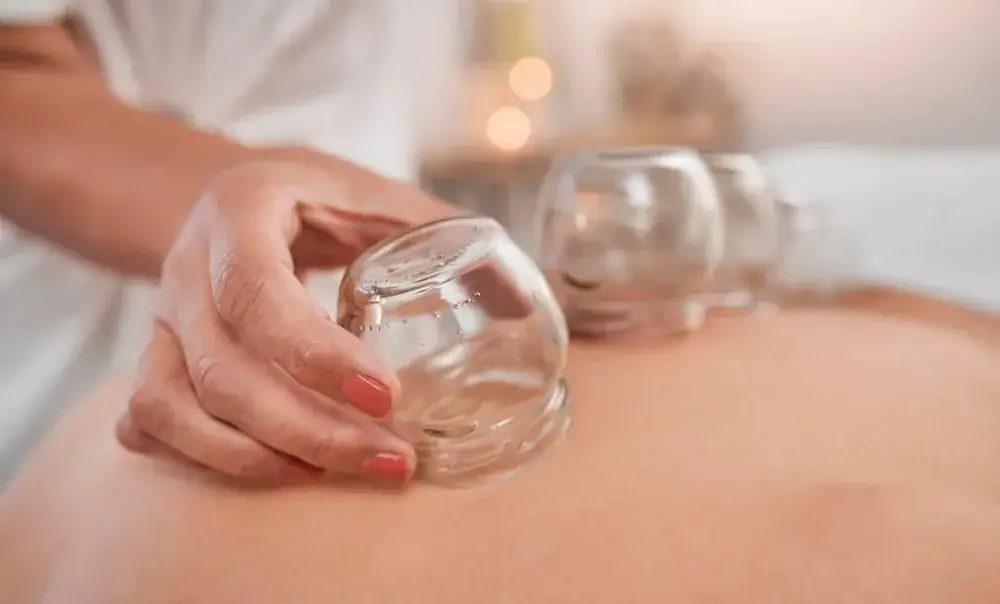
During cupping, your therapist places specialized cups on targeted areas of your body. The suction created by these cups—whether through dry cupping or other techniques—lifts your skin and the tissue beneath it. You’ll feel a pulling sensation, but it shouldn’t hurt. Most people find it surprisingly relaxing.
The cups typically stay in place for 5 to 15 minutes, depending on your condition and treatment goals. Your therapist may use stationary cups or move them across your muscles to release different areas. This is often combined with other physical therapy techniques like therapeutic exercise or soft tissue mobilization.
After the cups are removed, you might see circular marks on your skin. These aren’t bruises—they’re a result of increased blood flow to the area and typically fade within a week. Your therapist will explain what to expect and may give you specific movements or stretches to do between sessions.
Ready to get started?
Each cupping therapy session is part of a larger physical therapy treatment plan designed around your specific condition. You’re not just getting cups placed on your back—you’re getting a licensed therapist’s clinical expertise applied to your pain.
Sessions typically last 45 to 60 minutes and include cupping along with complementary techniques that support your recovery. That might mean therapeutic exercises to strengthen weak areas, manual therapy to improve joint mobility, or training on how to move differently to prevent re-injury.
For Poquott residents, home-based therapy eliminates a real barrier to consistent care. You don’t need to arrange transportation or navigate getting in and out of a car when you’re already in pain. The therapy comes to you, which means you’re more likely to stick with the treatment schedule that actually produces results.
Many insurance plans cover physical therapy services, including cupping when it’s part of a documented treatment plan. Medicare covers outpatient physical therapy for eligible patients. We’ll work with you on scheduling that fits your routine—morning, afternoon, or evening appointments are available based on your needs.
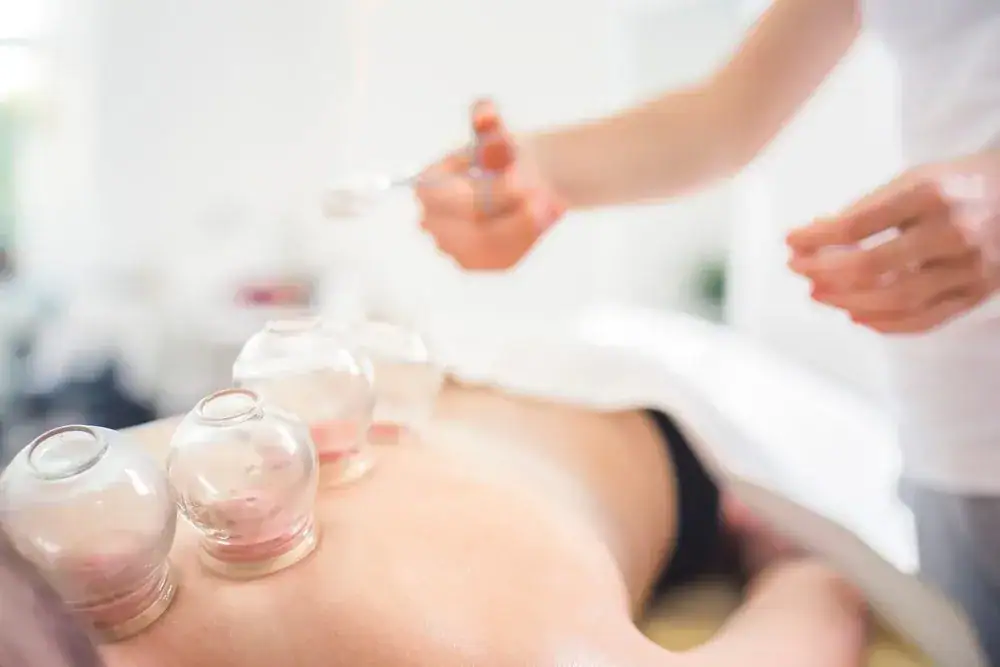
Yes, and there’s research backing it up. Studies show cupping therapy significantly reduces chronic pain and improves range of motion, particularly for lower back and neck pain. The mechanism is straightforward—cupping increases blood circulation to painful areas, reduces muscle tension, and decreases inflammation.
Here’s what that looks like in practice. When you’ve had back pain for months or years, the affected muscles become tight and restricted. Blood flow to those areas decreases, which slows healing and keeps the pain cycle going. Cupping creates suction that lifts tissue and draws blood to the surface, breaking that cycle.
Most people notice some improvement after one or two sessions, but consistent treatment produces better long-term results. We typically recommend cupping once or twice a week as part of a broader physical therapy plan. You’re not just getting temporary relief—you’re retraining your body to move without pain.
Cupping is a technique used within physical therapy, not a replacement for it. Think of it as another tool we can use to address your specific problem. Some conditions respond really well to cupping, while others need different approaches.
Dry cupping works through myofascial decompression—it lifts and separates the layers of fascia that can become stuck together and cause pain. Regular physical therapy might use compression techniques, stretching, strengthening exercises, or manual manipulation. Cupping does the opposite by creating space and increasing circulation through suction.
We’ll assess whether cupping makes sense for your condition. If you’re dealing with tight muscles, restricted movement, or chronic pain in specific areas, cupping often helps. It’s frequently combined with therapeutic exercise, soft tissue work, and movement training to give you the most complete treatment. You’re getting the benefits of multiple techniques working together, not just one approach in isolation.
Yes, cupping typically leaves circular marks that look like bruises but aren’t actually bruises. These marks are caused by increased blood flow to the area and usually fade within a week or two. They don’t indicate tissue damage—they’re a normal response to the suction.
Real bruises happen when muscle fibers are injured and blood vessels break. Cupping marks are different. The suction draws blood to the surface and can cause some capillaries to expand, which creates the distinctive circular discoloration. It doesn’t hurt, and the marks fade as your circulation normalizes.
If you have an event coming up where the marks would be visible and bothersome, let us know. We can adjust the intensity or placement of the cups. But for most people, the marks are a minor trade-off for the pain relief and improved mobility they experience. The discoloration is temporary; the benefits of treatment last much longer.
Many people feel some relief during or immediately after their first session. That tight spot in your shoulder releases. Your lower back feels less restricted. You can move more freely than you could an hour before.
But here’s the reality—one session rarely solves chronic pain that’s been building for months or years. The initial relief you feel is real, but lasting results come from consistent treatment. We typically recommend a series of sessions, often once or twice per week, depending on your condition.
Over the course of several weeks, you’ll notice the improvements lasting longer between sessions. The pain doesn’t come back as quickly or as intensely. Your range of motion continues to improve. You start doing things you’d been avoiding because they hurt too much. That’s when you know the treatment is working at a deeper level, not just providing temporary relief. Most treatment plans run 4 to 8 weeks, but your specific timeline depends on what you’re dealing with and how your body responds.
Cupping therapy is often covered when it’s performed by a licensed physical therapist as part of a documented treatment plan. Insurance companies typically don’t cover cupping as a standalone service, but they do cover physical therapy—and cupping can be one of the techniques we use during covered sessions.
Medicare covers outpatient physical therapy for eligible patients, which can include cupping when it’s medically necessary and part of your overall treatment. Private insurance coverage varies by plan, but most policies cover physical therapy services with a referral from your doctor.
The key is documentation. We need to show that cupping is being used to address a specific diagnosed condition and that it’s part of a comprehensive treatment approach. We handle insurance verification and can tell you what your specific plan covers before you start treatment. You’ll know your out-of-pocket costs upfront, not after you’ve already committed to care. If you have questions about your coverage, ask before your first session—that’s what we’re here for.
Convenience is the obvious answer, but it’s not the only one. When you’re already dealing with pain, getting in and out of a car and driving to a clinic adds physical stress. For some people—especially those with limited mobility or transportation challenges—that barrier is enough to prevent them from getting treatment at all.
Home therapy eliminates that obstacle entirely. Your therapist comes to you in Poquott with all the equipment needed for your session. You’re treated in your own space, where you’re comfortable and can relax more fully. That relaxation actually helps treatment work better—tension fights against the therapeutic effects of cupping and other techniques.
There’s also the consistency factor. When treatment is convenient, you’re more likely to stick with it. You don’t cancel because you can’t find a ride or because the pain makes driving too difficult that day. You show up because showing up just means being home. That consistency is what turns short-term relief into long-term improvement. You’re not just getting the same treatment in a different location—you’re getting treatment that fits into your life in a way that actually works.
Other Services we provide in Poquott