
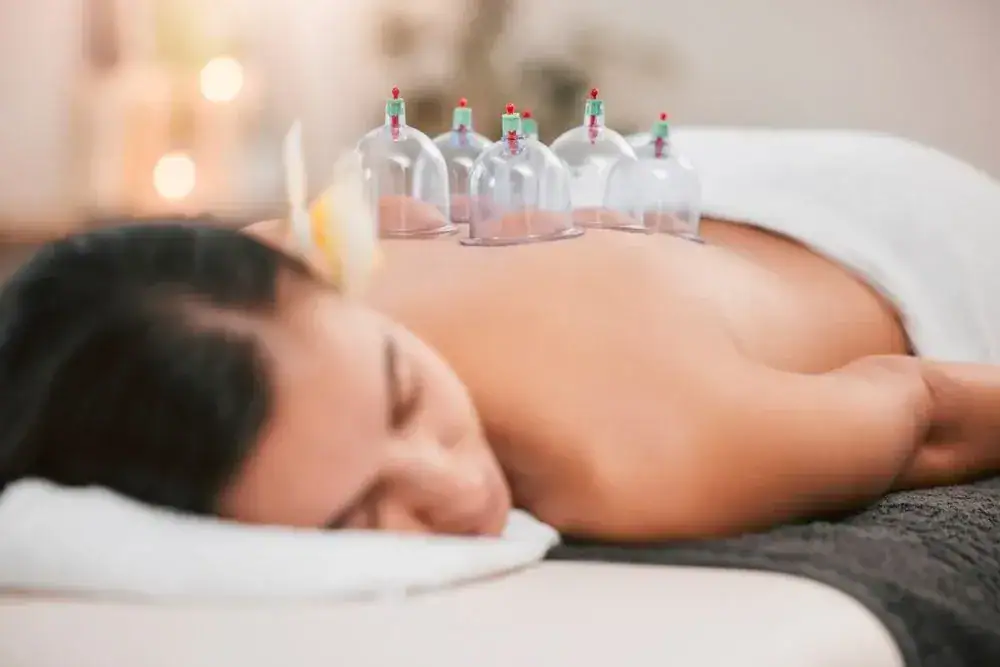

You’re dealing with tightness that won’t quit. Maybe it’s your lower back after sitting at a desk all day, or your shoulders from stress you didn’t realize you were carrying. Stretching helps for about ten minutes, then it’s back.
Cupping therapy works by creating suction that pulls blood flow to the area, loosens fascia, and gives your muscles room to actually relax. It’s not a temporary fix that wears off by lunch. Most people notice better range of motion right after the first session, and the relief builds as your body responds to improved circulation.
This isn’t about chasing trends. It’s about using a technique that’s been around for thousands of years because it works. When performed by a licensed physical therapist who understands musculoskeletal function, cupping becomes part of a real treatment plan, not just a standalone service. You get pain relief that’s tied to how your body actually moves and heals.
We’ve been serving Plandome and the surrounding Nassau County communities with physical therapy that’s grounded in real clinical expertise. Our team includes licensed physical therapists trained in cupping therapy and myofascial decompression techniques, not just wellness practitioners offering it as an add-on.
In an area where the median age is 44 and a significant portion of residents are managing age-related mobility issues or work-related strain, we see a lot of chronic conditions. That experience matters. We know what actually helps and what’s just noise.
Every treatment is personalized because your pain isn’t generic. We take the time to understand what’s causing the problem, not just where it hurts. And because we manage everything from verification to patient data with the same level of care, you can trust that your experience will be consistent, professional, and secure.
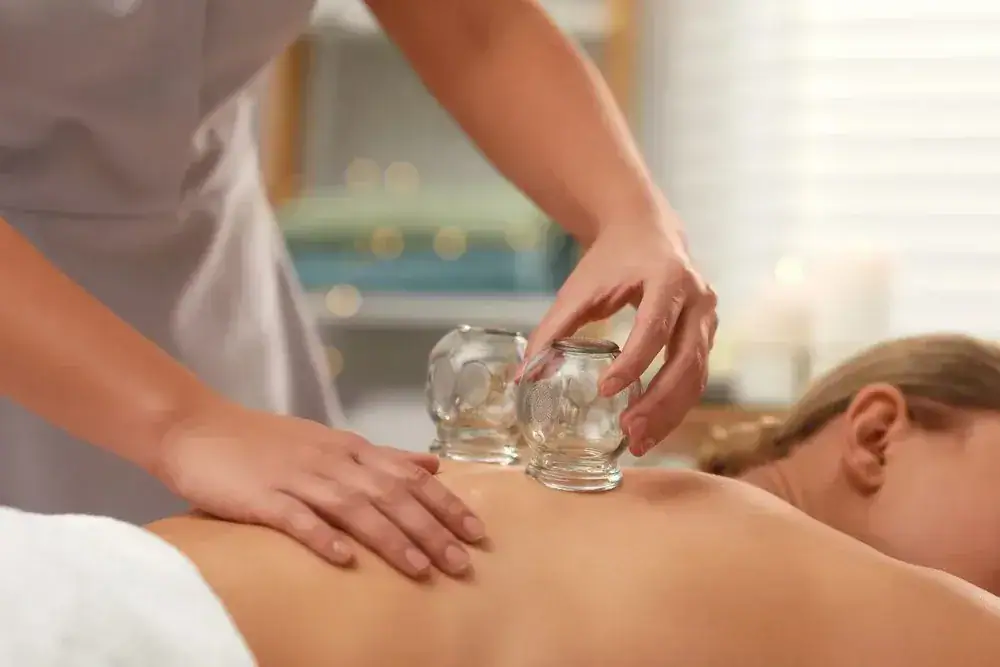
Your first visit starts with an assessment. We’re not just slapping cups on your back and calling it done. One of our licensed physical therapists evaluates your pain, your movement patterns, and what’s actually causing the problem. This takes about 10-15 minutes and helps us figure out if cupping is the right approach or if you need something else entirely.
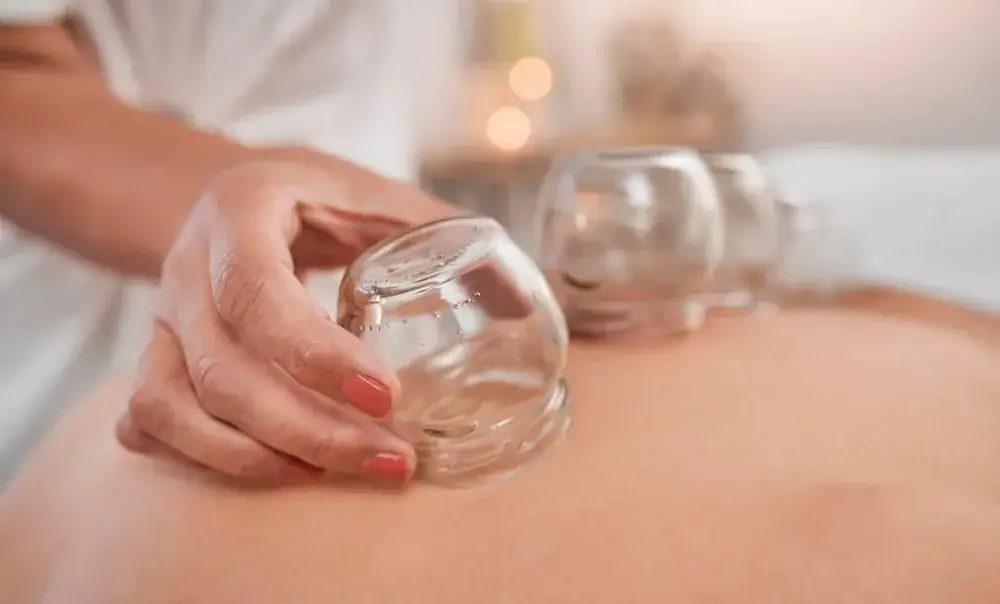
During the treatment, we place specialized cups on targeted areas of your body. These create suction that draws blood to the surface, increases circulation, and helps release tight fascia and muscle tissue. You’ll feel pulling and pressure, but it shouldn’t hurt. Most people find it surprisingly relaxing. Sessions typically last 15-30 minutes depending on the area being treated.
After the cups are removed, you might notice circular marks on your skin. These aren’t bruises, they’re a result of increased blood flow, and they fade within a few days to a week. You may feel immediate relief in terms of reduced tightness and better mobility. Some people feel a bit sore the next day as the body responds to treatment, similar to how you might feel after a deep tissue massage.
We usually recommend starting with a series of sessions spaced a few days apart, then adjusting based on how you respond. Cupping works well on its own, but it’s even more effective when combined with other physical therapy techniques that address the root cause of your pain.
Ready to get started?
Cupping therapy works particularly well for chronic musculoskeletal pain that hasn’t responded to other treatments. If you’ve tried stretching, medication, or basic physical therapy without lasting results, this might be the missing piece. It’s effective for lower back pain, neck tension, shoulder tightness, and knee issues, especially osteoarthritis.
Athletes and active adults in Plandome use cupping for faster recovery after workouts or sports. It helps reduce exercise-induced muscle soreness and improves flexibility, which means you’re back to your routine sooner. For people dealing with stress-related tension, the relaxation effect is significant. The treatment encourages your body to release endogenous opioids, which are your natural pain relievers.
In Nassau County, where a large percentage of residents are over 45 and dealing with age-related stiffness or chronic conditions, cupping offers a non-pharmaceutical option. You’re not adding another medication to your routine. You’re giving your body a way to heal itself more effectively. And because we offer home therapy services, if mobility is an issue, we can bring treatment to you. That’s especially valuable for older adults or anyone recovering from surgery who can’t easily travel to appointments.
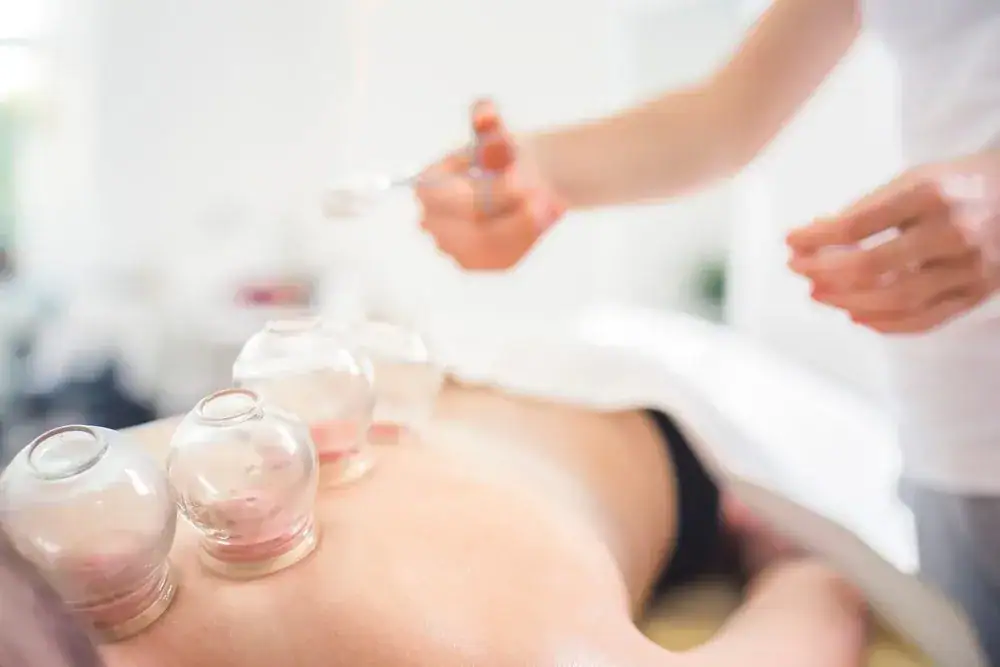
Cupping therapy has moderate-quality clinical evidence supporting its effectiveness for chronic pain conditions, particularly lower back pain, neck pain, and knee osteoarthritis. This isn’t anecdotal. Peer-reviewed studies show measurable improvements in pain reduction and range of motion.
The reason it works comes down to physiology. The suction increases microcirculation, which brings oxygen and nutrients to damaged tissue while removing metabolic waste. It also creates space in the fascia, the connective tissue that can get tight and restrict movement. When fascia releases, muscles can function properly again.
That said, it’s not a miracle cure, and anyone telling you otherwise isn’t being honest. Cupping is most effective when it’s part of a comprehensive treatment plan that addresses why you’re in pain in the first place. If your pain is caused by poor posture, muscle imbalances, or repetitive strain, cupping will provide relief, but you’ll also need to correct the underlying issue. That’s why having it performed by a licensed physical therapist matters. We’re not just treating symptoms.
The main difference is clinical training and treatment intent. At a spa, cupping is typically offered as a relaxation service by massage therapists or wellness practitioners. It might feel good, but it’s not designed to address specific musculoskeletal dysfunction.
At our physical therapy clinic, cupping is performed by licensed physical therapists who understand anatomy, biomechanics, and how your body compensates for pain or injury. We’re using cupping as a therapeutic tool within a larger treatment strategy. That means we’re assessing your movement patterns, identifying the root cause of your pain, and applying cupping in a way that supports your recovery goals.
We also integrate cupping with other evidence-based techniques like manual therapy, therapeutic exercise, and myofascial release. You’re not just getting cups placed on your back. You’re getting a treatment plan that’s built around your specific condition. And if cupping isn’t the right fit for you, we’ll tell you that upfront and recommend what will actually help.
Most people notice some improvement after the first session, usually in the form of reduced tightness and better range of motion. That initial relief can last a few days, but it’s not permanent yet because your body needs time to adapt and heal.
For chronic pain or long-standing issues, you’ll typically need a series of treatments. We usually recommend starting with sessions twice a week for two to three weeks, then spacing them out as your symptoms improve. By the fourth or fifth session, most patients report significant reduction in pain and better functional movement.
The timeline depends on what we’re treating. Acute muscle tension from overuse might resolve in two to three sessions. Chronic lower back pain that’s been building for years will take longer. The key is consistency. Cupping works by encouraging your body’s natural healing processes, and that takes time. If someone promises instant, permanent results after one session, they’re overselling. Real recovery is a process, and we’re transparent about what to expect.
The circular marks left by cupping are not bruises and they’re not harmful. They’re caused by increased blood flow to the area as the suction draws stagnant blood and metabolic waste to the surface. The darker the marks, the more stagnation was present in that tissue, which often correlates with areas of chronic tightness or poor circulation.
These marks typically fade within three to seven days depending on your circulation and how your body processes the treatment. They don’t hurt, and most people forget they’re there after the first day. If you’re concerned about visible marks for an event or occasion, let us know ahead of time and we can adjust the intensity or placement.
Some people don’t get marks at all, and that’s fine too. It doesn’t mean the treatment isn’t working. Everyone’s body responds differently based on skin type, circulation, and the severity of the underlying issue. What matters is how you feel afterward, not what the marks look like. If you’re moving better and experiencing less pain, the treatment is doing its job.
Yes, and in most cases, combining cupping with other treatments makes both more effective. Cupping works well alongside traditional physical therapy exercises, manual therapy, dry needling, and even chiropractic care. The key is coordination between your providers so everyone knows what’s being done and why.
We build cupping into your overall physical therapy plan. If you’re already doing strengthening exercises for a shoulder injury, adding cupping can help release tight muscles that are limiting your progress. If you’re receiving treatment elsewhere, let us know so we can time sessions appropriately and avoid overloading the same tissue.
The one thing to watch is medication. If you’re on blood thinners or have a clotting disorder, cupping may not be appropriate, or we’ll need to adjust the approach. Always disclose your full medical history and current treatments during your initial assessment. We’d rather know everything upfront than find out later that something isn’t compatible. Your safety and results are the priority.
Coverage depends on your specific insurance plan and how the treatment is billed. When cupping is performed by a licensed physical therapist as part of a physical therapy treatment plan, it’s often covered under your PT benefits. We bill it as part of your overall session, not as a separate standalone service.
That said, insurance policies vary widely. Some plans cover it fully, some require a copay, and others may not cover it at all if they consider it alternative medicine. The best approach is to contact your insurance provider before your first visit and ask whether cupping therapy or myofascial decompression is covered under your physical therapy benefits.
Our team can also help verify your coverage and provide any documentation your insurance company needs. We handle billing transparently, so you’ll know what to expect before you commit to treatment. If your plan doesn’t cover cupping, we’ll discuss costs upfront so there are no surprises. And if it turns out cupping isn’t covered but another technique achieves the same result and is covered, we’ll recommend that instead. We’re not here to upsell you on services you don’t need or can’t afford.
Other Services we provide in Plandome