


You’re not looking for temporary relief. You want to wake up without stiffness, get through your workday without reaching for painkillers, and return to the activities that matter without wondering if your body will cooperate.
Cupping therapy increases blood flow to areas that have been tight, inflamed, or overworked. That means oxygen and nutrients reach damaged tissue faster. Lactic acid clears out quicker. Muscle fibers that have been locked up start to release.
Most people notice a difference after the first session. Not just “it feels a little better”—actual improvement in range of motion, reduced pain when moving, and less reliance on ice packs or medication. If you’ve been dealing with chronic neck pain, lower back tightness, or shoulder tension from sitting at a desk all day, this is the kind of treatment that addresses the problem instead of covering it up.
We’ve been treating patients across Long Island for over a decade. Licensed therapists. Medicare and most commercial insurance accepted. In-home visits available if getting to an office isn’t realistic for you.
Plainview residents deal with the same issues we see across Nassau County—long commutes that wreck your posture, active lifestyles that lead to overuse injuries, and chronic conditions that need consistent, professional care. We’ve built our practice around what actually works: evidence-based treatments delivered by people who know what they’re doing.
You’re not a number here. Every session is built around your specific condition, your goals, and what your body needs to heal properly.
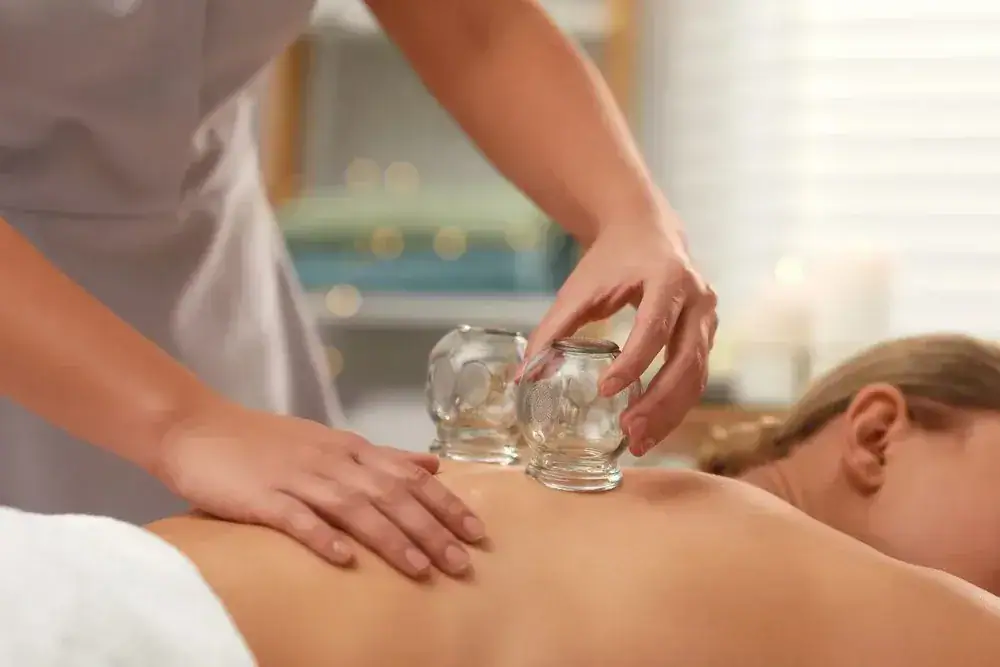
Your first visit starts with an assessment. We need to understand where the pain is, how long it’s been there, and what makes it worse. That tells us where to place the cups and how much suction to use.
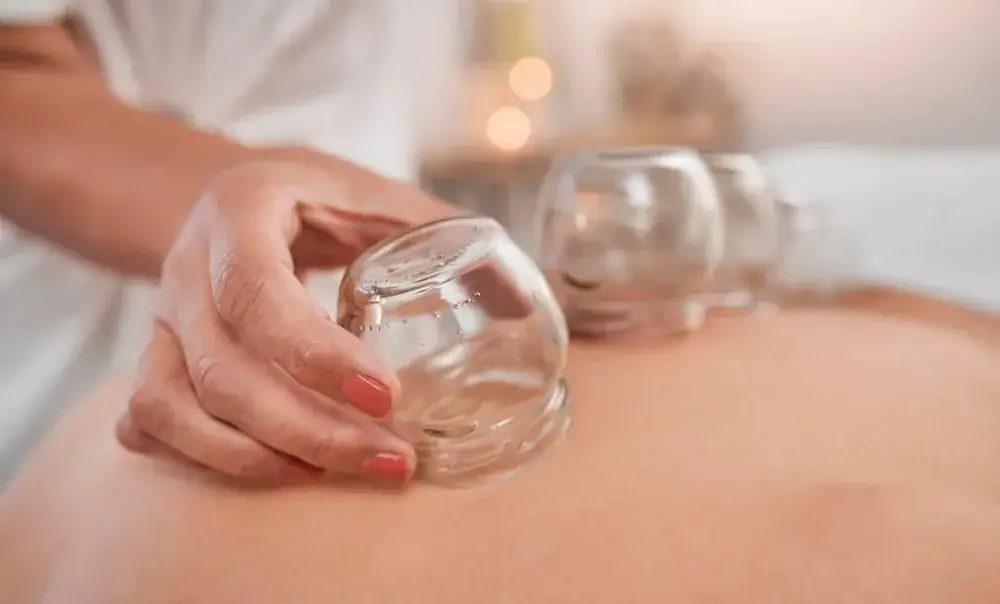
During the session, cups are applied to specific areas of your body. Suction pulls the skin and underlying tissue upward, which increases blood flow and releases tight fascia. Dry cupping is the most common method—no needles, no incisions. Sessions typically last 15 to 30 minutes depending on the area being treated.
You might see circular marks afterward. That’s normal. They’re not bruises—they’re a sign that blood flow increased in that area. Most marks fade within a few days to a week.
After your session, you’ll likely feel looser and less restricted. Some people feel immediate relief. Others notice gradual improvement over the next day or two as inflammation decreases and mobility improves. We’ll talk through what to expect and build a treatment plan based on how your body responds.
Ready to get started?
If you’re dealing with chronic lower back pain, neck stiffness, or shoulder tension, cupping can help. Athletes use it to speed up recovery after training. People recovering from surgery use it to regain mobility. Office workers use it to undo the damage from hours of sitting.
Plainview has a mix of active families, working professionals, and older adults managing long-term pain. Cupping fits into all of those lives because it’s non-invasive, doesn’t require downtime, and works alongside other treatments like physical therapy or massage.
We also offer in-home therapy for patients who have difficulty traveling. That includes cupping sessions in your own space, which makes treatment more accessible if transportation, mobility, or time is a barrier. Medicare covers many of our services, and we accept nearly all commercial insurance plans, so cost doesn’t have to be the reason you stay in pain.
Yes, and there’s research backing it up. A 2024 systematic review found that cupping reduces pain intensity in chronic neck and lower back pain more effectively than no treatment or standard care. The effect sizes were comparable to manual therapy, which is significant.
Here’s why it works: cupping increases circulation to areas that aren’t getting enough blood flow due to inflammation, scar tissue, or muscle tightness. More blood flow means more oxygen, faster healing, and less pain. It also helps release fascia—the connective tissue that can get stuck and restrict movement.
You’re not going to fix a herniated disc with cupping. But if your pain comes from muscle tension, poor posture, overuse, or inflammation, this is one of the most effective non-pharmaceutical options available. Most patients report noticeable improvement after just a few sessions.
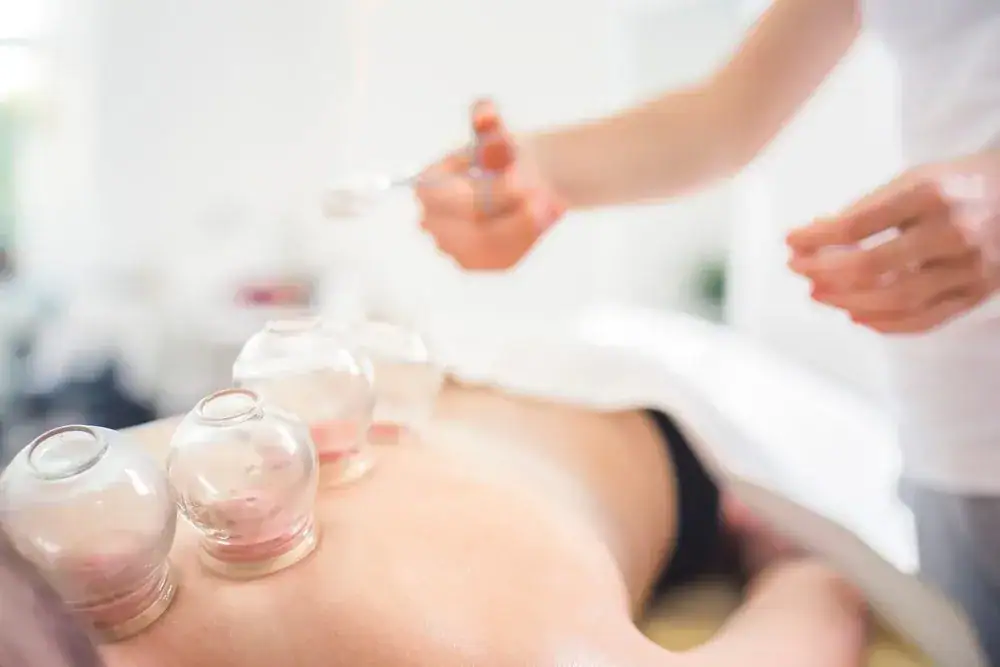
Dry cupping uses suction alone—no needles, no bloodletting. Cups are placed on your skin, and a vacuum is created either with heat or a manual pump. The suction pulls tissue upward, which increases blood flow and releases tight muscles.
Wet cupping involves making small incisions in the skin before applying the cups, which draws out a small amount of blood. It’s used in some traditional practices, but it’s not common in physical therapy settings and carries a higher risk of infection if not done properly.
Dry cupping is what most therapists use in the U.S., and it’s what we offer at Medcare. It’s low-risk, non-invasive, and effective for musculoskeletal pain. You get the benefits—improved circulation, reduced muscle tightness, faster recovery—without any cutting or bleeding.
Yes, cupping usually leaves circular marks where the cups were placed. They look like bruises, but they’re not. Bruises happen when blood vessels break due to trauma. Cupping marks happen because blood flow increases in that area, and some blood moves into the tissue.
The marks are typically dark red or purple right after treatment. They fade over the next few days to a week, depending on how much suction was used and how your body responds. If you bruise easily or have sensitive skin, the marks might be darker or last a bit longer.
Most people don’t mind the marks because the relief outweighs the cosmetic concern. But if you have an event coming up where you’ll be wearing something that shows your back or shoulders, just let your therapist know. We can adjust the treatment or schedule it for a different time.
It depends on what you’re treating and how long you’ve been dealing with it. Acute issues—like a muscle strain from working out or a flare-up from poor posture—often improve after one or two sessions. Chronic pain that’s been building for months or years usually requires more.
Most patients start with a series of sessions over a few weeks. You might come in once or twice a week at first, then taper off as your symptoms improve. Some people feel immediate relief after the first session. Others notice gradual improvement as inflammation decreases and mobility increases.
We’ll assess your progress after each visit and adjust the plan based on how you’re responding. If cupping isn’t giving you the results you need, we’ll talk about other options or combine it with physical therapy to address the root cause. The goal is to get you better, not to lock you into endless appointments.
It depends on your plan and how the treatment is billed. Cupping is often included as part of a physical therapy session, which means if your insurance covers physical therapy, there’s a good chance cupping is covered too.
At Medcare, we accept Medicare and nearly all commercial insurance plans. We’ll verify your coverage before your first visit so you know what to expect. If cupping is billed separately or considered an add-on, we’ll let you know upfront what the cost will be.
Even if insurance doesn’t cover it fully, cupping is relatively affordable compared to other pain management options. You’re looking at a fraction of the cost of ongoing prescriptions, injections, or surgical consultations. And because it’s low-risk with minimal side effects, it’s worth considering if you’ve been stuck in a cycle of temporary fixes that don’t actually solve the problem.
Absolutely. In fact, cupping works best when it’s part of a broader treatment plan. If you’re already doing physical therapy for an injury or chronic condition, adding cupping can speed up recovery and improve your results.
Cupping helps release tight fascia and improve circulation, which makes it easier for your body to respond to stretching, strengthening, and manual therapy. A lot of therapists use it before or after other treatments to enhance the effects. For example, cupping before a deep tissue session can loosen up muscles so the therapist can work more effectively.
We also see patients who combine cupping with acupuncture, massage, or chiropractic care. As long as your providers are communicating and your treatment plan makes sense, there’s no reason you can’t use multiple approaches. The key is making sure everything you’re doing supports the same goal: getting you out of pain and back to normal function.
Other Services we provide in Plainview