
You walk to the mailbox without second-guessing every step. You get up at night without gripping the wall. You move through your day with less fear and more freedom.
That’s what happens when balance training actually works. Research shows the right exercises can cut fall risk by 30% to 50%—but only if they’re done consistently, correctly, and with someone who knows what they’re doing.
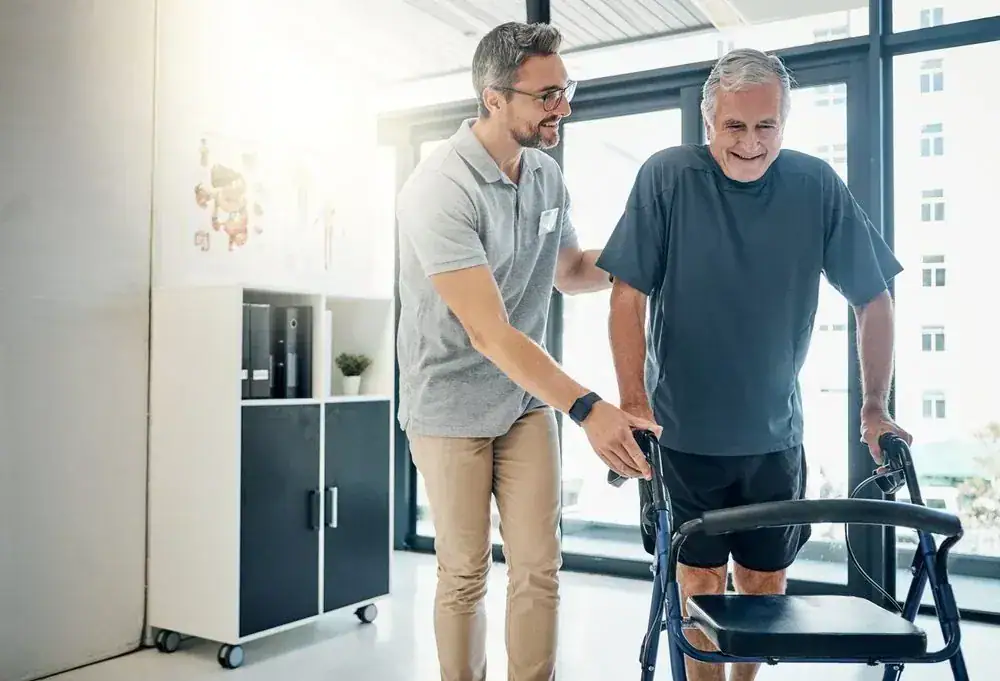
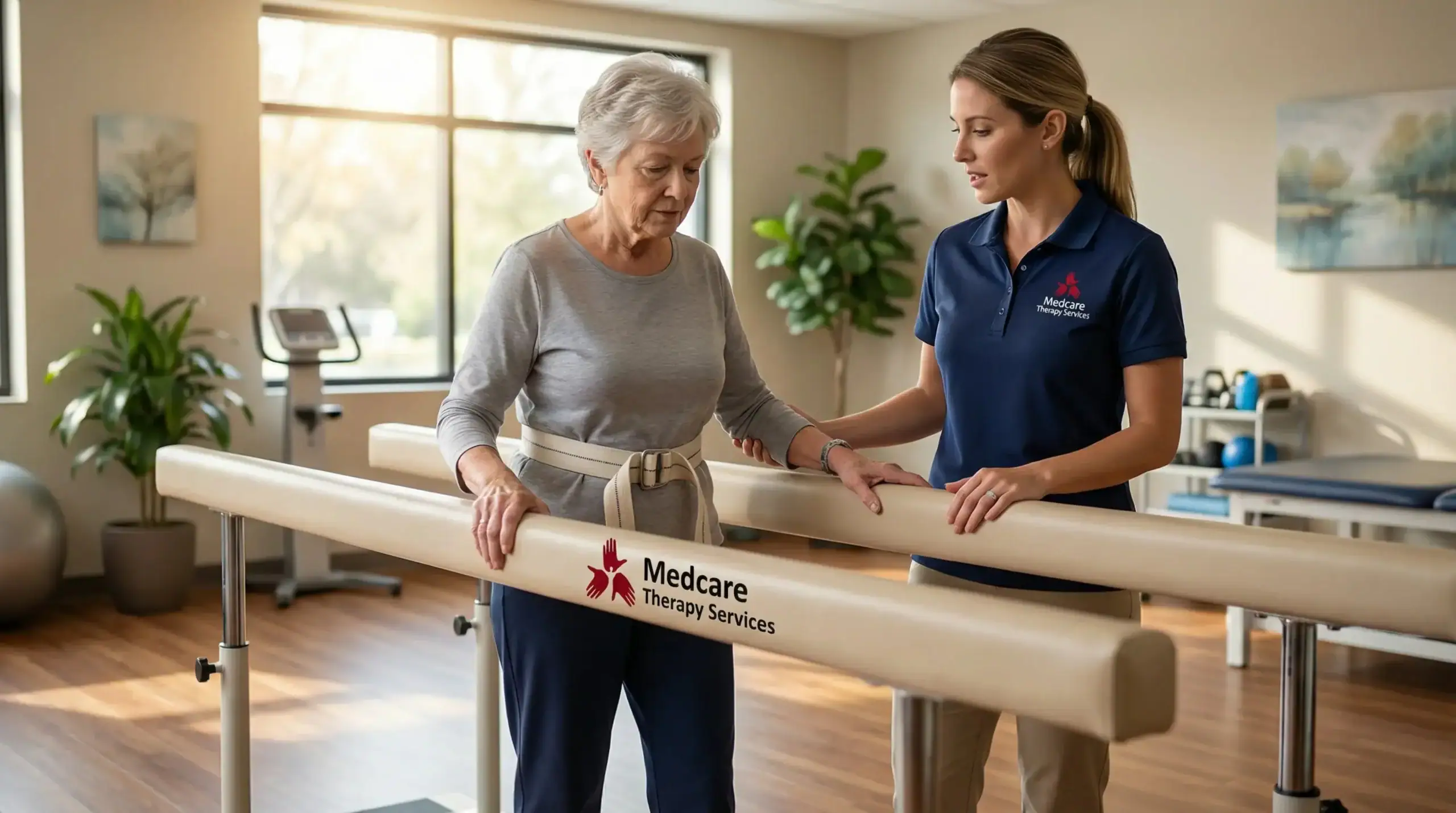
We bring that expertise to your home in Wading River. You don’t need to arrange rides or sit in waiting rooms. You get a licensed physical therapist who evaluates how you move, where you’re unstable, and what needs attention. Then you work together on exercises that strengthen the systems your body uses to stay upright: vision, inner ear function, and muscle coordination.
The goal isn’t just fewer falls. It’s getting back to doing what you want without constantly thinking about what could go wrong.
We’ve been serving Long Island for over a decade. We’re licensed, Medicare-approved, and we specialize in treating people who can’t easily leave home—or just don’t want to.
Wading River’s senior population is growing fast, just like the rest of Suffolk County. More people are choosing to age in place, and that means more people need real support to do it safely. We’ve built our practice around that reality.
Every therapist on our team is trained in fall prevention and balance rehabilitation. We don’t rotate you through a system. We show up, assess your specific risks, and build a plan that fits your home, your body, and your goals.

It starts with a call. We’ll ask about your mobility, your concerns, and whether you’ve had any falls or close calls. If you qualify for home-based care, we’ll schedule your first visit.
During that visit, a licensed therapist evaluates your balance, gait, strength, and home environment. They’re looking for risk factors: unsteady turns, weak legs, poor lighting, loose rugs. You’ll talk through what’s been hard and what you want to improve.
From there, we build a treatment plan. Most programs run 11 to 12 weeks, with sessions two to three times per week. Each session is 30 to 45 minutes and focuses on exercises that improve stability, coordination, and confidence. You’ll work on real movements—standing from a chair, walking on different surfaces, reaching without losing your footing.
We also teach you what to keep doing after therapy ends. The exercises work, but only if they become part of your routine. We make sure you know how to continue safely on your own.

Ready to get started?
Every session is one-on-one. Your therapist works with you in your home, using your furniture, your floors, your stairs. That’s intentional—you need to feel stable in the environment where you actually live.
You’ll do exercises that challenge your balance in controlled ways: weight shifts, single-leg stands, heel-to-toe walking, controlled reaches. Some use resistance bands or light weights to build leg strength. Others focus on coordination and reaction time.
Here in Wading River and across Suffolk County, nearly 37% of households include someone over 65. That’s thousands of people managing the same concerns you are. Many deal with arthritis, vision changes, or medication side effects that increase fall risk. We adjust every exercise to match where you’re starting from.
You’ll also get guidance on making your home safer. Small changes—better lighting, grab bars, clearing clutter—make a big difference. We point out what matters most based on how you move through your space.

If you’ve fallen in the past year, you’re at higher risk. But you don’t need a fall to qualify for help.
Other signs include feeling unsteady when you stand up, grabbing onto furniture when you walk, avoiding stairs, or skipping activities because you’re worried about balance. Even fear of falling increases your risk—it makes you move less, which weakens the muscles and reflexes that keep you stable.
A physical therapist can assess your gait, strength, and balance during the first visit. They’ll also ask about medications, vision problems, and any dizziness you’ve experienced. That combination of factors gives a clearer picture than any single symptom.
Yes, if you meet the criteria for home-based care. Medicare Part B covers physical therapy when it’s medically necessary and provided by a licensed therapist.
To qualify for in-home services, you generally need to be homebound—meaning leaving your home requires significant effort or assistance. That doesn’t mean you can never leave. It means that getting out is difficult enough that doing therapy at home makes more sense.
Your doctor will need to refer you and confirm that therapy is appropriate for your condition. From there, we handle the coordination with Medicare. Most patients pay little to nothing out of pocket once deductibles are met.
Balance training targets the specific systems your body uses to stay upright. That includes your inner ear, your vision, and the sensors in your muscles and joints that tell your brain where you are in space.
Regular exercise might strengthen your legs, but it won’t necessarily improve your reaction time when you start to tip. Balance exercises do both. They challenge your stability in ways that force your body to adapt—standing on one leg, walking while turning your head, stepping over obstacles.
The most effective programs also progress over time. What feels hard in week one should feel manageable by week four. That’s when we increase the difficulty. Research shows that 11 to 12 weeks of consistent training, done two to three times per week, produces measurable improvements in stability and confidence.
Most people notice changes within the first few weeks. You might feel steadier getting out of a chair or more confident walking to the bathroom at night.
Measurable improvements—like faster walking speed, better balance test scores, or reduced fear of falling—typically show up around the four- to six-week mark. But that depends on where you’re starting from and how consistently you do the exercises.
The full program usually runs 11 to 12 weeks. By the end, you should have better strength, improved coordination, and a clear plan for maintaining those gains. The exercises work, but only if you keep doing them. We make sure you know how to continue safely after therapy ends.
That fear is common, and it’s valid. A fall can shake your confidence in a way that’s hard to describe to someone who hasn’t experienced it.
The problem is that fear often leads to less movement, which weakens your muscles and actually increases fall risk. It becomes a cycle. Balance training helps break that cycle by rebuilding strength and proving to yourself that you can move safely.
We start where you are. If standing without support feels scary, we’ll use a chair or counter. If walking across the room makes you nervous, we’ll stay close and work on shorter distances first. The goal is to gradually expand what you can do without fear taking over. Studies show that balance training improves fall-related self-efficacy—meaning you trust your body more.
Yes. Research shows that balance exercises improve gait, posture, and stability even in adults over 80.
Your age doesn’t disqualify you. Neither do most health conditions. We work with people managing arthritis, diabetes, vision loss, neuropathy, and recovery from surgery or stroke. The exercises get tailored to your abilities and limitations.
What matters most is that you’re willing to participate and that your doctor agrees therapy is safe for you. If you can stand with support and follow instructions, we can build a program that helps. Some people progress faster than others, but improvement is possible at any age if the training is done correctly.
Other Services we provide in Wading River