
Every 11 seconds, an older adult in the U.S. is treated in an emergency room for a fall. In Nassau County alone, thousands of seniors face hospitalizations each year because of balance issues, weak muscles, or unsafe home environments. The fear is real, and so is the risk.
But falls aren’t inevitable. Research shows that targeted balance exercises for seniors and strength training can reduce your fall risk by up to 35%. You don’t need to give up your independence or move into assisted living to stay safe.
What changes is how strong you feel on your feet. How confident you are walking to the mailbox, getting out of the shower, or reaching for something on a shelf. You start moving through your day without second-guessing every step. That’s what happens when you address the root causes: weak legs, poor balance, slow reaction time, and hazards you’ve stopped noticing in your own home.
Medcare Therapy Services has been serving Uniondale and the surrounding Nassau County communities for over a decade. We work with seniors who want to stay in their homes but need help managing balance, strength, and mobility challenges that increase fall risk.
We accept Medicare and most commercial insurance plans. Every session is one-on-one in your home, so you’re not rushing to appointments or sitting in a waiting room. You get the full attention of a licensed professional who knows elderly fall prevention inside and out.
Uniondale is home to Nassau County’s Office for the Aging, located right on Charles Lindbergh Boulevard. That tells you something about the population here: there’s a real need for senior-focused care, and we’ve built our practice around meeting it. You’re not just another appointment on the schedule. You’re someone’s parent, grandparent, or neighbor who deserves to feel steady and safe.

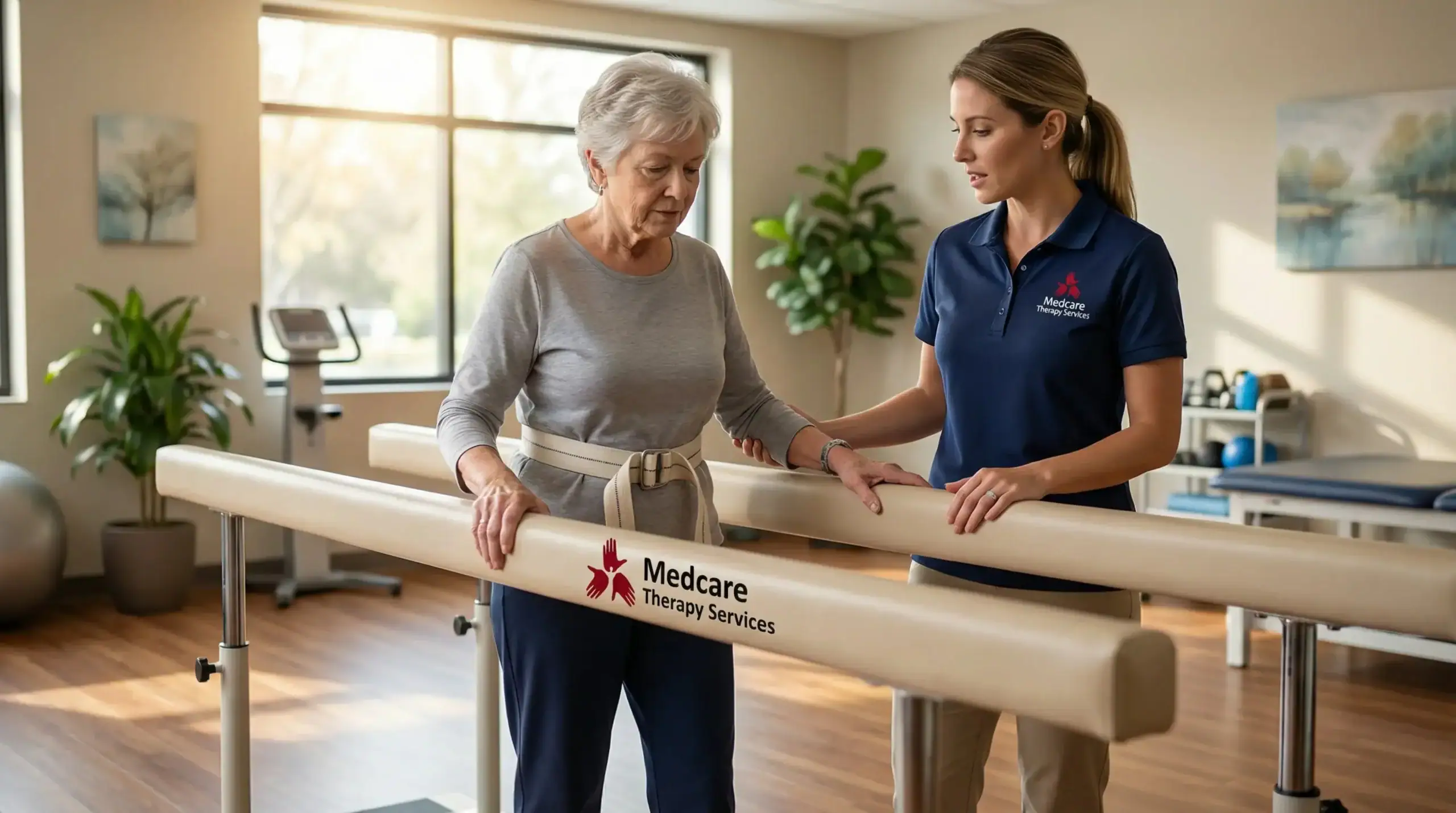
First, one of our licensed physical therapists comes to your home and conducts a full fall risk assessment. They’ll look at your strength, flexibility, balance, gait, and how you move through your daily routine. They’ll also walk through your home to spot tripping hazards like loose rugs, poor lighting, or clutter in walkways.
From there, they build a personalized treatment plan. That might include senior balance exercises, strength training for your legs and core, coordination drills, and recommendations for simple home modifications. Everything is designed around what you need, not a one-size-fits-all program.
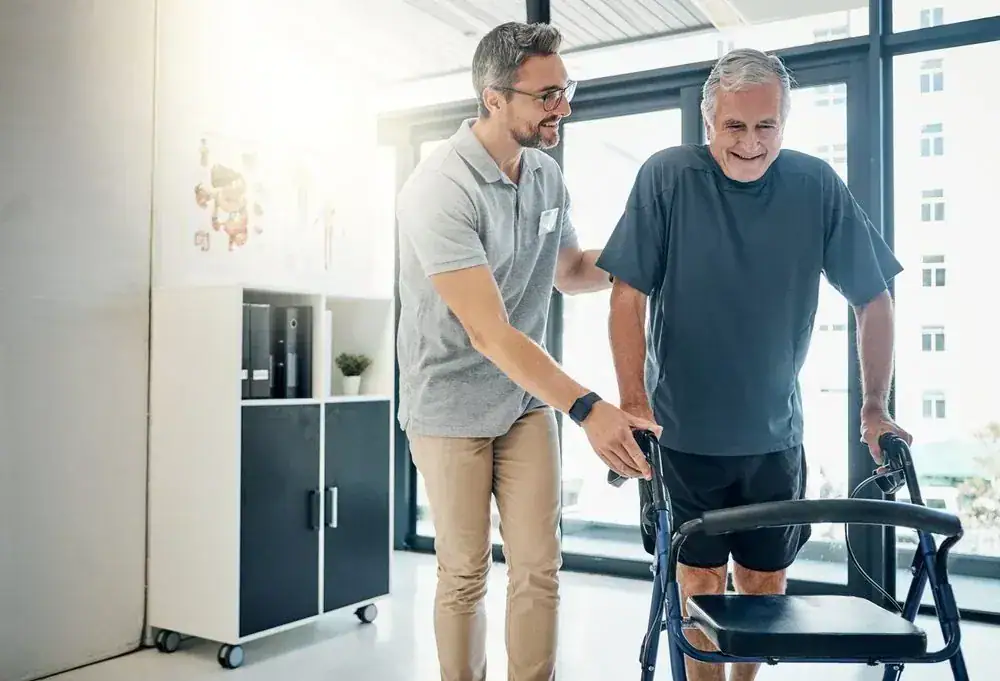
Sessions happen in your home, usually two to three times per week depending on your plan. You’ll work on functional movements: standing up from a chair, walking on different surfaces, improving your reaction time. These aren’t abstract exercises. They’re the exact movements you do every day, just done safer and stronger.
Over time, you’ll notice the difference. Stairs feel easier. You’re not grabbing onto furniture as much. You sleep better because you’re not anxious about falling in the middle of the night. That’s the goal: real improvement in how you live, not just checking a box.

Ready to get started?
You’ll receive a comprehensive fall risk assessment that identifies your specific vulnerabilities. Your therapist will measure your balance, test your strength, evaluate how you walk, and review any medications or health conditions that might increase your risk. This isn’t guesswork. It’s evidence-based evaluation.
Your treatment plan includes balance exercises tailored to your ability level, strength training focused on your legs and core, and gait training to improve how you walk. You’ll also get practical advice on making your home safer: removing tripping hazards, improving lighting, installing grab bars where they matter most.
In Uniondale, many homes were built decades ago and weren’t designed with aging in place in mind. Narrow hallways, steep stairs, older bathrooms without grab bars. We understand the local housing stock and can recommend modifications that actually fit your space and budget. Some changes cost nothing. Others might qualify for assistance through Nassau County programs.
You’ll also receive education on managing dizziness, understanding how your medications affect balance, and recognizing early warning signs that your risk is increasing. The goal is to give you the tools to stay safe long after therapy ends.

Most people start noticing improvements in balance and confidence within the first four to six weeks of consistent therapy. Research shows that evidence-based fall prevention programs can reduce fall risk by 23% to 35%, depending on the interventions used and how closely you follow the program.
That said, everyone’s timeline is different. If you’re recovering from a recent fall or dealing with multiple risk factors like muscle weakness, vision problems, or medication side effects, it might take a bit longer to see measurable change. We’ll set realistic goals based on your starting point.
The key is consistency. Attending your sessions and doing the exercises between visits makes a significant difference. Some patients see results faster because they’re diligent about their home exercise program. Others need more time to build strength and confidence. Either way, the improvements are real and backed by decades of research on elderly fall prevention.
Yes, Medicare Part B covers physical therapy for fall prevention when it’s medically necessary and prescribed by your doctor. That includes in-home therapy if you have difficulty leaving your house due to mobility issues, balance problems, or other health conditions.
You’ll typically be responsible for 20% of the Medicare-approved amount after you’ve met your deductible. If you have a Medicare Supplement plan or Medicare Advantage, your out-of-pocket costs may be lower. We accept Medicare and can verify your coverage before your first visit.
To qualify for home-based therapy, you generally need to be considered “homebound,” meaning leaving your home requires considerable effort due to illness, injury, or disability. Your doctor will need to certify this and provide a referral. Our team can help walk you through the paperwork and make sure everything is in order before we start. Most patients find the process straightforward, and the convenience of having a therapist come to you is worth it.
Your program will include exercises that challenge your balance in safe, controlled ways. That might mean standing on one foot while holding onto a counter, walking heel-to-toe in a straight line, or practicing weight shifts from side to side. These are called static and dynamic balance exercises, and they’re designed to improve your stability in real-world situations.
You’ll also do strength training focused on your legs, hips, and core. Weak muscles are one of the biggest risk factors for falls, so building strength in your quads, glutes, and calves makes a huge difference. Exercises might include sit-to-stand repetitions, leg lifts, or step-ups using a sturdy step or stair.
Coordination and reaction time drills are part of the mix too. We might have you practice catching a ball, stepping over obstacles, or changing directions quickly. These exercises train your body to respond faster when you lose your balance. Everything is tailored to your current ability level and progresses as you get stronger. You’re never pushed beyond what’s safe, but you’re always working toward improvement.
Loose throw rugs are at the top of the list. They slide underfoot and catch on walkers or canes. If you have area rugs, they need non-slip pads underneath or they need to go. Poor lighting is another major issue, especially in hallways, staircases, and bathrooms. Many older homes in Uniondale don’t have enough light switches or bright enough bulbs.
Clutter is a bigger problem than most people realize. Shoes left by the door, stacks of mail on the floor, electrical cords running across walkways. When you’re not steady on your feet, even small obstacles become tripping hazards. Bathrooms are particularly dangerous because of wet floors and the need to step over tub edges without grab bars.
Stairs without handrails or with worn carpeting are risky too. Some homes have steep basement stairs or narrow steps leading to a second floor. We’ll walk through your home and point out specific hazards you might not notice anymore because you’ve lived with them for years. Simple fixes like adding nightlights, securing rugs, and decluttering pathways can prevent a serious fall. Bigger changes like installing grab bars or improving stair railings might take more effort, but they’re worth it.
Most fall prevention programs run between six and twelve weeks, depending on your individual needs and goals. Some people need more time if they’re dealing with significant muscle weakness, a history of multiple falls, or complex medical conditions that affect balance.
We’ll reassess your progress every few weeks and adjust the plan as needed. If you’re improving quickly, you might transition to a home exercise program sooner. If you’re still struggling with certain movements or balance challenges, therapy might continue a bit longer. Medicare typically covers a set number of visits per year, and we’ll work within those limits while maximizing your outcomes.
The goal isn’t to keep you in therapy forever. It’s to give you the strength, balance, and confidence to manage on your own. By the end of the program, you should have a solid understanding of which exercises to keep doing at home, what warning signs to watch for, and when to reach out for a refresher. Many patients continue with a maintenance exercise routine long after therapy ends, and that’s exactly what we want to see.
We’ll start by asking about your fall history: how many times you’ve fallen, where it happened, what you were doing, and whether you were injured. We’ll review your medications because some drugs cause dizziness or affect balance. We’ll also ask about your daily routine and any activities you’ve stopped doing because you’re afraid of falling.
Next comes the physical assessment. We’ll test your balance using standardized tools like the Berg Balance Scale or the Timed Up and Go test. We’ll watch how you walk, how you get up from a chair, and how steady you are when you turn or reach for something. We’ll measure your leg strength, check your flexibility, and assess your coordination.
Finally, we’ll walk through your home and identify fall hazards. We’ll look at lighting, flooring, furniture placement, bathroom setup, and stairways. You’ll get specific recommendations for changes you can make right away. The whole assessment usually takes about an hour, and by the end, you’ll have a clear picture of your fall risk and a plan to address it. It’s thorough, but it’s not overwhelming. You’re in control the entire time.
Other Services we provide in Uniondale