
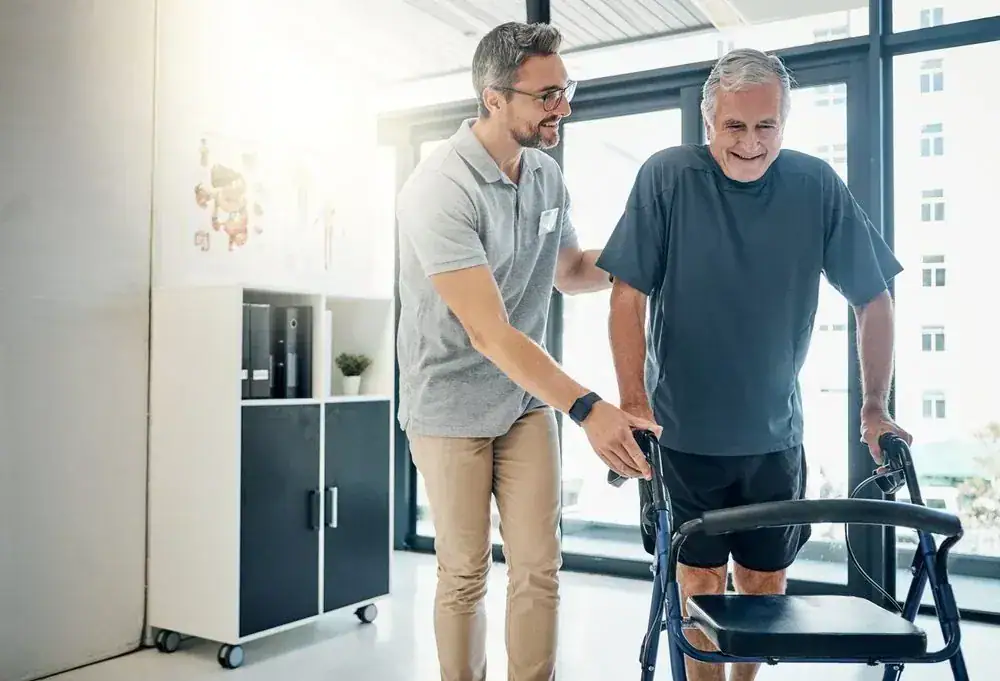
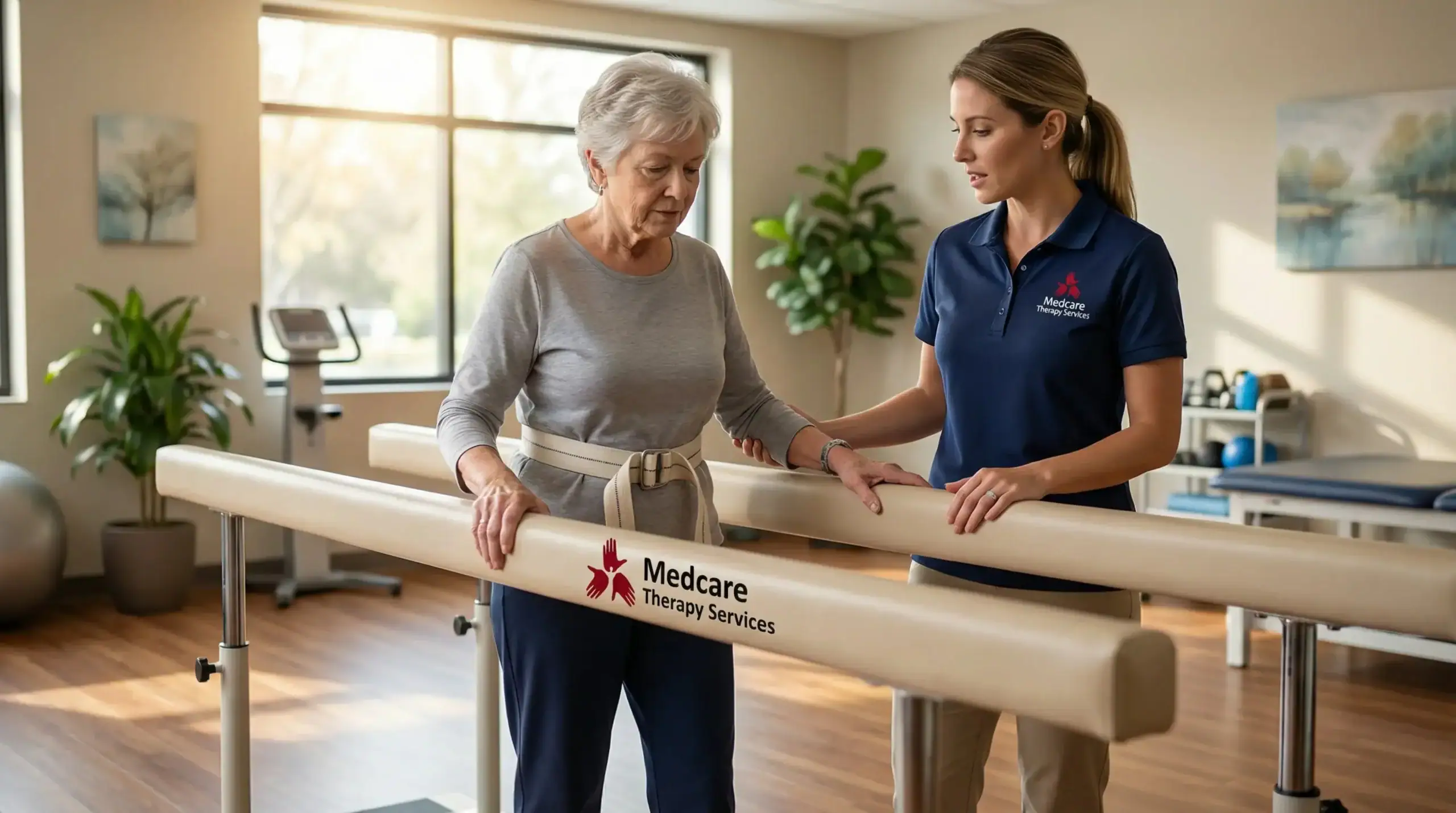
You stop planning your day around what might go wrong. You walk to the mailbox without gripping the railing. You get up at night without that split-second of hesitation.
That’s what better balance actually looks like. Not some abstract health metric, but the return of small freedoms you didn’t realize you’d given up.
Falls aren’t just accidents. They’re often the result of measurable, fixable issues: weak hip muscles, poor ankle mobility, delayed reaction time, or a home environment that hasn’t adapted to your needs. Physical therapy for balance addresses those root causes with targeted exercises that retrain your body’s stability systems.
Research consistently shows that structured fall prevention programs reduce fall risk by 30% to 35%. That’s not a small number when you consider that on Long Island, falls account for 88% of injury hospitalizations among adults over 65 in Nassau County alone. The work is simple, evidence-based, and done in your own home where it matters most.
We’ve been providing home-based physical therapy across Long Island for over a decade. We’re not new to this area, and we’re not new to fall prevention.
Our therapists are licensed, experienced, and trained specifically in balance rehabilitation for older adults. We accept Medicare and most commercial insurance plans, and we come to you—whether you’re in Stony Brook, Setauket, Port Jefferson, or anywhere across Suffolk County.
Long Island has one of the highest fall rates in New York State. Suffolk County ranks fifth statewide for fall prevalence. That means the people we serve face real, documented risk. We treat that seriously, and we treat every patient like they’re part of our own family—because in a lot of cases, after years of working together, they are.
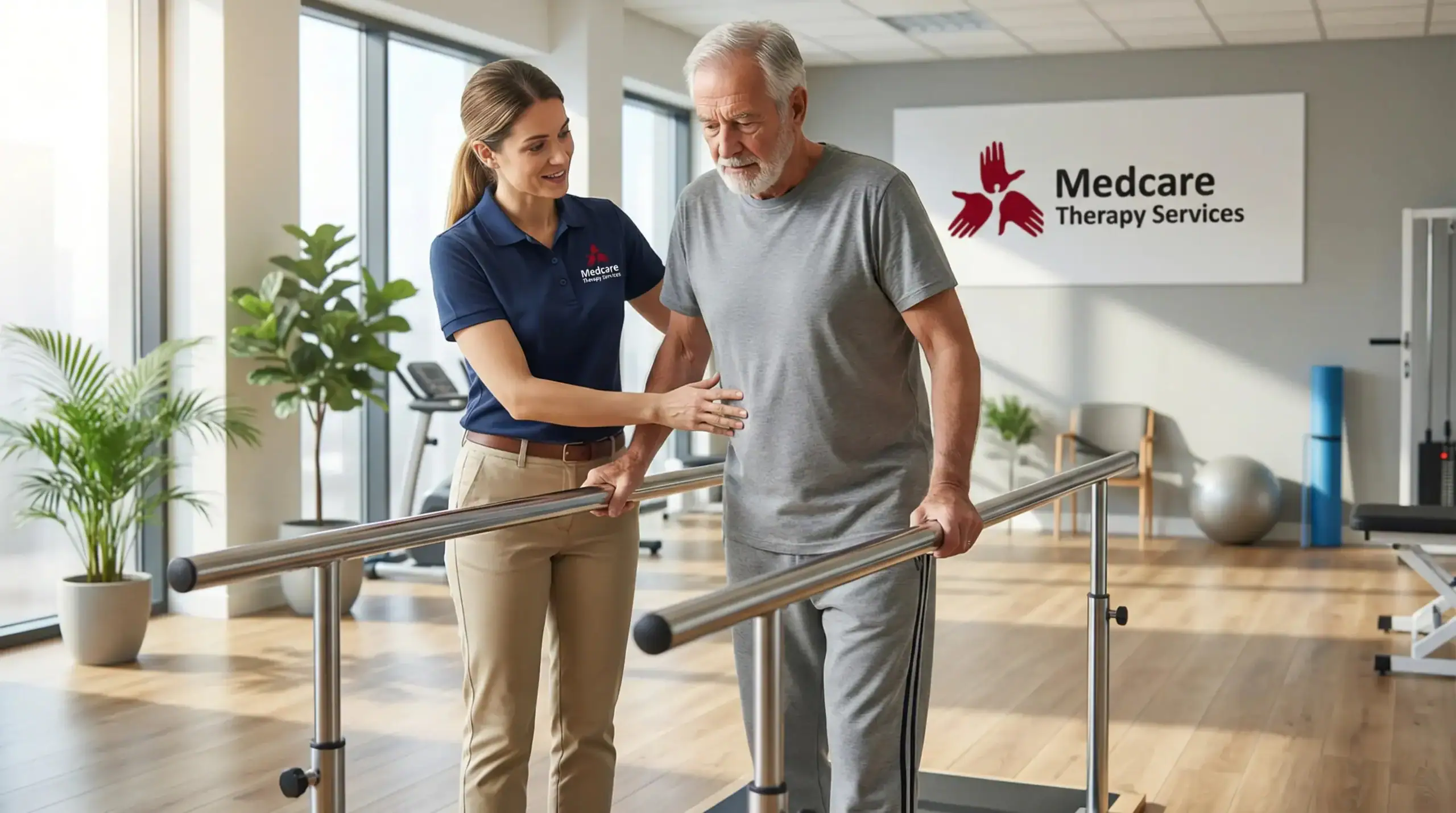
First, we come to your home and do a full fall risk assessment. That includes evaluating your strength, balance, gait, reaction time, and the layout of your living space. We’re looking at both you and your environment—because falls are almost always multifactorial.
From there, your physical therapist designs a personalized exercise plan. These aren’t generic senior balance exercises. They’re based on what we found during your evaluation: which muscles are weak, where your balance is compromised, and what movements put you at risk.
You’ll do the exercises at home, with guidance. Some target your legs and core. Others work on coordination and reaction time. Many involve real-life movements—standing from a chair, reaching for something on a shelf, walking on uneven surfaces. The goal is to make you stronger and more stable in the exact situations where you need it.
We check in regularly, adjust the program as you improve, and keep you accountable. Most people start noticing a difference within a few weeks. Better posture. More confidence. Less fear. That’s when the program starts to feel less like therapy and more like getting your life back.

Ready to get started?
Every plan starts with a comprehensive evaluation in your home. We assess intrinsic factors like muscle strength, joint mobility, vision, and medication side effects. We also evaluate extrinsic factors—lighting, rugs, stairs, bathroom setup, clutter. About 30% to 50% of falls are tied to environmental hazards, so we address both.
Your exercise program will include balance training, strength work, and functional movement drills. These might involve standing on one leg, weight shifting, stepping over obstacles, or practicing how you recover if you start to lose your balance. We also incorporate exercises that activate your core and retrain the connection between your brain and body.
On Long Island, where homes often have stairs, narrow hallways, and older layouts, the environmental piece is critical. We’ll make recommendations for grab bars, lighting, footwear, and furniture arrangement. Small changes that make a measurable difference.
You’ll also get education on fall risk factors you can control—footwear choices, medication timing, hydration, vision checks. And if you’ve already fallen, we’ll work on rebuilding your confidence so fear doesn’t become the thing that limits you. Because cutting back on activity out of fear often leads to exactly what you’re trying to avoid: weaker muscles, worse balance, and higher risk.
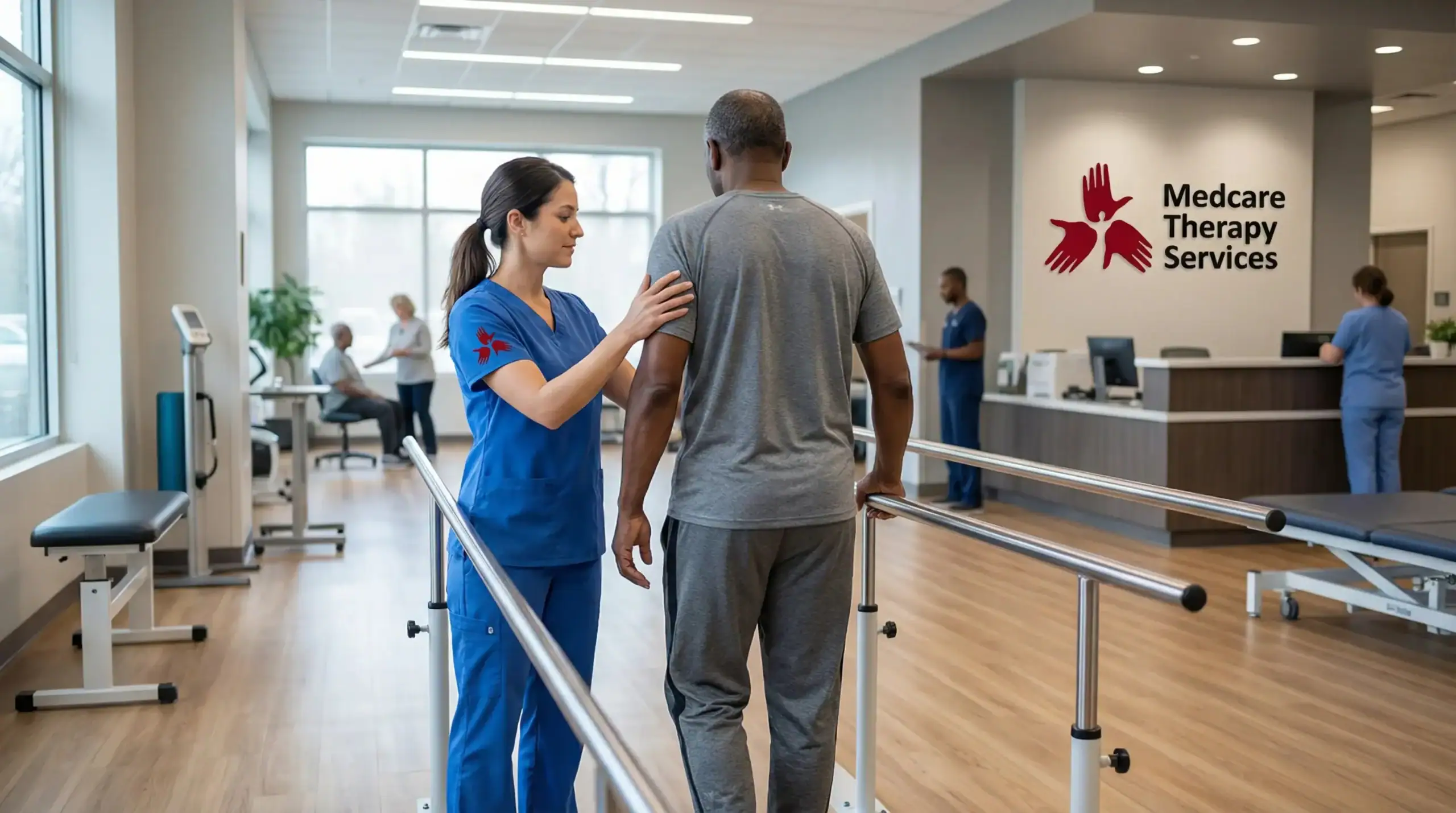
If you’ve fallen in the last year, you’re at higher risk of falling again. If you’ve had a close call or feel unsteady when you walk, that’s another sign. Even if you haven’t fallen, certain factors put you at risk: being over 65, taking four or more medications, having weak legs or poor balance, or living alone.
A lot of people don’t tell their doctor when they fall. Studies show fewer than half of older adults report it, often because they’re worried about losing independence. But falling once doubles your chance of falling again, and the consequences get more serious over time.
If you’re avoiding activities because you’re afraid of falling—skipping social events, not going outside, holding onto walls when you walk—that’s a red flag. Fear of falling can be just as limiting as an actual fall, and it often leads to a cycle of inactivity, muscle loss, and increased risk. Therapy interrupts that cycle.
We’re treating you in the environment where most falls actually happen. Sixty percent of fall-related hospitalizations occur at home. If your bathroom setup is a problem, or your stairs don’t have a railing, or your rugs slide, we see that firsthand and address it.
Home-based therapy also removes barriers. You don’t have to arrange transportation, navigate a parking lot, or sit in a waiting room. For people who have difficulty leaving the house—whether due to mobility issues, anxiety, or lack of support—home therapy makes treatment accessible.
And practically speaking, the exercises we teach you are ones you’ll do at home anyway. It makes more sense to learn them in your own space, using your own furniture and layout, so the skills transfer immediately. You’re not trying to replicate a clinic environment. You’re learning how to be safer and stronger right where you live.
Yes, Medicare Part B covers physical therapy for fall prevention when it’s medically necessary and prescribed by a doctor. That includes home health physical therapy if you meet the homebound criteria—meaning leaving your home requires considerable effort due to illness, injury, or disability.
Most commercial insurance plans also cover fall prevention therapy, though specifics vary by plan. We accept Medicare and nearly all major insurers, and we’ll verify your coverage before starting treatment so there are no surprises.
The average hospital cost for a fall injury is over $34,000. Medicare and insurers know that prevention is far cheaper than treatment after the fact. That’s why coverage for evidence-based fall prevention programs has expanded in recent years. If you’re unsure about your benefits, call us. We’ll walk you through it and handle the insurance coordination.
It depends on your starting point and your goals, but most people see meaningful improvement in six to eight weeks. Some need a few months, especially if they’re recovering from a fall or dealing with multiple risk factors.
You’ll typically have therapy sessions once or twice a week at first, then less frequently as you get stronger and more confident. Between sessions, you’ll do exercises on your own. Consistency matters more than intensity. Even adults over 80 show significant improvements in gait, posture, and stability with regular balance training.
The goal isn’t to keep you in therapy forever. It’s to give you the tools, strength, and confidence to manage your own risk long-term. Once you’ve built a solid foundation, many people continue with a maintenance routine at home and check in periodically if anything changes.
That fear is completely understandable, and it’s also one of the most important things we address in therapy. After a fall, many people develop an excessive fear of falling that causes them to limit their activities. That leads to weaker muscles, worse balance, and ironically, a higher risk of falling again.
We work on rebuilding both your physical stability and your confidence. Part of that is strength and balance training. Part of it is practicing controlled movements in a safe environment so your brain relearns that movement doesn’t have to mean danger.
We also teach you how to recover if you start to lose your balance, and what to do if you fall. Knowing you have a plan reduces anxiety. And as your strength improves and you start moving more easily, the fear naturally decreases. You start trusting your body again. That’s often the turning point where people go from just surviving to actually living again.
Yes. In fact, most people who need fall prevention therapy have other conditions—arthritis, neuropathy, vision problems, osteoporosis, or a history of stroke. Falls in older adults are almost always multifactorial, meaning several things contribute to the risk.
Your physical therapist will design a program that accounts for your specific health issues. If you have arthritis, we’ll focus on joint-friendly movements. If you have neuropathy and reduced sensation in your feet, we’ll work on compensatory strategies and environmental modifications. If you’re recovering from a stroke, we’ll incorporate gait training and coordination work.
We also coordinate with your doctor and other providers to make sure everyone’s on the same page. If a medication is affecting your balance, that’s something your physician needs to know. If you need a vision check or a podiatry referral, we’ll recommend it. Fall prevention works best when it’s part of a broader approach to your health, and we’re experienced at working within that framework.
Other Services we provide in Stony Brook University