
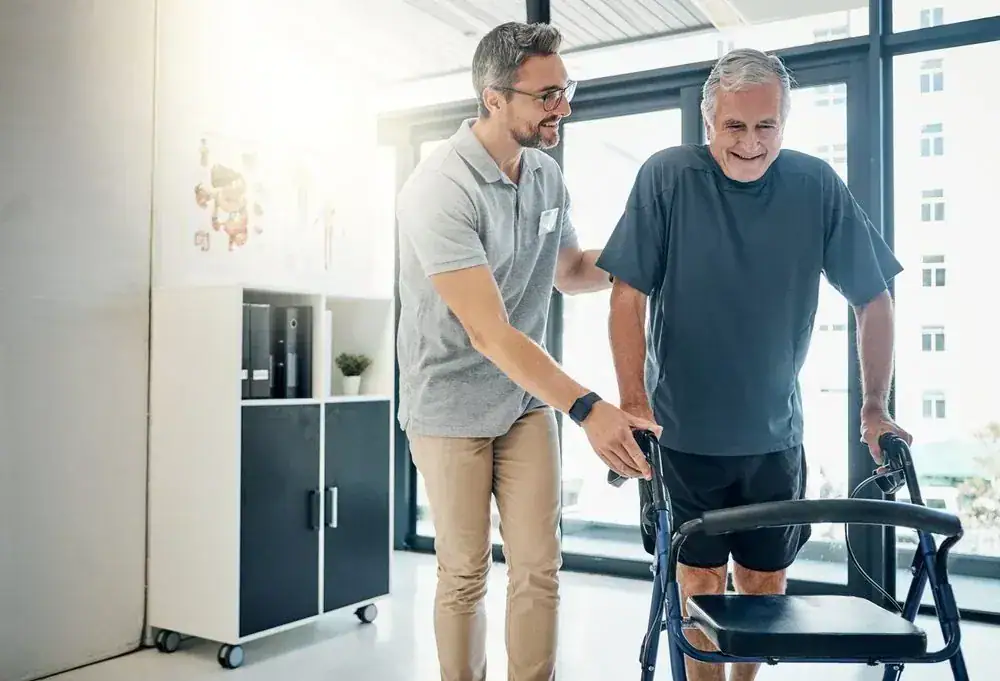
Here’s what matters: you’re not looking for a lecture about being careful. You want to walk to the mailbox, get out of the shower, or reach for something on a shelf without that split-second panic.
That fear isn’t in your head. Nassau County ranks 4th in New York State for fall-related incidents, and 88% of injury hospitalizations for adults over 65 here are from falls. Long Island seniors face statistically higher fall risks than almost anywhere else in the state.
Fall prevention isn’t about wrapping yourself in bubble wrap. It’s about rebuilding the strength, balance, and movement patterns that let you live without second-guessing every step. Research shows the right interventions reduce fall risk by 30% to 35%. That’s not a small number when you’re talking about staying in your own home, keeping your independence, and avoiding a trip to the ER.
You get stronger. You move better. You stop planning your day around what might go wrong.
We’ve been providing home physical therapy across Long Island for over a decade. We’re not new to South Huntington, NY, and we’re not new to working with older adults who need more than a handout with generic exercises.
Our therapists are licensed, trained specifically in balance disorders and fall prevention, and we accept Medicare along with nearly all commercial insurance. We come to your home because we know getting to a clinic isn’t always easy, and frankly, your home is where most falls happen anyway.
You’re not a number here. Every plan is built around what you need, what you can do right now, and where you want to be in three months. We’ve worked with hundreds of South Huntington residents who were afraid to move and helped them get back to living without that constant worry.
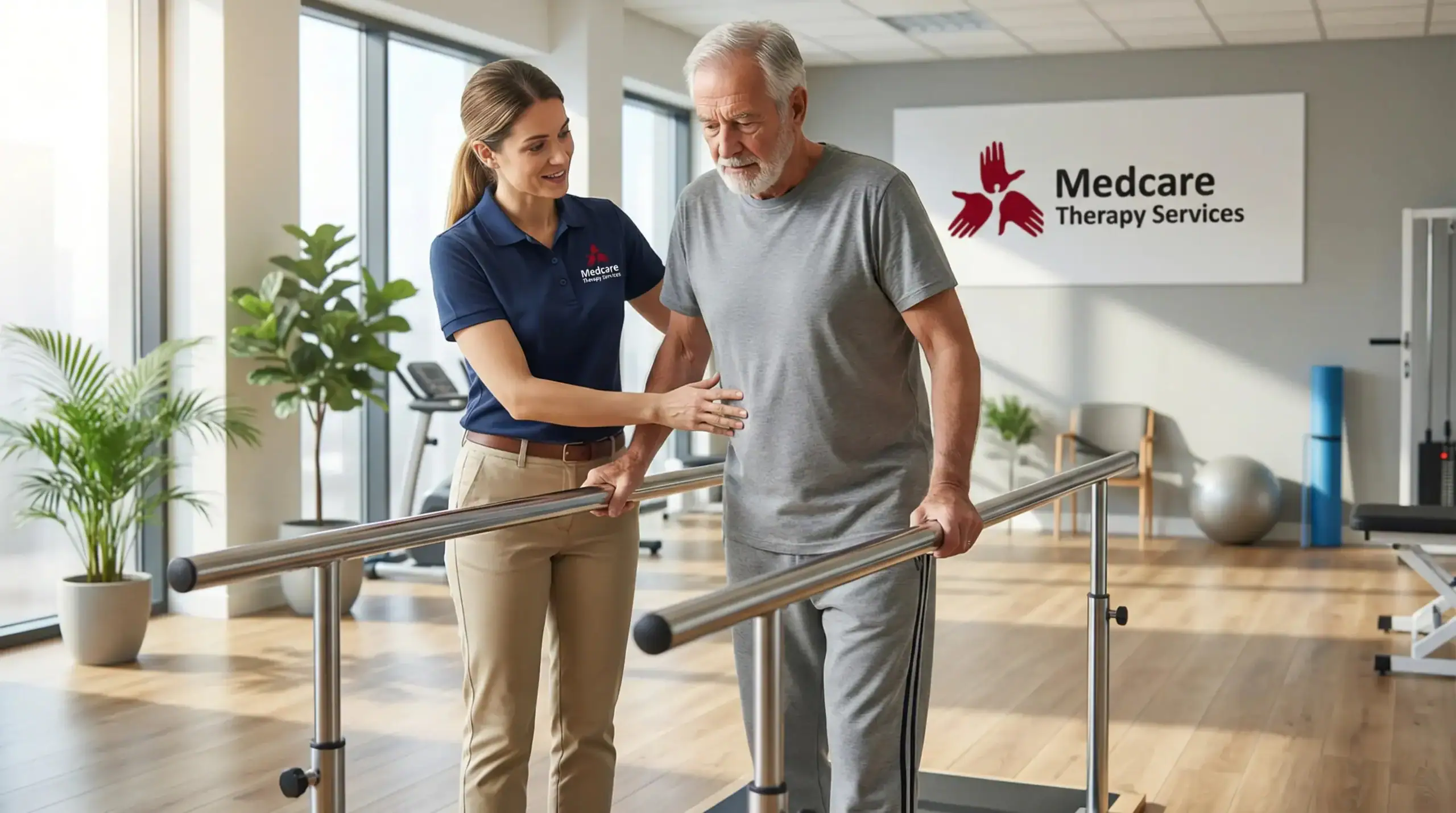
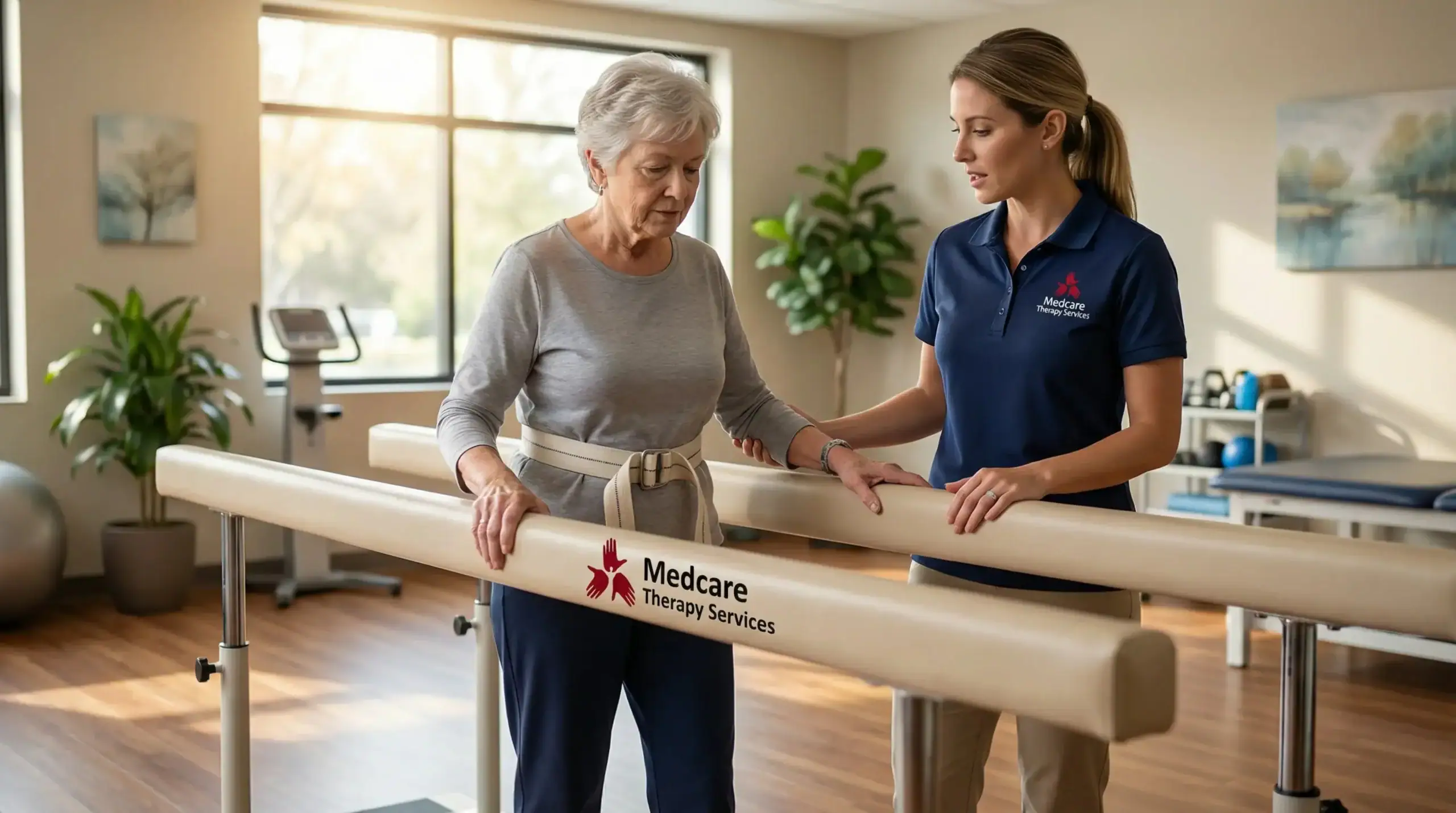
First, a licensed physical therapist comes to your home and does a full fall risk assessment. They’re looking at your strength, your balance, how you walk, your medications, and your home environment. They’re checking things like lighting, rugs, grab bars, and whether your bathroom setup is working against you.
From there, they build a personalized program. This isn’t a one-size-fits-all sheet of exercises. It’s based on what they found during your assessment and what your specific goals are. Maybe it’s getting up from a chair without using your arms. Maybe it’s walking outside again without someone next to you.
You’ll do balancing exercises and strength training that’s designed for where you are right now, not where you were 20 years ago. Sessions happen in your home, at your pace, with someone who adjusts things as you improve. They’ll also recommend home modifications if needed, like adding a grab bar or removing a tripping hazard.
As you get stronger and more stable, the exercises progress. The goal isn’t just to prevent a fall. It’s to give you back the confidence to move through your day without fear.

Ready to get started?
You get a licensed physical therapist who comes to your home and evaluates your specific fall risk factors. That includes strength testing, balance assessment, gait analysis, a medication review for anything that might make you dizzy, and a walkthrough of your home to spot hazards you might not notice anymore.
Then you get a treatment plan that’s yours. It includes exercises to improve your balance and leg strength, training to help you react if you start to lose your footing, and strategies to move safely during daily activities. If you’ve already fallen, we work on rebuilding your confidence in a controlled, supportive way so fear doesn’t keep you from moving.
Here in South Huntington, NY, we see a lot of homes with stairs, older layouts, and spaces that weren’t designed with aging in mind. Your therapist will recommend modifications that make sense for your home and your budget. Sometimes it’s as simple as better lighting or moving a piece of furniture.
Everything is covered by Medicare and most insurance plans, so you’re not paying out of pocket for something that could literally save your life. From 2018 to 2023, fall-related deaths among New Yorkers 60 and older increased by 25%. This isn’t a minor issue, and it’s not something to put off.

The exercises that work are the ones that challenge your balance in a safe, progressive way. That means standing on one leg with support nearby, heel-to-toe walking, weight shifts, and controlled movements that mimic real-life situations like reaching for something or turning around.
Strength training matters just as much. Your legs need to be strong enough to catch you if you start to stumble. Exercises like sit-to-stand, step-ups, and resistance work for your hips and ankles make a measurable difference. Research shows that combining balance and strength training can cut fall risk in half.
Your therapist will also work on reaction time and coordination. If you start to lose your balance, your body needs to respond fast. We practice that in a controlled environment so it becomes automatic. These aren’t complicated moves, but they need to be done correctly and progressed at the right pace, which is why doing this with a professional matters more than following a video online.
Most people notice improvements in confidence and stability within four to six weeks if they’re consistent with their exercises. Strength takes a bit longer, usually eight to twelve weeks, but you’ll feel the difference before you see it on a test.
The timeline depends on where you’re starting from. If you’ve had a recent fall and you’re dealing with fear and deconditioning, it might take a few extra weeks to rebuild that foundation. If you’re generally active but noticing some balance issues, you might progress faster.
What matters more than speed is consistency. Doing your exercises three to four times a week, even for 15 to 20 minutes, will get you further than sporadic longer sessions. Your therapist will track your progress with objective measures like how long you can stand on one leg, how fast you walk, and whether you’re using assistive devices less often. You’ll know it’s working when you stop thinking about every step you take.
Yes. Medicare Part B covers physical therapy for fall prevention if it’s medically necessary and prescribed by a doctor. That means if you’ve had a fall, you’re at risk for falling, or you have a condition that affects your balance, you’re likely covered.
You’ll need a referral or prescription from your physician, but once that’s in place, Medicare covers the evaluation and treatment sessions. There’s no specific limit on the number of sessions, but your therapist has to document that you’re making progress and that continued therapy is necessary.
We accept Medicare and handle the billing directly, so you’re not stuck figuring out paperwork or waiting for reimbursement. Most people have a copay or coinsurance depending on their plan, but the bulk of the cost is covered. If you have a Medicare Advantage plan or supplemental insurance, coverage can be even better. We’ll verify your benefits before we start so there are no surprises.
Your home is where most falls happen. More than half of fall-related hospitalizations for older adults are from falls at home. If we’re only working with you in a clinic, we’re missing the actual environment where you need to be safe.
When a therapist comes to your home, they see the real obstacles: the rug that bunches up, the lighting that’s too dim in the hallway, the step into the bathroom that’s higher than you realize. They can assess how you move in your actual space and make recommendations that are specific to your layout, not generic advice.
There’s also the practical side. If getting to a clinic is difficult because of transportation, mobility issues, or just the effort it takes, you’re less likely to stick with therapy. Home-based care removes that barrier. You get the same quality treatment, the same licensed therapists, and the same evidence-based exercises, but without the stress of leaving your house. For a lot of people in South Huntington, NY, that’s the difference between doing the program and skipping it.
Absolutely. In fact, if you’ve already fallen, you’re at higher risk of falling again, which makes therapy even more important. After one or two falls, many people develop a strong fear of falling that limits their activity. That fear leads to less movement, which leads to weaker muscles and worse balance, which increases fall risk. It’s a cycle, and therapy breaks it.
Your therapist will work on rebuilding your physical strength and balance, but also on addressing that fear. We use graded exercises in a supportive environment so you can regain confidence in your movement. You’ll practice the specific activities that make you nervous, like getting in and out of the shower or walking on uneven surfaces, until they feel manageable again.
We’ll also figure out why you fell in the first place. Was it a strength issue? A balance problem? A medication side effect? A hazard in your home? Once we know the cause, we can address it directly so it doesn’t happen again. Falls aren’t inevitable, and having fallen before doesn’t mean you’re destined to keep falling. It means you need a plan, and that’s exactly what this program gives you.
Look for licensed physical therapists with specific training in balance disorders and fall prevention, not just general PT experience. You want someone who understands the research, knows what interventions actually work, and can tailor a program to your specific risk factors.
Make sure the program includes a comprehensive assessment, not just a quick screening. That means evaluating your strength, balance, gait, medications, vision, and home environment. A good program addresses all of those factors, not just one or two.
You also want a program that’s personalized and progressive. Cookie-cutter exercise sheets don’t work because everyone’s starting point and goals are different. The exercises should get harder as you get stronger, and your therapist should be tracking objective progress, not just asking how you feel. Finally, check that they accept your insurance and that the program is convenient for you, whether that’s in-home visits or a clinic location that’s actually accessible. If it’s hard to participate, you won’t stick with it, and consistency is what gets results.
Other Services we provide in South Huntington