
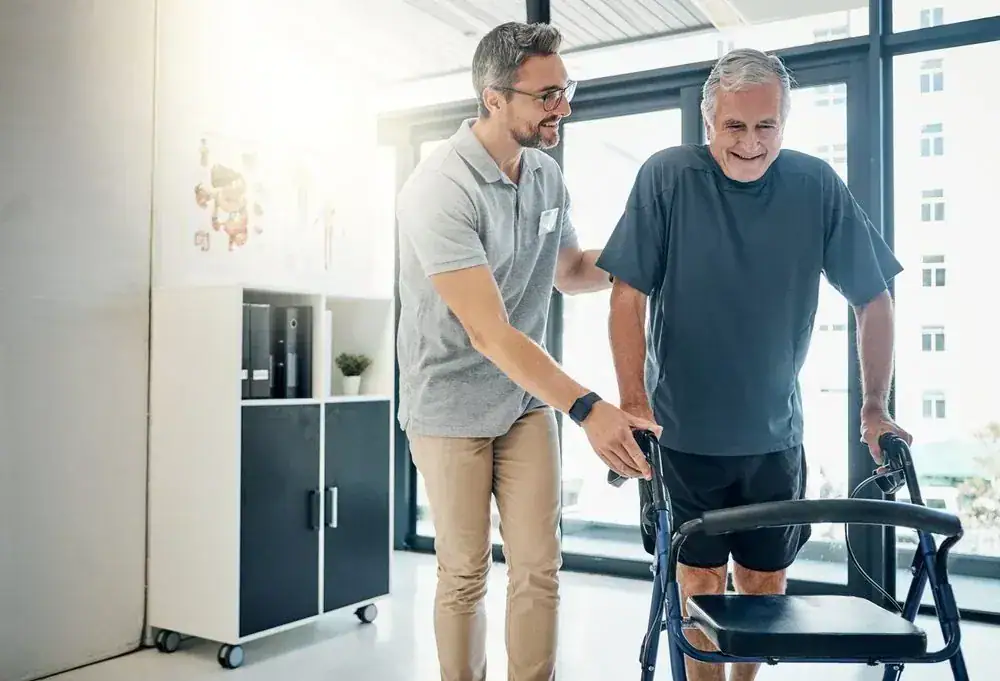
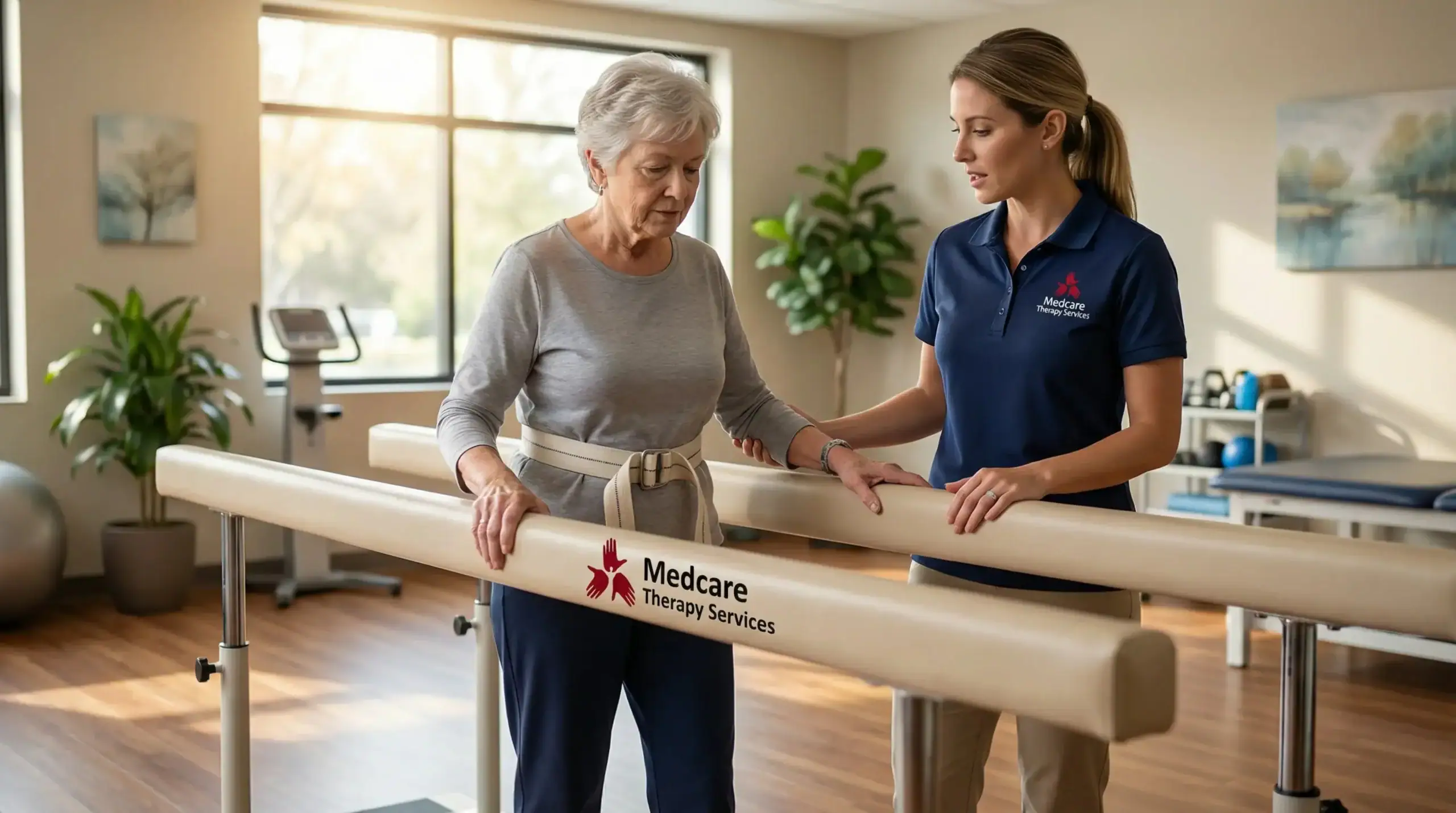
You stop planning your day around what feels safe. The bathroom at night, the stairs to the basement, walking to get the mail—these stop being calculated risks.
Research shows that targeted balance exercises for seniors can reduce your fall risk by 30% to 35%. That’s not a small number when you consider that falling once doubles your chance of falling again. And it’s not just about avoiding injury—it’s about keeping the life you’ve built.
When your balance improves, so does everything connected to it. Your posture gets better. Your gait steadies. You feel less anxious about moving through spaces that used to make you hesitate. Even adults over 80 see measurable improvements in stability with consistent training.
The goal isn’t just preventing a fall. It’s making sure you can live in your own home, on your own terms, without that constant background worry.
We work with older adults across Long Island who want to stay steady, independent, and confident. Our Doctors of Physical Therapy specialize in geriatric care and balance disorders—not as a side service, but as a core focus.
We’re located near Sea Cliff and serve the surrounding North Shore communities, including Glen Cove, Glen Head, and Glenwood Landing. You’re not traveling across the island for care. And you’re not getting a one-size-fits-all program.
Every fall prevention plan starts with a full assessment of your specific risk factors—your strength, your gait, your balance, your home environment, your medication list. Then we build a program around what your body actually needs to improve. That’s how you get results that stick.
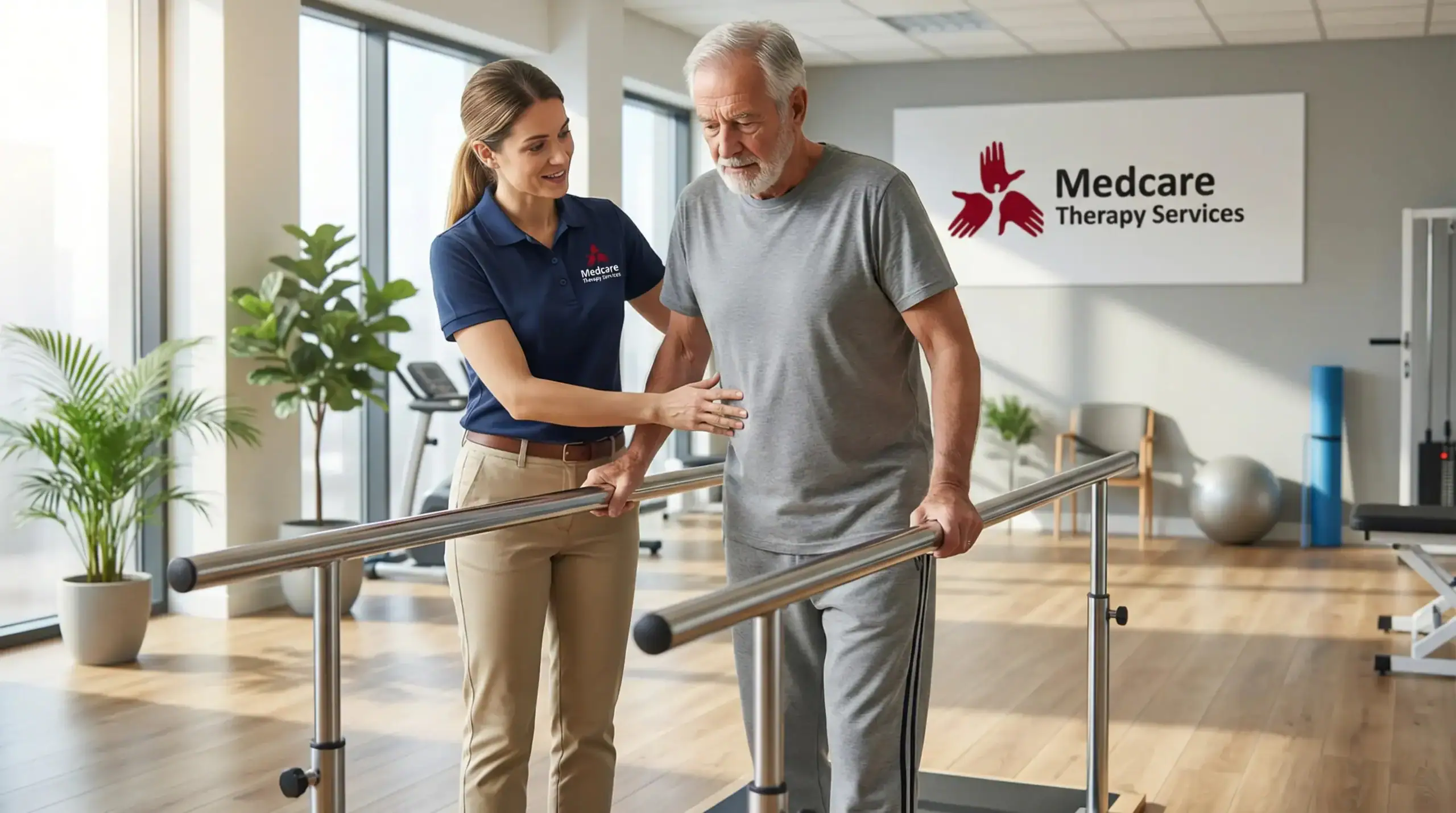
Your first session is an evaluation. We assess your balance, strength, gait, and coordination. We talk about your fall history, your medications, and any chronic conditions that might be affecting your stability. This isn’t a checklist—it’s a conversation that helps us understand what’s actually going on.
From there, we design a personalized exercise program. That typically includes balance training, strength work for your legs and core, and gait training to improve how you walk. If you’ve had a fall or you’re dealing with fear of falling, we address that too. Fear limits movement, and limited movement makes you weaker. It’s a cycle we can break.
We also talk through your home. Most falls happen at home, and a lot of them are preventable with simple modifications. We’ll walk you through what to look for—loose rugs, poor lighting, clutter in walkways—and how to make your space safer.
Sessions are typically scheduled two to three times per week at the start, then adjusted based on your progress. You’ll work with the same therapist throughout, so there’s continuity. And because we accept Medicare and most insurance plans, cost doesn’t have to be a barrier.

Ready to get started?
You get a comprehensive fall risk assessment that looks at all the factors contributing to instability—not just one or two. That includes evaluating your muscle strength, joint mobility, reaction time, vision, medication side effects, and environmental hazards.
Your exercise program is tailored to your current ability level. If you’re already active, we push you further. If you’re starting from a place of fear or weakness, we meet you there and build gradually. Senior balance exercises might include standing work, weight shifts, walking patterns, or functional movements that mimic your daily activities.
For Long Island residents, especially in areas like Sea Cliff where many homes have stairs, steps, and older layouts, we focus heavily on real-world application. You’re not just doing exercises for the sake of exercises—you’re training your body to handle the specific demands of your environment.
We also provide education. You’ll learn why certain medications increase fall risk, how to get up safely if you do fall, and what warning signs to watch for. And if you need it, we coordinate with your physician or other specialists to make sure everyone’s on the same page about your care.

If you’ve fallen in the past year, you need it. Falling once doubles your chance of falling again, even if you weren’t hurt the first time.
But you don’t have to wait for a fall. If you’re feeling unsteady on your feet, avoiding certain activities because you’re worried about balance, or if you’ve noticed your walking has changed, those are signs your stability is declining. Fear of falling is also a red flag—it often leads to less activity, which makes you weaker and more likely to fall.
Other indicators include taking four or more medications, having a chronic condition like Parkinson’s or arthritis, or experiencing dizziness or vision changes. If any of that sounds familiar, an evaluation makes sense. The earlier you address balance issues, the easier they are to correct.
Your first visit is an assessment. We’ll ask about your fall history, your medical conditions, the medications you’re taking, and any concerns you have about your balance or mobility.
Then we’ll do some physical tests. That usually includes watching you walk, checking your leg strength, testing your balance in different positions, and evaluating your coordination and reaction time. None of it is pass-or-fail—we’re just gathering information about where you’re starting from.
The whole appointment typically takes about an hour. By the end, you’ll have a clearer picture of your fall risk and what’s contributing to it. We’ll also talk through next steps and what a treatment plan might look like for you. You’re not locked into anything after the first visit, but most people leave with a better understanding of what’s going on and what can be done about it.
Most people see noticeable improvement in six to eight weeks with consistent sessions. But that depends on where you’re starting from and how often you’re coming in.
If you’re dealing with significant weakness or you’ve had multiple falls, it might take longer to build up your strength and confidence. If you’re catching balance issues early, you might progress faster. The key is consistency—balance training works, but it works best when you’re doing it regularly.
After the initial program, some people continue with maintenance sessions once a week or once a month. Others feel confident enough to keep up with exercises at home. We’ll adjust based on your goals and what your body needs. The point isn’t to keep you in therapy forever—it’s to get you stable and keep you that way.
Medicare covers physical therapy for fall prevention when it’s medically necessary, and most private insurance plans do as well. Medical necessity usually means you have a documented fall risk—either you’ve fallen recently, you have a condition that affects balance, or a physician has referred you for therapy.
We accept Medicare and most major insurance plans. During your first visit, we’ll verify your coverage and let you know what your out-of-pocket costs will be, if any. Most people are surprised by how affordable it is, especially compared to the cost of a fall-related injury.
If you’re unsure about your coverage, call us before your appointment. We can check your benefits and walk you through what to expect. The last thing you need is a surprise bill, and we do everything we can to make sure that doesn’t happen.
Yes. Studies consistently show that balance exercises improve stability in older adults, even those over 80. Your age doesn’t disqualify you from getting stronger or more coordinated.
What matters more than your age is your willingness to show up and do the work. Balance training isn’t passive—you have to participate. But the exercises are tailored to what you can handle right now, and we progress from there. You’re not competing with anyone else or trying to hit some arbitrary standard.
The reality is that falls aren’t a normal part of aging. They’re often the result of muscle weakness, poor balance, or environmental hazards—all of which can be addressed. If you’re over 80 and you’re worried about falling, therapy is one of the most effective things you can do to protect yourself.
We treat fall prevention as a specialty, not an add-on. Our therapists have specific training in geriatric care and balance disorders, and they work with older adults every day. You’re not getting a general physical therapist who occasionally sees someone with balance issues—you’re getting someone who knows this area inside and out.
We also focus heavily on function. The exercises you do in our clinic are designed to translate directly to your daily life. If you struggle with stairs, we work on stairs. If getting in and out of the car is hard, we address that. It’s not about checking boxes—it’s about making sure you can do the things you need to do.
And because we’re local to Sea Cliff and the surrounding North Shore communities, we understand the environment you’re living in. We know the housing stock, the terrain, the lifestyle. That context matters when we’re designing a program that actually works for you.
Other Services we provide in Sea Cliff