
One in four older adults falls each year. Most don’t report it until something breaks or the fear becomes too much to ignore.
You don’t have to wait for that. Physical therapy for balance works because it addresses what actually causes falls: weak legs, poor coordination, slow reaction time, and environments that haven’t been set up for safety. Research shows the right program can cut your fall risk by 30 to 35 percent.
That means fewer close calls. More confidence getting up from a chair, walking to the mailbox, or moving around your own home without second-guessing every step. You’re not trying to avoid life. You’re trying to live it without constantly looking down or holding on.
Fall prevention isn’t about wrapping yourself in bubble wrap. It’s about building the strength and stability you need to move through your day without fear taking over.
We’ve been providing in-home physical therapy across Nassau and Suffolk counties for over a decade. We specialize in fall prevention for older adults because we’ve seen what happens when balance issues go unaddressed.
Long Island ranks fourth and fifth in New York State for fall prevalence among seniors. In this area, 88% of injury-related hospitalizations for adults over 65 are due to falls. Roslyn Heights has a large senior population, and the risks are real.
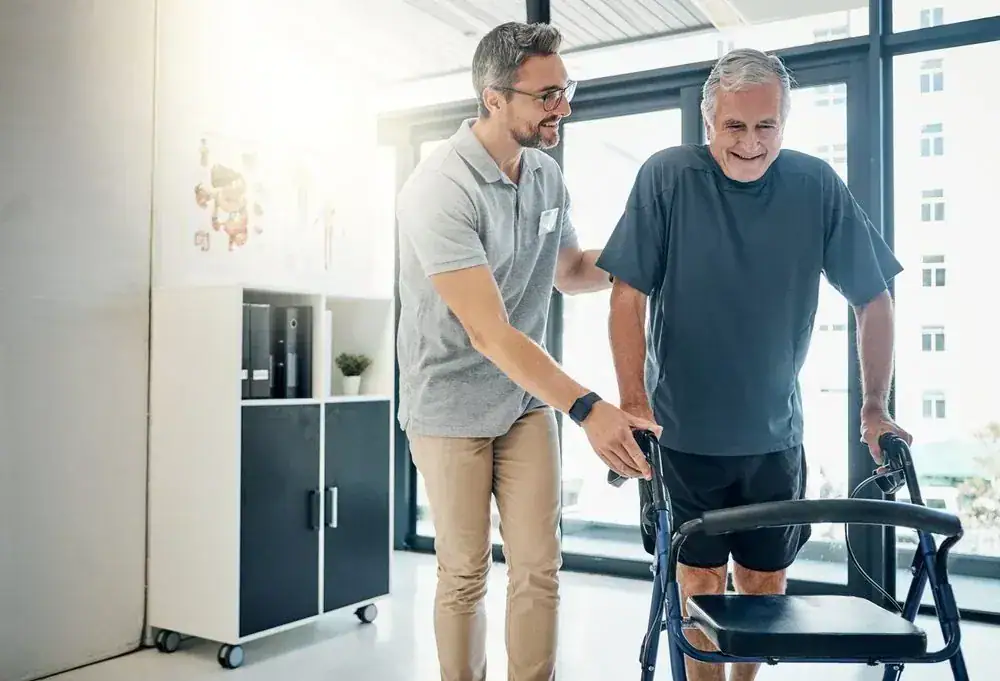
We bring licensed physical therapists to your home. They assess your strength, balance, gait, and environment, then build a plan around what you actually need. No generic exercises. No guessing. Just focused care that helps you stay on your feet.

First, a licensed physical therapist comes to your home and evaluates your current mobility. They’ll watch how you walk, test your balance, check your leg strength, and ask about any falls or near-misses you’ve had. They’ll also look at your home setup: lighting, rugs, furniture placement, bathroom safety.
From there, they design a personalized fall prevention program. This typically includes balance exercises for seniors, strength training for your legs and core, coordination drills, and specific recommendations to make your home safer. Many of our clients follow a custom Otago-based program, which is one of the most researched and effective fall prevention methods available.
Sessions happen in your home, usually one to three times per week depending on your needs and insurance coverage. You’ll also get exercises to do between visits. The goal isn’t just to get through the program. It’s to build habits and strength that last long after therapy ends.
Most people notice improvements in confidence and stability within the first few weeks. And because we accept Medicare and most commercial insurance, cost doesn’t have to be a barrier.

Ready to get started?
Every fall prevention plan we create includes a full assessment of your balance, gait, strength, and coordination. Your therapist will measure how you move now and identify the specific factors putting you at risk.
You’ll receive senior balance exercises tailored to your ability level. These aren’t one-size-fits-all routines. They’re progressive, meaning they start where you are and build from there. Exercises focus on improving posture, strengthening your legs and core, and training your body to react faster when you lose your balance.
We also address your environment. Falls don’t just happen because of weak muscles. They happen because of poor lighting, loose rugs, clutter, or bathrooms without grab bars. Your therapist will walk through your home and recommend changes that make a measurable difference.
In Roslyn Heights and across Long Island, many of our clients are dealing with multilevel homes, stairs, and spaces that weren’t designed with aging in mind. We help you adapt those spaces so they work for you now. And because fall-related healthcare costs hit $80 billion nationally in 2022, prevention isn’t just smart for your health. It’s smart financially.

Most people start noticing improvements in balance and confidence within three to four weeks of consistent therapy. That doesn’t mean you’re done at that point, but it’s when you’ll typically feel steadier on your feet and less anxious about moving around.
The full program usually runs eight to twelve weeks, depending on your starting point and goals. Some people need more time. Some need less. What matters is that the exercises are done correctly and regularly, both during sessions and on your own between visits.
Research backs this up. Studies on balance training show measurable improvements in gait, posture, and stability even in adults over 80. The key is sticking with it long enough for your body to adapt and build new strength.
In New York State, you can access physical therapy without a prescription for up to 30 days or 10 visits. That means if you’re worried about falling or you’ve already had a close call, you can call us directly and get started.
After that initial period, most insurance plans, including Medicare, will require a physician’s order to continue coverage. But we handle that coordination. If you don’t have a doctor lined up, we can help connect you with one.
The point is, you don’t have to wait weeks for an appointment with your primary care doctor before getting help. If you’re at risk, you can start now.
In-home therapy lets us see exactly where you live and how you move in your actual environment. That’s huge. A clinic can test your balance on flat floors under bright lights, but it can’t show us the uneven threshold in your hallway or the dim lighting in your bathroom.
We also work with people who have a hard time leaving the house. If you’re already unsteady or anxious about falling, getting to and from appointments can feel risky. In-home care removes that barrier.
And practically speaking, it’s more convenient. You don’t have to arrange rides, sit in waiting rooms, or lose half your day to a 45-minute session. Your therapist comes to you, works with you where you actually need the help, and leaves you with a plan you can keep using.
Yes. Medicare Part B covers physical therapy when it’s medically necessary, which includes fall prevention if you’re at risk or have a history of falls. You’ll typically be responsible for 20% of the Medicare-approved amount after you’ve met your deductible.
We accept Medicare and handle the billing directly. That means you’re not stuck filing claims or chasing reimbursements. We also work with most commercial insurance plans, so coverage isn’t limited to Medicare recipients.
If you’re not sure what your plan covers, call us. We’ll verify your benefits before your first session so there are no surprises. Cost shouldn’t be the reason you don’t get help, and in most cases, it’s covered.
The most effective exercises are the ones that challenge your balance in a controlled way while also building leg and core strength. That includes single-leg stands, heel-to-toe walking, sit-to-stand repetitions, and weight shifts.
But here’s the thing: the best exercise for you depends on where you’re starting. If you’re already unsteady, jumping into advanced balance drills can do more harm than good. A physical therapist will assess your current ability and design a program that’s challenging but safe.
We often use Otago-based protocols, which are backed by decades of research and have been shown to reduce falls by 30 to 35 percent. These programs combine strength, balance, and walking exercises in a specific progression. They work because they’re not random. They’re built on evidence, and they’re adapted to your individual needs.
If you’ve fallen in the past year, you’re at risk. If you’ve had a near-miss or felt unsteady more than once, you’re at risk. If you avoid certain activities because you’re afraid of falling, that’s a red flag too.
Other signs include difficulty getting up from a chair without using your hands, trouble walking on uneven surfaces, dizziness or lightheadedness when you stand, and muscle weakness in your legs. Even something like taking four or more medications can increase fall risk because of side effects or interactions.
Long Island has some of the highest fall rates in New York State, and Roslyn Heights has a significant senior population. The risks here are real, but they’re also preventable. A physical therapist can run a formal fall risk assessment in your home and give you a clear picture of where you stand. From there, you’ll know exactly what needs to change.
Other Services we provide in Roslyn Heights