
You stop planning your day around what feels safe. The bathroom at night isn’t a risk anymore. Getting the mail doesn’t require a mental checklist.
That’s what happens when balance exercises for seniors are done right. Research shows physical therapy programs reduce fall rates by 23% and can cut fall incidents by up to 37% in older adults. But the real change isn’t in the statistics—it’s in how you move through your home.
Most people start noticing improvements within 4 to 6 weeks. Your legs feel steadier. Transitions from sitting to standing get smoother. You’re not second-guessing every step. And after 8 to 12 weeks of consistent work, you’ve rebuilt strength and coordination that lasts.
This isn’t about doing generic exercises from a printout. It’s about a licensed therapist assessing your specific fall risks—weak ankles, poor proprioception, medication side effects, vision issues—and building a program that addresses what’s actually making you unsteady. Every session is in your home, covered by Medicare, and focused on keeping you independent.
We’ve been providing home-based physical therapy across Long Island for over a decade. We specialize in helping people who can’t easily get to a clinic—or who just don’t want the hassle.
Plandome Heights has one of the highest median household incomes on Long Island, and residents here expect competence, reliability, and respect for their time. That’s what we deliver. Our therapists are licensed, our programs are evidence-based, and our scheduling is flexible. We handle Medicare billing directly, and we show up when we say we will.
Long Island has higher fall rates than the New York state average. Nassau and Suffolk counties rank 4th and 5th statewide for fall prevalence among older adults. That means if you’re feeling unsteady, you’re not alone—and you’re in the right place to do something about it.

First, we do a comprehensive fall risk assessment in your home. A licensed physical therapist evaluates your strength, balance, gait, vision, medication list, and home environment. We’re looking for the specific reasons you’re at risk—not just checking boxes.
Then we build a custom program. If your ankles are weak, we strengthen them. If your reaction time is slow, we work on that. If your home has tripping hazards, we point them out. The exercises are functional, meaning they mimic real movements you do every day—standing from a chair, reaching for something on a shelf, walking on uneven surfaces.
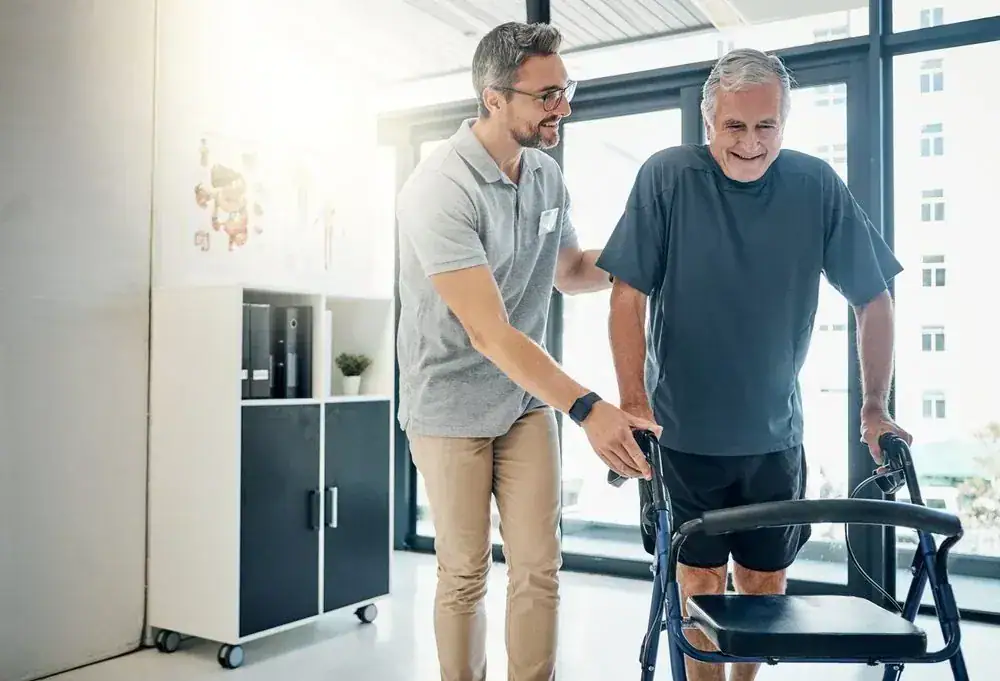
Sessions happen in your home, usually two to three times a week. Each one is about 45 minutes to an hour. Your therapist guides you through balance exercises, strength training, and mobility drills. They adjust the program as you improve, making sure you’re always challenged but never unsafe.
Between sessions, you’ll have exercises to do on your own. Consistency matters. The people who see the best results are the ones who stick with it. After 8 to 12 weeks, most patients have measurably better balance, stronger legs, and a lot less fear about moving around their home.

Ready to get started?
You get a licensed physical therapist who comes to your home and works with you one-on-one. No shared appointments, no waiting rooms, no commute.
The program includes strength training for your legs and core, balance exercises that challenge your stability in safe ways, and gait training to improve how you walk. We also work on proprioception—your body’s ability to sense where it is in space—which is critical for preventing falls.
Your therapist will assess your home for hazards. Loose rugs, poor lighting, cluttered walkways, bathroom grab bar placement—we’ll walk through it with you. Small changes can make a big difference, and we’ll tell you exactly what to fix.
We also coordinate with your doctor. If medications are affecting your balance, we’ll flag it. If you need a vision check or a medication review, we’ll recommend it. Fall prevention isn’t just about exercise—it’s about addressing every risk factor.
Most of our patients in Plandome Heights are dealing with one or more of these issues: previous falls, fear of falling, difficulty with stairs, dizziness, or a recent hospital stay. If that sounds like you, this program is built for your situation. And yes, Medicare Part B covers it.

Most people start noticing improvements within 4 to 6 weeks. You’ll feel steadier on your feet, more confident with transitions like standing up or turning around, and less worried about losing your balance.
The full benefit usually shows up after 8 to 12 weeks of consistent therapy. That’s when strength gains, balance improvements, and coordination really solidify. But the timeline depends on where you’re starting from. If you’ve had a recent fall or surgery, it might take a bit longer. If you’re just starting to feel unsteady, you might see changes faster.
What matters most is consistency. The people who do their home exercises between sessions and stick with the program see the best results. Your therapist will track your progress with measurable tests—things like how long you can stand on one foot, how fast you walk, and how well you recover from a stumble. You’ll see the numbers improve, and more importantly, you’ll feel the difference in your daily life.
Yes. Medicare Part B covers outpatient physical therapy, including fall prevention programs delivered in your home. As long as the therapy is medically necessary and prescribed by your doctor, Medicare will pay for it.
You’ll have a copay or coinsurance depending on your plan, but we handle all the billing directly. You don’t need to file claims or deal with paperwork. We verify your coverage before we start, so there are no surprises.
If you have a Medicare Advantage plan or supplemental insurance, coverage works similarly, though the details vary by plan. We accept most commercial insurance as well. The key is that your doctor agrees the therapy is necessary—which, if you’ve fallen or you’re at high risk of falling, is usually a straightforward conversation. We can coordinate with your physician’s office if needed.
The exercises depend on your specific needs, but most programs include a mix of strength training, balance challenges, and functional movements. You might do heel-to-toe walking, single-leg stands, sit-to-stand repetitions, or weight shifts from side to side.
We also use exercises that mimic real-life situations. Reaching for something while standing, stepping over an obstacle, turning your head while walking, or recovering from a small stumble. These aren’t random drills—they’re designed to prepare you for the actual movements that cause falls.
Strength work focuses on your legs, hips, and core. Weak muscles are one of the biggest fall risk factors, so we’ll have you doing squats, leg lifts, and resistance exercises. Your therapist will adjust the difficulty as you get stronger. Everything is done safely, with support nearby if you need it. The goal is to challenge your balance without putting you at risk.
It’s not too late. In fact, if you’ve already fallen, you’re at higher risk of falling again—which makes starting a fall prevention program even more important. Falling once doubles your chances of falling again, but physical therapy can break that cycle.
After a fall, many people develop a fear of falling that leads them to move less. That inactivity weakens muscles and worsens balance, which increases fall risk even more. Physical therapy addresses both the physical and psychological sides of that problem. You’ll rebuild strength and coordination, and you’ll regain confidence in your ability to move safely.
We’ve worked with plenty of people who’ve had multiple falls, hip fractures, or hospital stays. The program is designed to meet you where you are. Your therapist will start with exercises that feel manageable and progress from there. The goal is to get you back to doing the things you’ve been avoiding—not because you can’t, but because you’re worried about falling.
The difference is assessment, progression, and accountability. A licensed physical therapist can identify fall risk factors you might not notice—like weak hip abductors, poor ankle mobility, or balance deficits on one side. We’ll design a program that targets your specific issues, not just general “senior exercises.”
Progression matters too. Exercises that are too easy won’t help. Exercises that are too hard can be dangerous. Your therapist adjusts the difficulty week by week based on how you’re responding. They also make sure your form is correct, which prevents injury and makes the exercises more effective.
And then there’s accountability. It’s easy to skip exercises when you’re on your own. When a therapist is coming to your home twice a week, you’re more likely to stay consistent. We’ll also catch problems early—if something isn’t working or if you’re compensating in a way that could lead to injury, we’ll adjust the plan. You’re not guessing. You’re working with someone who knows what they’re doing.
The first visit is an evaluation. Your therapist will ask about your medical history, any falls you’ve had, medications you’re taking, and what activities you’re struggling with or avoiding. They’ll also do a series of physical tests to assess your strength, balance, flexibility, and gait.
You’ll do things like standing on one foot, walking in a straight line, getting up from a chair without using your hands, and reaching in different directions. These tests help your therapist understand where your fall risk is coming from. They’ll also walk through your home and point out hazards—things like loose rugs, poor lighting, or furniture placement that could cause a trip.
At the end of the visit, your therapist will explain what they found and outline a treatment plan. They’ll tell you how often you’ll meet, what kinds of exercises you’ll be doing, and what goals you’re working toward. Then you’ll schedule your next session. The whole visit usually takes about an hour. After that, regular therapy sessions begin, and you’ll start working on the exercises that will reduce your fall risk and rebuild your confidence.
Other Services we provide in Plandome Heights