

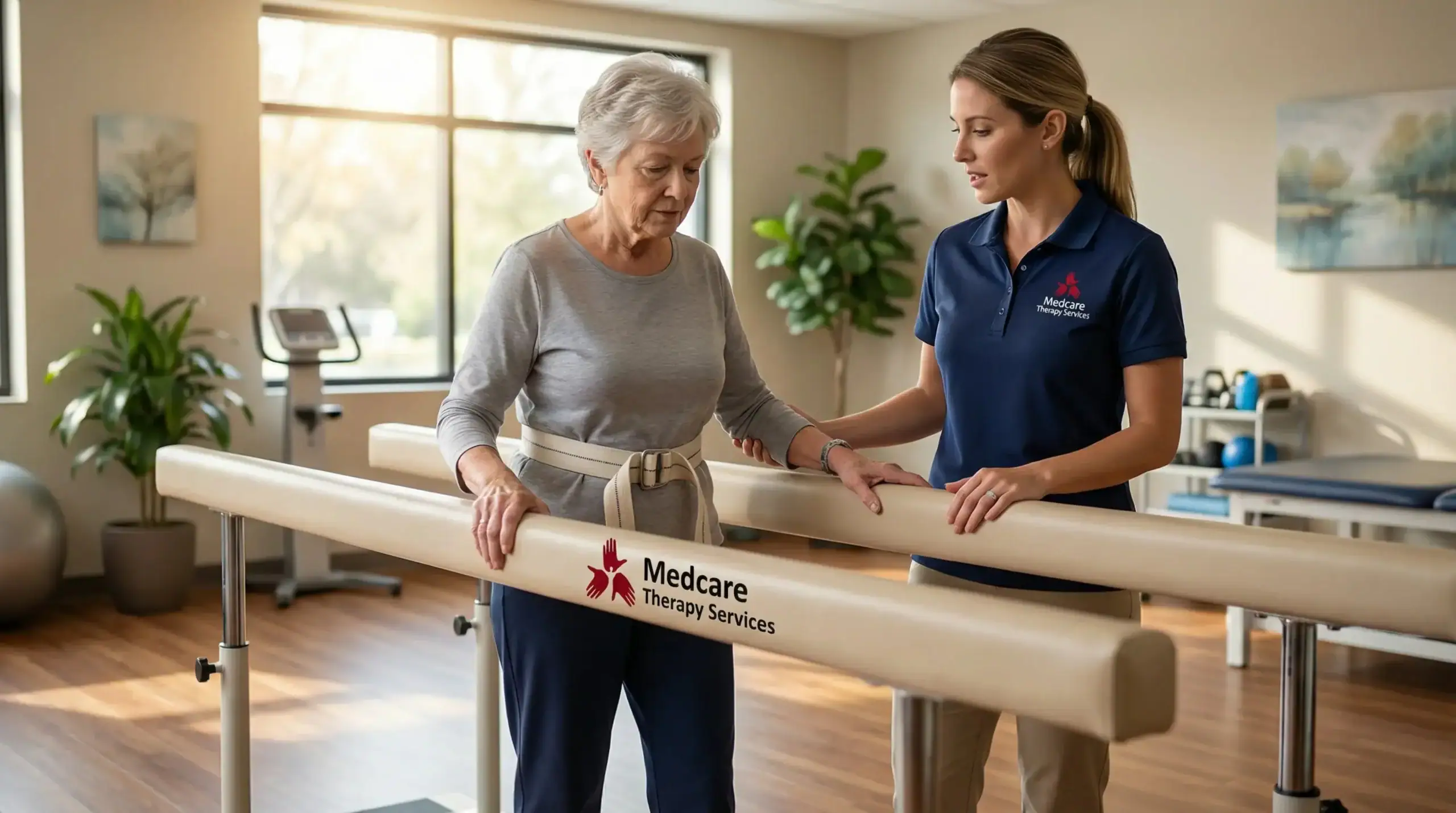
You’re not imagining it. That hesitation before you stand up, the extra second you pause at the stairs, the way you hold onto counters more than you used to—these aren’t just signs of getting older. They’re your body telling you something’s changed with your balance.
More than one in four adults over 65 falls each year. And if you’ve already fallen once, your chances of falling again double. That’s not meant to scare you—it’s meant to show you why waiting doesn’t help.
The Otago Exercise Program we use in your home has been studied for decades. It reduces falls between 35-40% for older adults by rebuilding the specific strength, flexibility, and coordination your body needs to stay upright. You’re not doing generic stretches or following a video. You’re working through a personalized plan designed around how you move, where you struggle, and what your home actually looks like.
Most people notice steadier walking within weeks. The fear starts to lift when your legs remember what to do.
We’ve been serving Long Island communities like Orient, NY since 2010. We’re Medicare-certified, and our therapists specialize in home-based fall prevention using evidence-backed programs that actually work.
We come to you because we know getting to an office isn’t always easy—and honestly, it’s better this way. We see the rugs that slide, the lighting that’s dim, the step you avoid. We build your program around your real environment, not a clinic floor.
Orient’s aging population has grown significantly over the past decade, just like the rest of Suffolk County. That means more people are dealing with balance issues, and fewer are getting the help that’s covered by Medicare. We’re here to close that gap with one-on-one care that treats you like family, not a file number.

First, a licensed physical therapist comes to your home in Orient, NY for an initial assessment. We check your strength, balance, gait, and how you move through your space. We also talk about any falls you’ve had, what you’re nervous about, and what you want to be able to do again.
From there, we design a customized exercise program based on the Otago method. It’s not complicated—it’s progressive. You start where you are, and we build from there. Exercises focus on leg strength, balance training, and walking patterns that reduce fall risk. We also review your home setup and recommend changes if needed, like better lighting or removing tripping hazards.
You’ll typically see us once or twice a week at first. As you get stronger and more confident, we adjust the program and reduce visit frequency. About 70% of people continue the exercises on their own after a year because they work—and because they’re manageable.
Everything is covered by Medicare if you’ve been diagnosed with a balance problem. No complicated paperwork, no surprise bills. Just straightforward care that helps you stay on your feet.

Ready to get started?
You get a physical therapist who comes to your home and works with you one-on-one. Not a group class. Not a handout. Real, personalized attention from someone trained in fall prevention for older adults.
The exercises are tailored to your current ability. If you’re using a walker, we work with that. If you’ve had a hip replacement or deal with arthritis, we factor that in. The goal is progress, not perfection.
We also educate anyone who helps you—whether that’s a spouse, adult child, or caregiver. They learn proper techniques for transfers, positioning, and body mechanics so they’re not accidentally increasing your fall risk while trying to help.
Orient and the surrounding North Fork communities have unique housing stock—older homes, uneven terrain, waterfront properties with stairs. We’ve worked in all of it. We know what to look for, and we know how to adapt your program so it fits your life, not someone else’s template.
This isn’t about making you feel old. It’s about making you feel stable again. There’s a difference.

Yes, Medicare covers the Otago Exercise Program and other physical therapy services for fall prevention if you’ve been diagnosed with a balance disorder or are at risk for falls. Your doctor needs to provide a referral, and the therapy must be deemed medically necessary.
We handle the Medicare billing directly. You won’t need to file claims or chase down reimbursements. Most patients pay nothing out of pocket if they’ve met their deductible, though co-pays may apply depending on your specific plan.
If you’re unsure whether you qualify, we can help you figure that out during the initial call. We’ve been working with Medicare patients across Long Island since 2010, so we know the system inside and out.
Otago is a specific, research-backed fall prevention program developed in New Zealand and now recommended by the CDC and other major health organizations. It’s not just “do some leg lifts and stretch.” It’s a progressive, individualized series of exercises proven to reduce falls by 35-40% in older adults.
The program includes strength training, balance retraining, and a walking plan. A physical therapist customizes it based on your current fitness level, medical history, and home environment. As you improve, the exercises get harder. That progression is what makes it effective.
Most generic balance programs you find online or in community centers aren’t tailored to you. They’re one-size-fits-all. Otago is the opposite. It’s prescribed, monitored, and adjusted by a licensed PT who knows what actually reduces fall risk—not just what feels good in the moment.
Most people notice improvements in stability and confidence within 4-6 weeks. That’s when your legs start responding faster, your balance feels less shaky, and you’re not grabbing onto things as much. Real fall risk reduction—the kind that shows up in research—happens over 3-6 months of consistent work.
The Otago program is designed to be done at least three times per week. We’ll visit you once or twice a week initially, and you’ll do the exercises on your own the other days. The more consistent you are, the faster you’ll see results.
After about six months, most people have built enough strength and motor control that the exercises become maintenance rather than rehab. You keep doing them because they work, and because falling becomes less of a constant worry. That peace of mind is worth the effort.
Absolutely. In fact, people who’ve already fallen are exactly who this program is designed for. Falling once doubles your risk of falling again, but it also means you qualify for Medicare-covered therapy without any pushback.
After a fall, most people develop a fear that makes them move less. That fear is understandable, but it actually makes things worse. You lose strength, your balance gets worse, and the cycle continues. Our job is to break that cycle by rebuilding your physical stability and your confidence at the same time.
We start slow and meet you where you are. If you’re nervous about certain movements, we modify them. If you’re using assistive devices, we incorporate those into your program. The goal is to get you moving safely again—not to push you into something that feels dangerous.
No. While we specialize in home-based therapy for people who have difficulty traveling, we also work with anyone who prefers the convenience and personalized attention of in-home care. You don’t have to be homebound to benefit from what we do.
Some people just don’t want to deal with getting in and out of a car, especially if transfers are hard or if they don’t have someone to drive them. Others have tried outpatient therapy and didn’t like the group setting or the lack of individual focus. Home therapy solves both problems.
We also see your actual environment, which is where most falls happen. We can spot hazards, suggest modifications, and design exercises that match the layout of your home. That’s something you don’t get in a clinic. It’s not just more convenient—it’s more effective.
Call us or reach out through our website. We’ll ask a few questions about your balance concerns, any falls you’ve had, and your current mobility. If it sounds like you’d benefit from an evaluation, we’ll coordinate with your doctor to get a referral and set up your first visit.
The initial assessment takes about an hour. We come to your home in Orient, NY, evaluate your strength and balance, talk through your goals, and start building your personalized plan. If you’re eligible for Medicare coverage, we’ll verify that ahead of time so there are no surprises.
You don’t need to wait until you fall to start this. If you’re feeling unsteady, if you’ve had close calls, or if you’re just not moving the way you used to, that’s enough. The earlier you address it, the easier it is to fix.
Other Services we provide in Orient