
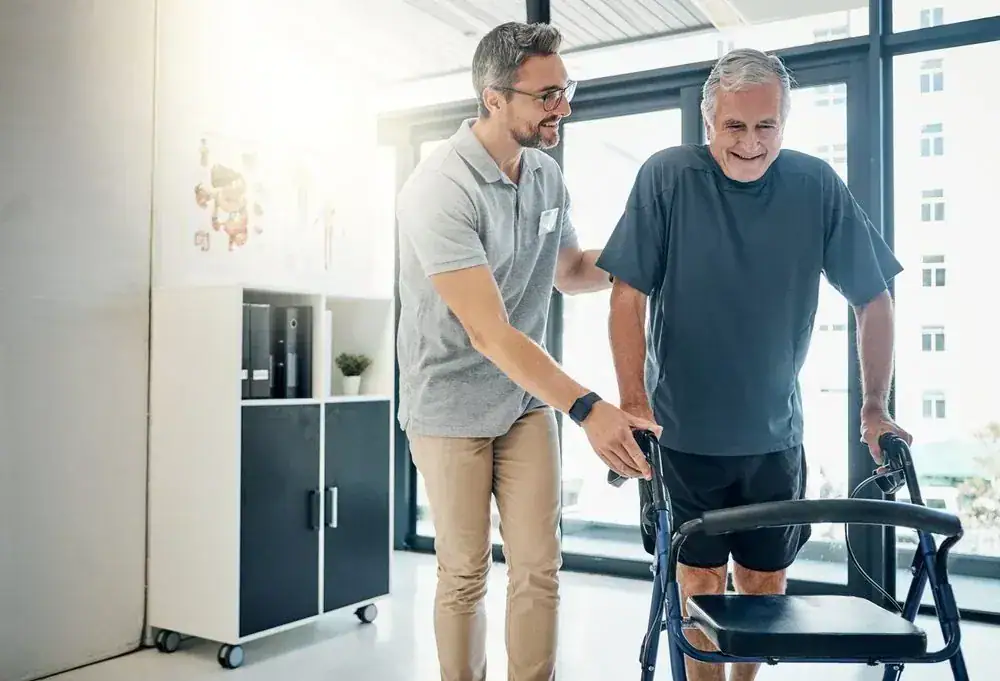
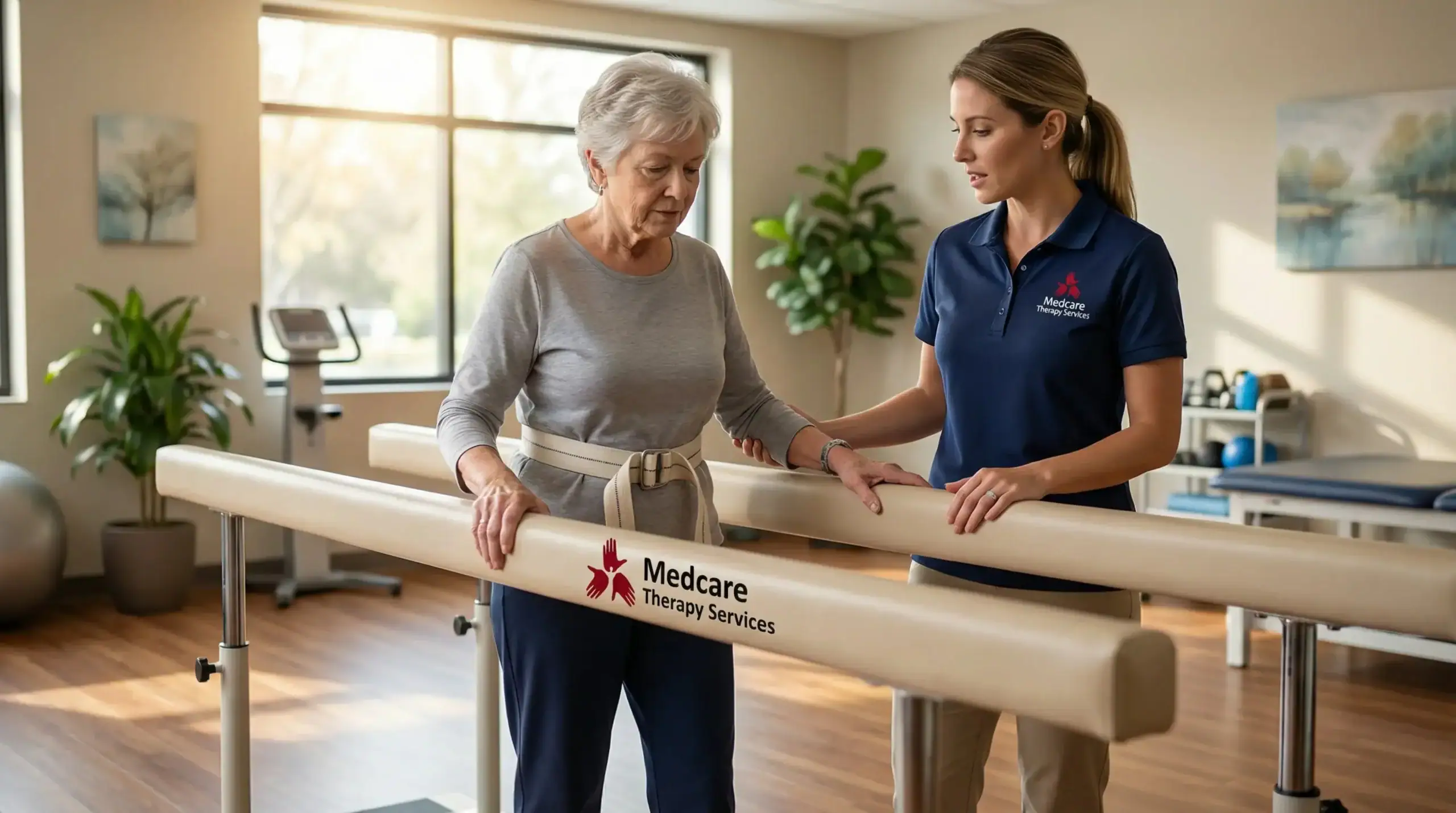
You stop second-guessing every step. You walk to the mailbox without holding onto furniture. You get up from a chair without bracing yourself or asking for help.
That’s what better balance actually looks like. Not just fewer falls—though research shows balance exercises for seniors can reduce fall risk by up to 50%—but real, daily confidence in how you move.
When you work with us, you’re not just doing generic exercises. You’re addressing the specific reasons your balance has declined: weak legs, poor coordination, medication side effects, vision changes, or fear left over from a previous fall. Each session is built around your body, your home, and your goals.
You’ll notice the difference in how you feel getting out of bed, walking on uneven surfaces, or turning around in tight spaces. And because the therapy happens in your home, you’re practicing in the environment that matters most.
We’ve been providing home-based physical therapy across Nassau County since 2010. We work with seniors in North Valley Stream, NY who want to stay independent but need help rebuilding strength and balance after a fall, surgery, or hospitalization.
We come to you. No waiting rooms, no driving, no rushing through a 20-minute session because the next patient is waiting. You get one-on-one attention in your own home, where the real work happens.
North Valley Stream has a growing senior population—nearly 18% of residents are over 65—and many of them are dealing with the same concerns you are. We’ve worked with people in your neighborhood who were afraid to walk to the kitchen at night, who stopped going outside because they didn’t trust their legs, or who had already fallen once and didn’t want it to happen again. They’re moving better now. You can too.

First, we assess where you are. A therapist comes to your home and evaluates your balance, strength, gait, coordination, and any environmental risks—loose rugs, poor lighting, clutter in walkways. This isn’t a checklist. It’s a conversation about what’s hard for you right now and what you want to be able to do.
Then we build a plan. Based on what we find, your therapist designs a program that combines balance training, strength exercises, and gait work. These aren’t random movements. They’re evidence-based techniques proven to reduce fall risk in older adults. You’ll practice standing on one leg, shifting your weight, walking heel-to-toe, getting up from a chair without using your hands—movements that directly translate to daily life.
Sessions happen in your home, usually two to three times a week depending on your needs. Your therapist adjusts the program as you improve, adding challenge when you’re ready and modifying exercises if something isn’t working. You’ll also get guidance on home safety changes, footwear, medication reviews, and how to keep progressing between visits.
Most people start feeling steadier within a few weeks. The goal isn’t perfection—it’s progress you can feel.

Ready to get started?
You get a full fall risk assessment that looks at balance, strength, vision, medication side effects, and home safety. Your therapist identifies the specific factors putting you at risk—not just general age-related decline, but your individual challenges.
Your program includes balance exercises for seniors tailored to your ability level. These might include standing exercises, weight shifting drills, coordination tasks, and functional movements like stepping over obstacles or turning quickly. You’ll also work on strength training, because stronger legs mean better stability. Research shows that combining balance and strength work is the most effective approach to elderly fall prevention.
Gait training is part of the process too. How you walk matters. Your therapist will watch how you move, identify compensations or weaknesses, and teach you safer, more efficient walking patterns. If you use a cane or walker, we’ll make sure you’re using it correctly.
You’ll also receive education on fall prevention strategies: how to get up if you do fall, how to move safely at night, what changes to make in your home, and when to talk to your doctor about medications that might affect your balance. In North Valley Stream, NY, where many homes have stairs, narrow hallways, or older layouts, these modifications can make a significant difference.
Everything is covered by Medicare Part B and most insurance plans, so cost doesn’t have to be a barrier.
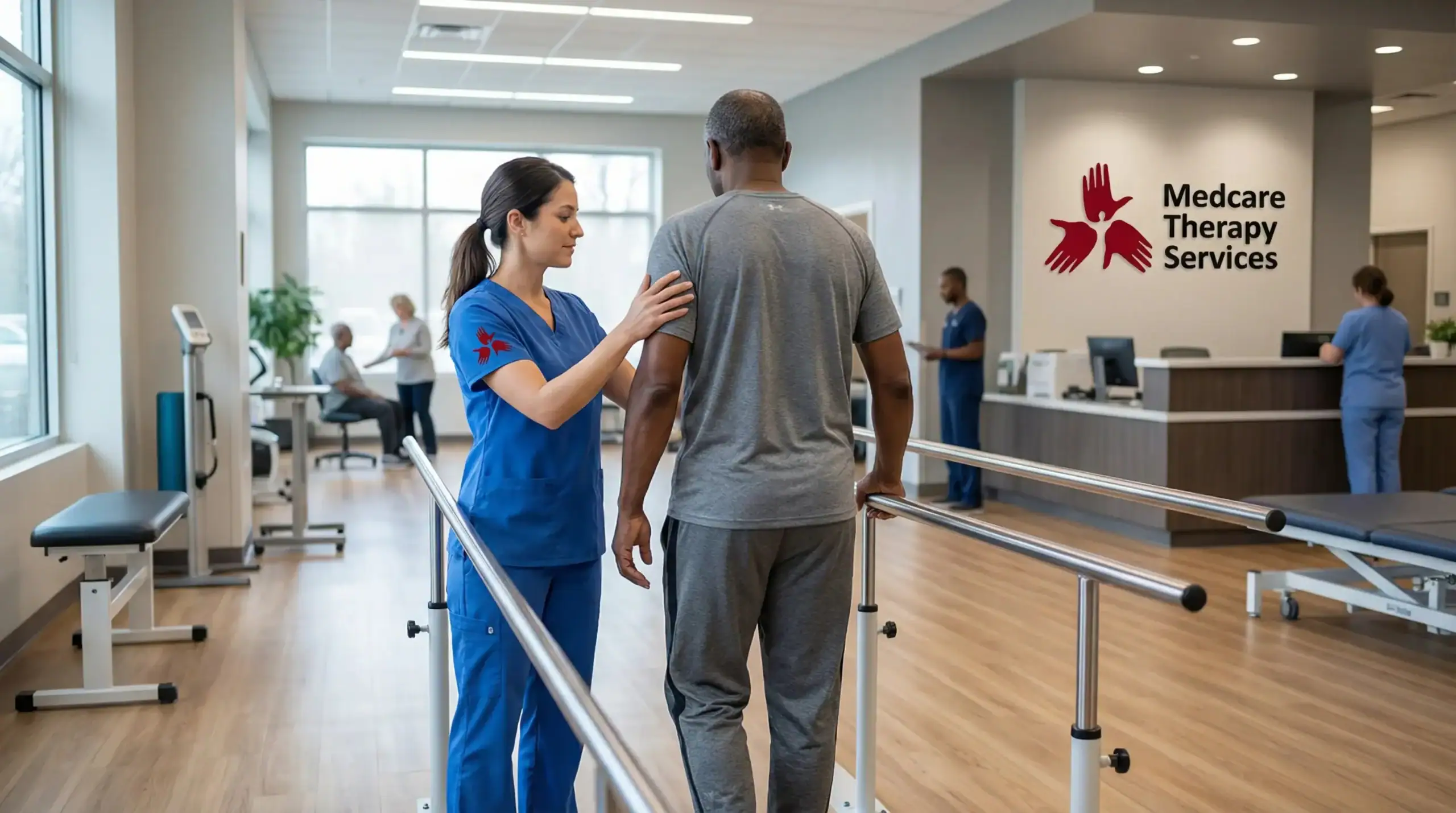
Most people notice small changes within two to three weeks—things like feeling steadier when standing up or walking with less hesitation. Meaningful improvement in strength and coordination usually takes four to six weeks of consistent work.
That timeline depends on where you’re starting from. If you’ve been inactive for months or you’re recovering from a fall or injury, it may take longer. If you’re relatively active but just need some targeted work, you might progress faster.
The key is consistency. Balance exercises for seniors work best when done regularly, and your therapist will give you exercises to practice between sessions. You’re not starting from scratch every time we visit—you’re building on what you did last time. Progress isn’t always linear, but it is real.
Yes. Falling once doubles your risk of falling again, but that’s exactly why therapy matters. After a fall, many people develop a fear of movement that actually makes things worse. You start moving less, your muscles get weaker, your balance declines further, and the cycle continues.
Physical therapy for balance breaks that cycle. We help you rebuild the strength and coordination you lost, and just as importantly, we help you regain confidence in your body. You’ll practice the movements that scare you—in a controlled way, with support—so they stop feeling dangerous.
We also figure out why you fell in the first place. Was it a trip hazard? Dizziness? Weak legs? Medication side effects? Once we know the cause, we can address it directly. Fall prevention in the elderly isn’t about avoiding all risk—it’s about reducing the factors you can control and preparing your body to handle the unexpected.
No. Prevention is just as important as recovery. If you’re noticing that your balance isn’t what it used to be—if you’re holding onto walls more, avoiding stairs, or feeling unsteady when you turn your head—that’s a sign to start now, before a fall happens.
One in four adults over 65 falls every year, but up to two-thirds of those falls are preventable. Early intervention makes a huge difference. The stronger and more coordinated you are, the better your body can react when you trip or lose your footing.
We work with people at all stages: those recovering from falls, those who feel unsteady but haven’t fallen yet, and those who just want to stay strong and independent as they age. Starting early means you’re building resilience, not just reacting to problems. And because we come to your home in North Valley Stream, NY, there’s no reason to wait until things get worse.
You’re practicing in the place where you actually live. That matters more than most people realize. Your home has the stairs you climb every day, the bathroom layout you navigate at night, the rugs and furniture you move around. When therapy happens here, we can address the real challenges you face, not generic ones.
Home-based therapy also means no transportation stress. If getting to a clinic is hard—because of mobility issues, lack of a car, or weather—you’re more likely to skip appointments. We eliminate that barrier. You get consistent care without the logistical hassle.
And you get our full attention. In a busy clinic, therapists are often juggling multiple patients at once. At home, it’s just you and your therapist for the full session. That means more hands-on work, more time to ask questions, and a program that’s truly tailored to your needs. For seniors in North Valley Stream, NY who value convenience and personalized care, home therapy makes sense.
Yes, in most cases. Medicare Part B covers physical therapy when it’s medically necessary—and if you’ve fallen, if you’re at high risk of falling, or if your doctor has referred you for balance issues, that typically qualifies. You’ll have a copay based on your plan, but the service itself is covered.
Most private insurance plans also cover home-based physical therapy for fall prevention, especially if it’s prescribed by your physician. We handle the billing and work directly with your insurance company, so you’re not navigating that process alone.
If you’re unsure about your specific coverage, call us. We can verify your benefits before your first session and let you know what to expect. Cost shouldn’t be the reason you avoid getting help—especially when falls lead to emergency room visits, hospitalizations, and long-term care that cost far more than prevention ever would.
Most programs run six to eight weeks, with two to three sessions per week. That’s usually enough time to see significant improvement in balance, strength, and confidence. Some people need less time, some need more—it depends on your starting point and your goals.
Your therapist will reassess your progress regularly and adjust the plan as needed. If you’re improving quickly, we’ll add more challenge. If something isn’t working, we’ll change the approach. The program isn’t rigid—it’s built around how your body responds.
After the formal program ends, many people continue with a maintenance plan: exercises they can do on their own to keep their gains. We’ll teach you what to do and how to do it safely, so you’re not dependent on us forever. The goal is to give you the tools to stay strong and steady long after therapy ends. For seniors in North Valley Stream, NY who want to age in place, that independence is everything.
Other Services we provide in North Valley Stream