
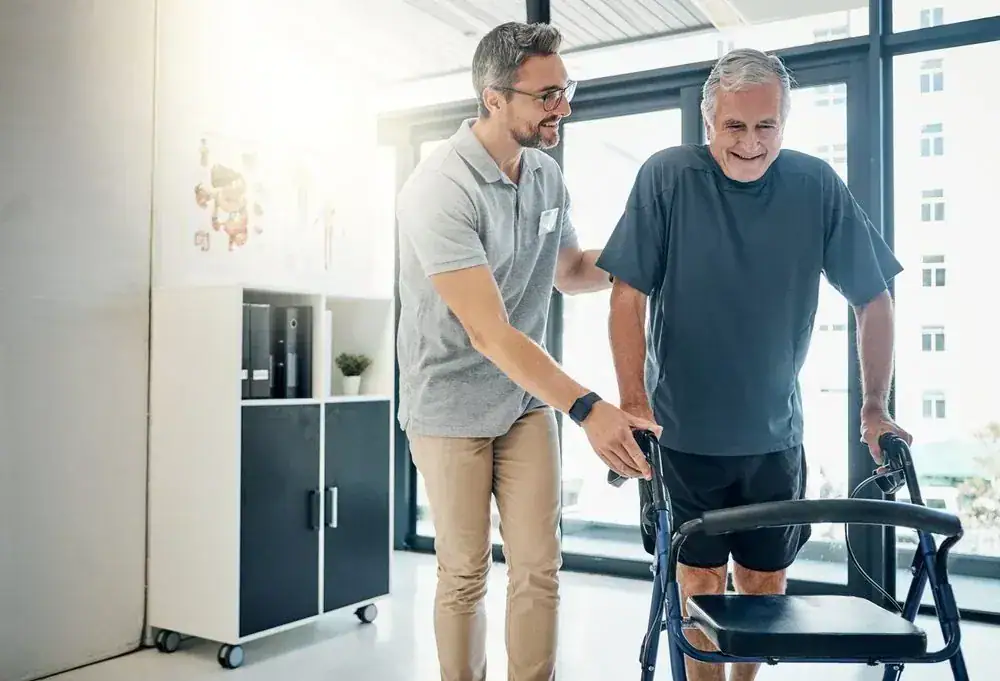
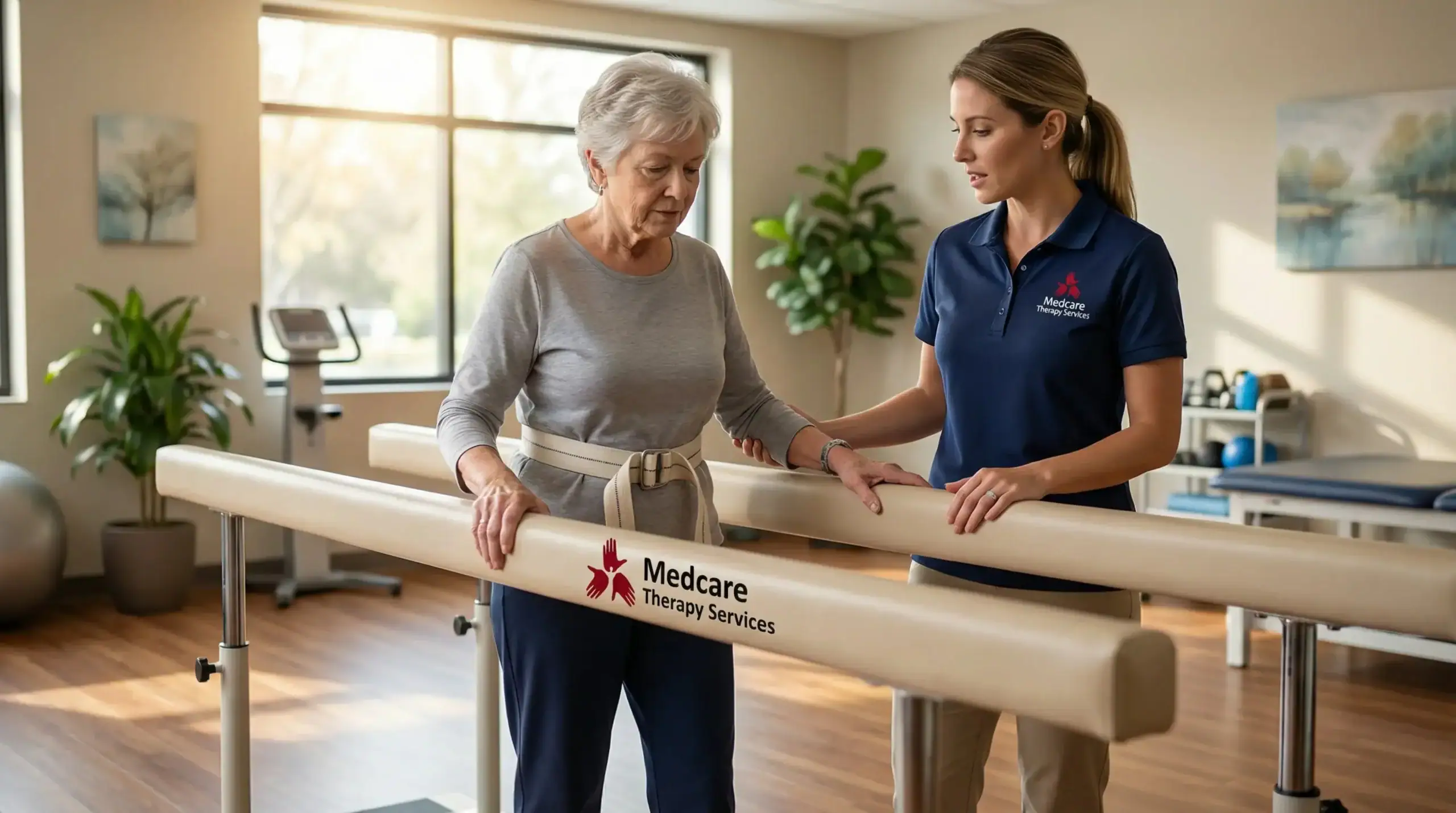
You shouldn’t have to think twice before getting up to grab something from the kitchen. Or worry every time you step into the shower. That constant background fear of falling changes how you live—it keeps you from doing things you used to do without a second thought.
Physical therapy for balance isn’t about wrapping you in bubble wrap. It’s about rebuilding the strength, coordination, and confidence that make you feel stable on your feet again. When your balance improves, you stop hesitating. You stop asking for help with things you’d rather do yourself.
The goal is simple: you stay independent. You keep living in your own home, on your own terms. Research shows that consistent balance exercises reduce falls by 13% to 40% in older adults. That’s not luck—it’s what happens when you work with someone who knows how to assess your specific risk factors and build a program around them. Every exercise is designed for your body, your home, and the activities that matter to you.
We’ve been providing in-home therapy across Long Island for over a decade. We’re not a national chain dropping in for a quick visit. Our therapists know North Bay Shore, they know Suffolk County, and they understand what it’s like to age in a community where staying home matters.
Every therapist on our team is licensed, Medicare-certified, and trained in fall prevention strategies like the Otago program—one of the most researched and effective approaches available. We don’t send someone different every week. You work with the same professional who learns your home layout, your routines, and your goals.
Falls are the leading cause of injury-related hospitalizations for older adults in Nassau and Suffolk counties. In fact, 88% of injury hospitalizations for adults over 65 in Nassau County are due to falls. We’re here because those numbers are preventable—and because you deserve care that comes to you, not the other way around.

First, your therapist comes to your home in North Bay Shore for a full fall risk assessment. They’ll evaluate your balance, gait, strength, and flexibility. They’ll also walk through your home with you to identify hazards—loose rugs, poor lighting, furniture placement—that increase your risk. This isn’t a clipboard checklist. It’s a real conversation about where you feel unsteady and what’s happened before.
From there, they design a personalized program. You’ll work on static balance exercises (standing still without swaying) and dynamic balance exercises (moving safely while doing everyday tasks). You’ll also do gait training to improve how you walk, and strengthening exercises that target the muscles you rely on to catch yourself. Everything is tailored to your current ability, and it progresses as you get stronger.
Sessions happen in your home, usually two to three times a week depending on what Medicare approves and what your therapist recommends. You’re not driving anywhere. You’re not sitting in a waiting room. You’re working in the same environment where you need to feel confident—your kitchen, your hallway, your bathroom. That’s where real improvement happens.

Ready to get started?
Each session includes one-on-one time with a licensed physical or occupational therapist. You’re never split between multiple patients. Your therapist will guide you through exercises that improve strength in your legs, hips, and core—the areas that keep you upright. You’ll practice standing from a chair, walking on different surfaces, and reaching without losing your balance.
Your therapist will also review your medications with you. Some prescriptions cause dizziness or drowsiness, which directly increases fall risk. If something looks concerning, they’ll recommend you talk to your doctor. They’ll work with your family too, teaching them how to support your progress without hovering or taking over.
Here in North Bay Shore and across Suffolk County, more than half of fall-related hospitalizations happen at home. That’s exactly why in-home therapy works. Your therapist sees the real risks—the step you always trip on, the corner you bump into, the lighting that’s too dim. They help you fix those things while building the physical skills to navigate them safely. You’re not just exercising. You’re making your home safer and your body stronger at the same time.

Yes. Medicare Part B covers outpatient physical therapy and occupational therapy when it’s medically necessary—and fall prevention absolutely qualifies. If you’ve fallen before, if you’re unsteady on your feet, or if your doctor is concerned about your balance, you’re likely eligible.
Your therapist will work with your doctor to get the referral and handle the Medicare paperwork. You’ll have a copay, just like any other outpatient therapy, but the bulk of the cost is covered. Most people don’t realize how accessible this is until they ask.
One thing to note: Medicare doesn’t cover home safety equipment like grab bars or shower chairs, but your therapist will tell you exactly what you need and where to get it. The therapy itself—the assessment, the exercises, the in-home visits—that’s covered.
Most people start feeling more stable within four to six weeks of consistent therapy. That doesn’t mean you’re done in six weeks—it means you’ll notice a difference. You’ll feel more confident getting out of bed in the morning. You’ll stop grabbing the counter every time you stand up.
Real, lasting improvement takes longer. Research shows that balance training programs work best when they last at least 12 weeks and include exercises at least twice a week. Your therapist will give you a realistic timeline based on your starting point, your goals, and how your body responds.
The earlier you start, the better. If you’re just beginning to feel unsteady, you’ll improve faster than if you’ve already fallen multiple times. But even if you’ve had a fall—even if you’re in your 80s or 90s—studies prove that balance exercises still work. Your body can still adapt. It just takes consistency and the right program.
It’s not too late. In fact, you’re exactly who this program is designed for. Falling once doubles your risk of falling again—but that’s only if nothing changes. If you address the reasons you fell in the first place, you can break that cycle.
Your therapist will figure out why you fell. Was it weakness in your legs? Poor balance? A medication side effect? A hazard in your home? Most falls aren’t random bad luck. They’re the result of multiple risk factors lining up at the wrong time. Once you identify those factors, you can fix them.
The other thing that happens after a fall is fear. You start moving less because you’re afraid it’ll happen again. That fear makes you weaker, which actually increases your risk. Physical therapy helps you rebuild your confidence in a controlled way. You’re not being pushed to do things that feel unsafe. You’re gradually expanding what you can do without fear taking over.
You could try exercises on your own, but here’s the problem: you don’t know what you don’t know. You might skip the exercises that matter most for your specific issues. You might do them incorrectly and not get the benefit. Or worse, you might do something that’s too advanced and actually increase your fall risk.
A licensed therapist assesses your individual risk factors—your strength, your balance, your gait, your home environment—and builds a program that’s appropriate for where you are right now. They also progress the exercises as you improve, which is critical. If the exercises stay too easy, you plateau. If they’re too hard, you get frustrated or hurt.
The other advantage: accountability. It’s easy to skip exercises when no one’s watching. When a therapist is coming to your home twice a week, you’re far more likely to stay consistent. And consistency is what makes the difference between a program that works and one that doesn’t.
Both help with fall prevention, but they focus on slightly different things. Physical therapy is more about improving your physical abilities—your strength, balance, gait, and endurance. Your PT will work on exercises that make your body more stable and coordinated.
Occupational therapy focuses more on how you do daily activities safely. Your OT will teach you techniques for getting in and out of the shower, dressing without losing your balance, or moving around your kitchen efficiently. They also evaluate your home setup and recommend modifications that make tasks easier and safer.
In many cases, you’ll benefit from both. We provide both physical and occupational therapy, and your therapist will coordinate with your doctor to determine which approach—or combination—makes the most sense for you. The goal is the same either way: keep you safe, strong, and independent at home.
Start by talking to your doctor. Let them know you’re concerned about falling, or that you’ve already had a fall, or that you just don’t feel as steady as you used to. They can write a referral for physical therapy, which is what Medicare requires.
Once you have the referral, contact us. We’ll verify your Medicare coverage, schedule your first in-home assessment, and assign a therapist to your case. The first visit usually happens within a few days, depending on availability.
From there, your therapist takes over. They’ll come to your home in North Bay Shore, do the full evaluation, and start your program. You don’t need to gather equipment or prepare anything special. Just be ready to talk honestly about what you’re struggling with and what you want to be able to do. That’s where the real work begins.
Other Services we provide in North Bay Shore