
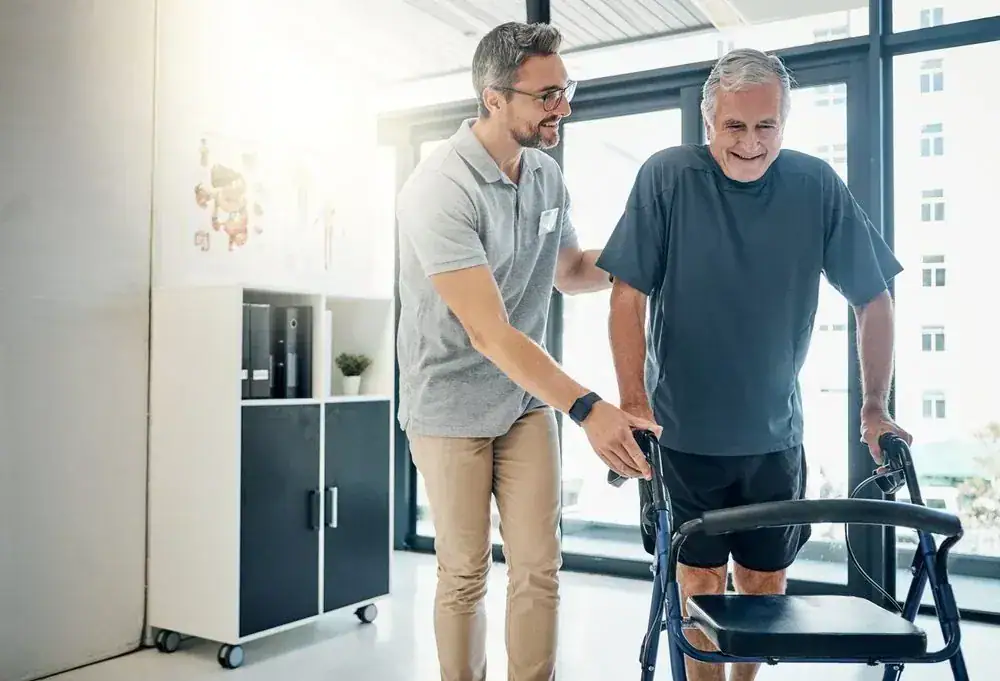

You’re not imagining it. Your balance isn’t what it used to be. Maybe you’ve already had a close call, or you’re just noticing that getting up from a chair takes more effort than it should.
That hesitation you feel when walking on uneven ground or reaching for something overhead? It’s your body telling you something’s changed. And you’re right to pay attention.
Falls aren’t inevitable. They’re preventable. The difference comes down to whether your muscles, joints, and reflexes are getting the specific work they need to keep you stable. Most people wait until after a fall to get help. You don’t have to be one of them.
Physical therapy for balance addresses the actual mechanics behind why falls happen. Weak hips, slow reflexes, poor ankle stability, vision changes, medication side effects. We assess what’s contributing to your risk and build a program that targets those specific factors. You get stronger in the ways that matter for daily movement, not generic exercise.
We bring licensed physical therapists directly to homes throughout New Suffolk, Cutchogue, Greenport, Aquebogue, and communities across Long Island. No waiting rooms, no driving, no wondering if you’ll find parking.
Our therapists specialize in geriatric mobility and fall risk reduction. They’ve worked with hundreds of older adults who want to stay in their homes safely, and they know exactly what it takes to rebuild the strength and coordination that keeps you upright.
We handle Medicare billing, coordinate with your other providers, and keep your primary care doctor in the loop. You get care that fits into your life, not the other way around.

Your first visit is a full evaluation. We look at your balance, gait, strength, range of motion, medication list, home environment, and fall history. This isn’t a cookie-cutter checklist. It’s a detailed assessment of what’s actually putting you at risk.
From there, we build a program. That might include senior balance exercises to improve stability, strength training for your legs and core, gait training to correct walking patterns, or coordination drills that sharpen your reflexes. Everything is progressive, meaning we start where you are and gradually increase difficulty as you improve.
Sessions happen in your home, usually two to three times per week depending on your needs and insurance coverage. Each visit lasts about 45 minutes to an hour. You’ll also get exercises to do between sessions because consistency is what drives results.
We track your progress with objective measures like timed walking tests, balance assessments, and functional movement screenings. You’ll see the improvement in numbers, but more importantly, you’ll feel it when you’re moving through your day.

Ready to get started?
Every fall prevention program includes a personalized exercise plan based on evidence-backed protocols like the Otago Exercise Program, which has been shown to reduce falls by up to 35% in older adults. You’re not getting made-up exercises. You’re getting what actually works.
We also address environmental hazards. Your therapist will walk through your home and point out trip risks, lighting issues, bathroom safety concerns, and other factors that increase fall likelihood. Small changes like removing throw rugs, adding grab bars, or improving lighting can make a significant difference.
For New Suffolk and North Fork residents, seasonal considerations matter. Uneven terrain, gravel driveways, beach access, and older home layouts all create unique challenges. We account for the specific environments you’re navigating, not just textbook scenarios.
You’ll also get education on how medications affect balance, what symptoms to report to your doctor, and how to recover safely if you do lose your footing. The goal is to give you the tools and knowledge to manage your own risk long after therapy ends.

If you’ve fallen in the past year, you need an evaluation. A previous fall is the strongest predictor of falling again, and waiting doesn’t improve your odds.
But you don’t have to wait for a fall. If you’re feeling unsteady when you walk, avoiding activities because you’re worried about balance, grabbing onto furniture or walls for support, or noticing that your legs feel weaker, those are all signs that your fall risk is elevated.
Other red flags include taking four or more medications (especially blood pressure meds, sleep aids, or anxiety medications), having vision problems, experiencing dizziness, or dealing with joint pain that affects how you move. Any of these factors can compromise your stability. A physical therapist can assess your specific risk level and determine whether you’d benefit from a structured program.
Medicare Part B covers physical therapy when it’s medically necessary, which includes fall prevention if you have documented risk factors or a history of falls. Your doctor will need to provide a referral or prescription, and we’ll handle the billing and authorization process.
Most people with Medicare pay 20% of the approved amount after meeting their deductible. If you have a Medicare Supplement plan, it may cover that remaining 20%. We’ll verify your coverage before starting treatment so you know what to expect.
There are annual caps on therapy services, but exceptions can be made if continued treatment is justified. We document your progress carefully and work with your physician to ensure you get the coverage you’re entitled to. If you have questions about your specific plan, we can walk through it with you during the initial consultation.
The exercises depend entirely on your current ability level and specific deficits. We don’t use a one-size-fits-all approach because everyone’s balance challenges are different.
For some people, we start with seated exercises that build core strength and improve weight shifting. For others, we begin with standing exercises using a chair or counter for support, working on single-leg balance, heel-to-toe walking, or controlled stepping patterns. As you progress, we add more challenging movements like tandem stands, dynamic reaching, or balance work on unstable surfaces.
Strength training is also part of the equation. Weak hips, quads, and ankles directly affect your ability to catch yourself when you stumble. We’ll include exercises like sit-to-stands, leg lifts, calf raises, and resistance work that targets the muscles responsible for keeping you upright. Everything is tailored to what you can safely do now, with a clear path toward what you’ll be able to do in a few weeks.
Most people see measurable improvement within four to six weeks of consistent therapy, but the full program often runs eight to twelve weeks depending on your starting point and goals.
You’re not going to reverse years of deconditioning in a couple of sessions. Building strength, retraining balance reflexes, and changing movement patterns takes time. But you should notice small improvements early on—better confidence when walking, less reliance on support, quicker reactions when you lose your balance.
The frequency of visits matters. Two to three sessions per week, combined with home exercises on off days, produces better results than once-a-week therapy. We’ll recommend a schedule based on your needs and insurance coverage, and we’ll adjust as you progress. Some people continue with a maintenance program after the initial treatment phase to keep their gains. Others graduate and manage their exercises independently.
Yes. Fear of falling is one of the most common issues we address, and it’s completely understandable. When you’ve hit the ground once, your brain doesn’t forget it.
The problem is that fear often leads to less activity, which leads to weaker muscles, which actually increases your fall risk. It becomes a cycle. Our job is to break that cycle by rebuilding your physical capacity and your confidence at the same time.
We start slow. You’re not going to be pushed into movements that feel unsafe. We’ll work within your comfort zone and gradually expand it as your strength and balance improve. Many people find that as their physical ability increases, their fear decreases naturally. You start trusting your body again because it’s actually more capable. We also teach fall recovery techniques so that if you do lose your balance, you know how to protect yourself and get back up safely.
Not at all. Prevention is always smarter than reaction, and we work with plenty of people who haven’t fallen but recognize they’re at risk.
Maybe you’re noticing that your balance isn’t as sharp as it used to be. Maybe your doctor mentioned concerns during your last checkup. Maybe you’re dealing with a condition like neuropathy, arthritis, or Parkinson’s that affects stability. Or maybe you just want to stay active and independent for as long as possible, and you’re being proactive about it.
All of those are valid reasons to start a fall prevention program. You don’t have to wait until something bad happens. In fact, starting before a fall occurs gives you a much better foundation to work from. Your body responds better, you build strength faster, and you avoid the setbacks that come with injury and recovery. If you’re thinking about whether you need help, that’s usually a sign that you do.
Other Services we provide in New Suffolk