
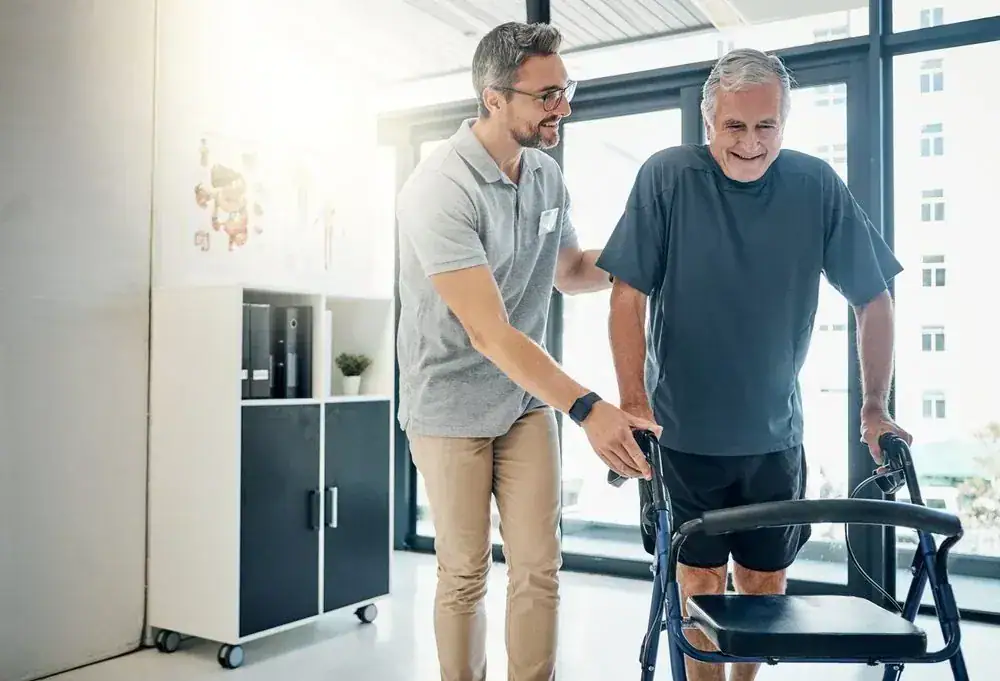
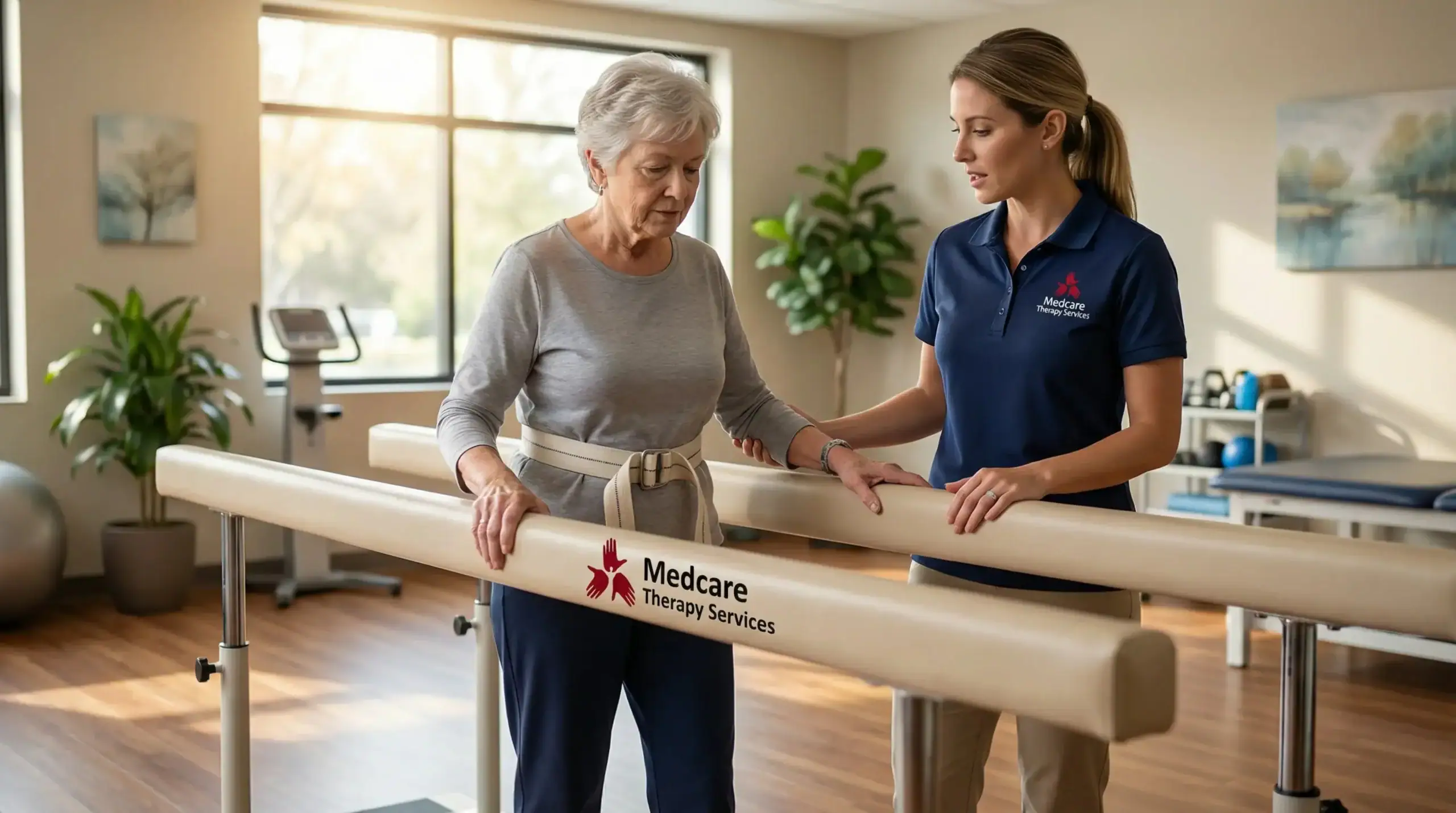
You’re not looking for a gym membership or a generic exercise plan. You need something that actually works when you’re walking to the bathroom at 2 a.m., reaching for something in the kitchen, or stepping into the shower.
That’s what fall prevention therapy does. It rebuilds the strength, coordination, and confidence you’ve lost. Not through guesswork, but through exercises designed specifically for older adults who want to stay independent.
Research shows that targeted balance exercises for seniors reduce fall risk by 23% to 35%. That’s not marketing talk. That’s what happens when you work with a licensed therapist who assesses your gait, your balance, your home environment, and your specific risk factors. Then builds a plan around you.
You’ll notice the difference in how you move. Steadier steps. Better reaction time. Less fear when you stand up or turn around. And all of it happens in your own home, where most falls actually occur.
We’ve been providing in-home physical therapy across Long Island for over a decade. We’re not a corporate chain. We’re local therapists who understand that Moriches seniors face real barriers to getting care—transportation, mobility limitations, and the simple fact that leaving home feels harder than it used to.
That’s why we come to you. Our licensed physical and occupational therapists specialize in elderly fall prevention using evidence-based programs like the Otago method. We’re Medicare-certified, and we treat every patient with the same care we’d want for our own family.
Long Island has one of the highest fall rates in New York State. Nassau and Suffolk counties rank 4th and 5th statewide for fall-related incidents. If you live in Moriches, you’re statistically more at risk than almost anyone else in the state. That’s not meant to scare you—it’s meant to show you why this matters and why we’re here.

First, a licensed therapist comes to your home in Moriches and does a full fall risk assessment. That includes checking your balance, your gait, your strength, and how you move through your own space. We’ll also look at environmental factors—rugs, lighting, furniture placement—that could increase your risk.
From there, we build a personalized program. You’re not doing random exercises. You’re doing movements that target the specific weaknesses or imbalances that put you at risk. That might include strength training for your legs, coordination drills, gait training to restore a normal walking pattern, or balance exercises that challenge your stability in safe, controlled ways.
Sessions happen in your home, usually two to three times per week depending on your needs and what Medicare approves. Your therapist tracks your progress, adjusts the program as you improve, and teaches you how to continue exercising safely on your own between visits.
The goal isn’t just to prevent a fall. It’s to give you back the confidence to move through your day without fear. To get up without hesitation. To walk without second-guessing every step.

Ready to get started?
You’ll receive one-on-one therapy from a licensed professional who specializes in balance and mobility for older adults. Every session is tailored to your current ability level, your health conditions, and your specific fall risks.
The program includes strength training to rebuild the muscles that keep you stable, balance exercises that improve your reaction time and coordination, and gait training to help you walk more naturally and confidently. If you’ve developed a fear of falling, your therapist will work with you to reduce that anxiety through gradual exposure and skill-building.
Here in Moriches and across Suffolk County, more than half of fall-related hospitalizations happen at home. That’s exactly why we deliver therapy where you live. Your therapist will also assess your home for hazards and recommend modifications—things like grab bars, better lighting, or removing tripping hazards—that make your space safer.
Medicare covers home-based physical therapy for individuals who have difficulty leaving their home due to mobility or health limitations. We handle the paperwork and work directly with your doctor to get you approved. You focus on getting stronger.

Most people start noticing improvements in balance and confidence within the first few weeks of consistent therapy. But the real reduction in fall risk—the kind backed by research—happens over the course of two to three months.
Studies show that structured balance exercises for seniors can reduce fall rates by 23% to 35% when done regularly under the guidance of a licensed therapist. That timeline assumes you’re attending sessions two to three times per week and practicing exercises between visits.
Your progress depends on your starting point. If you’ve already had a fall or you’re dealing with conditions like arthritis, neuropathy, or muscle weakness, it may take a bit longer to rebuild strength and coordination. But even small improvements matter. Steadier steps mean fewer close calls. Better reaction time means you can catch yourself before you go down.
Yes, if you meet Medicare’s criteria for home health services. Specifically, you need to be homebound, meaning it’s difficult for you to leave your home due to illness, injury, or mobility limitations. You also need a doctor’s order stating that physical therapy is medically necessary.
Medicare Part B covers home-based physical therapy at 80% of the approved amount after you’ve met your deductible. You’re responsible for the remaining 20%, though supplemental insurance often covers that portion.
We work directly with your physician to get the necessary orders and handle all the Medicare paperwork on your end. If you’re unsure whether you qualify, we can walk you through the requirements during an initial consultation. Most seniors in Moriches who have difficulty driving, walking long distances, or leaving home due to balance issues will meet the homebound criteria.
Fall prevention therapy is a specialized form of physical therapy focused specifically on reducing fall risk in older adults. It’s not about recovering from surgery or rehabbing an injury—it’s about improving the systems that keep you upright and stable.
That means your therapist will focus heavily on balance training, gait mechanics, lower body strength, and reaction time. You’ll do exercises that challenge your stability in controlled ways, like standing on one leg, weight shifting, or walking on uneven surfaces. The goal is to retrain your body to respond quickly and effectively when your balance is threatened.
Regular physical therapy might address those areas, but fall prevention therapy makes them the priority. It also includes a home safety assessment, which most general PT programs don’t offer. Your therapist will identify environmental hazards in your home and recommend changes that reduce your risk of tripping or losing your balance. For seniors in Moriches, where 60% of fall-related hospitalizations happen at home, that environmental piece is critical.
You can do some balance exercises on your own, but working with a licensed therapist—especially at the start—gives you a much better outcome. Here’s why: most people don’t know which exercises they actually need, how to do them correctly, or how to progress safely.
A therapist assesses your specific fall risks first. Maybe your issue is weak hip muscles. Maybe it’s poor proprioception (your body’s sense of where it is in space). Maybe it’s a shuffling gait or fear-based movement patterns. Without that assessment, you’re guessing. And guessing means you might spend weeks doing exercises that don’t address your actual problem.
We also ensure you’re doing exercises safely. If your balance is already compromised, certain movements could put you at risk of falling during the exercise itself. We supervise you, correct your form, and progress the difficulty as you improve.
Once you’ve built a foundation and learned the exercises, you can absolutely continue them on your own. In fact, that’s the goal. But starting with professional guidance—especially through a program like Otago, which is proven to reduce falls by up to 35%—sets you up for long-term success.
Your first session is mostly assessment. A licensed therapist will come to your home in Moriches and spend about an hour evaluating your balance, strength, gait, and mobility. We’ll ask about your health history, any previous falls, medications that might affect balance, and activities that make you feel unsteady.
You’ll do some basic movement tests—standing from a chair, walking across the room, standing on one leg, reaching in different directions. These aren’t pass-or-fail. They’re just ways for us to see how your body moves and where the weak points are.
We’ll also walk through your home and look for environmental hazards. Loose rugs, poor lighting, clutter in walkways, lack of grab bars—anything that increases fall risk. We’ll make recommendations, but you’re not required to change anything immediately.
By the end of the session, you’ll have a clear picture of your fall risk and a plan for how to address it. We’ll outline what exercises you’ll be doing, how often we’ll meet, and what improvements you can expect over the next few months. Then we’ll schedule your next visit and get started.
Most fall prevention programs run between eight and twelve weeks, depending on your progress and what Medicare approves. You’ll typically have two to three sessions per week, each lasting 45 minutes to an hour.
Some people improve faster and can transition to independent exercise sooner. Others need more time, especially if they’re managing chronic conditions like arthritis, Parkinson’s, or neuropathy that affect balance. Your therapist will reassess you regularly and adjust the timeline based on how you’re responding.
The goal isn’t to keep you in therapy forever. It’s to get you strong and confident enough to maintain your balance on your own. By the end of the program, you’ll have a set of exercises you can continue at home, along with the knowledge to recognize when your balance is declining and when you might need a refresher.
Even after you’re discharged, you can always return if your needs change. Many seniors in Moriches come back for a few sessions after an illness, a hospitalization, or a period of inactivity that affects their strength. Medicare will cover additional therapy as long as it’s medically necessary and your doctor orders it.
Other Services we provide in Moriches