

You stop second-guessing every step. Grocery shopping doesn’t feel risky. Stairs become manageable again, not something you avoid.
That’s what happens when balance exercises for seniors are done right. You rebuild strength in the muscles that keep you upright. You retrain your body to catch itself before a stumble turns into a fall.
Most people don’t realize how much they’ve pulled back until they start moving freely again. You’re not just preventing falls. You’re getting back to the things you stopped doing because they felt unsafe. Walking the dog. Gardening. Playing with grandkids without that constant worry in the back of your mind.
Physical therapy for balance isn’t about wrapping you in bubble wrap. It’s about giving you the tools to move through your day without fear dictating what you can and can’t do.
We’ve been treating patients across Long Island since 1998. That’s over two decades of working with people who want to stay independent, avoid hospitals, and keep living in their own homes.
Our therapists are licensed, experienced in geriatric care, and trained specifically in fall prevention in the elderly. We’re not rotating you between staff members or handing you off mid-session. You work with someone who knows your history, tracks your progress, and adjusts your plan as you improve.
Melville and the surrounding Suffolk County communities have a large senior population. That means there’s real demand here for balance therapy that actually works. It also means you have options. What sets us apart is straightforward communication, transparent billing, and a treatment approach that’s built around what you need—not what fits a generic protocol.

You start with a fall risk evaluation. A licensed physical therapist assesses your gait, balance, strength, and any environmental or health factors that increase your risk. This isn’t a checklist. It’s a conversation about what’s happening in your daily life and where the vulnerabilities are.
From there, you get a personalized treatment plan. That might include gait training to improve how you walk, senior balance exercises to strengthen stabilizing muscles, or vestibular rehabilitation if dizziness is part of the problem. Every plan is different because every person’s risk factors are different.
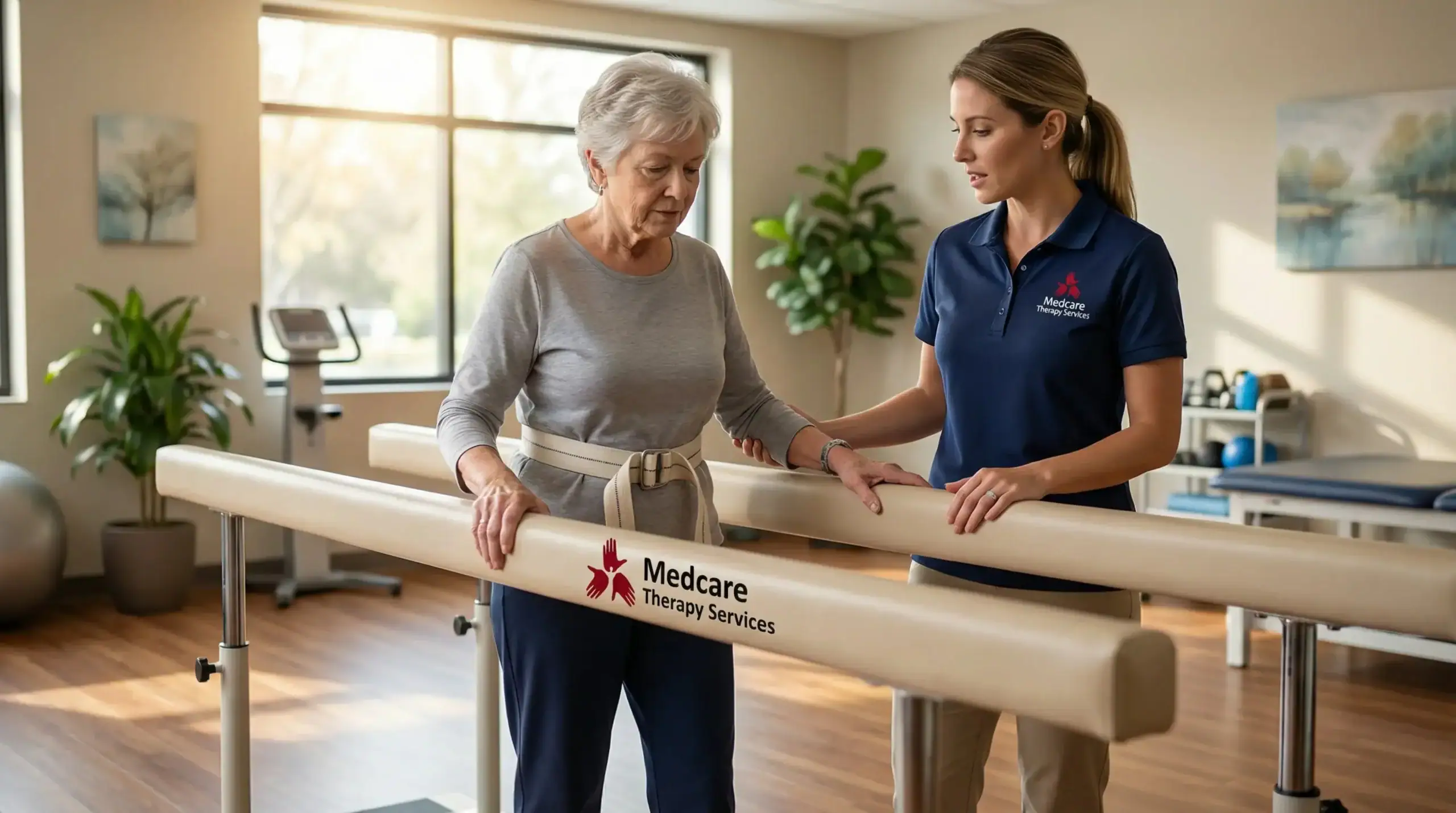
Sessions are hands-on. You’re not watching videos or doing generic stretches. You’re working through exercises that target your specific weak points, with a therapist who’s watching your form and adjusting in real time.
As you progress, the plan evolves. The goal isn’t endless therapy. It’s getting you stable, confident, and equipped with exercises you can continue at home. Most patients see measurable improvement within weeks, but the timeline depends on where you’re starting and how consistent you are with the work.

Ready to get started?
Your program includes a comprehensive balance assessment, one-on-one therapy sessions, and a customized exercise plan you can do at home. You’re also getting education—understanding why certain movements are risky, how to modify your environment, and what warning signs to watch for.
In Melville and across Long Island, falls are one of the leading causes of emergency room visits for seniors. The data is clear: proactive balance training reduces that risk significantly. But it only works if the program is tailored to you, not pulled from a template.
We accept most major insurance plans. That’s important because cost shouldn’t be the reason you avoid getting help. Billing is transparent from the start—no surprises after your first visit about what’s covered and what’s not.
You also get access to multiple locations across Suffolk and Nassau Counties. If Melville isn’t the most convenient, there are other options nearby. The goal is to make it as easy as possible for you to show up and do the work.

If you’ve fallen in the past year, you’re at higher risk. If you feel unsteady when standing up or walking, that’s a red flag. If you avoid certain activities because you’re worried about losing your balance, that’s another one.
Other risk factors include muscle weakness in your legs, dizziness or lightheadedness, vision problems, or taking multiple medications that affect coordination. Even things like poor lighting at home or loose rugs can increase your risk.
A fall risk evaluation gives you a clear picture. A physical therapist will test your balance, assess your gait, check your strength, and ask about your medical history. You’ll walk away knowing exactly where your vulnerabilities are and what needs to be addressed. Most people underestimate their risk until they go through a formal assessment.
They’re not complicated, but they are specific. You might work on standing on one leg to improve stability. You might practice weight shifts or step-ups to strengthen the muscles that keep you upright. Heel-to-toe walking is common for improving gait.
Some exercises focus on reaction time—your ability to catch yourself if you start to lose balance. Others work on coordination, like moving your arms and legs in different patterns while maintaining your center of gravity.
The key is progression. You start where you are, not where you think you should be. As you get stronger and more stable, the exercises get harder. A good therapist adjusts the difficulty based on what you can handle safely. You’re not doing anything that puts you at risk of falling during the session. Everything is controlled, supervised, and designed to build confidence as much as strength.
Most people notice a difference within four to six weeks if they’re consistent with therapy and home exercises. That doesn’t mean you’re done at six weeks—it means you’re starting to feel steadier, more confident, and less worried about losing your balance.
The timeline depends on where you’re starting. If you’ve had a recent fall or surgery, it might take longer. If you’re dealing with a chronic condition like Parkinson’s or neuropathy, improvement might be gradual but still significant.
What matters more than speed is sustainability. The goal isn’t just to feel better for a few weeks. It’s to build strength and habits that keep you stable long-term. That’s why the home exercise component is so important. Therapy sessions give you the foundation, but what you do between sessions determines how much progress you make and how well it sticks.
Most major insurance plans cover physical therapy for balance and fall prevention, especially if you’ve had a recent fall, have a documented balance disorder, or have a condition that affects mobility. Medicare typically covers it if it’s deemed medically necessary.
The key is getting a referral from your doctor and making sure the therapy is billed correctly. Some plans require a copay per visit. Others cover a certain number of sessions per year.
We accept most insurance plans and handle billing directly. Before your first session, we’ll verify your coverage and let you know what your out-of-pocket cost will be. No surprises after the fact. If you’re unsure whether your plan covers it, call your insurance company and ask specifically about physical therapy for balance or fall prevention. Have your policy number ready and ask how many visits are covered per year.
It’s not just exercise. It’s targeted intervention based on your specific risk factors. A physical therapist identifies why you’re at risk—weak hip muscles, poor ankle mobility, slow reaction time, whatever it is—and builds a plan to address those exact issues.
Research backs this up. Studies show that balance training and strength exercises reduce fall risk by 20 to 40 percent in older adults. That’s not a small number. That’s the difference between staying in your home and ending up in the hospital.
But it only works if the program is personalized and if you stick with it. Generic exercise videos won’t cut it because they don’t account for your limitations, your health conditions, or your environment. A licensed therapist adjusts the plan as you progress, watches for compensations or bad habits, and makes sure you’re doing the exercises correctly. That’s what makes it effective.
It’s not too late. In fact, falling once makes you more likely to fall again, so starting therapy after a fall is one of the smartest things you can do. Many people wait until after a fall to take balance seriously, and that’s okay—what matters is that you’re taking action now.
Post-fall therapy focuses on rebuilding strength, restoring confidence, and identifying what caused the fall so you can prevent it from happening again. Maybe it was a trip hazard at home. Maybe your legs gave out. Maybe you got dizzy. A therapist will figure out the root cause and address it.
A lot of people develop a fear of falling after it happens once. That fear leads to less activity, which leads to weaker muscles, which increases fall risk even more. It’s a cycle. Physical therapy breaks that cycle by giving you the strength and skills to move safely again. You’re not starting from scratch—you’re rebuilding what you lost and adding safeguards so it doesn’t happen again.
Other Services we provide in Melville