
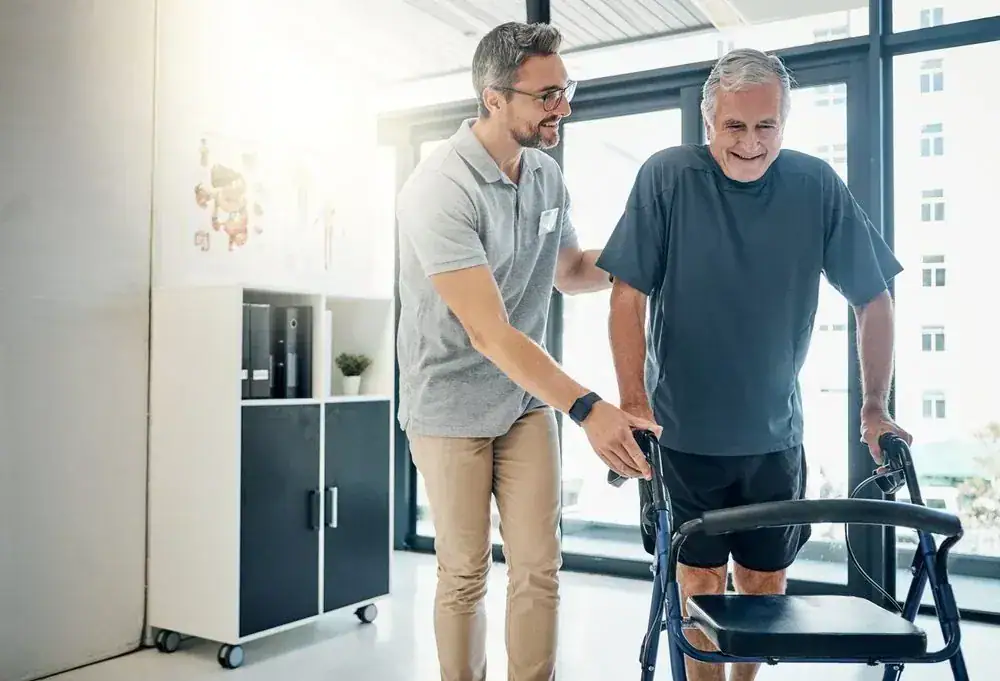
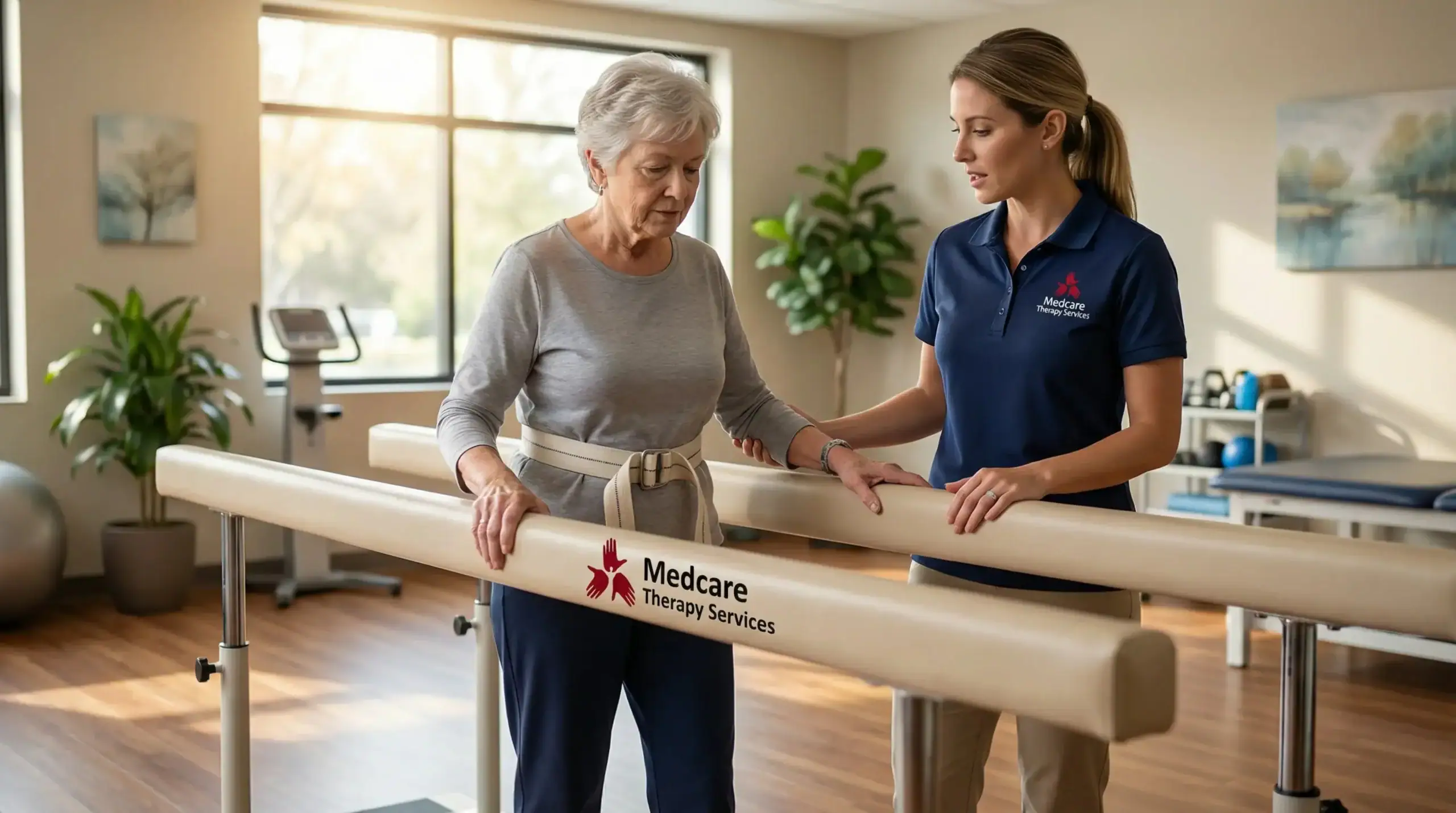
You’ve noticed it. The hesitation before standing up. The extra second you need to steady yourself. Maybe you’ve already had a close call, or you’re just worried about what could happen.
That fear changes how you live. You skip the grocery store. You stop visiting friends. You stay home more than you want to because moving around doesn’t feel safe anymore.
Balance exercises for seniors work because they retrain your body to respond faster and recover better. Strength training rebuilds the muscles that keep you upright. Together, they cut your fall risk in half. You’ll feel steadier on your feet, more confident in your movements, and less anxious about everyday activities. That’s not a promise—it’s what the research shows, and it’s what our patients experience when they stick with the program.
Medcare Therapy Services has been providing in-home physical therapy across Nassau and Suffolk Counties for over a decade. We’re licensed, Medicare-certified, and trained specifically in elderly fall prevention and balance disorders.
We work with seniors in Manhasset Hills and surrounding communities who want to stay in their homes but need help managing fall risk. We show up on time, treat you with respect, and build programs around your specific limitations—not some generic protocol.
Manhasset Hills has one of the highest concentrations of older adults on Long Island, and many live independently in multi-level homes. That means stairs, uneven surfaces, and daily challenges that require real strength and coordination. We account for that in every treatment plan.

First, a licensed physical therapist comes to your home and completes a fall risk assessment. We’ll check your balance, test your leg strength, review your medications, and walk through your home to spot hazards. This takes about an hour.
Then we build a program based on what we found. You’ll do balance exercises that challenge your stability in safe, controlled ways. You’ll do strength training focused on your legs, hips, and core—the muscles that catch you when you stumble. You’ll practice getting up from chairs, walking on different surfaces, and recovering from off-balance positions.
Sessions happen one to three times per week depending on your needs and insurance coverage. Most people see measurable improvement in four to six weeks. You’ll notice it first in small ways—less wobbling when you stand, more confidence on stairs, quicker reactions when you trip.

Ready to get started?
Every fall prevention program includes a full assessment, personalized exercise plan, and ongoing adjustments based on your progress. We’ll also review your medications with you—many common prescriptions cause dizziness or affect balance, and knowing which ones increases your awareness.
You’ll get a home safety evaluation. We’ll identify trip hazards like loose rugs, poor lighting, or bathroom risks. Small changes make a big difference, and most don’t cost anything.
In Manhasset Hills, many homes were built in the 1950s and 60s with stairs, narrow hallways, and bathrooms that weren’t designed for aging adults. We see these layouts every day. We’ll give you specific recommendations for your specific home—not general advice you could find online.
If you need it, we’ll introduce adaptive equipment like grab bars, shower chairs, or walking aids. We’ll also teach you how to use them correctly, because having the equipment doesn’t help if you don’t know when or how to use it.

If you’ve fallen in the past year, you’re at higher risk. If you feel unsteady when standing or walking, you’re at higher risk. If you avoid activities because you’re afraid of falling, you’re at higher risk.
Other signs include difficulty getting up from a chair without using your arms, needing to hold onto walls or furniture when walking around your house, or feeling dizzy when you stand up. Medications for blood pressure, sleep, anxiety, or depression can also increase fall risk because they affect balance and reaction time.
One in four adults over 65 falls each year. Most don’t tell their doctor because they’re embarrassed or afraid of losing independence. But falling once doubles your chances of falling again, and the consequences get worse with age. A fall risk assessment takes an hour and gives you a clear answer about where you stand.
Yes, if you meet the requirements. Medicare Part B covers outpatient physical therapy when it’s medically necessary and prescribed by your doctor. Fall prevention qualifies if you have a documented balance problem, history of falls, or condition that affects your mobility.
You’ll need a referral from your physician. Once we have that, we handle the rest—verification, billing, and communication with Medicare. Most patients pay little to nothing out of pocket after their deductible is met.
Medicare covers a set number of therapy visits per year, and that limit resets annually. We’ll work within those visits to get you the best results possible. If you have a Medicare Advantage plan, coverage works similarly but may have different copays or visit limits depending on your plan.
Balance training focuses on your body’s ability to recover when you’re off-center. It’s not about strength alone—it’s about reaction time, coordination, and proprioception, which is your sense of where your body is in space.
Senior balance exercises challenge your stability in controlled ways. You might stand on one leg, walk heel-to-toe, or shift your weight while standing on an uneven surface. These exercises retrain your nervous system to respond faster when you start to fall.
Strength training for fall prevention targets specific muscle groups—your quads, glutes, calves, and core. These muscles stabilize your joints and generate the force you need to catch yourself. Stronger legs mean better control and less risk of buckling when you lose balance. The combination of balance and strength work is what reduces fall risk by up to 50%, according to clinical research.
Most people notice improvement in four to six weeks if they’re consistent with their exercises. You’ll feel steadier first, then you’ll see measurable changes in tests like how long you can stand on one leg or how fast you can get up from a chair.
The timeline depends on your starting point. If you’re very deconditioned or recovering from an injury, it may take longer. If you’re generally active but just need some targeted work, you might see results sooner.
Consistency matters more than intensity. Doing your exercises three times a week will get you further than doing them once a week at twice the effort. We’ll progress the difficulty as you improve, so the program stays challenging but manageable. Even after therapy ends, you’ll need to keep up with some version of the exercises to maintain your gains. Balance and strength decline when you stop using them.
It’s not too late. Falling once actually makes fall prevention more important, not less, because your risk of falling again is now higher. Physical therapy after a fall addresses the specific reasons you went down in the first place.
We’ll figure out what happened. Was it a balance issue? Leg weakness? A medication side effect? A hazard in your home? Most falls are caused by multiple factors, and fixing just one of them isn’t enough.
The goal is to rebuild your confidence as much as your strength. Many people become fearful after a fall and start limiting their activity, which makes them weaker and more likely to fall again. We break that cycle by improving your physical abilities and giving you strategies to move safely. You’ll also learn how to get up from the floor if you do fall, which reduces injury risk and gives you a backup plan.
You can do exercises on your own, but you won’t know if you’re doing the right ones or if you’re doing them correctly. A physical therapist identifies your specific weaknesses and builds a program around them. We also make sure you’re challenging yourself enough to improve without overdoing it and risking injury.
Generic balance exercises you find online aren’t tailored to your limitations. If you have arthritis, neuropathy, or a previous injury, some exercises could make things worse. We adjust the program based on what your body can handle and progress it as you get stronger.
You also get accountability. Most people start strong and then stop after a few weeks. We keep you on track, measure your progress, and adjust the plan when you hit a plateau. If you’re serious about reducing your fall risk, working with someone who knows what they’re doing will get you better results faster.
Other Services we provide in Manhasset Hills