
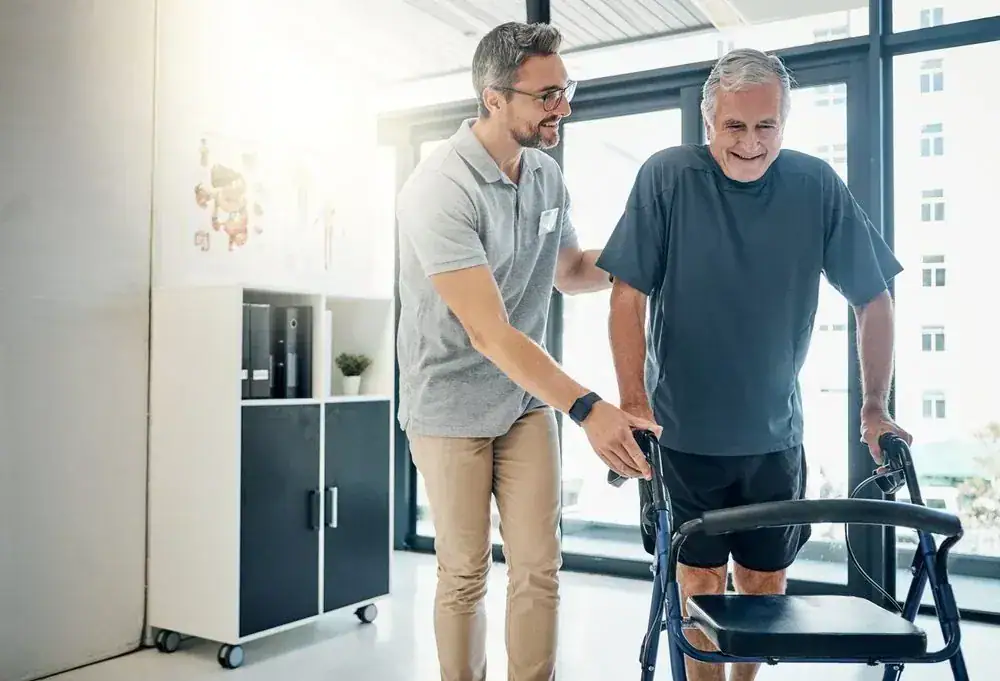
You stop second-guessing the stairs. You walk to the mailbox without that nagging worry in the back of your mind. You get up from a chair without bracing yourself first.
That’s what better balance actually looks like. Not some vague idea of “feeling stronger,” but real, measurable confidence in how you move through your day. When you work with a licensed physical therapist who understands fall prevention, you’re not just doing generic exercises—you’re addressing the specific reasons your balance has changed.
Maybe it’s muscle weakness in your legs. Maybe it’s reduced flexibility in your ankles. Maybe medications are affecting your coordination, or your vision has shifted how you perceive space. A proper fall risk assessment identifies what’s actually happening, so the exercises you do target the right problems. And the results show up fast—most people notice a difference in how they feel within the first few weeks.
The goal isn’t perfection. It’s getting back to doing what you want without fear holding you back.
We’ve been providing home-based physical therapy across Long Island since 2010. That means over a decade of helping people in Lawrence, Cedarhurst, Woodmere, and surrounding Five Towns communities stay safe and independent at home.
You’re not getting a one-size-fits-all program. You’re working with our licensed New York physical therapists who specialize in elderly fall prevention and understand how aging affects balance, strength, and mobility. Every session happens in your home, so you’re training in the environment where you actually live—where the real risks are.
Lawrence has one of the highest senior populations on Long Island, with more than 20% of residents over 65. That means your neighbors are dealing with the same concerns you are. And many of them have already worked with our team to reduce their fall risk and regain confidence in their movement.

First, one of our licensed physical therapists comes to your home and conducts a full fall risk assessment. This isn’t a quick checklist—it’s a detailed evaluation of your strength, balance, flexibility, gait, medication use, and home environment. You’ll walk through your daily routine so we can see where the actual risks are.
From there, you get a personalized exercise program designed around what your body needs. If your ankles are stiff, you’ll work on mobility. If your legs are weak, you’ll focus on strength. If your balance is off, you’ll do targeted exercises that retrain your body’s stabilization system. These aren’t complicated moves—they’re functional exercises that translate directly to real life, like getting in and out of the shower or walking on uneven pavement.
Sessions happen one-on-one in your home, usually two to three times per week depending on your needs. Your therapist supervises every movement, adjusts your program as you improve, and teaches you exercises you can do safely on your own between visits. Most programs run eight to twelve weeks, but some people continue longer depending on their goals. And yes, it’s covered by Medicare and most commercial insurance plans.

Ready to get started?
You get a comprehensive fall risk assessment that looks at every factor contributing to your risk—muscle strength, joint flexibility, balance, coordination, medications, vision, and home hazards. We identify what’s increasing your risk and build a plan around those specific issues.
Your exercise program includes balance training, strength exercises for your legs and core, flexibility work, and functional movement training. These aren’t random exercises—they’re based on evidence-backed protocols like the Otago Exercise Programme, which has been shown to reduce falls by 35-40%. You’ll practice movements that mirror real life: standing from a chair, reaching for items, walking on different surfaces, turning your head while moving.
In Lawrence and the Five Towns area, many homes were built decades ago and weren’t designed with aging in mind. We also assess your home environment and recommend modifications that reduce risk—things like removing tripping hazards, improving lighting, adding grab bars, or rearranging furniture. Small changes make a big difference when you’re trying to prevent a fall that could land you in the hospital.
You’ll also get education on other risk factors you might not have considered. If you’re taking five or more medications, your fall risk goes up significantly. If you’re not wearing proper footwear, that’s another factor. We’ll talk through all of it so you understand what’s within your control.

Most people start noticing improvements in their balance and confidence within three to four weeks of consistent therapy. But the timeline depends on where you’re starting from and how often you’re doing your exercises.
If you’re coming in with significant weakness or balance issues, it might take six to eight weeks before you feel a major shift. If you’re relatively active but just want to address some specific concerns, you might see changes faster. Research shows that balance exercises can reduce fall risk by about 24% when done regularly, and multicomponent programs that combine strength, balance, and flexibility training can cut your risk in half.
The key is consistency. We’ll give you exercises to do between sessions, and those matter just as much as the supervised visits. The more you practice, the faster your body adapts. And once you’ve built up your strength and balance, maintaining it becomes much easier—you just need to keep moving.
Yes. Medicare Part B covers outpatient physical therapy when it’s medically necessary, and fall prevention absolutely qualifies. If you’ve had a fall, if you’re at high risk, or if your doctor has concerns about your balance or mobility, Medicare will typically cover your sessions.
You’ll need a referral or prescription from your physician, but that’s usually straightforward. Your doctor just needs to document that you have a balance issue, a history of falls, or risk factors that make therapy necessary. From there, Medicare covers 80% of the approved amount after you’ve met your deductible, and most supplemental plans cover the remaining 20%.
We accept Medicare and nearly all commercial insurance plans, and we handle the billing and authorization process for you. You don’t need to navigate the paperwork on your own. If you have questions about your specific coverage, our office can verify your benefits before your first session so there are no surprises.
It’s not too late. In fact, you’re exactly the person who needs fall prevention therapy the most. Falling once doubles your chances of falling again, which is why early intervention after a fall is so important.
When you fall, it’s usually not random bad luck—it’s a sign that something in your body or environment has changed. Maybe your legs aren’t as strong as they used to be. Maybe your balance has declined and you didn’t realize it. Maybe you’re on a new medication that’s affecting your coordination. We can figure out what caused the fall and address it directly.
The other thing that happens after a fall is fear. You start moving less because you’re worried it’ll happen again, and that inactivity makes you weaker, which actually increases your risk. Our therapy breaks that cycle. You rebuild strength and balance in a controlled, supervised way, so you regain confidence in your movement. And we work with you in your home, so you’re practicing in the exact environment where you need to feel safe.
All of your therapy happens at home. That’s the whole point. You’re not driving to a clinic, sitting in a waiting room, or trying to replicate your home environment in some generic gym.
We come to you, evaluate your space, and design a program around the way you actually live. If you have stairs, you’ll practice stairs. If your bathroom is a tight space, you’ll work on maneuvering safely in tight spaces. If your flooring is uneven or you have area rugs that slide, those become part of the assessment and the training.
Home-based therapy also makes it easier to stick with the program. You don’t have to worry about transportation, weather, or whether you’re feeling up to leaving the house. Your therapist shows up, you do the work, and you’re done. It’s especially helpful for people in Lawrence and the Five Towns, where parking can be a hassle and getting around isn’t always easy. You stay comfortable, and you still get the same high-quality care you’d receive in a clinic.
The difference is specificity. Online exercises are generic—they’re designed for the average person and don’t account for your individual risk factors, limitations, or goals. We assess your body, identify your weak points, and prescribe exercises that target those exact issues.
For example, if your ankles are stiff and limiting your ability to react when you trip, we’ll give you ankle mobility exercises. If your hip muscles are weak and causing your pelvis to drop when you walk, you’ll do targeted hip strengthening. If your balance is fine when you’re standing still but falls apart when you turn your head, you’ll work on dynamic balance training. You can’t get that level of customization from a YouTube video.
The other major difference is supervision. We watch how you move, correct your form, and progress your exercises as you get stronger. If you’re doing an exercise wrong, we catch it before it becomes a problem. And if something isn’t working, we adjust the plan. That kind of real-time feedback is what makes therapy effective—and it’s what keeps you safe while you’re rebuilding your strength and balance.
Most programs run eight to twelve weeks, with sessions happening two to three times per week. But the exact length depends on your starting point, your goals, and how quickly you progress.
If you’re dealing with significant weakness or balance impairment, you might need a longer program—closer to twelve weeks or more. If you’re relatively active and just want to address some specific concerns, you might be done in eight weeks. We’ll reassess your progress throughout the program and adjust the timeline as needed.
The goal isn’t to keep you in therapy forever. It’s to get you strong and stable enough that you can maintain your balance on your own. By the end of the program, you’ll have a set of exercises you can do independently, and you’ll understand how to keep your strength and balance up over time. Some people choose to continue with occasional maintenance sessions, but that’s up to you. The important thing is that you leave the program with the tools and confidence to stay safe.
Other Services we provide in Lawrence