
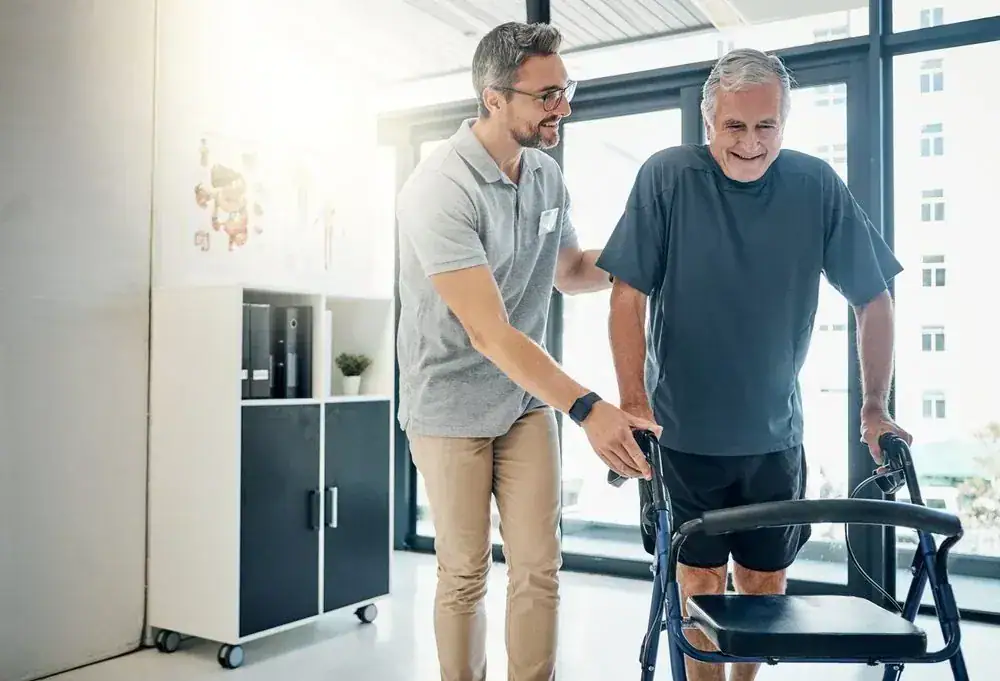
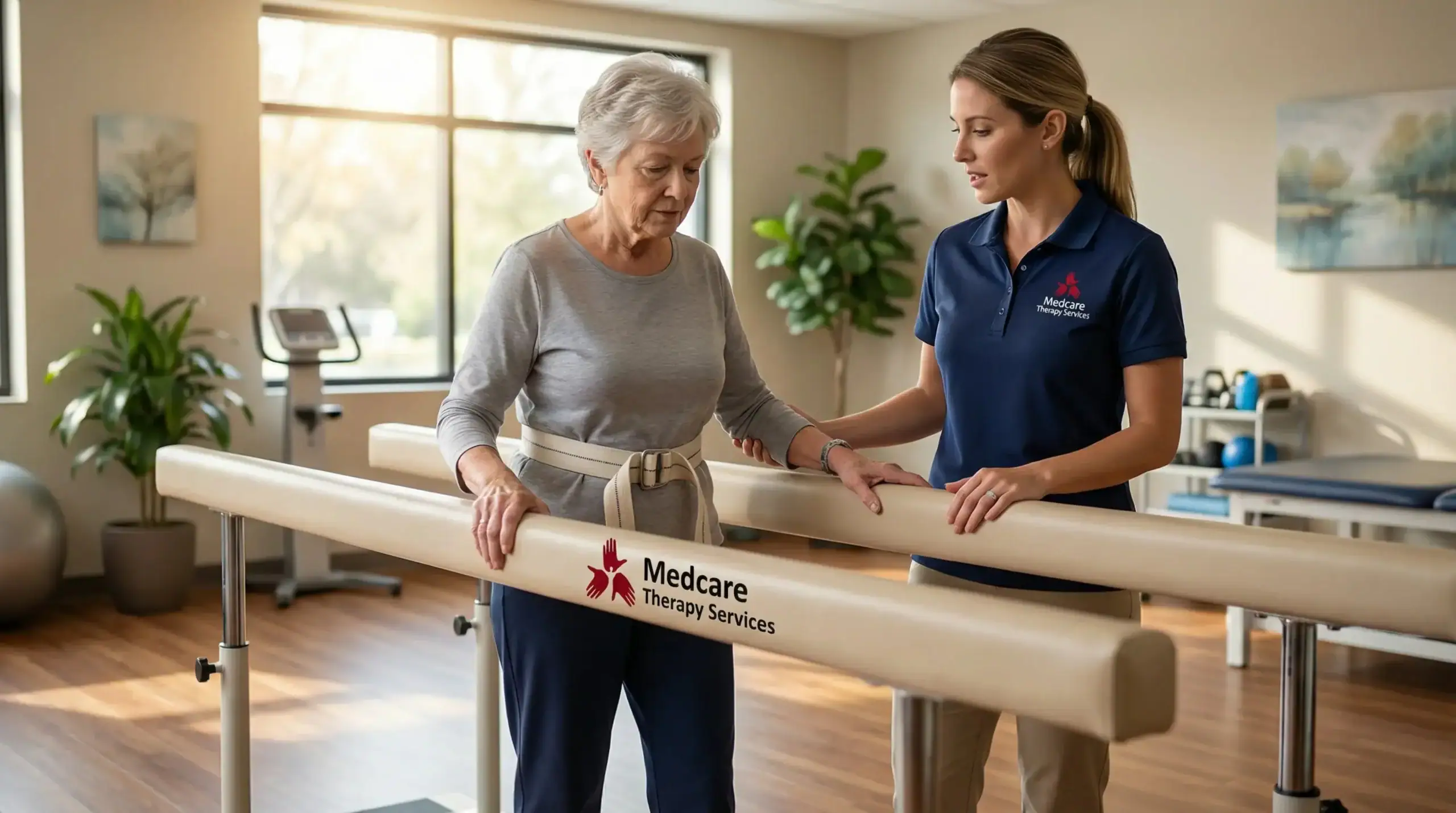
You move through your home without second-guessing every step. That hesitation before walking to the kitchen, the grip you keep on furniture just in case—it starts to fade when your balance improves and your legs feel stronger.
Falls aren’t just about the physical injury. They change how you live. One out of five falls causes a broken bone or head injury, and if you’re over 75, a fall makes you four times more likely to end up in a nursing facility. That’s not scare tactics—that’s why acting early matters.
Our fall prevention programs focus on the things that actually reduce risk: strengthening your legs, improving your coordination, training your balance, and making your home safer. You work with a licensed physical therapist who comes to you, assesses your specific risks, and builds a plan around what your body needs. The goal isn’t perfect balance. It’s confident movement and fewer close calls.
Medcare Therapy Services has spent over a decade providing home-based physical and occupational therapy across Nassau and Suffolk County. We work with people who find it difficult to leave their homes—whether that’s due to mobility issues, transportation challenges, or simply preferring care in a familiar environment.
Our therapists are licensed, experienced, and trained in evidence-based fall prevention methods. We don’t treat you like a number. Every plan is built around your specific risks, your home layout, and your daily routine.
Laurel Hollow and the surrounding North Shore communities have unique housing—older homes, stairs, uneven surfaces. We understand the environment you’re navigating because we’ve been serving this area for years. You’re not getting a generic program. You’re getting an evaluation and treatment plan designed for your life.

First, a physical therapist comes to your home and conducts a full fall risk assessment. They’ll evaluate your strength, test your balance and coordination, watch how you walk, and identify environmental hazards in your space. This isn’t a quick checklist—it’s a detailed look at what’s putting you at risk.
From there, your therapist designs a personalized program. That might include strength training to build leg stability, balance exercises for seniors that challenge your coordination in safe ways, gait training to improve how you walk, and specific recommendations for making your home safer—better lighting, removing tripping hazards, adding grab bars where they’ll actually help.
You’ll have regular sessions where your therapist guides you through exercises, tracks your progress, and adjusts the plan as you improve. Many of our patients are covered by Medicare, which often includes fall prevention therapy when it’s medically necessary. The timeline varies, but most people start feeling steadier within a few weeks and see measurable improvements in balance and strength over the course of treatment.

Ready to get started?
Your program includes a comprehensive risk assessment, one-on-one therapy sessions in your home, and a customized exercise plan you can continue between visits. We focus on the evidence-based interventions that research shows actually work—not generic advice you could find online.
Balance exercises for seniors are tailored to your current ability. If you’re unsteady now, we start with supported movements and progress from there. Strength training targets the muscles that keep you upright and stable. Gait training improves how you walk, which directly impacts fall risk.
In Laurel Hollow and nearby areas like Oyster Bay Cove, Cold Spring Harbor, and Syosset, many homes have features that increase fall risk—stairs without railings, dim hallways, thick rugs, bathtubs without grab bars. Your therapist will walk through your space and give you specific, actionable recommendations. Not everything requires expensive renovations. Sometimes it’s as simple as repositioning furniture or improving lighting in key areas.
You’ll also get education on managing dizziness, understanding how medications might affect your balance, and recognizing early warning signs that your risk is increasing. The goal is to give you the tools to stay safe long after therapy ends.
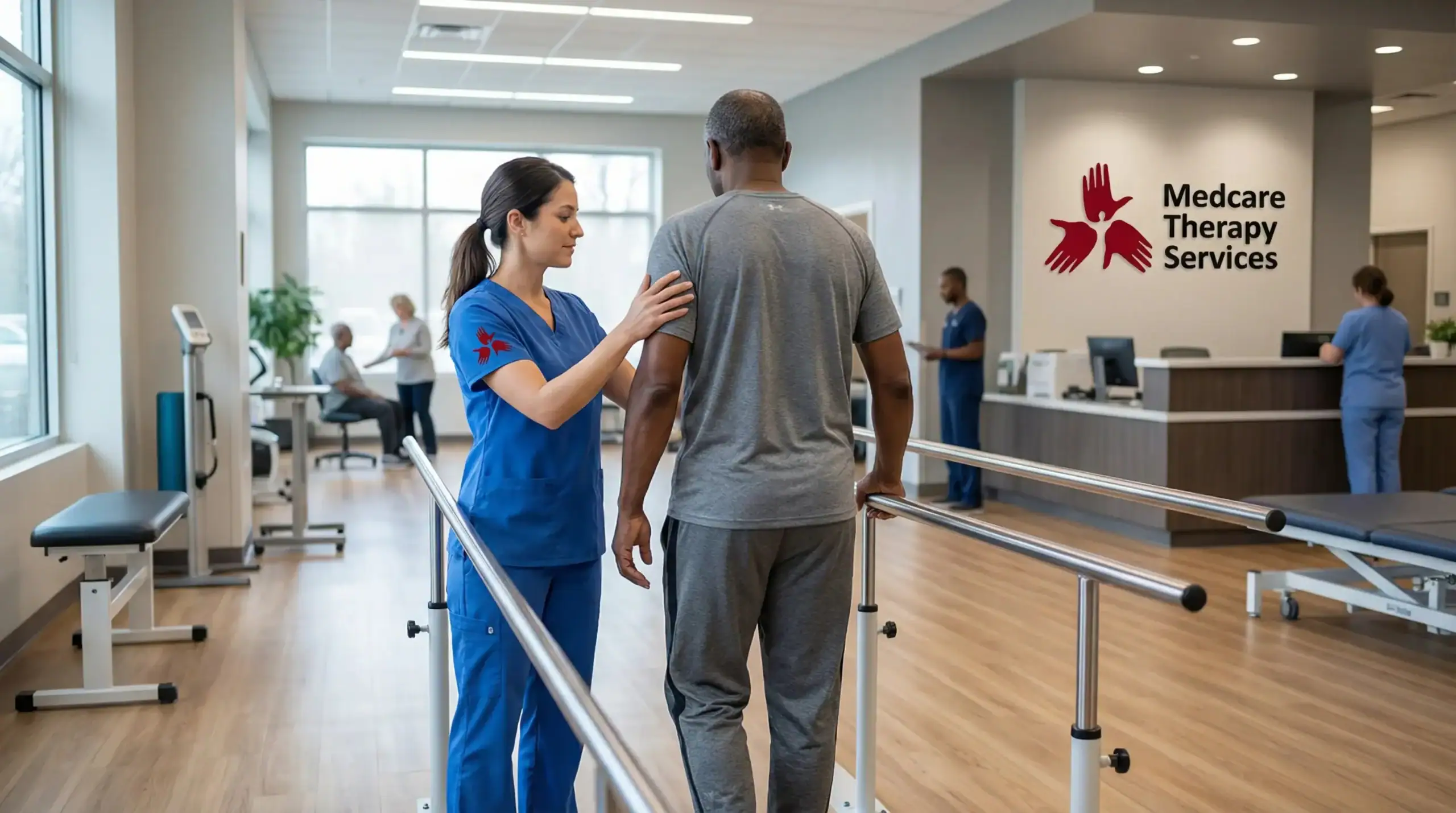
If you’ve fallen in the past year, you need it. If you’ve had close calls or feel unsteady when you walk, you need it. If you avoid certain activities because you’re worried about falling, that’s another sign.
A lot of people wait until after a fall to get help, but that’s reactive. Falls are the leading cause of injury and death in adults over 65, and as many as two-thirds of them can be prevented with the right intervention. If you’re noticing changes in your balance, strength, or confidence when moving, that’s your body telling you something needs attention.
Your doctor can refer you for a fall risk assessment, or you can reach out directly. Medicare often covers physical therapy for fall prevention when it’s medically necessary, so cost doesn’t have to be a barrier. The earlier you address it, the better your outcomes.
Most falls happen at home. If your therapist only sees you in a clinic, they’re missing the actual environment where you’re at risk. They can’t evaluate the lighting in your hallway, the height of your toilet, the layout of your bathroom, or the rugs you walk across every day.
Home-based therapy means your physical therapist assesses and treats you in the space where you actually live. They see the real obstacles. They can recommend changes that are specific to your home, not general advice that may or may not apply.
It also eliminates the transportation issue. If getting to appointments is difficult or stressful, you’re less likely to stick with the program. When your therapist comes to you, that barrier disappears. You get consistent care without the added risk of navigating unfamiliar parking lots or waiting rooms.
Medicare Part B often covers physical therapy for fall prevention when it’s deemed medically necessary by your doctor. That usually means you have a documented fall risk—either you’ve fallen recently, you have balance issues, or you have conditions that increase your likelihood of falling.
Your therapist will work with your physician to ensure the treatment plan meets Medicare’s requirements. Coverage typically includes the evaluation, therapy sessions, and the development of your personalized exercise program. There may be copays or deductibles depending on your specific plan.
If you’re unsure about your coverage, we can help you navigate that before you start. We’re an established Medicare provider, and we’re familiar with the documentation and approval process. The key is getting a referral from your doctor and making sure the therapy is tied to a specific medical need, not just general wellness.
It depends on your starting point and your goals. Some people see improvements in balance and confidence within a few weeks. Others need a couple of months to build the strength and coordination that significantly reduces their fall risk.
Your physical therapist will evaluate your progress regularly and adjust the plan as you improve. The initial assessment gives us a baseline—how strong you are, how well you balance, how you move. From there, we track measurable changes: can you stand on one foot longer, are you walking with better stability, do you feel steadier on stairs.
Most programs involve one to three sessions per week, depending on your needs and what Medicare or your insurance approves. The exercises you do between sessions matter just as much as the time with your therapist. Consistency is what drives results. Even after formal therapy ends, you’ll have a program you can continue on your own to maintain your progress.
The exercises depend on your current ability and specific risk factors. If you’re already pretty steady, we might have you practice standing on one leg, walking heel-to-toe, or doing weight shifts. If you’re less stable, we start with supported exercises—holding onto a counter while you lift one foot, practicing sitting and standing from a chair, or doing gentle weight-bearing movements.
Senior balance exercises aren’t about pushing you to the point of falling. They’re about controlled challenges that improve your body’s ability to catch itself and stay upright. Your therapist will also incorporate strength training—leg lifts, squats, resistance work—because stronger muscles directly improve balance.
Gait training is another component. That’s where we work on how you walk: your stride length, your posture, how you navigate turns or uneven surfaces. A lot of falls happen during transitions—standing up, turning around, stepping over something. We practice those movements in a safe, supervised way so your body learns to handle them better. Everything is tailored to you, and nothing happens without your therapist right there.
It’s not too late. In fact, if you’ve already fallen, you’re at higher risk of falling again, which makes intervention even more important. A previous fall often means there’s an underlying issue—weakness, balance problems, environmental hazards, medication side effects—that hasn’t been addressed.
Fall prevention therapy after a fall focuses on identifying what caused it and fixing those factors. Your physical therapist will assess your strength and balance, review your medications with your doctor if needed, and evaluate your home for risks you might not have noticed. The goal is to reduce the chance of it happening again.
People who’ve fallen often develop a fear of falling, which leads to less activity, which leads to weaker muscles and worse balance. It’s a cycle. Our program breaks that cycle by rebuilding your confidence alongside your physical abilities. You’re not just recovering from the fall—you’re actively preventing the next one. That’s a completely different approach than just resting and hoping it doesn’t happen again.
Other Services we provide in Laurel Hollow