
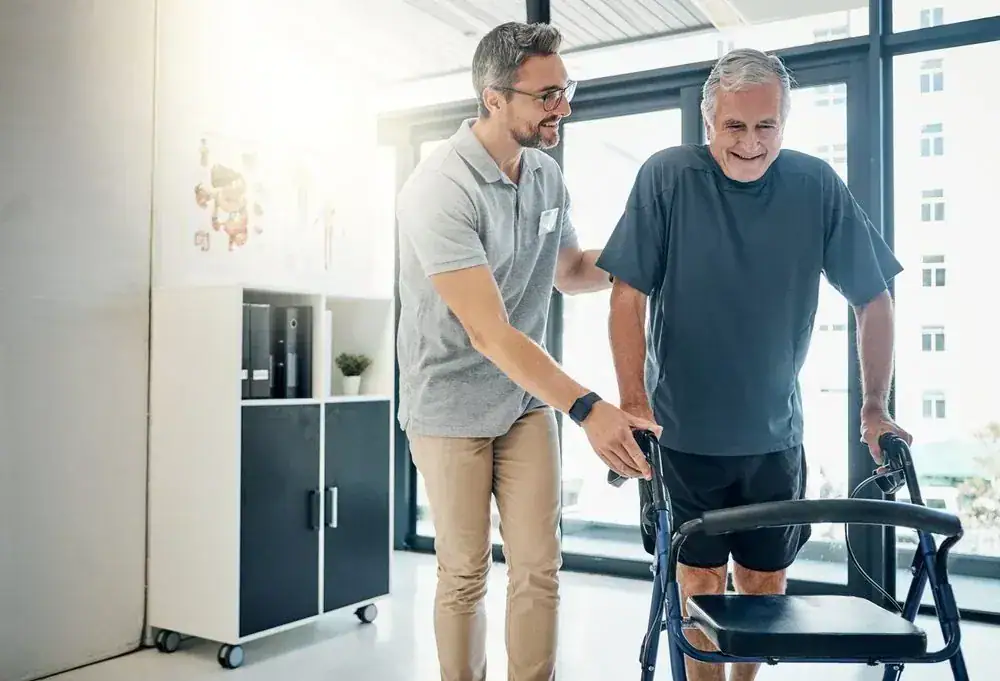
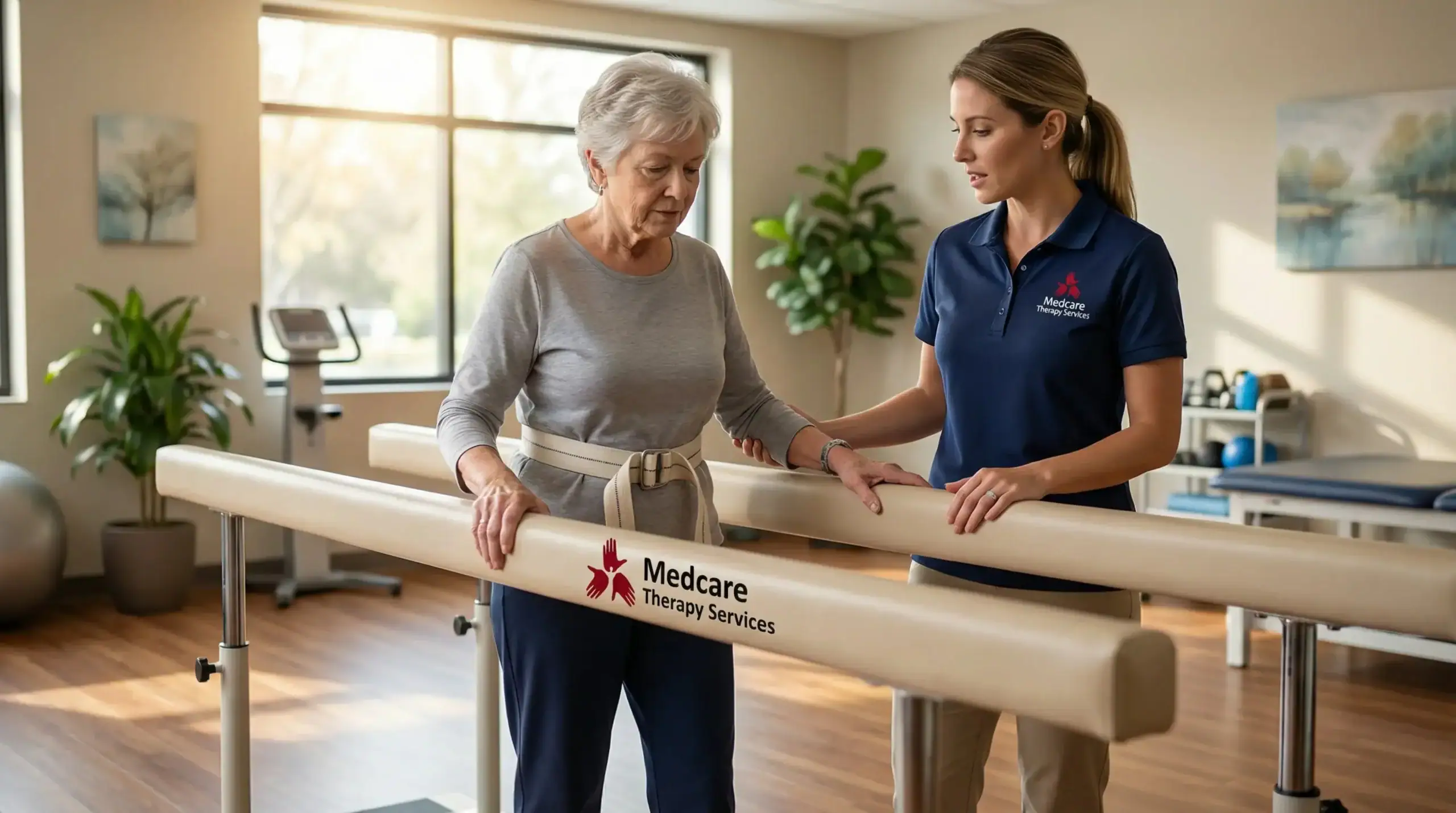
You stop second-guessing every step. Getting the mail doesn’t feel risky. Walking on uneven ground doesn’t make your heart race.
That shift happens when your legs get stronger, your core stabilizes, and your brain relearns how to react quickly. Physical therapy for balance isn’t about preventing every stumble—it’s about giving your body the tools to catch itself when it happens.
Here’s what matters: research shows seniors who do regular balance exercises and strength training cut their fall risk by 28%. That’s not a small number when you consider that one in four adults over 65 falls every year. On Long Island, where Nassau County sees 88% of injury hospitalizations in older adults tied to falls, the stakes are even higher.
You’re not looking for guarantees. You’re looking for better odds and more confidence. That’s what this kind of work delivers.
We’ve been treating Long Island residents for over a decade at Medcare Therapy Services. We work out of multiple locations and offer in-home visits for people who can’t easily get to a clinic.
Our therapists are licensed, trained in evidence-based fall prevention programs like Otago, and experienced with the specific needs of older adults in Nassau County. We accept Medicare and most insurance plans, and we handle the paperwork so you don’t have to chase down approvals.
Lattingtown and the surrounding North Shore communities have some of the highest concentrations of older adults on Long Island. We know the area, the terrain, the homes, and the lifestyle. That context matters when we’re designing a program that fits your actual day-to-day life.

First, we do a full assessment. That includes your medical history, current medications, vision, gait, balance, strength, range of motion, and coordination. We’re looking for what’s contributing to your fall risk—and it’s usually more than one thing.
From there, we build a personalized plan. It might include balance exercises for seniors, strength training for your legs and core, gait training to smooth out your walking pattern, and dual-task exercises that train your brain and body to work together under distraction. If your home setup is part of the problem, we’ll talk through that too.
Sessions can happen in our clinic or at your home, depending on what works better for you. Most people start with two or three visits per week, then taper as they get stronger and more confident. The goal isn’t to keep you in therapy forever—it’s to get you stable, then teach you how to maintain it on your own.
You’ll see progress in how you move, but also in how you feel. Less hesitation. Less fear. More control.

Ready to get started?
Every fall prevention plan we create includes a baseline assessment, individualized exercise programming, and ongoing adjustments as you improve. You’re not doing generic senior exercises—you’re doing movements designed around your specific weaknesses and goals.
Balance training might involve standing exercises, weight shifts, or controlled movements on unstable surfaces. Strength work focuses on your legs, hips, and core—the muscle groups that keep you upright. Gait training addresses how you walk, especially if you shuffle, lean, or favor one side. And dual-task training teaches you to stay balanced while doing something else, like talking or carrying groceries.
If you’re recovering from a fall or surgery, we adjust the intensity. If you haven’t exercised in years, we start slow. If you’re already active but still feel unsteady, we dig into why.
Long Island seniors face higher fall rates than most of New York State—Nassau and Suffolk counties rank 4th and 5th statewide. That’s not random. It’s tied to age demographics, home layouts, winter weather, and activity levels. Your program takes all of that into account, because what works in a flat apartment in the city doesn’t always work in a multi-level home near the water.

Most people notice a difference within four to six weeks if they’re consistent with their sessions and home exercises. That doesn’t mean you’re done in six weeks—it means you start feeling steadier, moving with more confidence, and catching yourself better when you trip.
The research backs this up. Studies on elderly fall prevention show that structured exercise programs need at least eight to twelve weeks to produce measurable reductions in fall risk. Some people improve faster, especially if their issue is isolated to one area like weak legs or poor gait. Others take longer if they’re dealing with multiple risk factors like medication side effects, vision problems, or a history of falls.
What matters more than speed is consistency. Two sessions a week plus daily home exercises will get you further than one session a week with nothing in between. Your therapist will track your progress with repeat balance and strength tests so you can see objective improvement, not just how you feel.
It does both, but prevention is where the strongest evidence sits. A Cochrane review of fall prevention studies found that exercise-based interventions reduce fall risk by 21 to 24%, reduce falls requiring medical attention by 39%, and cut fall-related fractures by 27%. Those aren’t small numbers.
The key is that physical therapy for balance addresses the root causes before a fall happens. Weak legs, poor coordination, slow reaction time, unsteady gait—these are all fixable with the right training. Most falls aren’t random accidents. They’re the result of a body that can’t adapt quickly enough when something goes wrong.
If you’ve already fallen, therapy helps you rebuild strength and confidence so it doesn’t happen again. But you don’t need to wait for a fall to start. In fact, starting before a serious fall happens is the smarter move. Once you’ve fallen and broken something, recovery is harder and longer. Prevention is faster, less painful, and way less expensive.
We offer both. If getting to a clinic is difficult because of mobility issues, transportation, or just the hassle of it, we can come to you. In-home therapy is especially useful because we can assess your actual environment—the stairs you use, the rugs you walk on, the lighting in your hallways.
Some people prefer the clinic because it has specialized equipment and fewer distractions. Others do better at home where they feel more comfortable and can immediately practice what they learn in the space where they actually live. There’s no wrong choice. It’s about what helps you stay consistent.
In-home visits are covered by Medicare and most insurance plans, just like clinic visits. Your therapist will do the same assessments, the same exercises, and the same progress tracking. The only difference is location. If you’re in Lattingtown, NY or nearby areas like Oyster Bay, Locust Valley, or Glen Cove, we can usually schedule home visits within a few days of your first call.
Fitness classes are great for staying active, but they’re not designed to reduce fall risk. They’re group-based, generalized, and not tailored to your specific weaknesses. If your issue is a weak left ankle and poor proprioception, a general strength class won’t target that.
Our programs are one-on-one, built around a clinical assessment, and adjusted as you improve. We’re not just making you stronger—we’re fixing the specific breakdowns in your balance system. That might mean gait retraining, vision-balance integration, or dual-task exercises that challenge your brain and body at the same time.
We also use evidence-based protocols like the Otago Exercise Program, which has been studied extensively and shown to reduce falls in community-dwelling older adults. Your therapist is a licensed professional who understands age-related changes in strength, coordination, and reaction time. That clinical knowledge makes a big difference when you’re trying to prevent something as serious as a fall-related fracture.
Yes, in most cases. Medicare Part B covers outpatient physical therapy when it’s medically necessary, and fall prevention absolutely qualifies if you have documented risk factors like a history of falls, balance problems, gait issues, or muscle weakness.
Your doctor will need to provide a referral or prescription, which is standard for any physical therapy. From there, we handle the billing and work directly with Medicare or your insurance company. You’ll have a copay or coinsurance depending on your plan, but you won’t be paying out of pocket for the full cost of treatment.
If you’re not sure whether you’re covered, call us. We can check your benefits before you start and give you a clear answer on what you’ll owe. We’ve been doing this since 2010, and we’re very familiar with how Medicare and supplemental plans work for Long Island residents. You shouldn’t have to guess about coverage or avoid treatment because you’re worried about cost.
It’s not too late. If anything, you’re exactly the person who needs this most. Multiple falls mean something in your system isn’t working—whether that’s strength, balance, coordination, or reaction time—and it’s not going to fix itself.
The good news is that even people with a significant fall history see improvement with the right program. You might need a slower start or more support at first, but progress is still very possible. Your therapist will meet you where you are and build from there.
One thing to know: if you’ve developed a fear of falling, that’s something we address directly. Fear makes you move less, which makes you weaker, which increases your fall risk. It’s a bad cycle. Part of therapy is rebuilding your confidence in controlled, safe environments so you can get back to doing the things you’ve been avoiding. You’re not stuck where you are right now. You just need the right plan and someone who knows how to guide you through it.
Other Services we provide in Lattingtown