
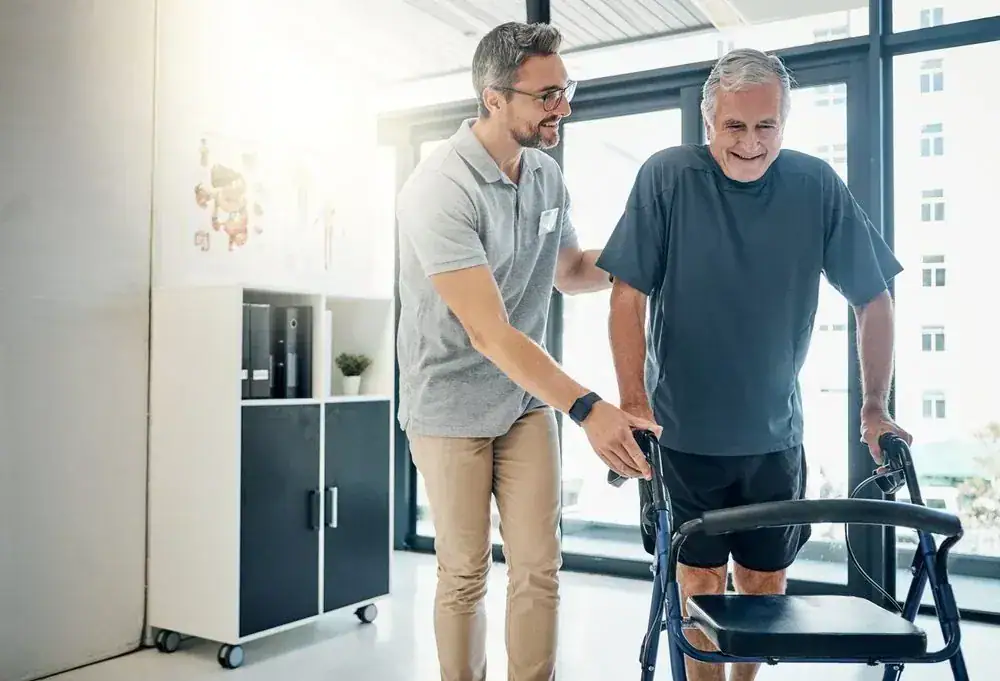
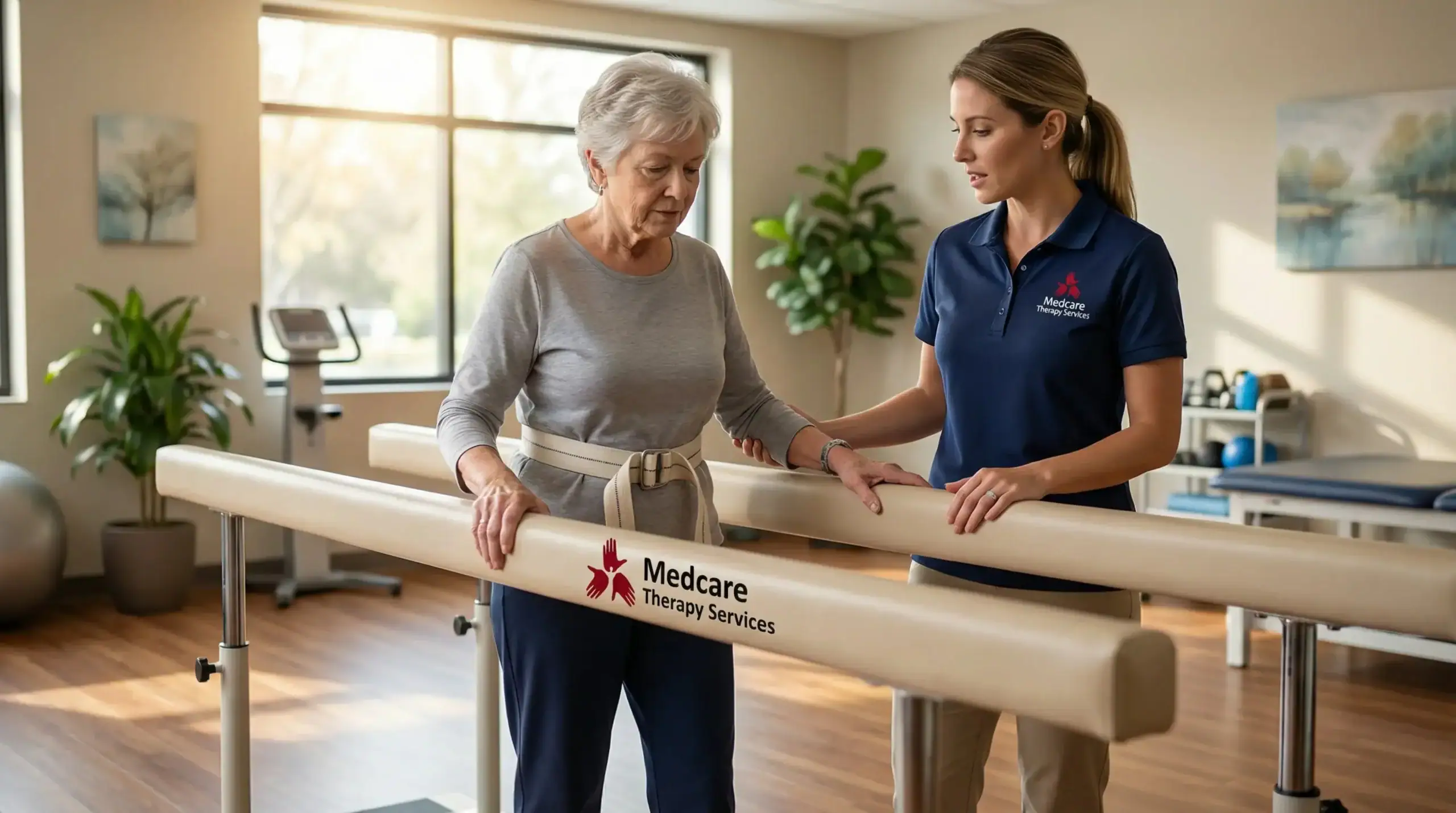
You stop planning your day around what might go wrong. The bathroom at 2 a.m. doesn’t feel like a gamble anymore. Getting the mail or reaching for something in the kitchen becomes automatic again, not something you have to think through first.
That’s what happens when balance exercises for seniors actually work. Your legs get stronger. Your reaction time improves. The unsteadiness that’s been creeping in for months starts reversing.
Most people notice real improvements within four to six weeks. Not just feeling better—actually moving better. Walking without holding onto furniture. Standing up without bracing yourself. Going outside without someone watching you.
The goal isn’t just avoiding a fall. It’s getting back to doing what you want without constantly calculating risk. And for most seniors in Jericho dealing with balance issues, that shift happens faster than they expect when the therapy comes to them.
We’ve been providing in-home physical therapy across Nassau County for over a decade. We work with seniors in Jericho, East Meadow, Hicksville, and surrounding communities who need fall prevention but can’t easily get to an outpatient clinic.
Our therapists are licensed, Medicare-certified, and trained specifically in elderly fall prevention. They come to your home, assess your actual environment, and build a program around how you move in the space where you actually live.
Jericho has one of the higher concentrations of older adults on Long Island. That means more people dealing with balance issues, more falls happening at home, and more families trying to figure out how to help without taking away independence. We get it because we’ve been part of this community long enough to see what works and what doesn’t.

First, a licensed physical therapist comes to your home in Jericho for an evaluation. They watch how you move, test your balance and strength, and look at your environment—rugs, lighting, furniture placement, bathroom setup. Everything that could contribute to a fall gets noted.
Then they build a personalized program. That usually includes senior balance exercises, gait training, strength work for your legs and core, and specific recommendations for your home. Maybe it’s grab bars in the bathroom or better lighting in the hallway. Maybe it’s just rearranging furniture so there’s a clear path.
You work with your therapist one-on-one, usually two to three times a week at first. Sessions happen in your living room, bedroom, wherever makes sense. The exercises are designed around real movements—standing up from your chair, walking to the kitchen, getting in and out of bed.
Progress gets tracked. Adjustments get made. And once you’re stronger and more stable, the frequency drops. Most people move to a maintenance phase after eight to twelve weeks, with check-ins as needed. The whole process is covered by Medicare Part B, so there’s no out-of-pocket cost for most seniors.

Ready to get started?
Every program starts with a full fall risk assessment. Your therapist evaluates strength, balance, gait, vision, medication side effects, and environmental hazards. This isn’t a generic checklist—it’s specific to you and your home in Jericho.
From there, you get a customized plan that typically includes balancing exercises, lower body strengthening, proprioceptive training (how your body senses position and movement), and gait training to improve how you walk. If you’ve had a stroke, deal with Parkinson’s, or have arthritis, the program adjusts for that.
You also get a home safety evaluation. Falls don’t just happen because of weakness—they happen because of loose rugs, poor lighting, clutter, or bathroom layouts that don’t work for older adults. Your therapist identifies those risks and gives you practical fixes.
On Long Island, especially in older Jericho neighborhoods with split-level homes and stairs, environmental modifications matter. Small changes—like moving a lamp, securing a rug, or adding a railing—can make a bigger difference than most people realize. And unlike a generic fall prevention checklist you find online, this is based on your actual house and how you actually move through it.

Most people start noticing improvements in balance and confidence within four to six weeks of consistent therapy. That’s when strength starts coming back and movements feel steadier. But the biggest reduction in fall risk—up to 37% according to research—happens after eight to twelve weeks of a structured program.
The timeline depends on where you’re starting from. If you’re dealing with significant weakness or you’ve already had a fall, it might take a bit longer to rebuild strength and retrain your gait. If you’re catching balance issues early, progress tends to come faster.
What matters more than speed is consistency. Doing the exercises your therapist assigns, even on days they’re not there, makes the difference. This isn’t passive treatment—you’re retraining your body to move differently, and that takes repetition.
Yes. Medicare Part B covers in-home physical therapy for fall prevention as long as you’re homebound, meaning leaving your home takes considerable effort. You don’t have to be completely bedridden—most seniors in Jericho who qualify can leave the house occasionally, but it’s difficult or requires help.
Your doctor needs to order the therapy, and the service has to be provided by a Medicare-certified agency like us. There’s no copay for the evaluation, and most therapy sessions are fully covered. If you have a supplemental plan, that usually picks up any remaining costs.
The key is that the therapy has to be medically necessary. If you’ve had a recent fall, you’re experiencing balance problems, or you have a condition like Parkinson’s or stroke that increases fall risk, you’ll likely qualify. Your therapist can walk you through the specifics during the initial evaluation.
The exercises depend on your current ability, but most programs include a mix of standing balance work, weight shifting, leg strengthening, and movement drills. You might practice standing on one foot, stepping over objects, or walking heel-to-toe. These aren’t complicated—they’re functional movements that translate directly to daily life.
Your therapist will also have you work on sit-to-stand exercises, which build the leg strength you need to get up from a chair or toilet without using your arms. Core strengthening is usually part of it too, since your trunk stability affects your overall balance.
Everything is tailored to what you can do safely. If you’re unsteady, you’ll start with exercises near a counter or sturdy chair for support. As you get stronger, the difficulty increases. The goal is always to challenge you just enough to make progress without putting you at risk of falling during the session itself.
Absolutely. In fact, if you’ve already had a fall, you’re at higher risk for another one—which makes therapy even more important. A previous fall often means there’s an underlying issue with strength, balance, or gait that hasn’t been addressed yet.
Therapy after a fall focuses on rebuilding whatever was lost and figuring out why the fall happened in the first place. Was it muscle weakness? Poor balance? A trip hazard at home? Medication side effects? Your therapist investigates all of it and builds a program that targets the root causes.
Just as important is the psychological piece. Fear of falling again can make you move less, which actually increases your risk. Physical therapy helps rebuild confidence by showing you that you can move safely. That mental shift—from “I’m afraid to walk to the mailbox” to “I can do this”—is often what keeps people independent long-term.
The biggest difference is that your therapist sees how you actually move in your own environment. They’re not guessing what your bathroom looks like or how far you have to walk from your bedroom to the kitchen—they’re right there, watching you navigate your actual home in Jericho.
That means they can spot hazards you might not even notice. A rug that slides. A dark hallway. A step you’ve been compensating for. And they can design exercises that match your real life, not a generic gym setup.
In-home therapy also removes the barrier of getting to appointments. If you’re unsteady or you don’t drive anymore, getting to a clinic twice a week is stressful and sometimes impossible. Therapy at home eliminates that. You’re more likely to stay consistent, which is what makes the program work.
Not if you keep up with a maintenance routine. The strength and balance you build during therapy will stick as long as you continue doing some version of the exercises. Your therapist will give you a plan to follow once formal sessions end.
Most people transition to a maintenance phase where they do exercises on their own a few times a week. Some continue with occasional check-ins—maybe once a month—to make sure they’re staying on track. The goal is to make the improvements permanent, not temporary.
If you stop moving altogether, yes, you’ll lose ground. But that’s true for anyone at any age. The difference is that after completing a fall prevention program, you’ll know exactly what to do to maintain your balance and strength. You’re not starting from scratch—you have the tools to keep yourself stable and independent long-term.
Other Services we provide in Jericho