
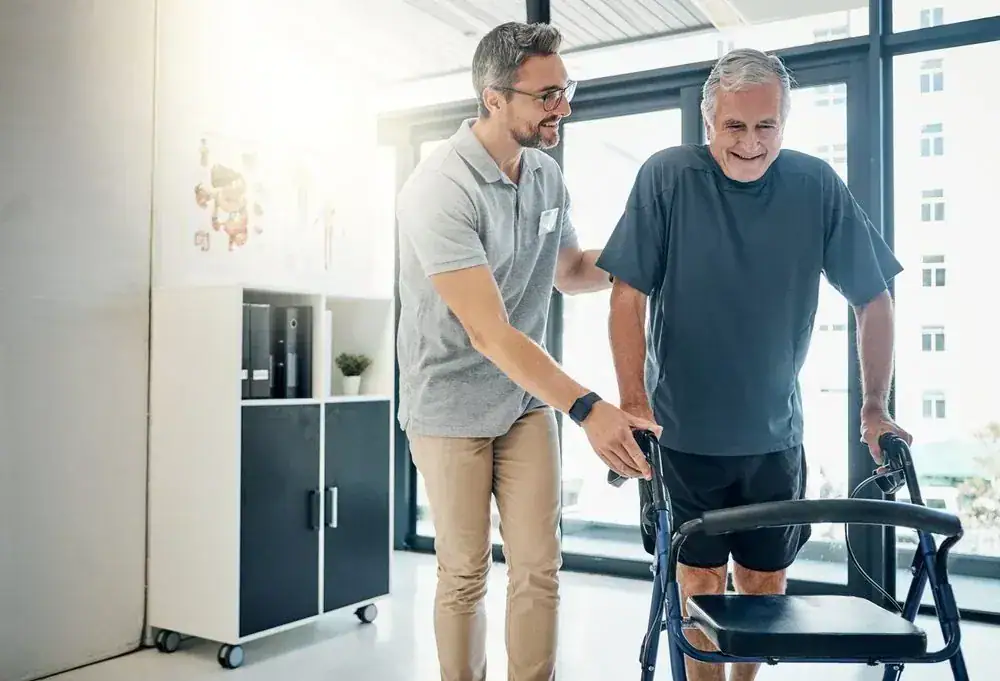
You stop second-guessing every step. Getting up from a chair, walking to the mailbox, reaching for something on a shelf—these everyday movements become automatic again, not calculated risks.
Your legs feel stronger. Your core feels stable. You’re not bracing yourself against furniture or walls as often, and that constant low-level anxiety about falling starts to fade.
The goal isn’t just avoiding a fall. It’s getting back to living without that fear hanging over you. When your balance improves, so does your confidence. And that’s when independence really comes back—not because someone told you it would, but because you can feel it in how you move.
Research backs this up. Studies show that fall prevention programs built around physical therapy can cut fall risk by 30% to 35%. That’s not a small number when you consider what’s at stake—your mobility, your freedom, your ability to stay in your own home.
We’ve been serving Long Island families for over 40 years. We’re not new to this, and we’re not experimenting with your care.
Our therapists specialize in fall prevention, balance training, and gait work. We treat patients across Nassau County, including right here in Hewlett Harbor, and we do it with the kind of attention that comes from decades of experience and a family-owned approach to healthcare.
You’re not a case number. You’re someone’s parent, grandparent, or neighbor. We treat you that way—with personalized plans, in-home visits when needed, and a team that actually listens. Long Island’s senior population is growing fast, and so is the need for care that’s both professional and personal. That’s what we’ve built our reputation on.

First, we assess where you are. A physical therapist will evaluate your balance, strength, gait, and any specific risk factors you’re dealing with. This isn’t a generic checklist—it’s a detailed look at how you move, where you’re compensating, and what’s putting you at risk.
Then we build a plan around you. That might include strengthening exercises for your legs and core, balance training that mimics real-world situations, and gait work to improve how you walk. We also look at your home environment and suggest changes that make falls less likely—better lighting, removing tripping hazards, rearranging furniture if needed.
You’ll work through exercises that are challenging but doable. The goal is functional movement—training your body to handle the things you actually do every day, not just exercises for the sake of exercises.
Progress happens in stages. You’ll notice small wins first—feeling steadier on your feet, moving with less hesitation. Over time, those wins add up to real independence. And if you’re on Medicare or most insurance plans, your therapy is likely covered.

Ready to get started?
You get a full fall risk assessment that identifies exactly what’s making you unsteady. From there, you receive a personalized treatment plan that targets your specific needs—not a one-size-fits-all routine.
Your program will include strength training focused on the muscles that matter most for balance: your legs, hips, and core. You’ll also work on proprioceptive training, which helps your body understand where it is in space—critical for preventing falls before they happen.
We incorporate functional movement exercises, so you’re practicing the motions you use every day. Standing up from a low chair. Stepping over obstacles. Turning quickly. These are the movements that trip people up, and we make sure you can do them safely.
You’ll also get education on how to make your home safer and how to move more confidently in different environments. And because we offer in-home therapy, you can receive care in the place where most falls actually happen—your own home. In Hewlett Harbor and across Nassau County, about 60% of fall-related hospitalizations start at home. We meet you there and help you address the risks in real time.

Most people start noticing improvements in balance and confidence within a few weeks, but the real reduction in fall risk builds over time. Research shows that patients who stick with a physical therapy program see the biggest benefits around the three-month mark and beyond.
That said, every session moves you forward. You’re strengthening muscles, retraining movement patterns, and building the kind of stability that doesn’t happen overnight. The timeline depends on where you’re starting from, how consistent you are with exercises, and what other health factors are in play.
The key is commitment. Falls don’t usually happen because of one weak moment—they happen because of accumulated risk. Physical therapy works by reversing that accumulation, one session at a time.
Yes. Medicare covers physical therapy when it’s medically necessary, and fall prevention absolutely qualifies—especially if you’ve had a fall, you’re at high risk, or you’re dealing with balance or mobility issues.
Most Medicare Advantage plans cover it too, along with a wide range of private insurance. We accept Medicare, Medicaid, and most major plans, and our team can help you understand your specific coverage before you start.
The bottom line: if you’re struggling with balance or you’ve already fallen, there’s a strong chance your therapy will be covered. Don’t let cost be the reason you wait. A fall can lead to a hospital stay that costs tens of thousands of dollars. Preventing that fall through therapy is a fraction of the price—and usually covered.
A fall risk assessment looks at everything that could be contributing to your risk. Your therapist will evaluate your balance, how you walk, your muscle strength, your flexibility, and your reaction time. They’ll also ask about your medical history, any medications you’re taking, and whether you’ve fallen before.
You’ll go through a series of movement tests—standing on one leg, walking in a straight line, getting up from a chair, reaching for objects. These aren’t pass-fail tests. They’re diagnostic. They show where you’re compensating, where you’re weak, and where you’re at risk.
From there, your therapist builds a plan that addresses what they found. If your legs are weak, you’ll work on strengthening. If your gait is unsteady, you’ll focus on walking mechanics. If your home has hazards, you’ll get recommendations to fix them. It’s a complete picture, and it’s personalized to you.
You can do both, and honestly, doing exercises at home is a huge part of fall prevention. Your therapist will teach you exercises you can do on your own between sessions, and those home exercises are what keep the progress going.
That said, working with a therapist—whether in a clinic or during an in-home visit—gives you guidance, correction, and accountability. You’re not guessing if you’re doing it right. You’re getting real-time feedback and adjustments that make the exercises more effective.
We offer in-home therapy, which is especially helpful if getting to a clinic is difficult or if you want to address fall risks in your actual living space. Many people do a combination: regular sessions with a therapist and daily exercises at home. That’s usually the fastest path to real improvement.
Age is one factor, but it’s not the only one. If you’ve fallen before, your risk goes up significantly. If you have muscle weakness, poor balance, vision problems, or certain medical conditions like arthritis or neuropathy, your risk is higher.
Medications can also play a role. Some prescriptions cause dizziness or affect your coordination. Your home environment matters too—poor lighting, loose rugs, clutter, and stairs without railings all increase the chance of a fall.
The good news is that most of these risk factors can be managed. Physical therapy addresses the physical side—strength, balance, and movement. Your therapist can also help you identify environmental risks and give you practical steps to reduce them. You’re not stuck with your current risk level. You can lower it, and that’s exactly what fall prevention is designed to do.
It depends on your starting point and your goals, but most programs run anywhere from a few weeks to a few months. Some people see the improvements they need in six to eight weeks. Others benefit from a longer program, especially if they’re recovering from a fall or dealing with multiple risk factors.
Your therapist will reassess your progress regularly and adjust the plan as you improve. The goal isn’t to keep you in therapy forever—it’s to get you strong, stable, and confident enough to maintain your balance on your own.
Even after you finish formal therapy, you’ll have exercises and strategies you can keep doing at home. Fall prevention isn’t a one-and-done thing. It’s about building habits and strength that last. And if you ever feel like you’re slipping—literally or figuratively—you can always come back for a tune-up.
Other Services we provide in Hewlett Harbor