
You stop planning your day around what might go wrong. The bathroom at night doesn’t feel like a risk. Getting the mail becomes automatic again, not something you brace for.
Falls aren’t just about the physical injury. They change how you see yourself. One fall, and suddenly you’re second-guessing every step. You avoid stairs. You hold onto walls. You start saying no to things you used to do without thinking.
Physical therapy for balance addresses that. Through targeted senior balance exercises and strength work, you rebuild the stability that makes movement feel normal again. Research shows balance training can reduce your fall risk by 23% to 35%—and those aren’t just statistics. That’s the difference between living in your home with confidence and living in constant caution.
You’re not training to become an athlete. You’re training to walk across your kitchen, reach into your cabinet, and turn around without grabbing the counter. That’s what matters.
We’ve spent over 14 years providing home-based physical therapy across Long Island. We’re not a new name trying to prove ourselves. We’re the team Glen Head families call when they want fall prevention that actually works—without the hassle of driving to a clinic.
Here’s what matters: Nassau County sees 88% of injury hospitalizations for adults over 65 tied to falls. That’s not a national average—that’s your backyard. We know the homes, the demographics, the insurance landscape, and what it takes to help older adults in this area stay safe.
Every therapist we send is licensed, Medicare-certified, and trained in evidence-based balance therapy. You’re not getting a one-size-fits-all program. You’re getting an assessment in your actual environment, with exercises built around your specific risks and goals.
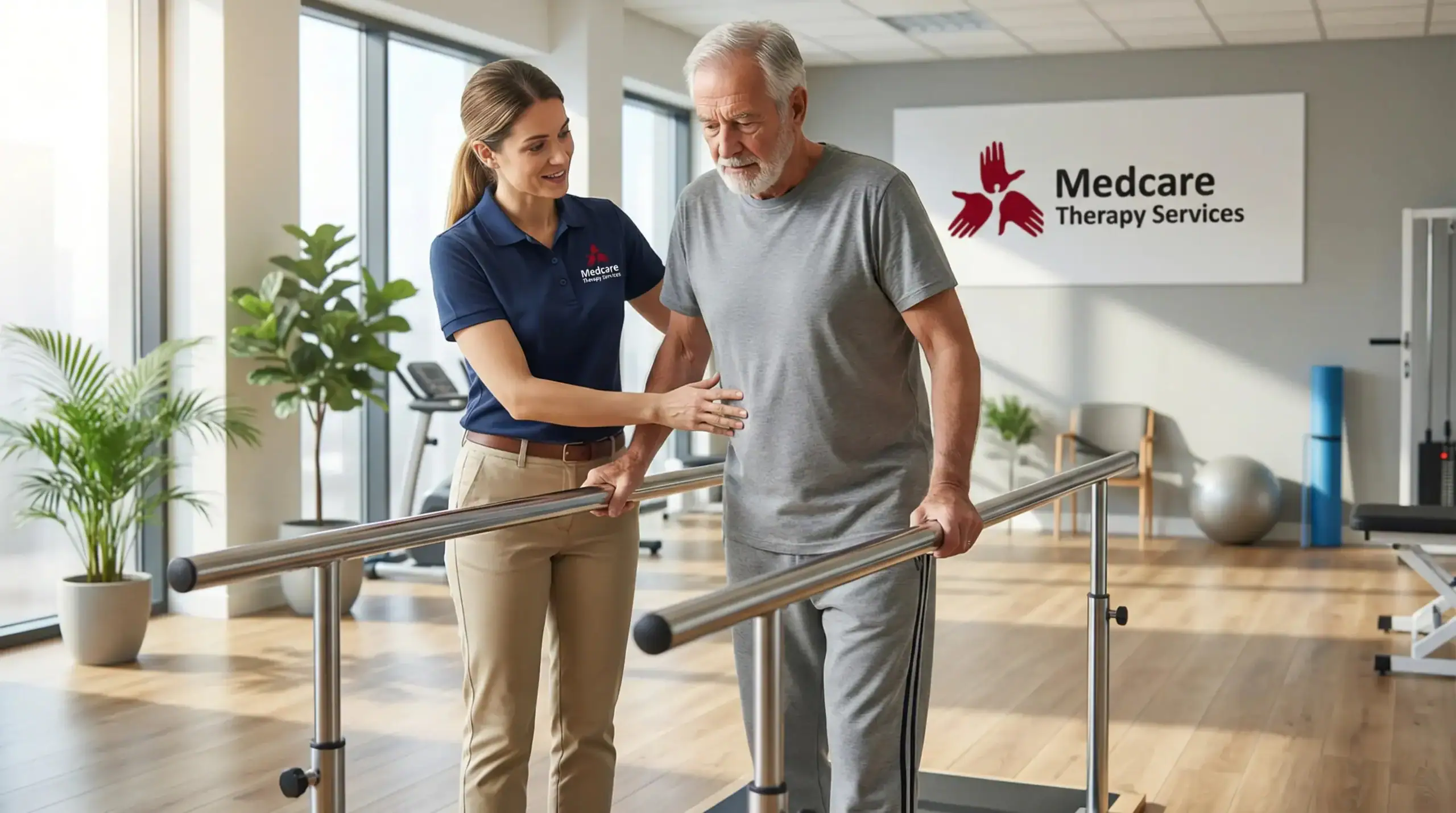
First, we come to your home in Glen Head. No waiting rooms, no driving, no trying to navigate an unfamiliar clinic when balance is already a concern. A licensed physical therapist evaluates how you move—not on a treadmill, but in your kitchen, your hallway, your bathroom. The places where falls actually happen.
From there, we build a personalized plan. That might include strengthening exercises, balance drills, gait training, or modifications to how you navigate your space. If you’ve fallen before, we address why. If you’re afraid of falling, we work on that too—because fear affects movement just as much as weakness does.
Sessions happen on your schedule, in your home, as often as your plan requires. Most patients see us one to three times per week initially, then taper as strength and confidence build. You’ll know what to expect at every visit, and you’ll have a direct line to your therapist if something changes.
We accept Medicare and most commercial insurance, so cost doesn’t become the reason you avoid getting help. And because we’ve been doing this across Long Island for over a decade, we know how to work with your coverage to maximize what’s available.

Ready to get started?
You get a full fall risk assessment in your home. That means we’re looking at your strength, your gait, your balance, and your environment. We’re checking for trip hazards, lighting issues, and movement patterns that increase risk. It’s a complete picture, not a checklist.
From there, you receive a customized exercise program. These aren’t generic senior balance exercises pulled from a handout. They’re based on your current ability and designed to progress as you improve. Exercises might focus on weight shifting, single-leg stance, coordination, or functional movements like standing from a chair or reaching overhead.
We also provide education—for you and your family. You’ll understand why certain exercises matter, what warning signs to watch for, and how to modify daily activities to reduce risk. If adaptive equipment makes sense—like a grab bar or walking aid—we’ll recommend it and show you how to use it correctly.
In Nassau County, where nearly 39% of households include someone over 65, fall prevention isn’t optional. It’s essential. And in Glen Head specifically, where the median age is 46.6 and the senior population continues to grow, access to home-based care makes the difference between getting help early and waiting until after a fall.
If you’ve fallen in the past year, you need it. Falling once doubles your chance of falling again, and the second fall is often worse than the first.
But you don’t have to wait for a fall. If you’re feeling unsteady, holding onto furniture more than you used to, or avoiding certain movements because you’re not confident, those are signs your balance has changed. Many people dismiss this as “just getting older,” but balance loss isn’t inevitable—it’s treatable.
Other red flags: difficulty standing from a chair without using your arms, trouble walking on uneven surfaces, dizziness when turning your head, or a fear of falling that’s started to limit what you do. Physical therapy can address all of these before they lead to an actual injury.
Yes. Medicare Part B covers outpatient physical therapy when it’s medically necessary, and fall prevention absolutely qualifies. If you’ve had a fall, a near-fall, or your doctor has documented balance or gait issues, you’re likely eligible.
There’s no requirement to be homebound for this service. You just need a physician’s order and a licensed therapist to provide the care. We handle the paperwork and work directly with Medicare to make sure your coverage is maximized.
Most patients pay a copay or coinsurance depending on their plan, but the bulk of the cost is covered. And because therapy happens in your home, you’re not paying for transportation or dealing with the physical strain of getting to a clinic multiple times per week.
We’re treating you in the environment where you actually live. That matters more than most people realize. A clinic might have you walk on a flat, well-lit surface with railings nearby. But your fall risk isn’t in a clinic—it’s in your hallway at night, on your front steps, or in your bathroom.
Home-based therapy lets us see the real hazards. We assess the lighting, the flooring, the furniture layout, and how you navigate your space. Then we train you in that exact environment, so the skills you build transfer immediately to daily life.
It also removes barriers. No driving. No scheduling around transportation. No exposure to other people if you’re immunocompromised. And for many Glen Head seniors, especially those already feeling unsteady, eliminating the trip to a clinic makes it far more likely they’ll actually complete their therapy.
Most patients see measurable improvement in six to eight weeks, but the timeline depends on where you’re starting and what your goals are. If you’re recovering from a fall or surgery, it may take longer. If you’re catching balance issues early, you might progress faster.
Sessions typically happen one to three times per week at the start. As you get stronger and more confident, frequency decreases. Some patients transition to a maintenance program where we check in monthly or provide exercises they can do independently.
The goal isn’t to keep you in therapy forever. It’s to get you stable, confident, and equipped with the tools to maintain your balance long-term. We’ll know you’re ready to finish when you can move through your home safely, perform daily activities without assistance, and feel secure in your movement.
It’s not just exercise—it’s targeted intervention based on your specific fall risk factors. We evaluate your strength, flexibility, coordination, reaction time, and how all of those work together when you move. Then we address the gaps.
For example, if your ankles are weak, we strengthen them. If your vision and balance aren’t coordinating well, we work on that. If you’re compensating for pain in one leg by shifting your weight incorrectly, we correct the pattern. These aren’t things a general fitness class or YouTube video can address.
Research backs this up. Studies show that balance exercises can reduce fall risk by 24%, and when combined with strength training and environmental modifications, that number climbs to 35%. Those interventions are exactly what happens in a structured fall prevention program. You’re not hoping it works—you’re following a process that’s been proven across thousands of patients.
That fear is real, and it’s one of the biggest obstacles we address in therapy. After a fall, many people become so afraid of falling again that they stop moving. They avoid stairs, stop going outside, and limit activity. That actually makes things worse, because less movement leads to weaker muscles and worse balance.
We work on rebuilding both your physical stability and your confidence. That means starting with exercises that feel safe and controlled, then gradually progressing as your strength improves. You’re never pushed beyond what you’re ready for, but you’re also not left stuck in fear.
Part of therapy is also understanding why the fall happened in the first place. Was it a trip hazard? A medication side effect? Muscle weakness? Once we identify the cause, we can prevent it from happening again. And that knowledge alone often reduces anxiety, because you’re not just hoping you stay upright—you’re actively managing the risk.
Other Services we provide in Glen Head