
You stop second-guessing every step. Getting up from a chair doesn’t require a mental checklist anymore. Walking to the mailbox or reaching for something on a shelf becomes automatic again, not calculated.
That’s what happens when your balance improves through targeted physical therapy. You’re not just avoiding falls—you’re rebuilding the confidence that makes daily life feel normal again. Research shows evidence-based fall prevention programs reduce your fall risk by 30-35%. That’s not a small number when you consider that falls send someone to the emergency room every 11 seconds in the U.S.
Here in Nassau County, 88% of injury hospitalizations for adults over 65 are fall-related. Garden City residents face the same risks as the rest of Long Island, where fall rates rank among the highest in New York State. The good news is that falling isn’t inevitable. With the right training, most falls are preventable.
You regain strength in your legs and core. Your reaction time improves. You learn how to navigate your own home safely, and you get personalized recommendations that actually fit your space and your routine.
We’ve been treating patients across Long Island since 1982. Our physical therapists in Garden City specialize in balance training and fall prevention for older adults, and we’ve worked with hundreds of people who’ve had close calls—or actual falls—and want to make sure it doesn’t happen again.
We’re a family-owned practice, and we operate as a Hospital for Special Surgery Center of Excellence, which means our therapists meet rigorous training standards. We accept Medicare and most major insurance plans, and we’ll verify your coverage before you start so there are no surprises.
Garden City is one of several Nassau County communities we serve, and we understand the layout of homes here—the stairs, the narrow hallways, the older construction that wasn’t designed with aging in place in mind. That local knowledge matters when we’re assessing your fall risk and making recommendations you’ll actually use.

First, we assess your current balance, strength, gait, and any medical conditions or medications that might increase your fall risk. This isn’t a quick screening—it’s a thorough evaluation that looks at how you move, where you’re unstable, and what’s causing it.
Then we build a personalized treatment plan. That usually includes balance exercises for seniors designed to strengthen your legs and core, improve your coordination, and help you react faster if you start to lose your footing. We also work on gait training so your walking pattern becomes more stable and efficient.
If you’re recovering from a fall or dealing with a condition like Parkinson’s, stroke, or neuropathy, we adjust everything to match where you are right now—not where you think you should be. We can also conduct a home safety evaluation, either in person or virtually, to identify hazards like loose rugs, poor lighting, or bathroom layouts that increase your risk. You’ll get specific recommendations on what to change and how to change it.
Most patients come in one to three times per week for several weeks. Some continue with a maintenance program after that. It depends on your goals and your progress.

Ready to get started?
You get a full fall risk assessment that measures your balance, strength, flexibility, and walking pattern. We also review your medications with you, since some common prescriptions can cause dizziness or affect your coordination.
Your treatment plan includes one-on-one sessions with a licensed physical therapist who’ll guide you through senior balance exercises tailored to your ability level. These aren’t generic stretches—they’re evidence-based movements that target the specific muscle groups and reflexes that keep you upright. We also teach you how to get up safely if you do fall, which can be the difference between a minor incident and a major injury.
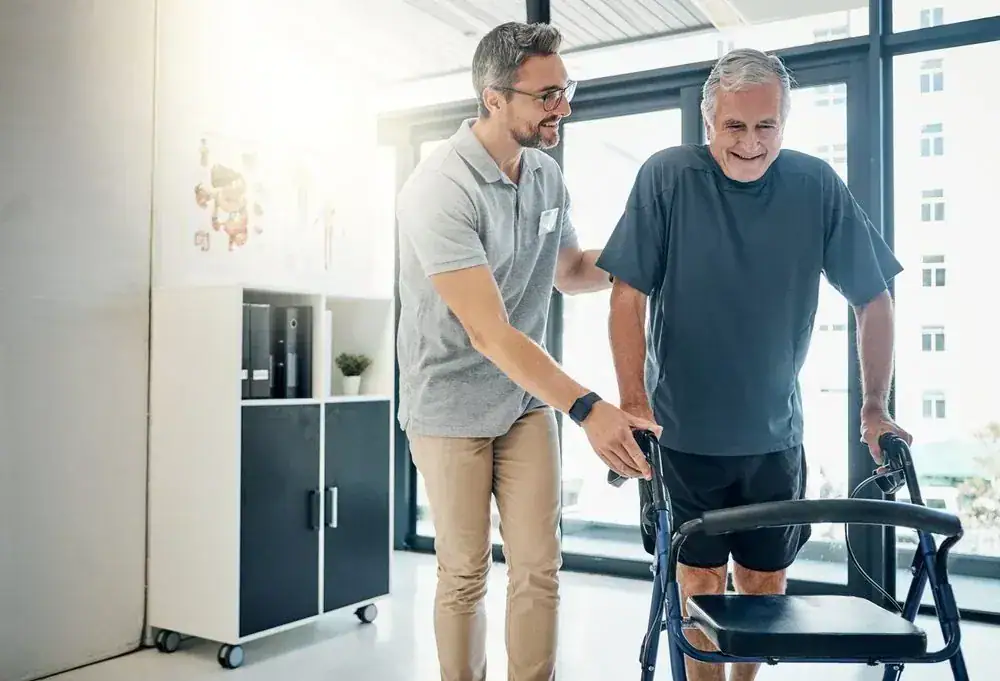
If you need assistive devices like a cane or walker, we’ll help you choose the right one and train you to use it correctly. A lot of people use walkers incorrectly, which actually increases fall risk instead of reducing it. We also provide education on footwear, home modifications, and how to manage environmental risks like ice, uneven pavement, or dim lighting.
For Garden City patients, we know that many homes here have front steps, basements, and older bathrooms without grab bars. We’ll address those specific concerns and give you practical solutions that don’t require a full renovation.

If you’ve fallen in the past year, you’re already at higher risk of falling again. That’s the clearest sign. But you don’t have to wait for a fall to start therapy.
Other signs include feeling unsteady when you walk, needing to hold onto furniture or walls to move around your house, avoiding stairs or certain rooms because you don’t feel safe, or noticing that your balance isn’t what it used to be. If you’ve had a near-miss—where you caught yourself just in time—that counts too.
Medical conditions like arthritis, diabetes, Parkinson’s, stroke, or neuropathy can all affect your balance. So can medications for blood pressure, anxiety, or sleep. If you’re dealing with any of those, a fall risk assessment makes sense even if you haven’t fallen yet. The goal is to catch problems early, before they lead to an injury.
Yes, Medicare Part B covers physical therapy for fall prevention when it’s medically necessary and prescribed by your doctor. That includes balance training, gait therapy, and strength exercises designed to reduce your fall risk.
You’ll need a referral or prescription from your physician, and your therapist will document your progress to show that the treatment is helping. Most patients pay little to nothing out of pocket after their deductible is met, depending on their specific plan.
We verify your insurance coverage before your first visit so you know exactly what to expect. If you have a Medicare Advantage plan or supplemental insurance, coverage may vary slightly, but we’ll walk you through it. The key is that fall prevention therapy is considered a covered service when it’s part of a treatment plan to address a medical condition or functional limitation.
It depends on your current ability and what’s causing your balance issues, but most programs include exercises that challenge your stability in a controlled way. That might mean standing on one leg, walking heel-to-toe in a straight line, or shifting your weight from side to side while holding onto a stable surface.
We also work on strengthening your legs, hips, and core, since weak muscles are one of the biggest contributors to falls. Exercises like sit-to-stand repetitions, leg lifts, and step-ups are common. If your balance is more compromised, we start with seated or supported movements and progress from there.
You’ll also do exercises that improve your reaction time and coordination—things like reaching for objects while standing, turning your head while walking, or stepping over obstacles. These mimic real-life situations where you’re more likely to lose your balance. Everything is tailored to you, and we adjust as you get stronger and more confident.
Yes. Home safety evaluations are a key part of fall prevention, and we can conduct them in person at your Garden City residence. A therapist will walk through your home and identify hazards like loose rugs, clutter, poor lighting, slippery floors, or bathroom layouts that increase your fall risk.
You’ll get specific recommendations on what to change—things like adding grab bars in the bathroom, improving lighting in hallways and stairways, removing tripping hazards, or rearranging furniture to create clearer pathways. We also look at how you’re using assistive devices and whether they’re set up correctly for your height and mobility level.
If an in-person visit isn’t convenient, we can also do a virtual home assessment where you walk us through your space on a video call. Either way, the goal is to make your home safer without requiring expensive renovations. Most changes are simple and inexpensive, but they make a big difference in reducing your risk.
Most patients notice improvements in their balance and confidence within four to six weeks of consistent therapy. That’s usually enough time to build strength, improve coordination, and develop better movement patterns.
The exact timeline depends on your starting point and how often you’re coming in for sessions. If you’re attending therapy two to three times per week and doing your home exercises in between, you’ll see faster progress. If you’re dealing with a neurological condition or recovering from a serious fall, it may take longer.
The good news is that even small improvements make a big difference in your daily life. You might notice that you’re steadier on your feet, that you’re not grabbing onto things as much, or that you’re moving around your home with less fear. Those are the real outcomes that matter—not just test scores, but how you feel and function every day.
Fall prevention therapy is a specialized type of physical therapy that focuses specifically on reducing your risk of falling. It includes balance training, gait analysis, strength exercises, and education on home safety and risk factors. The goal is to address the underlying causes of instability and teach you how to move more safely.
Regular physical therapy might focus on recovering from an injury, managing pain, or improving mobility after surgery. While there’s overlap—strength and balance are part of most therapy programs—fall prevention therapy is more targeted. It’s designed for people who are at risk of falling or who’ve already fallen and want to prevent it from happening again.
Your therapist will use evidence-based assessments and exercises that have been proven to reduce fall risk in older adults. That includes things like the Timed Up and Go test, the Berg Balance Scale, and functional movement training. You’ll also get personalized recommendations based on your medical history, medications, and home environment. It’s a proactive approach, not just reactive.
Other Services we provide in Garden City