
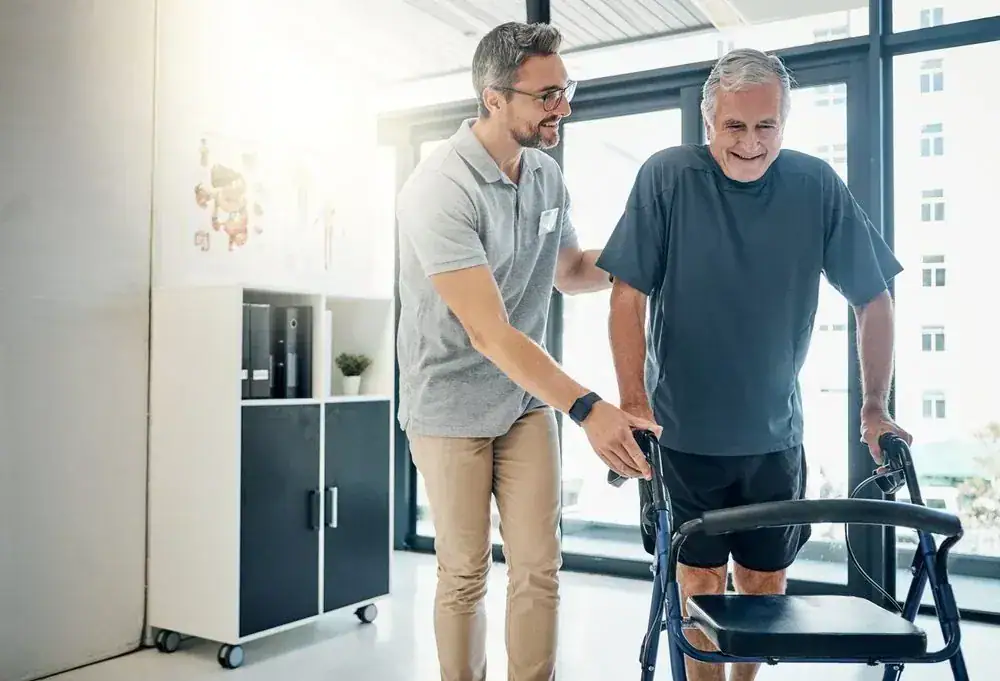
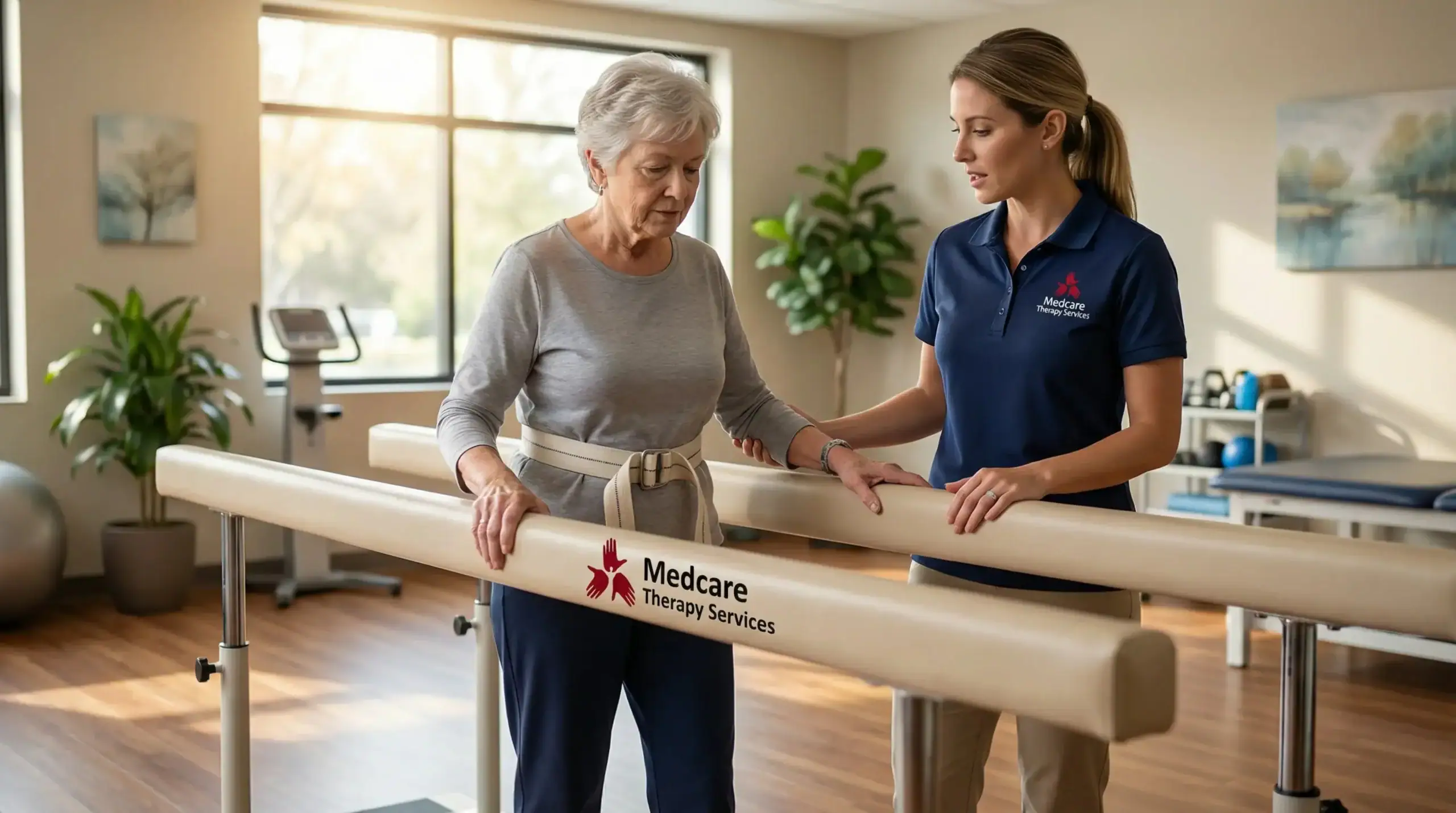
You stop planning your day around what might go wrong. The bathroom at night isn’t a calculated risk anymore. Getting the mail doesn’t require a mental checklist.
That’s what better balance actually gives you. Not just stronger legs or better coordination, though those matter. You get your independence back without the constant background worry that one misstep could change everything.
When you’ve fallen before, or even just felt unsteady, that fear doesn’t just go away on its own. It builds. You start avoiding activities you used to do without thinking. Research shows this fear affects up to 85% of older adults, and it creates a cycle where less activity leads to weaker muscles, which increases fall risk even more.
Physical therapy for balance breaks that cycle. You rebuild strength in the muscles that keep you stable. You practice movements that challenge your balance in controlled ways. And over time, your confidence comes back because your body proves it can handle what daily life throws at it.
We’ve spent over a decade providing in-home physical therapy across Long Island, including Fishers Island and the surrounding communities. We’re not new to this, and we’re not trying to be everything to everyone.
We focus on what we do well: helping seniors stay independent through evidence-based fall prevention and balance training. Our therapists come to your home, assess your specific risk factors, and build a treatment plan around your needs, not a generic protocol.
Long Island has some of the highest fall rates in New York State. Nassau and Suffolk counties rank 4th and 5th statewide for fall prevalence. That’s not just a statistic—it’s your neighbors, your friends, people dealing with the same concerns you are. We understand the local challenges because we’ve been working in this community long enough to see what actually helps.

Your first session is an evaluation. It takes 45 to 60 minutes. A licensed physical therapist comes to your home and assesses how you move, where your balance weaknesses are, and what environmental factors in your home might increase your fall risk.
You’re not getting a cookie-cutter program. We look at your medical history, any previous falls, your current activity level, and what you want to be able to do. Then we build a plan specific to you.
Treatment typically runs 8 to 20+ sessions, depending on your needs. Each session lasts 60 to 90 minutes. You’ll work on balance exercises for seniors that challenge your stability in safe, progressive ways. You’ll practice gait training to improve how you walk. You’ll strengthen the muscles that keep you upright.
The most effective programs run three times per week for about three months. That’s what the research shows works. But we adjust based on how you’re progressing and what your schedule allows.
Between sessions, you’ll have exercises to do on your own. These aren’t complicated. They’re movements you can do at home that reinforce what you’re working on in therapy. The goal is to make you stronger and more stable so you can get back to doing what you want without constantly worrying about falling.

Ready to get started?
You get a comprehensive fall risk assessment that looks at strength, balance, gait, and home safety. We identify the specific factors putting you at risk—whether that’s weak hip muscles, poor ankle stability, vision issues affecting balance, or medication side effects.
From there, you receive a personalized exercise program. This includes standing balance exercises that challenge your stability, strength training for your legs and core, and coordination drills that improve how your body responds when you start to lose balance. Everything is adapted to your current ability level.
Gait training is a major component. How you walk matters. We work with you on stride length, foot placement, weight shifting, and walking speed. These aren’t small details—they’re the mechanics that determine whether you stay upright or go down.
You also get education on fall prevention strategies. This covers proper footwear, how to navigate different surfaces, what to do if you feel unsteady, and how to modify your home environment to reduce hazards. Knowledge matters as much as physical ability.
Studies consistently show that fall prevention interventions like this reduce your risk by 30% to 35%. On Long Island, where 88% of injury hospitalizations for adults over 65 are due to falls, that reduction isn’t just a number. It’s the difference between maintaining your independence and ending up in a hospital.
We accept Medicare and most commercial insurance plans. We handle the documentation and work with your insurance so you’re not navigating that process alone.

If you’ve fallen in the past year, you need it. Falling once doubles your chance of falling again, and the second fall is often worse than the first.
But you don’t have to wait until you’ve actually fallen. If you feel unsteady when you walk, if you grab onto furniture or walls for support, if you avoid certain activities because you’re worried about your balance—those are signs your balance needs work.
Fear of falling is also a legitimate reason to seek help. That fear affects your quality of life even if you haven’t fallen yet. It makes you less active, which weakens your muscles, which actually increases your fall risk. Physical therapy addresses both the physical instability and the confidence issues that come with it.
Your doctor can refer you, or you can contact us directly. We’ll do an initial assessment and give you a straight answer about whether therapy would help your situation.
Balance exercises specifically challenge your body’s ability to maintain stability when your center of gravity shifts. That’s different from general strength training or cardio.
These exercises often involve standing on one leg, shifting your weight in different directions, walking heel-to-toe, or moving from sitting to standing without using your hands. They force your muscles, joints, and nervous system to work together to keep you upright.
The exercises progress as you get stronger. You might start with simple standing balance while holding onto a counter. As you improve, you do the same exercise without holding on, then with your eyes closed, then while standing on an uneven surface. Each progression makes your balance system work harder.
Senior balance exercises also account for age-related changes in strength, flexibility, and reaction time. We adjust intensity and difficulty based on what your body can safely handle while still challenging you enough to see improvement. The goal is to make you more stable in real-world situations—walking on uneven ground, reaching for something on a high shelf, turning around quickly—not just stronger in a gym setting.
Most people notice improved confidence and stability within 4 to 6 weeks if they’re consistent with therapy sessions and home exercises. That doesn’t mean you’re done at that point, but you’ll feel the difference.
Measurable improvements in balance, strength, and gait typically show up around the 8 to 12 week mark. That’s when the physical changes in muscle strength and coordination become significant enough to reduce your actual fall risk.
The research-backed programs run three times per week for three months. That timeline isn’t arbitrary—it’s how long it takes for your body to adapt and build the strength and neuromuscular control that keeps you stable.
Your progress depends on several factors: how often you do your home exercises, your starting fitness level, whether you have other medical conditions affecting balance, and how consistent you are with therapy sessions. People who stick with the program see results. People who skip sessions or don’t do their home exercises don’t improve as quickly.
Yes. Medicare Part B covers outpatient physical therapy when it’s medically necessary, and fall prevention absolutely qualifies. If you’ve fallen, if you’re at high risk for falling, or if your doctor identifies balance or gait issues, Medicare will cover your therapy.
You’ll need a referral or prescription from your doctor, though some Medicare Advantage plans allow direct access to physical therapy without a referral. We can help you figure out what your specific plan requires.
Medicare typically covers 80% of the approved amount after you’ve met your deductible. You’re responsible for the remaining 20%. If you have a supplemental insurance plan (Medigap), it often covers that 20% copay.
We accept Medicare and nearly all commercial insurance plans. We handle the billing and work directly with your insurance company so you’re not stuck dealing with paperwork and phone calls. Before you start therapy, we verify your coverage and let you know what your out-of-pocket costs will be. No surprises.
We start by talking with you about your medical history, any falls you’ve had, medications you’re taking, and what activities you’re having trouble with or avoiding. This conversation matters because it tells us what’s actually affecting your daily life.
Then comes the physical assessment. We watch how you walk, how you get up from a chair, how you turn around, and how you handle different balance challenges. We test your leg strength, your ankle flexibility, and how well you can shift your weight from one foot to the other.
We also look at your home environment. Are there loose rugs? Poor lighting? Clutter in walkways? Steps without handrails? We identify hazards you might not have noticed and give you specific recommendations for making your home safer.
The evaluation takes 45 to 60 minutes. At the end, we explain what we found, what’s contributing to your fall risk, and what the treatment plan will look like. You’ll leave with a clear understanding of what you’re working on and why. You’ll also get some initial exercises to start on before your next session.
You can do some basic exercises on your own, but there’s real value in having us assess your specific situation first. Balance problems have different causes—weak muscles, inner ear issues, nerve damage, vision problems, medication side effects—and the right exercises depend on what’s actually causing your instability.
We identify your specific deficits and build a program that targets those areas. We also make sure you’re doing exercises correctly, which matters more than you’d think. Poor form can reinforce bad movement patterns or even increase injury risk.
That said, once you’ve been through an evaluation and learned proper technique, many balance exercises can be done at home between therapy sessions. Simple things like standing on one foot while holding a counter, practicing sit-to-stand movements, or walking heel-to-toe down a hallway are effective when done consistently.
The key is knowing which exercises you need and how to progress them safely. Start with a professional assessment. Get a program designed for your situation. Learn the exercises correctly. Then you can maintain and build on that work at home. But trying to DIY your way through fall prevention without knowing what you’re actually dealing with is like trying to fix your car without knowing what’s wrong with it. You might get lucky, but you’re more likely to waste time or make things worse.
Other Services we provide in Fishers Island