
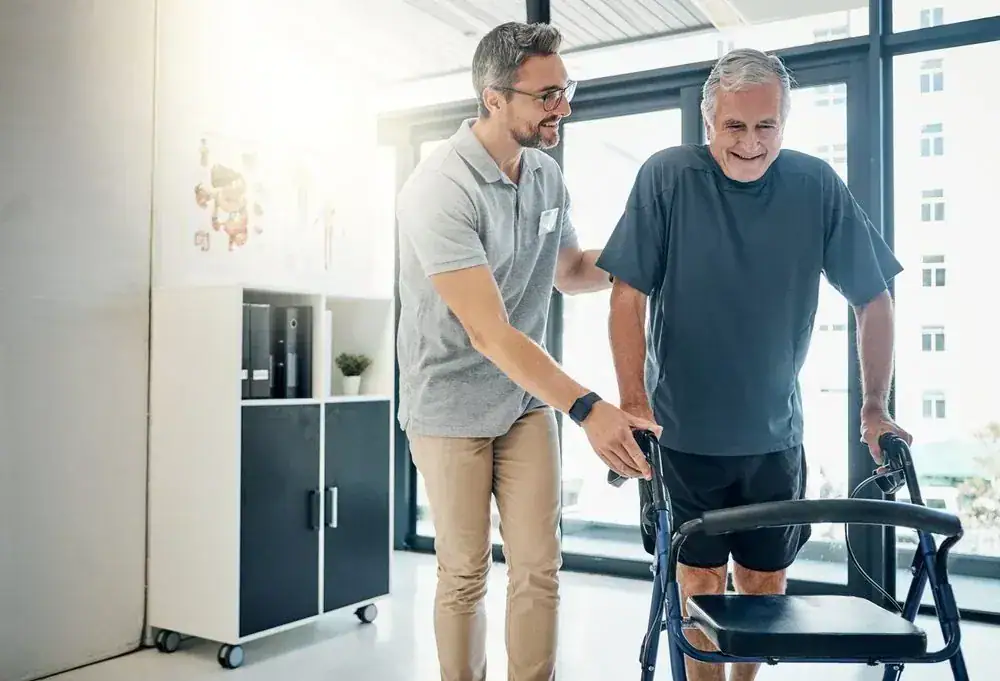
You stop second-guessing the stairs. You shower without holding your breath. You walk to the mailbox, grab something from a high shelf, or step off a curb without that split-second panic.
That’s what better balance actually looks like. Not some abstract health metric, but real moments where you feel stable again.
Every 11 seconds, an older adult ends up in the ER because of a fall. Most of those falls happen at home, doing everyday things. But here’s what matters: balance exercises for seniors can cut your fall risk by 30% to 35%. Strength training cuts it even more. When you combine both with gait work and a home safety review, you’re not just preventing falls—you’re getting your confidence back.
Physical therapy for balance isn’t about making you feel old. It’s about making sure you stay independent. You keep doing what you want, when you want, without fear running the show.
We’ve been treating patients across Long Island for years, including right here in East Quogue. Our physical therapists specialize in geriatric care and fall prevention—not as a side offering, but as a core focus.
We know the local community. We know that Long Island’s 65+ population has grown by nearly 28% over the past decade. We know that means more people are looking for care that actually keeps them home, not care that just checks a box.
Every assessment is personalized. Every treatment plan is built around your specific risks, your home setup, your goals. We’re not handing you a generic exercise sheet. We’re working with you to address balance deficits, strength gaps, medication side effects, and environmental hazards that increase your risk.

First, we assess your fall risk. That means looking at your balance, your gait, your strength, your medication list, and your home environment. We use evidence-based tools like the STEADI protocol from the CDC—the same screening method trusted by therapists nationwide.
Then we build your plan. You’ll get therapeutic exercises designed to improve stability. Strength training that targets the muscles you actually use to catch yourself. Gait training so you walk with better control and confidence. And a home safety review, because 60% of fall-related hospitalizations happen at home.
Your sessions are one-on-one. You’re not in a group class doing generic senior balance exercises. You’re working with a licensed therapist who adjusts your program as you improve. Most patients see measurable progress within a few weeks—better balance scores, less fear, more freedom to move.
You’ll also learn what to watch for: dizziness from medications, tripping hazards in your house, footwear that throws you off. Small changes that make a big difference.

Ready to get started?
You get a full fall risk assessment that looks at balance, strength, gait, medications, and home safety. From there, your therapist designs a program that’s specific to your needs—not a cookie-cutter routine.
Your treatment includes dynamic balance exercises that challenge your stability in safe, controlled ways. Strength training focused on your legs, core, and hips. Gait training to improve how you walk, turn, and navigate uneven surfaces. And education on how to reduce risks at home, from lighting to rugs to bathroom setup.
Here in East Quogue and across Suffolk County, falls are the leading cause of injury-related ER visits for adults 65 and older. But regular exercise and targeted therapy can reduce that risk by up to 50%. You’re not just doing exercises—you’re actively preventing the kind of fall that leads to a hospital stay, a nursing home admission, or worse.
This isn’t about making you feel fragile. It’s about giving you the tools to stay strong, stable, and independent in your own home for as long as possible.

If you’ve fallen in the past year, you’re at higher risk. If you’re afraid of falling, even if you haven’t fallen yet, that’s a red flag too. Fear changes how you move—it makes you more cautious, less active, and ironically, less stable.
Other signs: you feel unsteady when you walk or stand. You grab onto furniture or walls for support. You’ve had a close call—a stumble, a trip, a moment where you almost went down. You take four or more medications, especially anything that makes you dizzy or drowsy. You have vision problems, foot pain, or numbness in your legs.
One in three adults over 65 falls each year. But fewer than half tell their doctor, often because they’re worried about losing independence. Here’s the truth: getting assessed and treated early is what keeps you independent. Ignoring the problem is what leads to a fall that changes everything.
You’ll do exercises that challenge your balance in real-world ways. That might mean standing on one leg, walking heel-to-toe, shifting your weight side to side, or practicing how you get up from a chair. The goal is to improve your stability when you’re moving, not just when you’re standing still.
Strength work focuses on your legs, hips, and core—the muscles that keep you upright and help you recover if you start to fall. You might do squats, step-ups, or resistance band exercises. Everything is scaled to your current ability and progressed as you get stronger.
Gait training helps you walk with better control. You’ll practice turning, stopping, stepping over objects, and navigating different surfaces. These aren’t arbitrary drills—they’re the exact movements that trip people up at home. Your therapist will also work with you on reaction time and how to catch your balance if you do stumble.
Most people notice a difference within a few weeks. You might feel steadier on your feet, more confident going up stairs, or less anxious about walking outside. Measurable improvements in balance and strength usually show up around the four-to-six-week mark, depending on how often you’re doing your exercises.
That said, fall prevention isn’t a one-and-done thing. The benefits come from consistency. You’ll work with your therapist for several weeks to build strength and retrain your balance. After that, you’ll have a home exercise program to maintain what you’ve gained.
Research shows that fall prevention programs can reduce your risk by 30% to 35%, and those results hold as long as you keep up with the exercises. Think of it like brushing your teeth—you don’t stop just because your teeth are clean. You keep going because it prevents problems down the road.
Most Medicare and private insurance plans cover physical therapy for balance and fall prevention, especially if you’ve had a fall or your doctor has identified you as high-risk. Coverage depends on your specific plan, but therapy for balance deficits and gait issues is typically considered medically necessary.
We’ll verify your benefits before you start and let you know what your out-of-pocket costs will be. If you have Medicare, you’ll usually have a copay or coinsurance after you meet your deductible. If you have a Medicare Advantage plan or private insurance, the details vary, but we’ll walk you through it.
What matters is this: the average hospital stay for a fall injury costs over $34,000. A few physical therapy sessions cost a fraction of that. Even if you have some out-of-pocket expense, you’re investing in staying out of the hospital and staying in your own home. That’s not just a financial win—it’s a quality-of-life win.
It’s not too late. In fact, if you’ve already fallen, you’re exactly the person who benefits most from fall prevention therapy. Forty percent of people who go to the hospital for a fall don’t return to independent living. Twenty-five percent die within a year. Those numbers are scary, but they’re also preventable.
After a fall, many people develop a fear of falling again. That fear makes you move less, which makes you weaker, which makes another fall more likely. Physical therapy breaks that cycle. You rebuild strength, retrain your balance, and regain confidence in your ability to move safely.
Your therapist will figure out why you fell in the first place. Was it a balance issue? Weak legs? A medication side effect? A hazard in your home? Once you know the cause, you can address it. You’ll work on the physical side—strength, balance, gait—and the environmental side—lighting, rugs, grab bars. Together, those changes can cut your fall risk in half.
It depends on your insurance. Some plans require a referral from your doctor. Others allow direct access, meaning you can schedule an evaluation without seeing your physician first. We can check your specific plan and let you know what’s required.
Even if you don’t technically need a referral, it’s often a good idea to talk to your doctor. They can review your medications, check for underlying issues like vitamin deficiencies or inner ear problems, and make sure there’s nothing else contributing to your fall risk. Plus, if they document your fall history or balance concerns, it strengthens the case for insurance coverage.
Once you’re cleared to start, we’ll schedule your initial assessment. From there, you’ll work with the same therapist throughout your treatment. No bouncing between providers. No repeating your story five times. Just consistent, personalized care focused on keeping you stable and independent.
Other Services we provide in East Quogue