
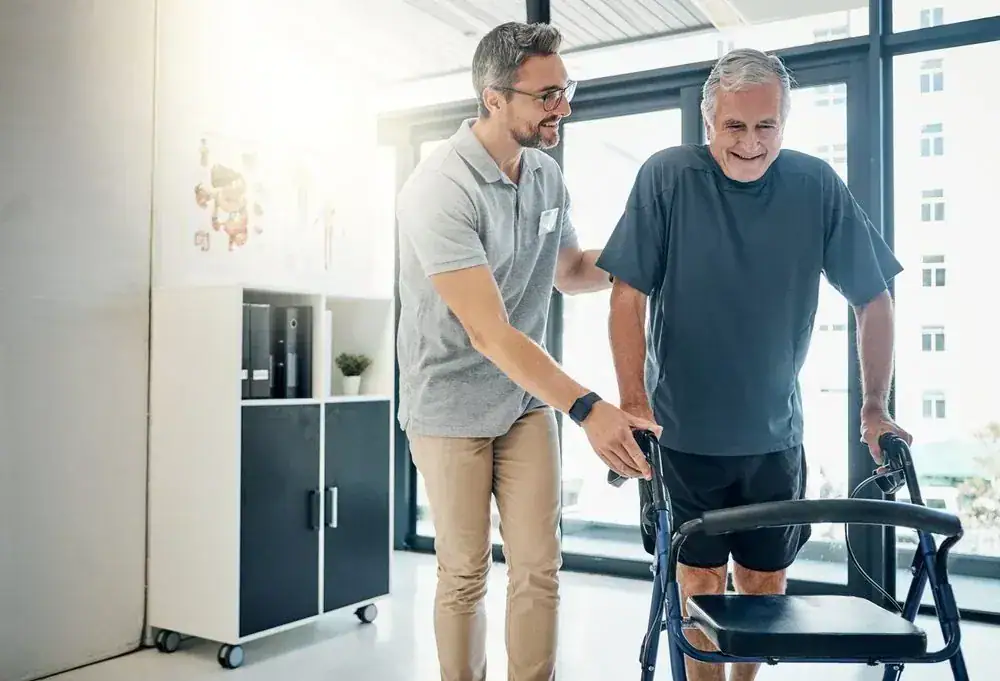
You stop second-guessing every step. Getting up from a chair doesn’t require a mental checklist. Walking to the mailbox or reaching for something on a shelf becomes automatic again, not calculated.
That’s what balance training does. It rebuilds the confidence that falls—or the fear of falling—took away.
Research shows balance exercises can reduce fall risk by up to 28% in older adults. But the real outcome isn’t a statistic. It’s being able to move through your day without that constant background worry. It’s staying in your own home, on your own terms, without needing someone to shadow you.
Physical therapy for balance isn’t about becoming an athlete. It’s about restoring what used to feel normal. Strength in your legs. Stability when you turn. The ability to catch yourself if you stumble. These are the things that keep you independent—and they’re all trainable, even if you’ve already fallen or feel unsteady now.
We’ve been delivering in-home physical and occupational therapy across Long Island for over a decade. Our therapists are trained in Otago fall prevention protocols and work with seniors in East Moriches who either can’t easily get to an office or simply prefer the comfort and convenience of home-based care.
We’re not a national chain. We’re local, licensed, and we accept Medicare. Every therapist on our team is credentialed and background-checked. We manage our own scheduling, our own verifications, and our own patient communication—so nothing falls through the cracks.
East Moriches has a large senior population, and falls are the leading cause of injury-related hospitalizations for older adults in New York. That’s not a scare tactic. It’s why we’re here. You deserve access to real fall prevention care without the runaround.

First, we assess where you are. A licensed physical therapist comes to your home in East Moriches and evaluates your balance, strength, gait, and fall risk factors. This isn’t a questionnaire—it’s a real functional assessment. We look at how you move, where you’re compensating, and what’s putting you at risk.
Then we build a plan. Based on what we find, your therapist designs a personalized program of senior balance exercises. These might include standing exercises, weight shifts, coordination drills, and strength work—all tailored to your current ability. You’re not following a generic routine. You’re working on what your body actually needs.
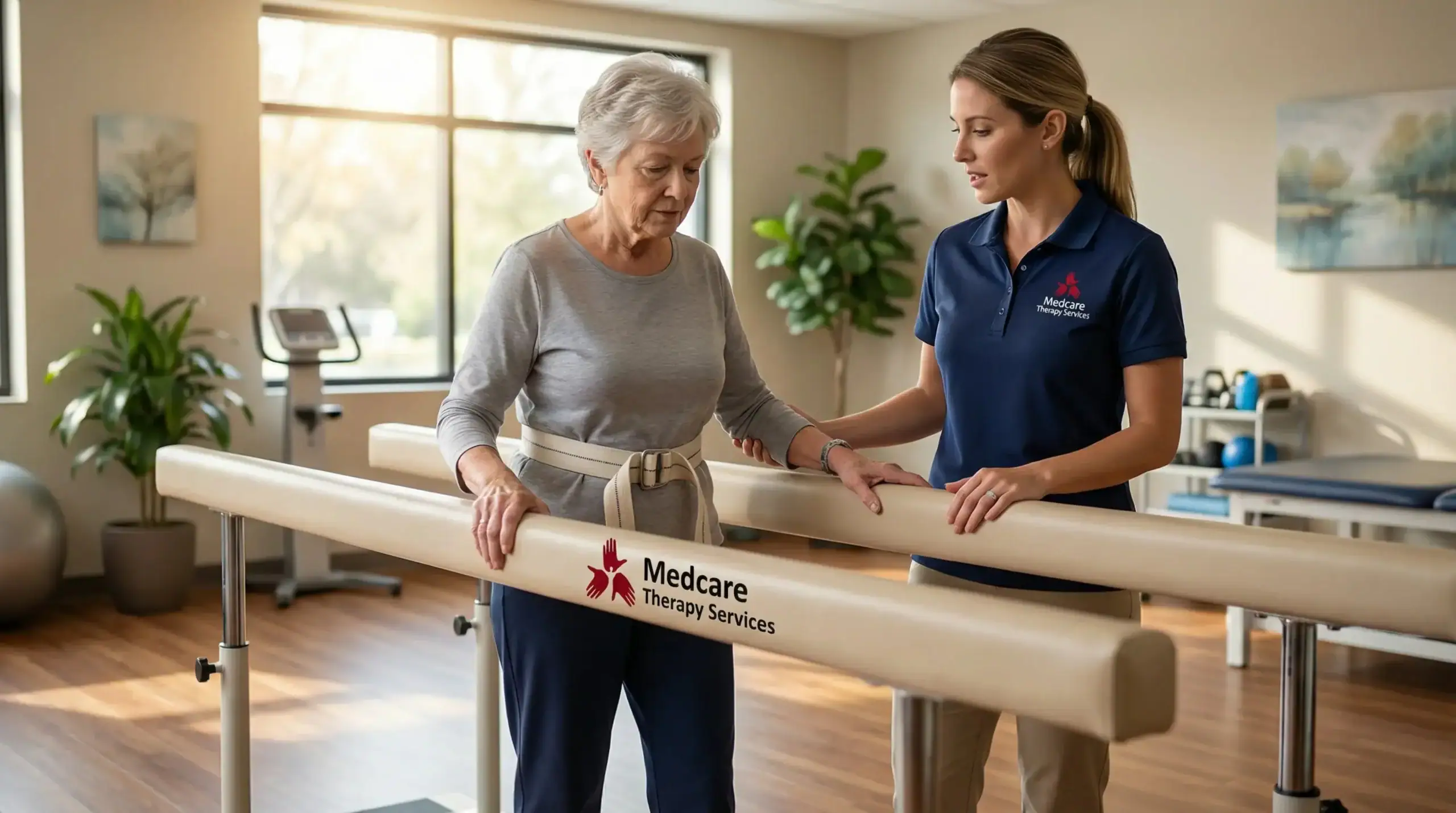
Sessions happen in your home, usually two to three times per week. Your therapist guides you through each exercise, corrects your form, tracks your progress, and adjusts the program as you improve. You’ll also get exercises to practice between visits. Over time, the goal is simple: reduce your fall risk, improve your confidence, and help you stay independent.
Most programs run for several weeks to a few months, depending on your needs and goals. And yes, Medicare typically covers this if you meet eligibility requirements.

Ready to get started?
You get one-on-one care with a licensed physical therapist who comes to your home in East Moriches. Every session is private—no shared appointments, no gym full of strangers. Just you and a therapist focused on your balance, your mobility, and your goals.
We evaluate your inner ear function, muscle strength, joint mobility, and coordination. We test your gait and your ability to recover if you start to lose balance. Then we address what’s weak or unstable. That might mean strengthening your legs, improving your posture, retraining your reaction time, or teaching you how to move more safely in your own space.
Falls among older adults in New York have increased by 25% in recent years, and more than half of fall-related hospitalizations happen at home. That’s exactly why in-home therapy makes sense. We’re training you in the environment where you actually live—where the rugs, stairs, lighting, and furniture are yours. We can spot hazards you’ve stopped noticing and help you navigate your home more safely.
You’ll also receive education on footwear, lighting, grab bar placement, and other practical fall prevention strategies. This isn’t just exercise. It’s a full picture of what keeps you upright and independent.

Yes, Medicare Part B typically covers physical therapy for fall prevention if it’s medically necessary and prescribed by your doctor. That means if you’ve fallen recently, you’re at high risk of falling, or you have a condition that affects your balance—like Parkinson’s, stroke, arthritis, or neuropathy—you likely qualify.
You’ll need a referral or prescription from your physician. Once we have that, we verify your coverage and handle the billing. Most patients pay little to nothing out of pocket after their deductible is met.
If you’re not sure whether you’re covered, we can check your benefits before your first visit. We work with Medicare and several other insurances, and we’ll walk you through what’s covered and what’s not—no surprises, no runaround.
It depends on your current ability, but most programs include standing balance exercises, weight-shifting drills, single-leg stands, heel-to-toe walking, and controlled stepping patterns. If you’re less stable, we start with seated exercises or use a counter or chair for support. If you’re stronger, we add challenge—like standing on foam, closing your eyes, or turning your head while balancing.
We also work on strength. Weak legs are one of the biggest fall risk factors, so you’ll do exercises that target your quads, glutes, calves, and core. These don’t require a gym. We use your body weight, resistance bands, or household items.
Everything is progressed gradually. You’re never pushed beyond what’s safe. And your therapist is right there with you, hands-on, making sure your form is correct and you’re not compensating in ways that could cause injury. The goal is to challenge your balance just enough to improve it—without putting you at risk.
Most patients see measurable improvement in 8 to 12 weeks, but it varies. If you’re recovering from a fall or surgery, it might take longer. If you’re relatively strong but just need some balance retraining, you might progress faster.
Sessions typically happen two to three times per week, for about 45 minutes to an hour each. Between visits, you’ll practice exercises on your own. Consistency matters. The research is clear: balance training works best when it’s done at least three times per week for three months.
Your therapist will reassess you regularly and adjust your program as you improve. Once you’ve hit your goals—better balance, more confidence, lower fall risk—we’ll transition you to a maintenance program you can do independently. Some patients continue with occasional check-ins. Others graduate completely. It’s based on what you need, not a predetermined timeline.
No. In fact, falling once is one of the strongest predictors that you’ll fall again—which is exactly why therapy after a fall is so important. Your body may have lost strength or confidence. You might be moving differently now, compensating in ways that actually increase your risk.
Physical therapy helps you rebuild what was lost. We retrain your balance systems, strengthen the muscles that keep you stable, and teach you how to recover if you start to stumble. We also address the fear of falling, which often causes people to move less—and moving less makes you weaker and more likely to fall. It’s a cycle, and therapy breaks it.
One in three adults over 65 falls each year. But falls aren’t inevitable. They’re preventable. Even if you’ve already fallen, even if you feel unsteady now, your balance can improve. We’ve worked with patients in East Moriches who went from using a walker to walking independently. It’s not magic. It’s consistent, targeted training with someone who knows what they’re doing.
Convenience is part of it. You don’t have to arrange transportation, sit in a waiting room, or navigate a clinic full of equipment and other patients. Your therapist comes to you, works with you one-on-one, and leaves. It’s private, it’s efficient, and it eliminates a lot of the friction that keeps people from sticking with therapy.
But there’s a clinical reason too. More than half of fall-related injuries happen at home. If we’re training you in a clinic, we’re not addressing the environment where you actually need to be steady. In-home therapy lets us evaluate your specific space—your stairs, your bathroom, your bedroom, your lighting—and train you to move safely in that environment.
We can also spot hazards you’ve stopped noticing. Loose rugs, poor lighting, clutter in walkways, lack of grab bars. These aren’t minor details. They’re fall risks. And we can help you address them while we’re working on your strength and balance. It’s a more complete approach, and for a lot of people in East Moriches, it’s the difference between following through with therapy and letting it slide.
You don’t have to wait until you fall to start fall prevention. If you’ve noticed you’re a little less steady than you used to be, if you’re holding onto walls or furniture more often, if you’ve had a close call or two—that’s enough. Those are early warning signs, and they’re a lot easier to address now than after a fall puts you in the hospital.
Less than half of older adults who fall ever tell their doctor. A lot of people downplay it, or they assume it’s just part of aging. It’s not. Balance is trainable at any age. Strength is trainable. Coordination is trainable. You don’t have to accept unsteadiness as your new normal.
If you’re on the fence, we can do an assessment and give you an honest answer about whether therapy makes sense for you. No pressure, no sales pitch. Just a licensed therapist evaluating your risk and telling you what they see. Sometimes that’s all it takes to realize you’d benefit from a few weeks of focused work. And if you’re fine? We’ll tell you that too.
Other Services we provide in East Moriches