
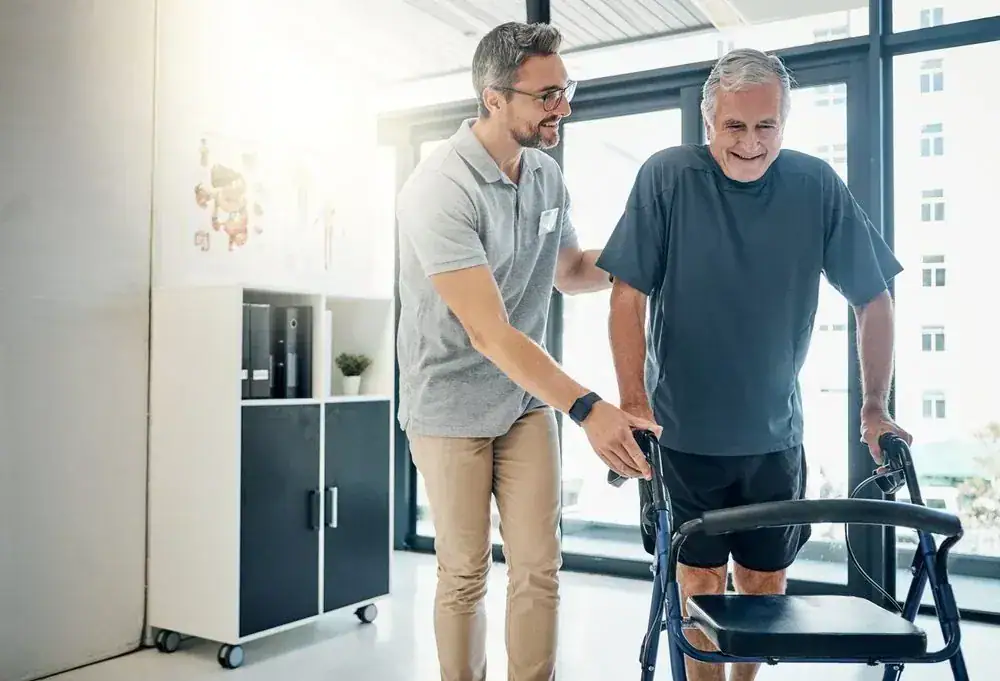
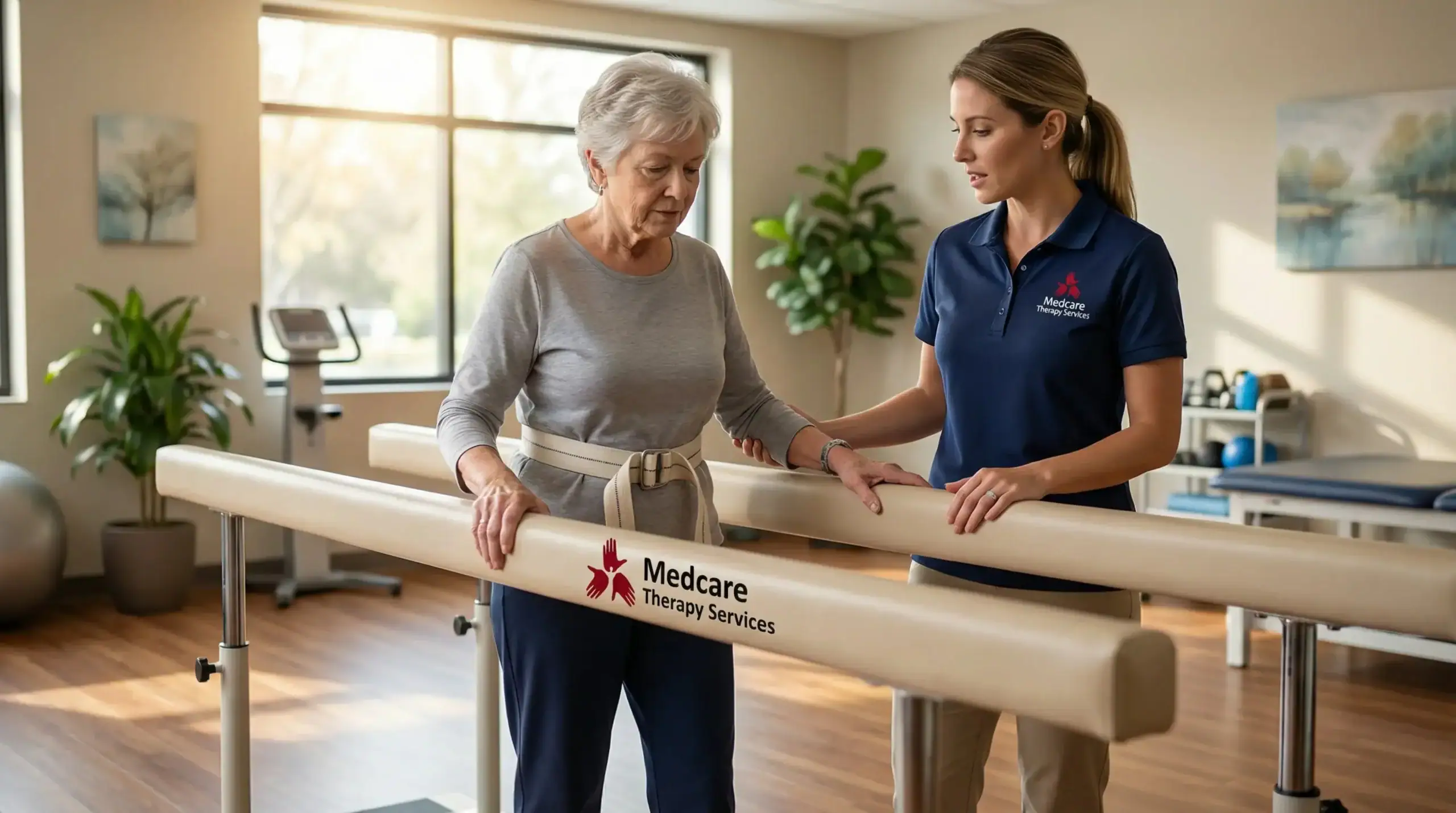
You stop second-guessing every step. Getting up from a chair, walking to the mailbox, reaching for something on a shelf—these stop feeling like calculated risks.
That’s what proper balance training does. It rebuilds the strength in your legs and core, sharpens your reaction time, and retrains your body to catch itself before a fall happens. Studies show the right exercises can cut your fall risk by up to 40%. That’s not a small number when you consider what’s at stake.
Here on Long Island, falls aren’t just common—they’re the leading cause of injury for older adults. Nassau and Suffolk counties rank fourth and fifth in New York State for fall-related incidents. In Nassau County alone, 88% of injury hospitalizations for adults over 65 are due to falls. Most of those happen at home, in familiar spaces where you should feel safest.
Balance exercises for seniors aren’t about becoming an athlete. They’re about maintaining the independence you’ve earned and keeping the life you’ve built.
We’ve been treating patients across Long Island for years, including our locations in Smithtown and Speonk. We understand the physical demands of living here—the commutes, the stairs, the older homes that weren’t built with aging in mind.
Our physical therapists specialize in balance and fall prevention. We don’t just hand you a sheet of exercises. We assess your specific risk factors, test your current balance and strength, and build a program that matches where you are right now.
We also come to you. Home-based physical therapy means you’re training in the environment where you actually live—where the real risks are. You’re not wasting energy on travel, and you’re working with someone who sees your home setup firsthand and can recommend changes that actually matter.

It starts with an evaluation. We look at your balance, your gait, your leg strength, your reaction time. We ask about past falls or close calls. We review medications that might affect your stability. This gives us a baseline and helps us spot the specific areas where you’re most vulnerable.
From there, we design senior balance exercises that challenge you without putting you at risk. These aren’t one-size-fits-all. Some people need more work on static balance—standing steady on one foot. Others need dynamic training—moving while maintaining control. Most need both, plus strength work and coordination drills.
Sessions typically run three times a week for about 30 to 45 minutes. Research shows that 11 to 12 weeks of consistent training delivers measurable results: better balance, faster walking speed, stronger legs, and less fear of falling. You’ll notice the difference in how you move. Your family will notice you’re more confident.
We adjust as you improve. The goal isn’t to keep you in therapy forever—it’s to get you strong enough and stable enough to maintain your progress on your own.

Ready to get started?
You get a full fall risk assessment that covers balance, strength, gait, medication review, and home safety. This isn’t a checklist—it’s a conversation about your daily life and where the risks actually are.
Your exercise program includes balancing exercises that target static stability, dynamic movement, and reactive control. That means you’re training your body to stay steady when standing still, keep control while moving, and catch yourself when something unexpected happens. We also incorporate strength training for your legs and core, because stability starts with a strong foundation.
On Long Island, where 60% of fall-related hospitalizations happen at home, we pay close attention to your environment. We’ll walk through your space and point out hazards you might not notice—loose rugs, poor lighting, clutter in walkways, bathroom grab bar placement. Small changes make a big difference.
You also get education on fall prevention strategies: proper footwear, how to get up safely if you do fall, when to use assistive devices, and how to manage fatigue. The more you understand about why falls happen, the better you can prevent them.

Most people start noticing changes within the first few weeks, but real, measurable improvement takes consistency. Research shows that 11 to 12 weeks of balance training—three sessions per week—produces significant results in stability, strength, and confidence.
You might feel steadier on your feet after a month. By two months, you’re usually moving faster and with more control. By three months, the improvements tend to stick, and you’ve built enough strength and coordination to maintain your progress with less frequent sessions.
That said, everyone’s different. If you’ve had a recent fall or injury, or if you’re dealing with other health conditions, it might take longer. The key is showing up and doing the work. Balance training isn’t a quick fix, but it’s one of the most effective ways to reduce fall risk—and the benefits go beyond just preventing falls. You’re also improving your overall mobility and quality of life.
Falling is not inevitable. It’s common, but it’s not something you just have to accept. The idea that balance naturally declines with age and there’s nothing you can do about it is outdated and flat-out wrong.
Yes, balance control does decline as we age, but physical therapy for balance can slow that decline and even reverse some of it. Studies consistently show that the right exercises reduce fall risk by up to 40%. That’s a massive reduction, and it’s backed by decades of research. Balance training strengthens the muscles that keep you upright, improves your reaction time, and retrains your nervous system to respond faster when you start to lose your footing.
Here’s the reality: falls are the leading cause of injury for adults over 65, and on Long Island, Nassau and Suffolk counties have some of the highest fall rates in New York. But most falls are preventable. They happen because of weak legs, poor balance, home hazards, or medications that affect stability—all things that can be addressed with the right intervention. Physical therapy gives you the tools to stay on your feet.
You’ll do a mix of exercises that challenge different aspects of your balance. Static exercises train you to stay steady while standing still—like standing on one foot or holding a position with your eyes closed. Dynamic exercises focus on maintaining control while moving—walking heel-to-toe, stepping over obstacles, or changing direction quickly.
Reactive balance exercises are about training your body to respond when something unexpected happens. That might mean catching yourself when you’re gently pushed off balance, or practicing quick steps to regain stability. These are critical because most falls happen when you’re caught off guard.
You’ll also do strength training for your legs and core. Strong muscles are the foundation of good balance. Weak legs make it hard to catch yourself, and a weak core makes it hard to stay upright. We’ll incorporate exercises like sit-to-stand repetitions, leg lifts, and controlled stepping patterns.
Everything is adjusted to your current ability. If you’re unsteady, we start with supported exercises and progress from there. If you’re stronger, we add more challenge. The goal is to push you just enough to make progress without putting you at risk.
For fall prevention, home-based therapy often works better. You’re training in the space where you actually live—where most falls happen. Your therapist can see the layout of your home, identify hazards, and help you practice navigating the specific challenges you face every day.
Clinic-based therapy has its place, but it doesn’t always translate to real life. You might do great on flat, open floors with bright lighting and no distractions. But what about your bathroom at night? Your stairs? The uneven threshold between rooms? Home-based therapy addresses those real-world situations.
There’s also the practical side. If you’re already unsteady or worried about falling, getting to and from a clinic adds stress and uses up energy you could be putting toward your exercises. Home therapy eliminates that. You’re working with a licensed physical therapist who brings the same expertise and equipment to you, without the commute.
Research supports this. Studies show that home-based balance programs are safe, effective, and well-received by patients. People tend to stick with them longer because they’re more convenient and feel more relevant to daily life.
In most cases, yes—if it’s medically necessary. Medicare Part B covers physical therapy when it’s prescribed by a doctor and delivered by a licensed therapist. Fall prevention and balance training typically qualify, especially if you’ve had a fall, you’re at high risk, or you have a condition that affects your balance.
The key is documentation. Your doctor needs to refer you for therapy, and your therapist needs to show that treatment is improving your function and reducing your fall risk. As long as you’re making progress and the therapy is reasonable and necessary, Medicare will usually cover it. You’ll be responsible for your deductible and coinsurance, but the bulk of the cost is covered.
Private insurance varies, but many plans follow similar guidelines. Some require prior authorization. Some have limits on the number of visits per year. It’s worth calling your insurance company or asking us to verify your benefits before you start.
What’s not covered is maintenance therapy—sessions meant to keep you at your current level without making further progress. But if you’re actively improving, insurance typically pays. And even if you hit a coverage limit, the cost of continuing therapy is far less than the cost of a fall-related hospital stay or nursing home placement.
First, know that fear of falling is real, and it’s common. Nearly half of older adults who’ve fallen once develop a fear that limits their activity. That fear can actually increase your fall risk because you start moving less, which makes you weaker and less steady. It’s a cycle, and physical therapy is one of the best ways to break it.
Start by talking to your doctor. If you’ve fallen recently, there might be an underlying cause—medication side effects, vision problems, blood pressure issues, or something else that needs attention. Get that checked out first.
Then, get an evaluation from a physical therapist who specializes in balance and fall prevention. They’ll assess why you fell and what’s making you vulnerable. Maybe it’s weak legs. Maybe it’s poor balance. Maybe it’s your home setup. Once you know what the problem is, you can fix it.
Balance training will rebuild your confidence as much as your strength. You’ll practice controlled movements in a safe environment, and you’ll gradually work up to more challenging tasks. Over time, you’ll start trusting your body again. Research shows that balance programs not only reduce fall risk—they also reduce fear of falling and improve overall quality of life. You don’t have to live in fear. You can get stronger, steadier, and more confident. It just takes the right help.
Other Services we provide in East Farmingdale