
You stop second-guessing every step. Getting up from a chair doesn’t feel like a risk. Walking to the mailbox or reaching for something on a shelf becomes automatic again, not something you plan around.
That’s what happens when you work with a physical therapist who understands fall prevention. You’re not just doing random exercises. You’re rebuilding the strength in your legs, retraining your reflexes, and addressing the specific reasons your balance has declined.
Falls aren’t inevitable. One in four older adults falls every year, but research shows that targeted balance exercises for seniors can reduce that risk by 35 to 40 percent. The key is doing the right exercises, at the right intensity, with someone who knows how to progress you safely. That’s where physical therapy makes the difference.
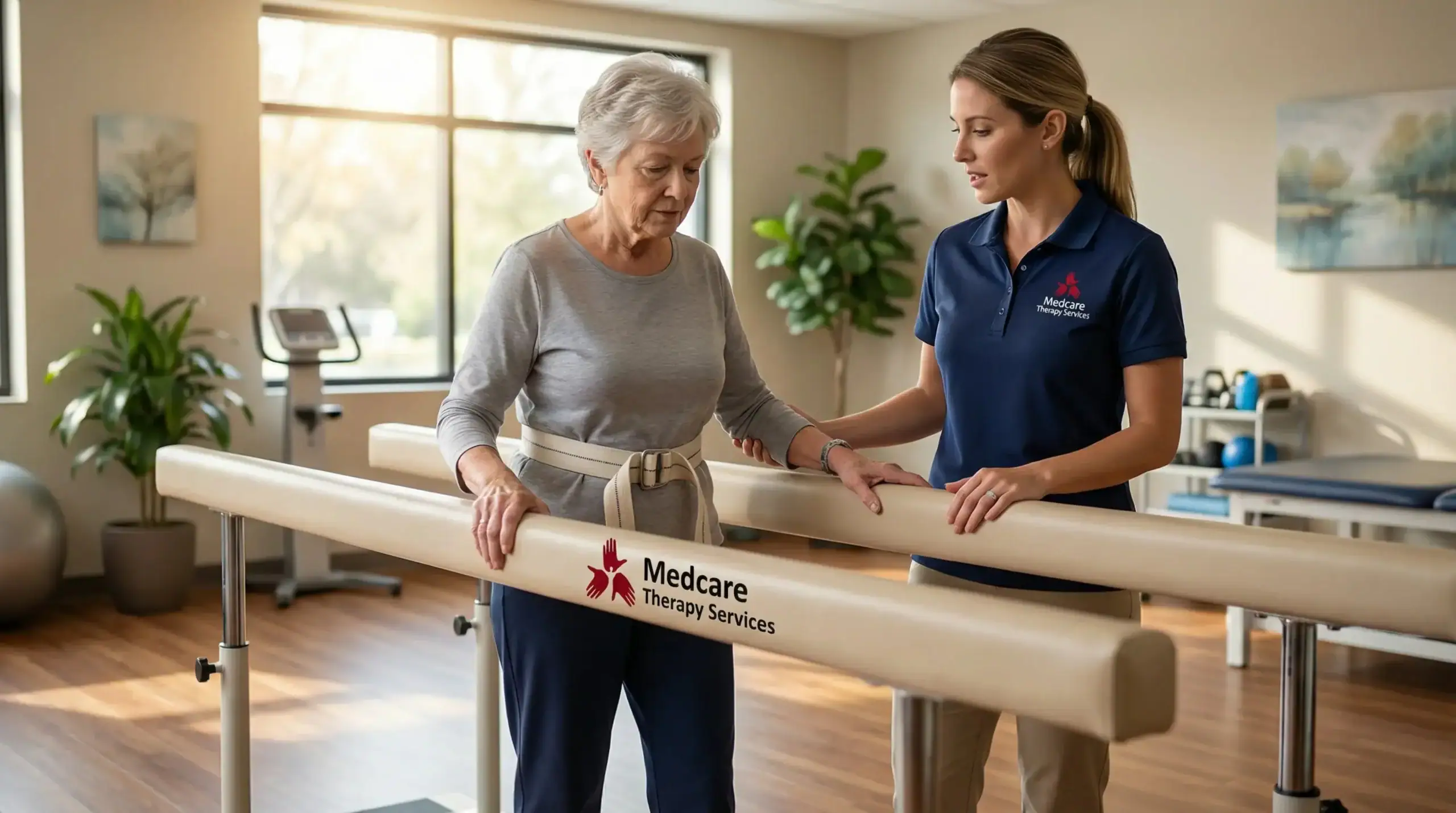
Medcare Therapy Services has been serving Blue Point and the surrounding Long Island communities for years. We don’t just hand you a sheet of exercises and send you home. We assess your specific fall risk factors, design a program that fits your current ability level, and adjust as you get stronger.
Blue Point’s aging population deserves more than generic advice. You deserve a team that understands how joint replacements, medication side effects, and even small changes in vision can affect your balance. We work with your doctors, we listen to what’s actually happening in your daily life, and we build a plan that makes sense for you.
Our Google Business Profiles are verified, our staff is trained in secure patient data handling, and our communication is straightforward. You’ll always know who has access to your information and what’s happening with your care.

First, we assess where you are right now. That means testing your balance, checking your leg strength, reviewing your medical history, and talking through any falls or near-falls you’ve experienced. We’re looking for the real reasons you’re at risk, not just checking boxes.
Then we build your program. Most of our patients follow a structure similar to the Otago Exercise Program, which has been tested in multiple studies and shown to cut fall rates significantly. You’ll do strength exercises, balance training, and walking practice. Some of it happens in our clinic. Some of it you’ll do at home, three times a week.
We don’t disappear after the first session. You’ll come back regularly so we can watch your form, increase the difficulty as you improve, and make sure you’re doing everything safely. Seventy percent of people who start evidence-based balance programs like this are still doing the exercises a year later because they work and they’re manageable.

Ready to get started?
You get a full fall risk assessment that looks at strength, balance, gait, medication effects, and home safety. You get a personalized exercise program based on where you’re starting from, not where someone thinks you should be. And you get ongoing check-ins to make sure you’re progressing without pain or setbacks.
In Blue Point and across Long Island, falls are the leading cause of injury-related emergency room visits for adults over 65. Every 11 seconds, someone in that age group is treated for a fall. The numbers are climbing, but so is the evidence that physical therapy-based fall prevention works.
We also talk through your home environment. Sometimes it’s the rug in the hallway or the lighting in the bathroom that’s creating risk. We’ll help you identify those hazards and suggest modifications that don’t require a full renovation. Small changes make a big difference when combined with stronger legs and better balance.

If you’ve fallen in the past year, your risk of falling again doubles. That’s the clearest sign. But there are others.
Do you feel unsteady when you stand up or walk? Do you avoid certain activities because you’re worried about losing your balance? Have you noticed your legs feel weaker than they used to? Those are all red flags. So are things like taking four or more medications, having vision problems, or dealing with conditions like arthritis or diabetes that affect your nerves and joints.
We can run you through a formal fall risk assessment. It’s not invasive. We test your balance in different positions, check how strong your legs are, watch how you walk, and ask about your medical history. From there, we can tell you exactly where your risk is coming from and what we can do about it.
You can absolutely do balance exercises at home. The problem is knowing which ones to do, how hard to push yourself, and when to progress.
We’re trained to spot the specific weaknesses that increase fall risk. Maybe your right leg is significantly weaker than your left. Maybe you’re compensating with your upper body in ways that throw off your balance. Maybe you’re doing the exercises, but your form is off just enough that you’re not getting the benefit. We catch those things.
We also know how to progress you safely. If you push too hard too fast, you risk injury. If you don’t push hard enough, you won’t see improvement. We adjust the program as you get stronger so you’re always working at the right level. That’s why studies show professionally guided programs reduce falls by 35 to 40 percent, while generic exercise advice doesn’t move the needle nearly as much.
Most people start feeling more stable within four to six weeks if they’re consistent with the exercises. That doesn’t mean you’re done at six weeks. It means you’re noticing a difference in how confident you feel moving around.
The research-backed programs we use, like the Otago Exercise Program, are designed to be done for several months. You’re building muscle strength, retraining your nervous system, and improving your reflexes. That takes time. But the improvements are real and they last as long as you keep up with the exercises.
The good news is that once you’ve built that foundation, maintaining it doesn’t take as much effort. You’re not starting from scratch every time. And because the exercises are designed to be done at home, you’re not dependent on coming to the clinic forever. We teach you what to do, make sure you’re doing it right, and then you own it.
In most cases, yes. Medicare and many private insurance plans cover physical therapy for balance and fall prevention, especially if you’ve had a recent fall, you’re recovering from an injury or surgery, or your doctor has documented balance problems.
The key is having a referral or prescription from your doctor. If your physician writes that you need physical therapy for balance training or fall risk reduction, insurance typically covers it the same way they’d cover PT for any other condition. There may be copays or deductibles depending on your specific plan.
We handle the insurance verification process for you. When you call to schedule, we’ll ask for your insurance information and let you know what your coverage looks like before you come in. If there’s any cost to you, we’ll tell you upfront. No surprises.
That fear is real, and it’s common. More than half of older adults who’ve fallen once become afraid of falling again. That fear often leads to avoiding activities, which actually makes things worse because you move less, your muscles get weaker, and your balance declines further.
The way out of that cycle is rebuilding your confidence through controlled, progressive exercise. You start with movements you can do safely, even if that means holding onto a counter or doing exercises while seated. As you get stronger, you gradually add more challenge. The whole process is designed to prove to yourself that you can move without falling.
We’ve worked with plenty of people in Blue Point who came in after a fall, scared and unsure. What they find is that the more they practice balance exercises in a safe environment, the less scary normal movement becomes. You’re not just getting physically stronger. You’re retraining your brain to trust your body again. That’s a big part of what physical therapy for fall prevention does.
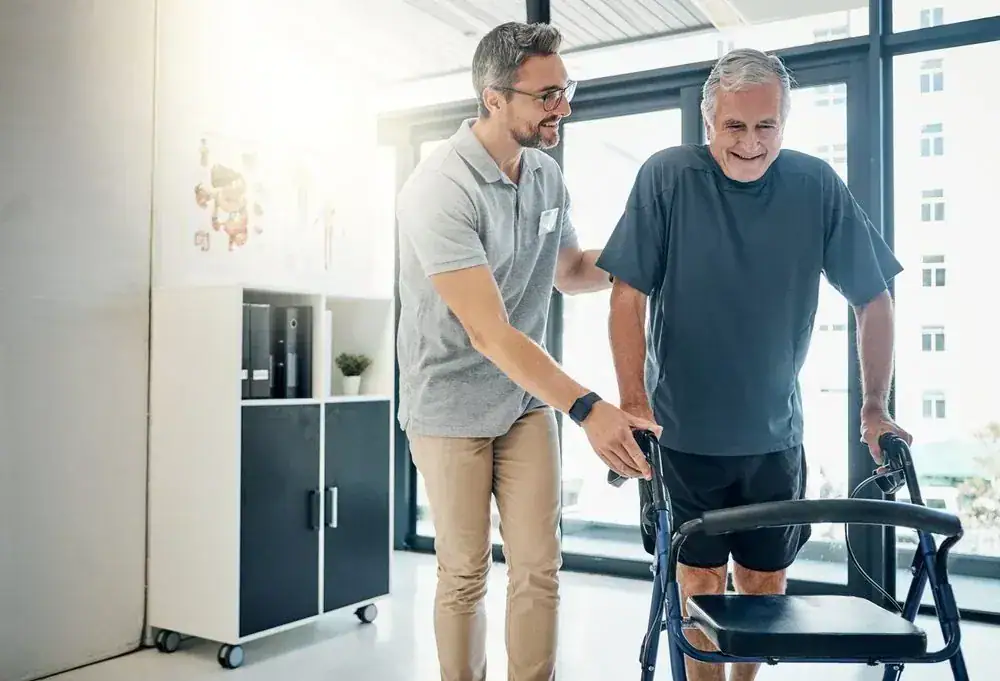
Absolutely. Using a walker or cane doesn’t mean you can’t improve your balance and strength. In fact, it’s even more important that you do.
Assistive devices help you stay stable, but they work best when your legs are strong enough to support you and your balance is as good as it can be. If your muscles are weak, you’re putting more weight on the device and you’re still at risk. Balance exercises make you steadier even when you’re using your walker or cane.
We’ll work with whatever assistive device you currently use. Some exercises you’ll do while holding onto something for support. Others might be seated or done in ways that don’t require you to stand unsupported. The goal isn’t to take away your walker if you need it. The goal is to make you as strong and stable as possible so you can move more confidently and reduce your risk of falling, whether you’re using a device or not.
Other Services we provide in Blue Point