
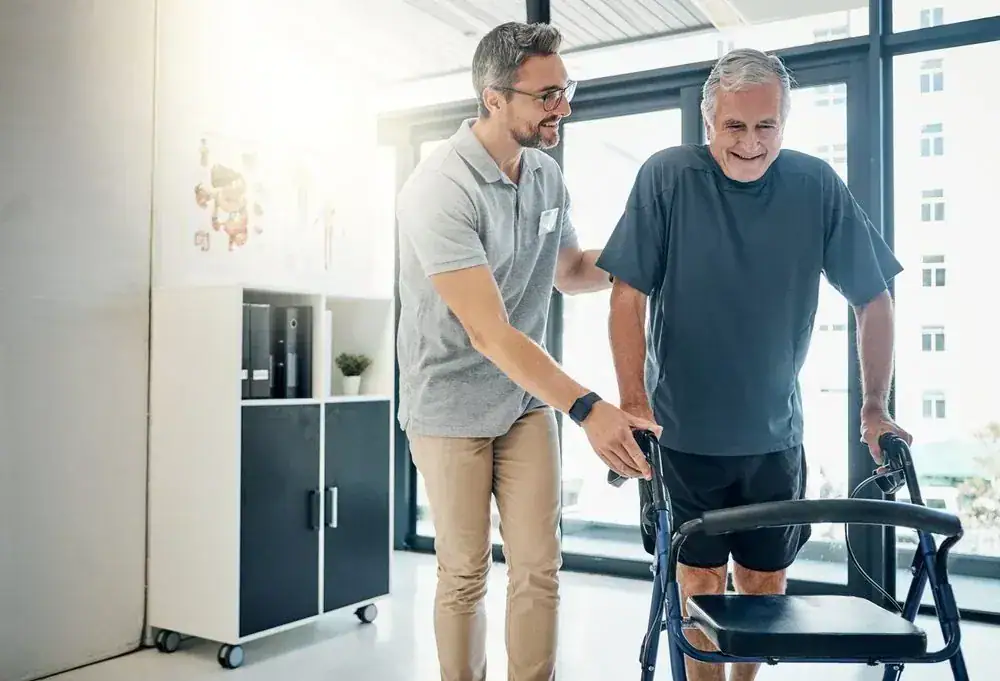
You shouldn’t have to grab furniture when you walk to the kitchen. You shouldn’t avoid the stairs or worry about getting out of the shower. And you definitely shouldn’t feel like your own home has become a hazard.
Fall prevention isn’t about wrapping yourself in bubble wrap. It’s about retraining your body to respond when your balance shifts. That means stronger legs, better coordination, and the kind of confidence that lets you garden, play with your grandkids, or just move through your day without that constant background worry.
Most people don’t think about balance until they’ve already had a close call. By then, the fear has already set in. The good news is that balance can be improved at any age with the right approach. You’re not too late, and you’re not stuck with where you are now.
We’ve been serving Bellerose and the surrounding Long Island communities with personalized physical therapy that actually fits your life. We’re not a corporate chain with rotating therapists. You’ll work with licensed professionals who take the time to understand your specific risks, your goals, and what’s keeping you up at night.
Every treatment plan starts with a real assessment. Not a generic checklist, but an actual evaluation of how you move, where you’re compensating, and what’s putting you at risk. From there, we build a program around you—not around what worked for someone else.
Bellerose has one of the most competitive physical therapy markets on Long Island, and that’s because people here expect results. We’ve earned our reputation by showing up consistently, communicating clearly, and helping people get back to their routines without the fear hanging over them.

First, we assess where you’re actually at. That means watching how you walk, how you turn, how you recover when your weight shifts. We’re looking for the small things—weak hip stabilizers, stiff ankles, delayed reactions—that add up to fall risk.
Then we design a strength and balance training program based on what your body needs. This isn’t about generic exercises you could find on YouTube. It’s targeted work on the muscle groups that keep you upright and the movements that challenge your balance in a controlled way.
You’ll do exercises that mimic real life. Getting up from a chair. Reaching for something on a shelf. Turning around quickly. These are the moments when falls happen, so these are the moments we prepare you for.
As you get stronger, we progress the difficulty. The goal isn’t just to prevent a fall. It’s to give you back the freedom to move without thinking about it. Most people start seeing improvements in confidence within the first few weeks, and measurable strength gains shortly after.

Ready to get started?
You’ll get one-on-one time with a licensed physical therapist who evaluates your gait, posture, strength, and balance. This isn’t a group class. It’s individualized care based on your health history and your current limitations.
Your program will include targeted strengthening exercises for your legs, hips, and core—the areas that matter most for stability. You’ll also work on flexibility, because stiff joints make it harder to catch yourself when you stumble. And you’ll practice balance exercises that get progressively harder as your body adapts.
In Bellerose and across Nassau County, falls are one of the leading causes of injury for adults over 65. The statistics aren’t pretty, but they’re preventable. Most falls happen at home, during routine activities, because balance and strength have gradually declined without anyone noticing. Physical therapy gives you a way to reverse that decline before it costs you your independence.
We also teach you what to watch for at home. Loose rugs, poor lighting, clutter in walkways—these things matter. But the real solution isn’t just making your environment safer. It’s making your body stronger and more responsive so you can handle the unexpected.
Most people notice a difference in how they feel within two to three weeks. That doesn’t mean you’re fully protected from falls yet, but you’ll start to feel more stable, more confident, and less hesitant when you move.
Measurable improvements in strength and balance typically show up around the four-to-six-week mark if you’re consistent with your sessions and any home exercises. Everyone’s timeline is different depending on where you’re starting from, but the key is consistency.
The goal isn’t to rush through a program and call it done. It’s to build a foundation that lasts. Some people continue with maintenance sessions once they’ve hit their goals, just to keep their progress. Others feel confident managing on their own. Either way, you’re in control of how long you stay involved.
Absolutely. In fact, if you’ve already fallen, that’s one of the strongest indicators that you’re at risk for falling again. The fear that comes after a fall can make you move less, which actually makes you weaker and more likely to fall in the future.
Physical therapy helps you rebuild the strength and coordination you lost, and it also addresses the psychological side. A lot of people become overly cautious after a fall, which limits their movement and accelerates physical decline. We help you regain confidence in a controlled, safe environment so you can start trusting your body again.
If you’ve had an injury from the fall, we’ll work around it. The program gets tailored to your current condition, and we progress at a pace that makes sense for your recovery. You’re not starting from scratch—you’re starting from where you are, and we build from there.
In New York, you can access physical therapy through direct access, which means you don’t always need a referral to get started. However, some insurance plans do require a physician’s referral for coverage, so it’s worth checking with your provider before your first visit.
If you’re unsure, we can help you figure that out. We deal with insurance questions every day, and we’ll let you know what your plan requires. In many cases, your primary care doctor will be happy to provide a referral if it’s needed—they’d much rather see you prevent a fall than treat one.
Even if you’re paying out of pocket, fall prevention therapy is one of the most cost-effective investments you can make. A single fall can lead to hospital stays, surgery, rehab, and months of recovery. Preventing that is worth far more than a few therapy sessions.
You can do exercises at home, but without proper assessment, you won’t know which exercises you actually need or whether you’re doing them correctly. A lot of people try generic balance exercises and either don’t see results or, worse, do them incorrectly and increase their risk.
A physical therapist evaluates your specific weaknesses. Maybe your ankles are stiff, or your hip stabilizers are weak, or you have a delayed reaction time when your weight shifts. Those details matter, and they determine what exercises will actually help you.
Once you’ve been assessed and taught the right exercises, yes—you’ll do some of them at home. That’s part of the program. But you’ll know exactly what to do, how to do it, and why it matters. And you’ll have someone checking in on your progress to make sure you’re improving, not just going through the motions.
Regular exercise is great for overall health, but it’s not always specific enough to prevent falls. Walking, swimming, or using a stationary bike will help your cardiovascular health, but they won’t necessarily improve your ability to catch yourself when you trip.
Balance exercises are designed to challenge your stability in a controlled way. That means standing on one leg, shifting your weight, practicing quick direction changes, or doing movements that force your body to react and adjust. These exercises train your nervous system to respond faster when your balance is threatened.
Senior balance exercises also focus on strengthening the specific muscle groups that keep you upright—your hips, glutes, core, and ankles. These areas tend to weaken with age, and they’re critical for preventing falls. A well-rounded fall prevention program combines strength, flexibility, and balance training in a way that regular exercise alone doesn’t address.
Most people start with two to three sessions per week, depending on their risk level and goals. That frequency gives your body enough stimulus to adapt and get stronger, while also allowing time for recovery between sessions.
As you improve, the frequency often decreases. You might drop down to once a week, or move to a maintenance schedule where you come in every few weeks just to make sure you’re staying on track. The program is flexible and adjusts based on your progress.
If you’re dealing with other health conditions or recovering from an injury, your therapist will factor that in. The schedule is built around what works for your body and your life. The most important thing is consistency—showing up regularly will always get you better results than sporadic visits, no matter how motivated you are in the moment.
Other Services we provide in Bellerose