
You’re not imagining it. Your balance isn’t what it used to be, and that hesitation you feel when you stand up or walk to the bathroom at night is real.
Every 11 seconds, someone over 65 ends up in the emergency room because of a fall. That’s not a scare tactic—it’s what happens when balance issues go unaddressed. And if you’ve already fallen once, your chances of falling again double.
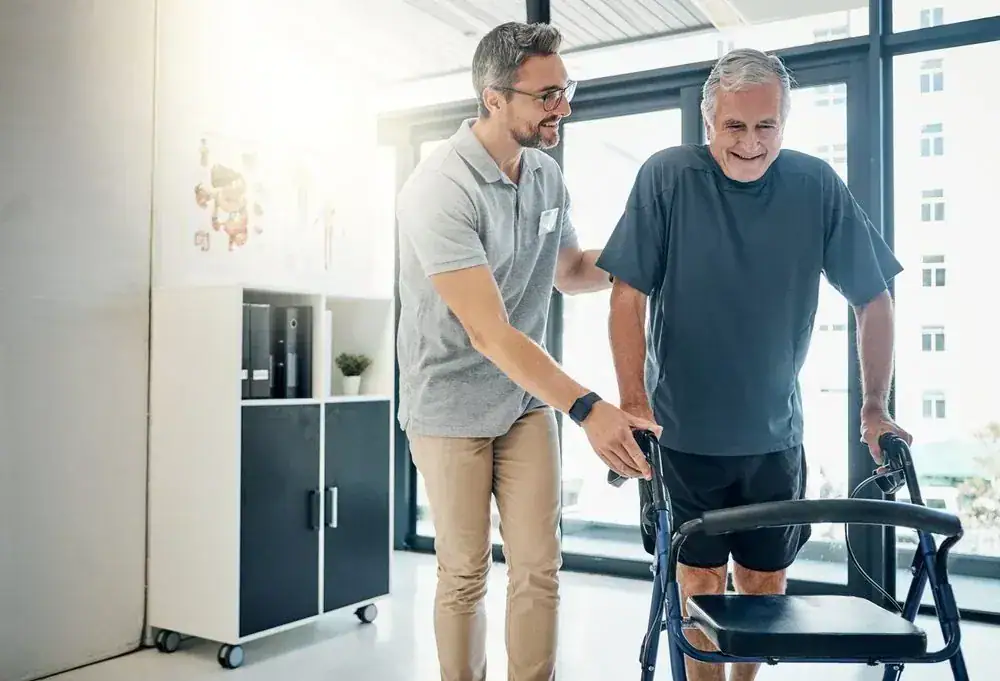
Here’s what changes when you work with a physical therapist who specializes in fall prevention: your legs get stronger, your core activates when you move, and your brain relearns how to keep you steady. You stop second-guessing every step. You stop asking someone else to grab things off high shelves. You move like yourself again.
The research backs it up. Targeted balance exercises for seniors can reduce fall risk by up to 50%. But it only works if the program is built for you—your strength level, your home layout, your specific balance challenges. That’s exactly what we do.
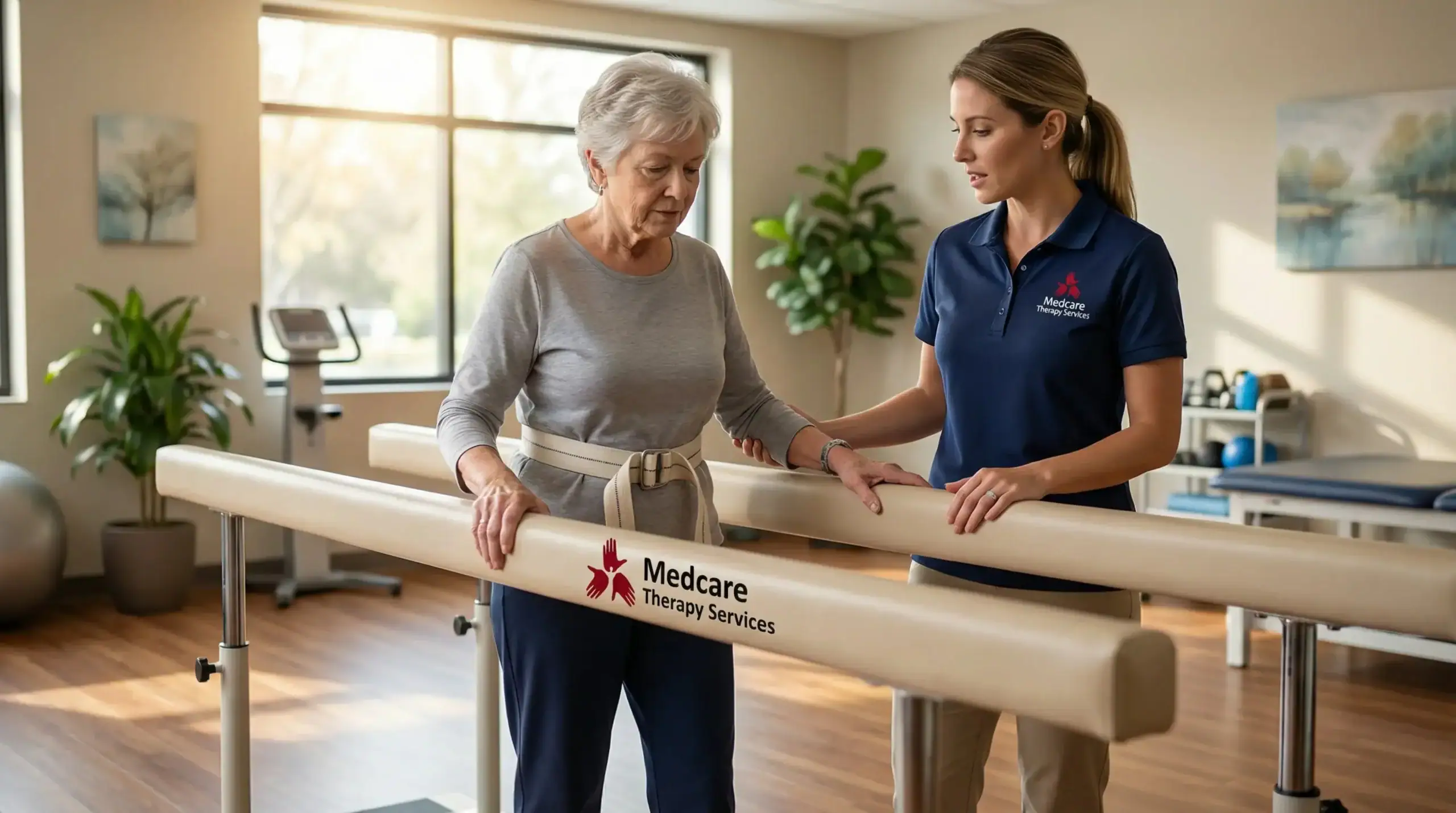
Medcare Therapy Services brings licensed physical and occupational therapists directly to your home in Bellerose Terrace, NY. No waiting rooms, no driving, no trying to find parking when your hip is bothering you.
We’ve worked with hundreds of seniors across Nassau County who were dealing with the same frustrations you are. Bellerose Terrace has one of the highest concentrations of older adults on Long Island—17.6% of residents are 65 or older—and we understand what that means for mobility, independence, and staying in the home you’ve lived in for decades.
Our therapists are trained in evidence-based fall prevention protocols, including the Otago program, which is recognized internationally for reducing falls in older adults. We accept Medicare and most major insurances, so cost doesn’t become another barrier between you and feeling steady on your feet again.

First, a licensed therapist comes to your home and does a full fall risk assessment. They’re looking at your strength, your balance, how you walk, and how your home is set up. They’ll notice things you’ve stopped noticing—like that rug in the hallway or the way you’re favoring one leg.
Then they build a program specifically for you. Not a generic handout. A plan that matches where you are right now and gets you where you need to be. You’ll do exercises that retrain your vestibular system, strengthen your legs and core, and improve your gait. Some of it happens during sessions. Some of it you’ll do on your own between visits.
Your therapist adjusts the plan as you improve. They’re tracking your progress, measuring your balance, and making sure you’re getting stronger without overdoing it. Most people start feeling more stable within the first few weeks. By the end of the program, you’re moving differently—and you know it.

Ready to get started?
You get one-on-one time with a therapist who’s seen this before and knows how to fix it. Every session is in your home, so you’re training in the environment where you actually need to stay safe.
The program includes strength training that targets the muscles you use to stand, walk, and catch yourself. You’ll do balance exercises that challenge your stability in controlled ways—so your body learns how to react when you’re caught off guard. Gait training helps you walk with a steadier, more natural rhythm, which makes a massive difference on uneven surfaces or when you’re tired.
Your therapist will also walk through your home and point out fall hazards you might not see anymore. That could mean recommending grab bars, better lighting, or just moving a piece of furniture. These aren’t big renovations—they’re small changes that make your home safer without making it feel like a hospital.
In Bellerose Terrace, where 55% of homes were built before 1970, older home layouts can create unique challenges. We’ve worked in these houses. We know where the risks are, and we know how to address them without asking you to move or remodel.

If you’ve fallen in the last year, you need it. Full stop. Falling once doubles your risk of falling again, and the second fall is usually worse than the first.
But you don’t have to wait until you hit the ground. If you’re feeling unsteady when you stand up, if you’re holding onto furniture more than you used to, if you’ve started avoiding stairs or stopping activities because you’re worried about balance—those are all signs that your body needs help. A physical therapist can assess your fall risk and tell you exactly where you stand. Most people wait too long. Don’t be most people.
Yes. Medicare Part B covers outpatient physical therapy, including fall prevention programs, as long as it’s medically necessary and prescribed by your doctor.
You’ll need a referral, and there are some coverage limits depending on your plan and how much therapy you’ve already used in a given year. But for most people, the cost is manageable—and far less than what you’d pay after a fall that lands you in the ER or requires surgery. We handle Medicare billing directly and can walk you through what your specific plan covers before you start. No surprises.
Online exercises are generic. They’re not wrong, but they’re not built for you. A physical therapist evaluates your specific weaknesses—whether that’s hip strength, ankle mobility, vestibular issues, or something else—and designs a program that addresses what’s actually causing your balance problems.
They also progress the exercises as you get stronger, which you can’t do on your own without risking injury or plateauing. And if something hurts or feels off, they adjust in real time. You’re not guessing whether you’re doing it right. You’re working with someone who’s trained to see what you can’t. That’s the difference between hoping you improve and actually improving.
Most programs run between 6 to 12 weeks, depending on where you’re starting and how quickly you progress. You’ll typically see a therapist 1 to 3 times per week at first, then less frequently as you build strength and confidence.
Some people feel steadier within the first few weeks. Real, lasting improvement—the kind that sticks after therapy ends—usually takes a couple of months. But here’s the thing: you’re not just doing exercises during sessions. Your therapist gives you a home program to do between visits, and that’s where a lot of the progress happens. The timeline depends on how consistent you are and how your body responds. Your therapist will give you a clearer picture after the first assessment.
That happens more often than it should, and it’s usually because the therapy wasn’t specific enough or the therapist didn’t specialize in fall prevention. General PT can help with pain or post-surgery recovery, but balance issues require a different approach.
Fall prevention therapy focuses on vestibular training, gait retraining, and functional strength—not just making you stronger in general, but making you stronger in the ways that actually prevent falls. If your last therapist didn’t assess your balance system or work on how you move through your home, you didn’t get fall prevention therapy. You got something else. We use evidence-based protocols like the Otago program, which has decades of research showing it works. If you’re willing to try again, we’ll make sure it’s done right this time.
Falling is not inevitable. That’s the biggest myth in aging, and it keeps people from getting help until it’s too late.
Yes, your balance system weakens as you age. But that doesn’t mean you’re destined to fall. It means you need to actively maintain your strength and balance—the same way you’d maintain your heart health or your vision. Research shows that regular, targeted exercise can cut fall risk in half. Half. That’s not a small improvement. That’s the difference between living independently and ending up in a nursing home after a hip fracture. Therapy works because it retrains your body to do what it used to do automatically. You’re not fighting aging. You’re just not letting it win without a fight.
Other Services we provide in Bellerose Terrace