
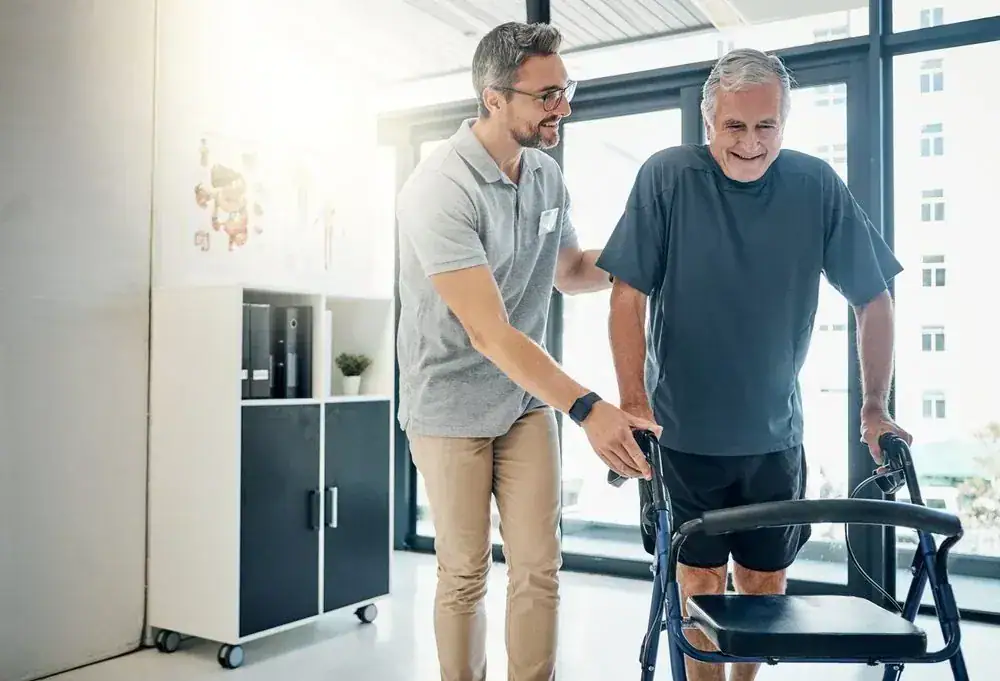
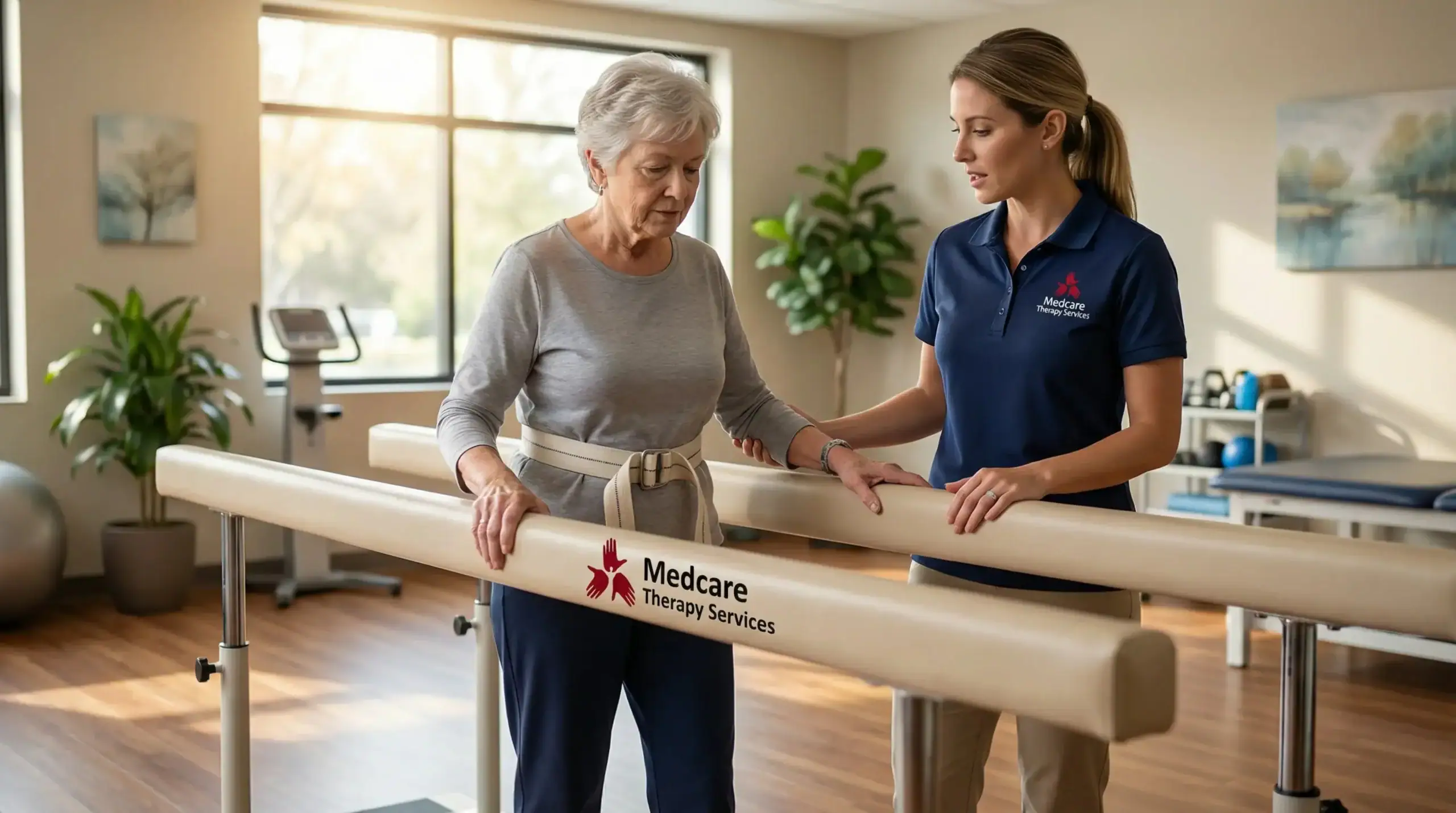
You stop second-guessing every step. Walking to the mailbox, getting up from a chair, reaching for something on a shelf—these everyday movements become automatic again instead of calculated risks.
Your confidence comes back. When you trust your body to keep you upright, you stay active. You keep doing the things you enjoy. You maintain the independence that matters most.
The numbers back this up. Regular balance and strength training can cut your fall risk in half. That’s not a small improvement—that’s the difference between living with constant worry and moving through your day without fear. For older adults in Bay Shore and across Long Island, that shift changes everything.
Falls aren’t just about the physical injury. It’s the loss of confidence that follows. It’s avoiding activities you love because you’re afraid. It’s the anxiety that builds every time you stand up. Addressing balance early stops that cycle before it starts.
We’ve served Bay Shore and surrounding Long Island communities for years through personalized, evidence-based care. Our doctoral-trained physical therapists specialize in fall prevention and balance training for older adults.
Suffolk County is home to over 201,000 older adults, with Bay Shore representing a significant portion of that population. We understand the local needs—the active seniors who want to maintain their lifestyle, the families concerned about aging parents, the individuals recovering from a fall who need to rebuild confidence.
We don’t rush you through a generic program. Every plan starts with a thorough assessment of your specific fall risk factors, movement patterns, and goals. From there, we build a program that fits your current abilities and progresses at your pace.
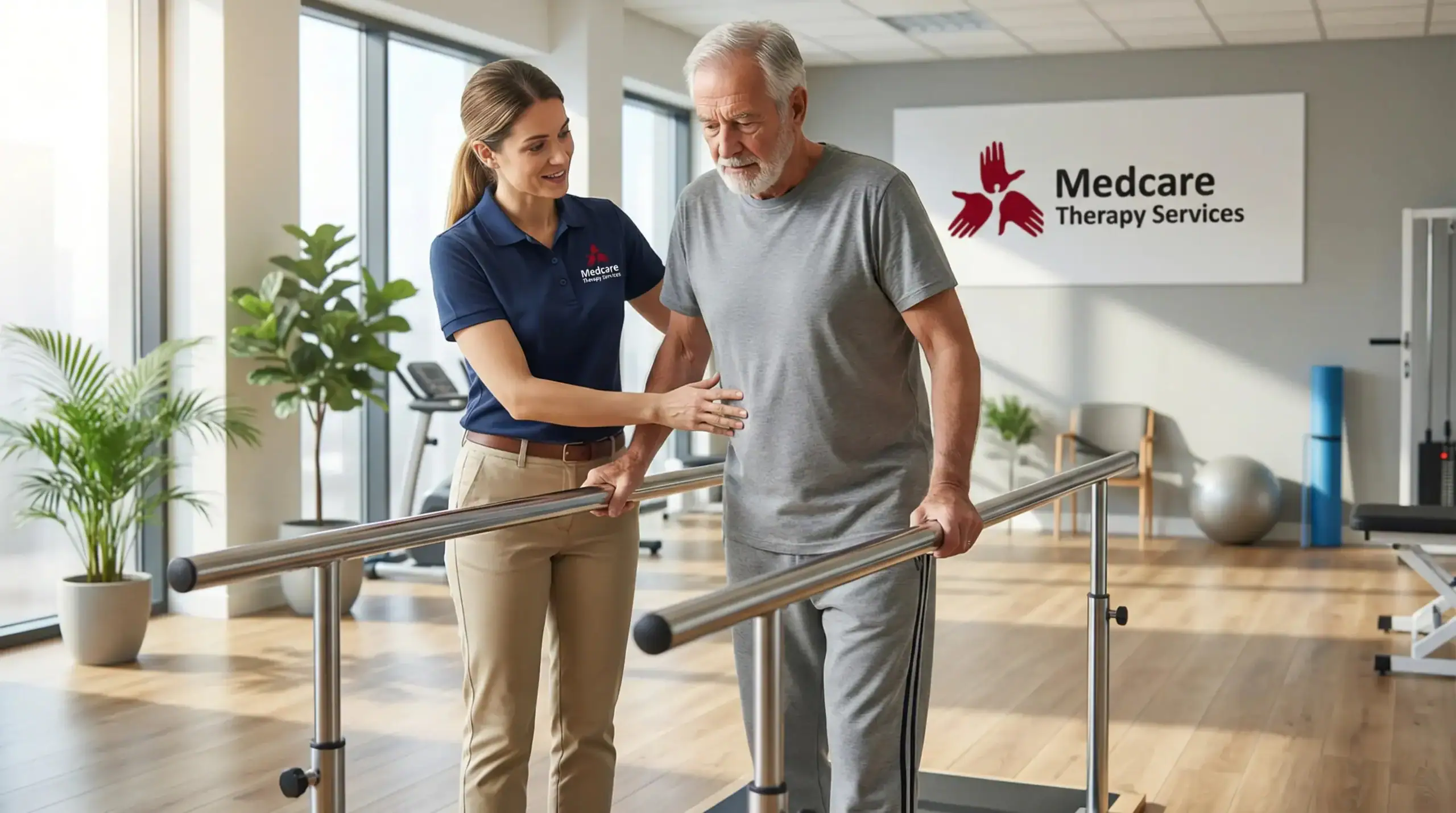
Your first visit is an assessment. We evaluate your balance, gait, strength, and any specific concerns you have about falling. We also look at your home environment and daily activities to identify where risks exist. This isn’t a quick screening—it’s a detailed look at what’s actually affecting your stability.
From there, we create your treatment plan. This typically includes balance exercises that challenge your stability in safe, controlled ways. We incorporate strength training focused on your legs and core. Gait training helps you walk with better control and confidence. Proprioception exercises improve how your body senses its position in space.
Each session builds on the last. You’re not doing the same exercises week after week. As your balance improves, we progress the difficulty. As your strength increases, we add new challenges. The goal is continuous improvement that translates to real-world stability.
Most patients attend therapy two to three times per week initially. Sessions last about 45 minutes to an hour. You’ll also get exercises to do at home between visits—these aren’t optional. The more consistently you work on balance, the faster you see results. Research shows that older adults who stick with balance programs see measurable improvements in walking speed, physical function, and fall-related confidence within weeks.

Ready to get started?
Balance training forms the core of what we do. These aren’t basic exercises you could find online—they’re progressively challenging movements tailored to your specific weaknesses. We might work on single-leg standing, weight shifting, or dynamic movements that mimic real-life situations where falls happen.
Strength building targets the muscles that keep you upright. Weak legs and core muscles are major fall risk factors. We focus on functional strength—the kind that helps you get out of a chair without using your hands, climb stairs safely, or catch yourself if you start to lose balance.
Gait training improves how you walk. Many falls happen because of shuffling, uneven steps, or poor foot clearance. We work on stride length, walking speed, and foot placement. For Bay Shore residents who navigate uneven sidewalks, beach areas, or older homes with stairs, this training is essential.
Education is part of every program. You learn what increases fall risk in your daily life and how to modify those risks. We discuss footwear, home safety, medication side effects, and vision concerns. About 60% of fall-related hospitalizations in older adults happen at home, so understanding your environment matters as much as the physical training.
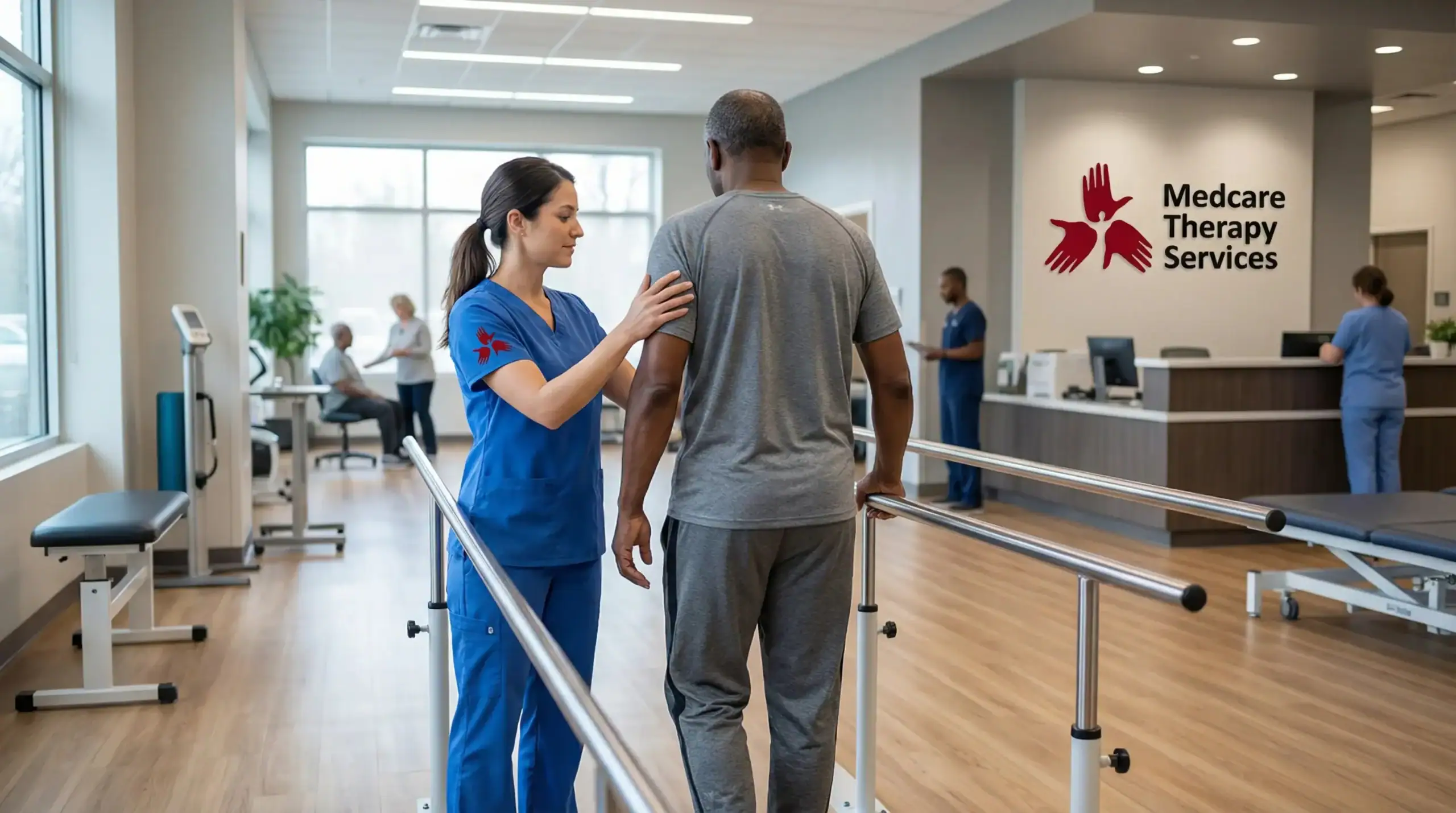
Most people notice changes within three to four weeks of consistent therapy. That doesn’t mean you’re completely steady by then—it means you start feeling more confident, your walking speed picks up slightly, and movements that felt shaky begin to feel more controlled.
The timeline depends on where you’re starting from. If you’re coming in after a fall with significant fear and weakness, it takes longer. If you’re being proactive about balance issues you’ve noticed but haven’t fallen yet, you’ll likely progress faster.
Research shows that balance programs produce measurable improvements in stability and physical function when done consistently over eight to twelve weeks. The key word is consistent. Attending therapy twice a week but skipping home exercises will slow your progress. Doing both gets you results that actually reduce your fall risk—not just temporarily, but in a way that lasts if you maintain the habits we teach you.
Fear of falling is one of the biggest obstacles we address. That fear is real and it’s valid—but it also makes falls more likely because it leads to avoiding activity, which weakens you further.
We start where you are. If standing on one foot feels terrifying, we don’t start there. We build your confidence gradually with exercises you can do successfully, then progress from there. Every session is supervised, so you’re not at risk of falling during therapy.
Part of the work is psychological. As your physical balance improves and you successfully complete exercises that felt impossible at first, your confidence rebuilds. We’ve worked with hundreds of older adults who came in after a fall, convinced they’d never feel steady again. The majority leave therapy moving better than they did before the fall—not just physically recovered, but stronger and more stable than they were when they first lost their balance.
It depends on your insurance. Some plans require a physician referral for physical therapy, while others allow direct access. New York is a direct access state, which means you can see a physical therapist without a referral in many cases.
That said, if you’ve recently fallen or have medical conditions affecting your balance—like neuropathy, vertigo, or stroke history—it’s worth talking to your doctor first. They can rule out underlying issues that need medical treatment alongside therapy.
We accept most major insurance plans, and our team can verify your coverage before your first visit. If your plan requires a referral, we’ll let you know upfront so you can get that from your physician. For Bay Shore residents on Medicare, fall prevention and balance training are typically covered services when medically necessary, which includes having a history of falls or documented balance impairment.
Group fitness classes can be helpful for maintaining balance once you’ve built a solid foundation. But they’re not individualized, and they’re not supervised by licensed therapists who can assess your specific fall risk factors.
We start with a clinical assessment that identifies why you’re at risk. Is it weak ankles? Poor proprioception? Medication side effects? Inner ear issues? A generic class can’t address those specific problems. We can.
Our programs are also progressive. We adjust your exercises as you improve, constantly challenging your balance in new ways. Group classes tend to repeat the same routines, which stops being effective once your body adapts. Plus, if you have limitations—maybe you can’t get down on the floor easily, or you have arthritis that affects certain movements—we modify everything to work for your body. In a class setting, you’re expected to keep up or sit out. Here, everything is designed around what you need.
Absolutely. This is actually the best time to start. Waiting until after a fall means you’re dealing with injury recovery, fear, and potentially more significant balance loss. Addressing instability early prevents that entire scenario.
Feeling unsteady is your body telling you something’s changed. Maybe your balance isn’t as sharp as it used to be. Maybe you’re catching yourself more often or holding onto furniture when you didn’t need to before. Those are warning signs worth taking seriously.
One in four older adults falls every year, but most falls are preventable. Balance exercises can reduce that risk by up to 50%, and the earlier you start, the more effective they are. We treat plenty of Bay Shore residents who come in proactively because they’ve noticed changes and want to stay independent. That’s not overreacting—that’s smart. Building strength and stability now means you’re far less likely to end up in the emergency department later, which is where 3.5 million older adults ended up in 2023 due to fall-related injuries.
Most patients complete their initial fall prevention program in eight to twelve weeks. By that point, you’ve built significant strength and balance improvements, and you have a solid home exercise routine you can continue independently.
But balance isn’t something you achieve once and forget about. Your body needs ongoing challenge to maintain those gains. We teach you how to progress your home exercises so you don’t plateau. Some patients transition to a maintenance program where they come in once or twice a month for a check-in and program update.
Others do well on their own and only return if they notice their balance declining or after an illness or injury that affects their stability. There’s no one-size-fits-all timeline. What matters is that you keep doing something. Research on adults over 80 shows that consistent balance exercises maintain improvements in gait, posture, and stability long-term—but only if you stay consistent. The habits you build during therapy need to continue after you’re discharged. That’s what keeps you steady for years, not just weeks.
Other Services we provide in Bay Shore